Tag Archives: Bible

Apocalyptic Misquotes . . . Part I

“God has a plan for me!” & “The Last Generation”

Today’s Jesus culture and its focus on experience over obedience have left the Church largely scripturally illiterate. This is supported by statistics reporting that 95% or more of people who say they’re Christians don’t’ study the Bible regularly or thoroughly or actively engage in discipleship. Evidence of this sobering trend pops up regularly in the form of misquoted and abused Scripture spouted as out-of-context clichés or carelessly misrepresented words of God, our Christ, the prophets, or the apostles.

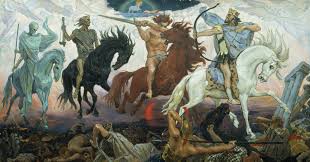
My use of Apocalyptic in the title is two-fold: One, to represent the unfortunate abuses of end-times / apocalyptic references twisted to support manmade end-of-the-world doctrine and, two, to represent the incredible magnitude of inadequate training of the Saints and the resulting lack of faith building and scriptural abuse. So, we’ll look at two examples weekly with one related to the return of our Christ (or at least related to apocalyptic literature or prophecies) until I’ve run out of low-hanging examples.

Let’s begin Apocalyptic Misquotes Part I with a look at abuses that give birth to a spiritual rock star mentality and erroneous end-of-the-world timing.

Misquote #1: “God must have a specific plan and purpose for my life!” This is a common Christian culture cliché based on taking Jeremiah 29:11 out of context. First and foremost, we are compelled by Christ and others (like the apostle Paul) to follow; that way may be difficult and costly (from a worldly point of view). Second, the context is God’s admonishment to Israel during her exile to Babylon and is a reiteration that He has a last-days plan for that nation to be reconciled to Him. Abuse of these words of God today plays right into a spiritual entitlement mentality and promotes the question, “Common God – what do you have for Me?” instead of “God – what can I do to help You in Your desire to be reconciled with Your creation?

Misquotes #2 & #3: “Jesus said the generation that sees Israel become a nation in 1948 will see His return!” and “Jesus said the generation witnessing the destruction of Jerusalem in 70 AD will see His return!” Both are wrong and are abuses of the following verses in the support of pre-tribulation (former) and preterist (latter) end-times views.

  • Now learn the parable from the fig tree: when its branch has already become tender and puts forth its leaves, you know that summer is near so, you too, when you see all these things, recognize that He is near, right at the door.  —Matthew 24:32-33.
  • Truly I say to you, this generation will not pass away until all these things take place. —Matthew 24:34.

In context, Jesus is just telling His disciples that the generation that sees the signs He’d just revealed in verses 21-31 will see His return (‘when you see this, you will see that’) to gather His ‘bride’ for the marriage supper in heaven. (See Matthew 24:30-31 and 26:29, and Revelation 7:9-17 and 19:5-10 for examples of prophetic and apocalyptic glimpses of the betrothal and wedding shadow Jesus is fulfilling (and will complete) with those who will enter into a covenant with Him.

By the way: the original idea of a 40-year generation and a 1988 return of Jesus didn’t happen (as you can surmise) so the debates about longer generational lengths such as 70 years rage on as men struggle to validate faulty doctrine.

For more information regarding the return of our Christ and our ‘marriage’ to Him, and of the end of our world as we know it, please consider studying my very comprehensive guide “Finding the End of the World”. You’ll easily find it in paper and electronic format at Amazon, Barnes & Noble, and www.ronbraley.com.

Next week, we’ll look at bad doctrine related to tithing and 1,000-year-long God days as we continue to explore common misquotes and abuses of Scripture.

How to Study the Bible . . . or NOT!

True faith – confidence – is based on our exposure to, and understanding of, God’s words and testimonies contained in the Bible. How we interpret it is vital to ensuring we “get it right.” Getting it wrong could have devastating consequences. Those who mislead others will be judged accordingly. Ignorance could lead to experiencing God’s wrath, disappointment, deception, a falling away from the Christian faith, etc.

Rule number one of Bible interpretation: do everything possible to determine the writer’s original intent. Rule number two of Bible interpretation: see rule number one. Figuring out what the text writer meant to say to the intended audience should be your primary focus.

The next goal of Scripture interpretation should be to find out how the message applies today (there’s only one meaning of the text, but possibly multiple applications). A good understanding of grammatical principles and attention to format and message context will help ensure your success.

Here are some tips for effective biblical study:

  • Be prepared to study through guidance by God’s Spirit (having a teachable spirit and a good attitude, etc.)
  • Take Scripture literally whenever possible and look for the simplest meaning first
  • Consider the author and audience
  • Consider historical/cultural background first
  • Compare translations for consensus
  • Consider apocalyptic symbols and look for explanation in Scripture (nearly all are explained somewhere in the Bible!)
  • Use study tools (like e-Sword) and aids whenever possible (i.e. concordance or dictionaries)

Work to understand what God, His son, the prophets, or the apostles intended to say to their audience – not what you’d like their words to mean to you. Remember: only one meaning, many potential applications.

God gets the Final Word!

We hear the phrase, “the Word of God!” quite often. And, we quote Paul who told Timothy that, “All Scripture is inspired by God . . .” But, what is that Word of God or Scripture? The fourth-century Vulgate? The 1560 Geneva Bible? The 1611 King James Bible? ‘Our Daily Bread’ devotional? None of them, actually.

The Scripture Paul referred to is the Torah, or Old Testament, available in Hebrew and in Greek in the first century. It was what the Bereans used to hold Paul accountable for his teachings of the prophetic fulfillment of the coming Christ by Jesus.

The word (lower-case ‘w’) represents the words spoken by God as when He spoke the world into existence or when He spoke of the coming Christ and our reconciliation with God through Him. In fact, the Word (upper-case ‘W’) is the manifestation of the reconciliation word(s) of God (i.e. Revelation 19:13).

So, what is the Bible and where does it come into play if not necessarily the Word of God? It’s a collection of ancient texts consolidated by groups of men after much arguing and debate; it contains the Torah and many first and second-century documents.

The Old Testament Torah is a collection of oral traditions, historical documentation, personal reflections of wisdom and love and lamentations, and prophecies – both current to the times and futuristic in nature. These were inspired by God and written by men.

The New Testament is a similar collection of historical and eyewitness accounts, letters full of wisdom from apostles, and prophetic and apocalyptic literature. The Gospel accounts of Jesus’ life, death, resurrection, and ascension were reiterations of what was spoken of or influenced by Jesus as was the Revelation given to John later. This collection was also recorded by men.

We’re creatures of free will and of differing intelligence levels and backgrounds. So, it’s truly amazing that God entrusted us to record anything related to Him or our Christ. But, despite that and the transliterations, translations, and interpretations that have introduced minor discrepancies in today’s Bible, the core words of God that promise hope of the future through the Word – our Christ – stands untarnished and remains intact.

What Word do you subscribe to?