So far, you’ve met several heroes of the Christian faith who were martyred for their beliefs or actions rooted in their Christian worldview. Here, you’ll meet two more who, though not killed for their faith, were at least imprisoned for it. Thomas Aquinas employed faith and reason, showing that they point to the same truth, the same God. By contrast, John of the Cross approached faith and theology less intellectually and more emotionally. Spirit. Poetry. Knowledge. Nonetheless, both exemplified a faith that not only seeks God but also presents Him and His kingdom in meaningful ways. Let’s begin our exploration with Aquinas.
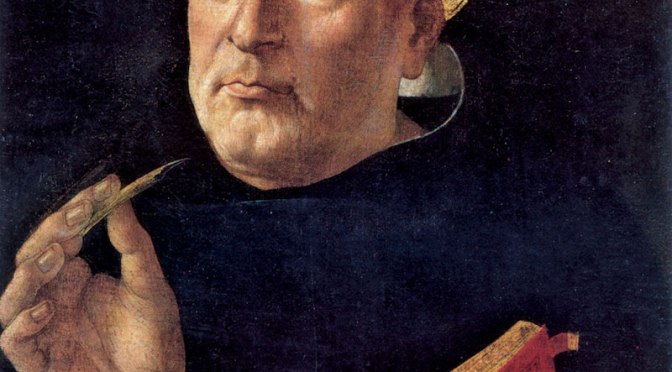
Thomas Aquinas (1225–1274). “To one who has faith, no explanation is necessary. To one without faith, no explanation is possible.” When Thomas Aquinas announced his intention to become a Dominican friar, his wealthy family was horrified. They even imprisoned him for a time, hoping he would abandon his calling. Instead, Thomas emerged more determined than ever. Gifted with an extraordinary mind, he dedicated his life to showing that faith and reason ultimately point to the same truth, since both originate with God. In this, he resembled Justin Martyr, who argued that reason and faith are compatible.
His masterpiece, the Summa Theologica, carefully organized Christian doctrine into a work that continues to shape theology centuries later. Aquinas also developed philosophical arguments for God’s existence that are still widely studied today. Quiet and humble despite his brilliance, he believed the greatest knowledge was knowing and loving God. Canonized after his death, Thomas Aquinas remains one of the most influential theologians in Christian history.
John of the Cross (1542–1591). “In the evening of life, we will be judged on love alone.” He believed that the deepest relationship with God often grows in life’s darkest moments. Working alongside Teresa of Ávila, he helped reform the Carmelite order, calling believers to greater simplicity, prayer, and devotion. His efforts met fierce opposition, and he was imprisoned for months by members of his own order. Amazingly, his experience mirrored Aquinas’s, as both were isolated to shape their thoughts and desires.
Confined to a tiny cell, he endured hardship and gained profound spiritual insight. During this time, he composed some of Christianity’s most beautiful poetry, later expanding those themes into classics such as the Dark Night of the Soul. Rather than viewing suffering as meaningless, John taught that God often uses difficult seasons to deepen faith and draw believers into closer communion with Him. His writings continue to comfort Christians facing trials today.
From the incisive power of reason to the complexities of emotion, Thomas and John revealed a rich, holistic faith that speaks to both thinkers and feelers. Knowledge and emotion are certainly not mutually exclusive! Next, we’ll meet two more early discipleship heroes: Count Zinzendorf and John Wesley. In the meantime, be encouraged and draw closer to God, even if you’re walking through a difficult season.
Blessings and peace,
Dr. Ron Braley (MDiv; DMin)