Are You ‘Saved?’ – Part Two

Someone told me this when I was 16: “All you have to do to be saved from hell is believe in Jesus and say this silent prayer.” It sounded too good to be true, and I thought, “Surely, there must be more to a relationship with God!” Now I can tell you that rescue from hell is possible only through an active, two-way relationship (covenant) with Him that we need to foster… do our part… until we die or the world ends. But this isn’t what many Protestants believe.

In Part One of this series, I defined salvation as both a rescue from God’s future wrath (will be saved) and the process of being made whole (being saved). I also noted that salvation involves two main parts: (1) entering a relationship with God and (2) remaining in that relationship. Here, I will expand on these points and explain their elements.

Enter a relationship (covenant) with God. Some believe that everyone is on the fast track to hell unless God occasionally rescues someone. Others teach that everyone will be saved. The truth: Anyone can choose salvation, but not everyone will … or stay if they do.

• Who. “… God our Savior, who desires all men to be saved and to come to the knowledge of the truth.” (1 Timothy 2:4).

• Why. “For Christ also died for sins once for all, the just for the unjust, so that He might bring us to God.” (1 Peter 3:18—see also 1 John 2:2).

• How. Entry into the relationship, like a marriage, requires experience, decision, and devotion: “He came as a witness, to testify about the Light, so that all might believe through him.” (John 1:7; 20:31) and “… confess with your mouth Jesus as Lord, and believe in your heart that God raised Him from the dead, you will be saved …” (Romans 10:9-10).

Stay in the relationship. Honor God, be charitable to people, and abide (stay).

• Honor God with all you are and have (e.g., Matthew 22:34-40).

• Be charitable (love others through a fruitful faith). “Instruct them to do good, to be rich in good works, to be generous and ready to share …” (1 Timothy 6:18). Otherwise, “… faith, if it has no works, is dead.” (James 2:17)

• Persevere. “But the one who endures to the end, he will be saved. … If anyone does not abide in Me, he is thrown away … and cast them into the fire, and they are burned.” (Matthew 24:13; John 15:6).

Summary. Partner with God for transformation, rescue, and eternal life by devoting yourself fully to Him and remaining in the relationship. What’s next? Many Christians view their connection to a heavenly Father (which should be a covenant) as a one-sided affair with a lovesick God. So we’ll work to better understand it. Meanwhile, honor God, be charitable, love justice and mercy, and focus on purity and spiritual growth.

Blessings and peace,
Dr. Ron Braley, MDiv; DMin.
Are You ‘Saved?’ – Part One

“Are you saved, brother?” two guys asked me for several days about 40 years ago. I initially replied, “Yep!” Finally, I responded, “I was saved the first time you asked me, and I’m still saved!” What does salvation mean, and how do we attain it? We’ll explore this in a two-part series.

Salvation Defined. In Biblical Greek, it means to rescue, protect, or restore. The specific meaning varies based on the context, and the Bible often describes salvation as a future rescue from God’s end-of-the-world wrath: “… for a salvation ready to be revealed in the last time.” (1 Peter 1:3-5) Meanwhile, we are “being” saved—being made whole (e.g., 1 Corinthians 1:18).

Salvation relies on choosing, engaging in, and maintaining a healthy relationship with God. Therefore, rescue from God’s wrath requires free-will decision and action, as the Bible teaches and the earliest Church affirmed.

What the Bible teaches and the earliest Church believed. Ancient Church fathers (and the Bible!) taught that salvation has two parts: (1) entering a relationship with God; (2) staying in that relationship. Entry requires a decision and dedication (e.g., John 1:7 and 20:31; Romans 10:9-10). Staying requires obeying God’s commands to honor Him and to love others charitably—doing good works (e.g., James 2:14-26; Ephesians 2:10; 1 Timothy 6:18; Hebrews 10:24; Revelation 20:13). As a result, apostles and early Church fathers emphasized that belief and action go hand in hand: “Even so faith, if it has no works, is dead, being by itself. … You see that a man is justified by works and not by faith alone” (James 2:17 & 24).

Staying also requires perseverance: “But the one who endures to the end, he will be saved. … If anyone does not abide in Me, he is thrown away as a branch and dries up; and they gather them, and cast them into the fire and they are burned.” (Matthew 24:13; John 15:6). So, who is called by God to believe, devote, and persevere?

Who. God wants everyone to have a relationship with Him (1 Timothy 2:4). So Jesus died to pay the penalty for humanity’s rebellion (2 Corinthians 5:14-15; 1 Peter 3:18; 1 John 2:2). The reality is, though, that not everyone will follow the narrow path to salvation.

The path to salvation. Contrary to popular beliefs, faith alone, silent prayers or fruitless faith will not save you. Instead, the Bible teaches that the way to eternal life follows this basic approach: Experience and decide, devote yourself to God, honor Him, be charitable to people, and stay in the relationship. Dissecting and explaining these steps will be the focus of Part Two.

Summary. Salvation involves being rescued from God’s wrath and experiencing a present transformation. Building and maintaining a relationship with God is essential to navigating these life-changing events. Next time, I will discuss the elements of the pathway that lead to new life and rescue from God’s wrath.

Blessings and peace,

Dr. Ron Braley, MDiv, DMin.

Heavenly Armor: Part Two

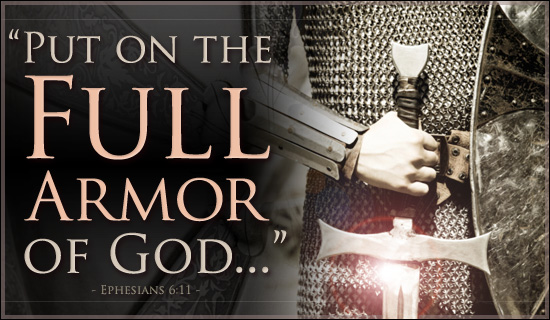
In part one, we learned that evil is everywhere and that we have protective armor and a spiritual sword. The armor consists of these elements:

  • Belt of Truth: Girds us with Christ’s foundational truth.
  • Breastplate of Righteousness: God’s standard that keeps us on the narrow path.
  • Shoes of the Gospel of Peace: The good news of God’s Kingdom being shared with humanity.
  • Shield of Faith: Guards us against fear, doubt, and anxiety.
  • Helmet of Salvation: Confidence in future rescue for those who seek God’s righteousness.
  • Sword of the Spirit: The Word of God that helps discern God’s truth from the lies of the Evil One.

Here, we’ll explore the Shield of Faith, which is built on belief—confidence. The apostle Paul explains that this enables us to hold firmly to the unseen aspects of our Christianity, whether through the Spirit or fulfilled prophecies (Hebrews 10:39 & 11:1). We trust in God and Christ because of what they’ve done, are doing, and will do. It’s like this: you strongly believe you’ll get a paycheck because you have received one consistently in the past. But why do we need a Shield of Faith?

A Shield of Faith helps us stay focused on what we know to be true. It enables us to persevere through trials as we pursue the ‘crown of life’ that awaits God’s children (James 1:12). Faith-driven perseverance also builds character and hope (Romans 5:3-4). Without a heavenly Shield of Faith, we would crumble in despair and doubt, unable to endure life’s struggles. Therefore, we need this shield to overcome difficulties and live spiritually. How do we attain this Shield of Faith?

Experience is essential for developing strong faith, and it can take various forms, such as biblical writings and the proclamation that God’s Kingdom is accessible. “But these [signs performed by Jesus] have been written so that you may believe that Jesus is the Christ, the Son of God; and that believing you may have life in His name.” (John 20:31) Additionally, a healthy fear of God and related knowledge are faith-builders: “The fear of the LORD is the beginning of wisdom, And the knowledge of the Holy One is understanding.” (Proverbs 9:10)

Additionally, we become stronger in everything through discipline; building faith is no different. Study the Bible. Don’t just read the words—study and seek understanding through prayer! Also, pray regularly to adore and thank God, intercede for yourself and others, and confess sinful behavior. Practice your faith through self-control and charity. And when you lack faith (perhaps due to discouragement, doubt, or spiritual immaturity), pray for faith-boosting wisdom (James 1:5-6).

In summary, a Shield of Faith is crucial for overcoming doubt and fear and for fueling our perseverance as we pursue the ‘crown of life.’ It is developed through experiencing God in various ways and through practice. Next time? Let’s explore the fears of a looming third world war from a biblical perspective.

Blessings and peace,

Dr. Ron Braley, MDiv, DMin.