Tag Archives: Holy Spirit

Are You ‘Saved?’ – Part One

“Are you saved, brother?” two guys asked me for several days about 40 years ago. I initially replied, “Yep!” Finally, I responded, “I was saved the first time you asked me, and I’m still saved!” What does salvation mean, and how do we attain it? We’ll explore this in a two-part series.

Salvation Defined. In Biblical Greek, it means to rescue, protect, or restore. The specific meaning varies based on the context, and the Bible often describes salvation as a future rescue from God’s end-of-the-world wrath: “… for a salvation ready to be revealed in the last time.” (1 Peter 1:3-5) Meanwhile, we are “being” saved—being made whole (e.g., 1 Corinthians 1:18).

Salvation relies on choosing, engaging in, and maintaining a healthy relationship with God. Therefore, rescue from God’s wrath requires free-will decision and action, as the Bible teaches and the earliest Church affirmed.

What the Bible teaches and the earliest Church believed. Ancient Church fathers (and the Bible!) taught that salvation has two parts: (1) entering a relationship with God; (2) staying in that relationship. Entry requires a decision and dedication (e.g., John 1:7 and 20:31; Romans 10:9-10). Staying requires obeying God’s commands to honor Him and to love others charitably—doing good works (e.g., James 2:14-26; Ephesians 2:10; 1 Timothy 6:18; Hebrews 10:24; Revelation 20:13). As a result, apostles and early Church fathers emphasized that belief and action go hand in hand: “Even so faith, if it has no works, is dead, being by itself. … You see that a man is justified by works and not by faith alone” (James 2:17 & 24).

Staying also requires perseverance: “But the one who endures to the end, he will be saved. … If anyone does not abide in Me, he is thrown away as a branch and dries up; and they gather them, and cast them into the fire and they are burned.” (Matthew 24:13; John 15:6). So, who is called by God to believe, devote, and persevere?

Who. God wants everyone to have a relationship with Him (1 Timothy 2:4). So Jesus died to pay the penalty for humanity’s rebellion (2 Corinthians 5:14-15; 1 Peter 3:18; 1 John 2:2). The reality is, though, that not everyone will follow the narrow path to salvation.

The path to salvation. Contrary to popular beliefs, faith alone, silent prayers or fruitless faith will not save you. Instead, the Bible teaches that the way to eternal life follows this basic approach: Experience and decide, devote yourself to God, honor Him, be charitable to people, and stay in the relationship. Dissecting and explaining these steps will be the focus of Part Two.

Summary. Salvation involves being rescued from God’s wrath and experiencing a present transformation. Building and maintaining a relationship with God is essential to navigating these life-changing events. Next time, I will discuss the elements of the pathway that lead to new life and rescue from God’s wrath.

Blessings and peace,

Dr. Ron Braley, MDiv, DMin.

Heavenly Armor: Part Two

In part one, we learned that evil is everywhere and that we have protective armor and a spiritual sword. The armor consists of these elements:

  • Belt of Truth: Girds us with Christ’s foundational truth.
  • Breastplate of Righteousness: God’s standard that keeps us on the narrow path.
  • Shoes of the Gospel of Peace: The good news of God’s Kingdom being shared with humanity.
  • Shield of Faith: Guards us against fear, doubt, and anxiety.
  • Helmet of Salvation: Confidence in future rescue for those who seek God’s righteousness.
  • Sword of the Spirit: The Word of God that helps discern God’s truth from the lies of the Evil One.

Here, we’ll explore the Shield of Faith, which is built on belief—confidence. The apostle Paul explains that this enables us to hold firmly to the unseen aspects of our Christianity, whether through the Spirit or fulfilled prophecies (Hebrews 10:39 & 11:1). We trust in God and Christ because of what they’ve done, are doing, and will do. It’s like this: you strongly believe you’ll get a paycheck because you have received one consistently in the past. But why do we need a Shield of Faith?

A Shield of Faith helps us stay focused on what we know to be true. It enables us to persevere through trials as we pursue the ‘crown of life’ that awaits God’s children (James 1:12). Faith-driven perseverance also builds character and hope (Romans 5:3-4). Without a heavenly Shield of Faith, we would crumble in despair and doubt, unable to endure life’s struggles. Therefore, we need this shield to overcome difficulties and live spiritually. How do we attain this Shield of Faith?

Experience is essential for developing strong faith, and it can take various forms, such as biblical writings and the proclamation that God’s Kingdom is accessible. “But these [signs performed by Jesus] have been written so that you may believe that Jesus is the Christ, the Son of God; and that believing you may have life in His name.” (John 20:31) Additionally, a healthy fear of God and related knowledge are faith-builders: “The fear of the LORD is the beginning of wisdom, And the knowledge of the Holy One is understanding.” (Proverbs 9:10)

Additionally, we become stronger in everything through discipline; building faith is no different. Study the Bible. Don’t just read the words—study and seek understanding through prayer! Also, pray regularly to adore and thank God, intercede for yourself and others, and confess sinful behavior. Practice your faith through self-control and charity. And when you lack faith (perhaps due to discouragement, doubt, or spiritual immaturity), pray for faith-boosting wisdom (James 1:5-6).

In summary, a Shield of Faith is crucial for overcoming doubt and fear and for fueling our perseverance as we pursue the ‘crown of life.’ It is developed through experiencing God in various ways and through practice. Next time? Let’s explore the fears of a looming third world war from a biblical perspective.

Blessings and peace,

Dr. Ron Braley, MDiv, DMin.

World War III?

I’ve lost track of how many times I’ve heard or read that we’re on the verge of a third world war (WWIII)! Some even believe the war has already begun. Many, especially Evangelicals, think WWIII is tied to end-of-the-world prophecies. Is this true? Or are people just overreacting? I’ll discuss these questions here to help ease fears or anxiety.

Is World War III starting or about to happen? Probably not. Deep alliances, divisions, and failed diplomacy — like those that led to the first two world wars — aren’t at pre-war levels. And although Jesus showed several signs of the end times, current events don’t match anything more than ‘birth pains’ leading to the end. This has been true for 2,000 years, and it will be, with the frequency and intensity of events foretold by Jesus increasing significantly as the end approaches.

Unfortunately, people often believe that current conflicts and natural disasters indicate the end of the world, leading to fears of a looming global war like biblical Armageddon. However, these predictions have recurred throughout history. For example, the Crusades, the Black Plague, the Napoleonic Wars, both World Wars, the Cold War, and Y2K have caused Christians to think the world was ending. Adding to the confusion are Nostradamus’ cryptic prophecies, which some interpret as signs of imminent disaster or biblical prophetic fulfillment.

It’s true that close alliances and divisions among nations, or an event that triggers a major conflict involving them, can lead to a large-scale war. Territorial expansion, dominance, military buildup, and failed diplomacy might signal a global conflict, as seen with both World Wars. Still, we should focus on hope, not despair—on biblical and historical truths, not on distorted media hype, prophecies, or YouTube sensationalism.

What does the Bible reveal about World War III? Nothing. The Bible does suggest there will be at least two major conflicts: the Armageddon of Revelation 16:12-16 and 19:11-21, and the Gog-Magog war of Ezekiel 38-39 and Revelation 20:8-9. However, neither Armageddon nor the Gog-Magog wars qualify as world wars. Both involve or are against God, and at least the Gog-Magog war targets Israel during a time of peace. Currently, Israel is seen as an aggressor, not a peacetime victim. Also, God is not openly a combatant as He will be in both conflicts I mentioned. Nonetheless, how should we behave?

How should we respond? Paul teaches us to persevere through trials, which builds character and hope (Romans 5:3-4). Jesus also encourages us by saying that those who “endure to the end will be saved” (rescued from God’s wrath to come in the last days—Matthew 10:22 and 24:13). Meanwhile, spend more time honoring God and loving people than watching or reading media outlets!

In short, we’re unlikely to see WWIII or the end of the world anytime soon. Still, we must stay strong and faithful during difficult times. In the next column, I’ll try to unravel the mystery of ‘salvation.’

Blessings and peace,

Dr. Ron Braley, MDiv, DMin.

Heavenly Armor: Part One

Evil is everywhere! For example, wicked spiritual beings in an unseen realm influence people and governments: “For our struggle is not against flesh and blood, but against the rulers, against the powers, against the world forces of this darkness, against the spiritual forces of wickedness in the heavenly places.” (Ephesians 6:12) Thankfully, God has provided us with various defenses and an offensive weapon to counteract trouble: heavenly armor. Here, I’ll introduce what can keep you safe from ungodly spiritual forces. In Part Two, we’ll focus on its ‘Shield of Faith.’

Here’s an interesting fact: Paul’s description of heavenly armor is partly based on Isaiah 59:16-17, which mentions the breastplate of righteousness and the helmet of salvation (below). The context of the Isaiah reference is God arming Himself in wrath as He deals with the unfaithful. This is in direct contrast to Paul’s use of the Old Testament text, which presents heavenly armor—including salvation and righteousness—that humans can wear to repel unwanted spiritual forces. Was Paul being careless or dishonest? No, he was simply using a text that the Jews would have recognized to emphasize clothing ourselves with the same armor God used when fighting evil.

So, wear the six-piece spiritual armor described in Ephesians 6:11-13. There, Paul explains the protection God’s children automatically receive: “Put on the full armor of God, so that you will be able to stand firm against the schemes of the devil.” I want to emphasize that ALL of God’s children have access to the heavenly armor. It can be helpful to remember what God has given by imagining ourselves putting them on regularly—maybe every morning? Here are the individual pieces:

Belt of truth. Jesus Christ’s truth secures our faith and provides the foundation of the universal Christian Church.

Breastplate of Righteousness. Just as the breastplate protects the physical heart, the righteousness of Christ protects our mind (spiritual heart.

Shoes of the Gospel of Peace. When we wear them, we share the good news of God’s Kingdom brought near to people through Christ’s sacrifice and resurrection (primarily through behaving as Kingdom citizens).

Shield of Faith. Faith protects us from fear, doubt, or anxiety. God provides more of this when we’re low.

Helmet of Salvation. With it, we can take every thought captive and avoid sinful pursuits, knowing we will be rescued (saved) from God’s wrath.

Sword of the Spirit. This ‘offensive’ weapon is “able to judge the thoughts and intentions of the heart,” according to Hebrews 4:12. With it, we can discern God’s truth from the lies of the Evil One.

In summary, God has given us the good news of His Kingdom (the gospel of peace), His standard (righteousness), and His ultimate rescue (salvation). We also have the truth Christ taught, protection from doubt (faith), and God’s truth (to combat falsehoods). Next time, we’ll explore faith and the ‘shield of faith’ more deeply before explaining righteousness further.

Blessings and peace,

Dr. Ron Braley, MDiv, DMin.

Spiritual Donuts

Muscle cars, parking lots, and hot chicks! Yep. You’ve gotta love the seventies and eighties (or not)! Reminiscing, I thought: “Ron! Remember punching the accelerator on your car in a parking lot to hear all the ‘squeaking’ and smell burnt rubber? Remember how you thought the girls would be impressed?” My response to myself: “Well, of course!” And my answer to my reply? “Ron! You were an idiot! You wasted gas, used up perfectly good clutches and tires, and ended up dateless anyway!” Sigh . . . It’s true. But the situation made me think: “Do we do something similar in our Christianity: spin around in circles, pointlessly wasting resources?” The simple answer is YES!

First, let’s look at the God-given resources we often waste or keep to ourselves. These are meant to empower us to be effective partners in introducing people to His Kingdom, and they include spiritual skills, superpowers, and assignments:

Skills. In Ephesians 4:11-16, Paul explains that the Spirit enables people to become Christian apostles, prophets, evangelists, pastors, and teachers. You can also add helpers and administrators to the list (1 Corinthians 12:28). For what purpose? To equip others in the Body of Christ to be faithful, helpful, and complete.

Superpowers. Furthermore, the Spirit occasionally empowers us to do really cool stuff at a particular time and for a specific reason according to God’s desires. These ‘superpowers’ include wisdom, knowledge, faith, healing, miracles, prophecy, spiritual discernment, and human and heavenly languages (1 Corinthians 12:4-11 & 28).

Assignments. We were made, and are equipped, for doing good works (Ephesians 2:10). We must honor God with all we are and have and be charitable (Matthew 22:34-40). And we must make the most of every moment by being righteous as He desires (Ephesians 5:13-21).

Second, spiritually doing donuts by not using our God-given resources and wasting what’s good and meant for others is genuinely robbing God! Sharing what He has given to build up His people is impossible, though, if we don’t hang out with them: “and let us consider how to stimulate one another to love and good deeds, not forsaking our own assembling together . . ..” (Hebrews 10:24-25)

Stealing from God, forsaking others, and wasting God-given gifts and skills by ‘spinning spiritual wheels’ will have consequences! For instance, in the parable of the talents: “. . . . Throw out the worthless slave into the outer darkness; in that place there will be weeping and gnashing of teeth.” (Matthew 25:14-30) And Jesus repeats this fate in Matthew 25:31-46.

In summary, God wishes to equip you for partnership in this age and the next. Don’t be wasteful or stingy! What about the following article? Let’s uncover how God seeks partners, not affirmation, zombies, or spiritual couch potatoes!

Blessings and peace,

Dr. Ron Braley, MDiv, DMin.

Christmas, the Retold Story!

Christmas is filled with traditions, including the story of Jesus’ birth. Some depictions show sheep, camels, and donkeys alongside people in costumes for effect. The event makes us feel happy and can be a fun, family-focused time. But is there more to the story—perhaps behind-the-scenes details that could make it more meaningful if known? Let’s find out.

First, the Son of God, born as a son of man, has existed since at least the creation of our universe (John 1:1-4). Nothing was created without Jesus’ presence and action!

Second, this Son of God had to live and die as a human for a reason: to restore the relationship between the Creator and creation by paying the penalty for the first humans’ rebellion and crushing evil (e.g., Genesis 3:15). Why? Paying the price could only be done by someone who had never rebelled against God. He began sending clues about this coming perfect Savior through various prophets like Isaiah: “Therefore, the Lord Himself will give you a sign: Behold, a virgin will be with child and bear a son, and she will call His name Immanuel.” (Isaiah 7:14)

This Prince was born around 4 BC and was eventually crucified, as the prophet Daniel predicted 500 years before Jesus came to earth (Daniel 9:25-26). His birth brings God’s peace to those He favors (Luke 2:14), but it also sparked Herod’s wrath (Matthew 2:1-12). To protect Jesus, an angel instructed Joseph and Mary to flee to Egypt until Herod died (Matthew 2:13-15). How was such a journey possible? After all, travel and daily life were costly, just as they are now. Let me introduce the wise men.

To truly appreciate their contribution, we need to go back to Persia, 500 years earlier, when Daniel gained great respect and wealth. He was also knowledgeable about Babylonian arts, including astronomy. He knew when Jesus would be born (Daniel 9:25-26) and where (Micah 5:2). 

So, Daniel, the Jew who spent his life in Persia, had treasure, knew how to chart the movements of the stars, and understood where Jesus would be born and the timeframe. Therefore, we shouldn’t be surprised that Persian magi (wise men) knew that Jesus fulfilled prophecies and that the alignment of the stars at the time and place of His birth was significant. Daniel’s great wealth was likely the resource that funded Jesus’s trip to Egypt until Herod’s death. Our God is the master orchestrator who crafts everything according to His pleasure! “And we know that God causes all things to work together for good to those who love God, to those who are called according to His purpose.” (Romans 8:28)

In summary, God and our Christian traditions can bring great blessings, peace, and joy! Where will we go next? Please allow me to encourage you who are “spiritual diamonds” in the making! Meanwhile, give what God desires: charity, justice, mercy, and a pure heart.

Blessings and peace,

Dr. Ron Braley, MDiv, DMin.

The Tithe: Religion Over Love!

Recently, I discussed the Old Covenant Law, pointing out that Christians aren’t required to follow its religious or civil rules. Most Christian leaders agree, yet they often push congregants to tithe. However, there is no obligation to do so. Yes, God desires giving — but for charity, not for church expenses under the pretense of an Old Covenant tithe.

The tithe, meaning ‘a one-tenth part,’ was part of the ancient pagan suzerain-vassal (king-servant) covenant system that God adopted to establish His salvation-focused relationship with people, starting with Abram. However, as far as we know, God did not command a tithe until He renewed the covenant through Moses. Then He instructed the eleven tribes who received land to tithe to support the priests, their families, and the temple. Eventually, they disobeyed, which led to starvation and disrepair, prompting a sharp rebuke (Malachi 3:6-15). Today, there are no physical temples or priests: we are the spiritual temple and a priesthood of believers (e.g., 1 Corinthians 3:16; 1 Peter 2:5), and therefore, do not need a tithe.

So, there was no New Covenant tithe until Constantine reinstituted it in the fourth century to fund religious leaders and buildings. Previously, money was collected only for charity. For example, Paul collected funds from regional churches to support the beleaguered saints in Jerusalem. Additionally, Tertullian wrote: “Though we have our treasure-chest, it is not made up of purchase-money, as of a religion that has its price. On the monthly day, if he likes, each puts in a small donation; but only if it be his pleasure, and only if he be able: for there is no compulsion; all is voluntary. These gifts are . . . to support and bury poor people …”. Today?

Many church leaders misuse Scripture to guilt or excite congregants into tithing for things God never asked for, ignoring charity and discipleship—things that God and Christ commanded. Beyond misinterpreting Malachi 3:6-15, Luke 6:38 is often distorted to promote a tithing pyramid scheme, where giving more money supposedly leads to receiving more. Read it along with verses 1-36, and you’ll see the context is about judging and the exchange of justice and mercy, not tithing. Still, little return is seen from today’s tithes. Fewer than 5% of American churches make disciples that make disciples. Fewer than 20% of church members engage in spiritual disciplines. Typically, less than 1% of church budgets go to missions, and there’s usually nothing allocated for charity or discipleship—the core things we’re called to do. The solution?

Leaders: don’t misuse the Scriptures! Be open about church business needs and teach your people to prioritize charity—starting at home, then within the Body, and finally to others. I could write much more about solving this issue, but I’ve run out of space! Maybe in a future article…

In summary, there’s no New Covenant tithe, but loving others is essential. Next, we’ll revisit “Christmas, the Retold Story!”

Blessings and peace,

Dr. Ron Braley (MDiv, DMin)

The Power Button of Faith

Last time, I introduced third-century Perpetua as a prime example of unwavering faith. This time, I’ll answer the question, “Ron! Where’s the power switch to activate great faith like she had?” The button’s name is ‘experience.’ Keep pressing it and enjoy an extraordinary life with God here and in the hereafter, just like Perpetua. Alright—let’s explore the experiential ‘power button of faith.’

Everything in the Christian faith revolves around personal encounters and experiences. This includes what we read in the Bible and what we experience throughout our faith journey. For example, people encountered God through dreams and prophecies, which they documented. Others met Jesus as He spoke and healed, and they recorded those moments. Even the historical events, genealogies, love letters, and lamentations in the Bible are documented accounts of real experiences. Engaging with these—by reading, hearing, and seeing—can help build faith after an introduction to God’s Kingdom and making a well-placed choice (Romans 10:9-10).

Experience is essential for strong faith, and it can take many forms, such as biblical writings and the proclamation of God’s Kingdom being near to people. “But these [signs performed by Jesus] have been written so that you may believe that Jesus is the Christ, the Son of God; and that believing you may have life in His name.” (John 20:31) And, according to the apostle Paul: “How then will they call on Him in whom they have not believed? How will they believe in Him whom they have not heard? And how will they hear without a preacher?” (Romans 10:14) One more: “The fear of the LORD is the beginning of wisdom, And the knowledge of the Holy One is understanding.” (Proverbs 9:10)

Another kind of experience that can ignite and build strong faith is personal evangelism. Not as you might think, though. I’m not talking about speaking to strangers about things they don’t understand or handing out pamphlets, but representing God’s Kingdom as ambassadors through your actions. What you do matters much more than what you say!

“Alright, Ron. I believe in God through Jesus and have dedicated all I am and have to them (Romans 10:9-10); my faith power button exists. Now what? How do I energize and strengthen it? We grow stronger in anything through discipline; building faith is no different. Study the Bible. Don’t just read the words—study and ask for understanding! Pray regularly to adore and thank God, intercede for yourself and others, and confess sinful behavior. Practice your faith through self-control and charity. And when you lack faith (perhaps due to discouragement and doubt or spiritual immaturity), pray for faith-boosting wisdom (James 1:5-6).

In summary, develop a faith power button through experience, then strengthen it by practicing spiritual disciplines like study, prayer, self-control, charity, and fellowship. For something entirely different, we’ll explore the Old Covenant Law (Instruction) and its role in setting standards, revealing darkness, and understanding God’s nature in the following article.

Blessings and peace,

Dr. Ron Braley

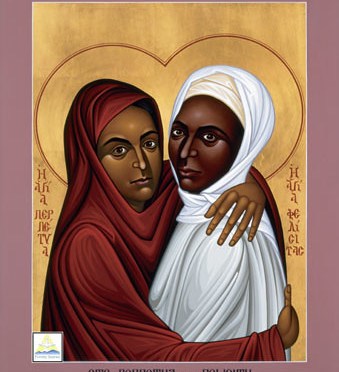
Perpetua: Faithful unto Death

Human life is valuable; we cherish ours above all else. Yet, Jesus said that God-fearing Christ-followers would willingly give up everything to enter God’s kingdom, even under severe persecution in the last day: “And they overcame [Satan] because of the blood of the Lamb and because of the word of their testimony, and they did not love their life even when faced with death.” (Revelation 12:11) Here, you’ll meet such a martyr who had much to lose but infinitely more to gain: third-century Vibia Perpetua.

Twenty-two-year-old Perpetua, who had a breastfed infant son, had recently completed her discipleship and been baptized when she was condemned to die in the arena for her allegiance to God and Christ. Understand that her discipleship and martyrdom occurred when cheap grace, with its self-centeredness, and today’s ‘get-saved-quick’ culture, would have been unfamiliar concepts. Discipleship often took up to three years and required close mentoring and observation to ensure that the trainees (catechumens) truly understood the potential cost of their faith before being admitted to the Christian community and, presumably, God’s kingdom.

Perpetua weighed the costs and chose to relinquish all earthly pleasures for heavenly joys beyond imagination, even though she was offered the chance to keep her life and her infant son by denying Christ. What you’ll read now is from her diary, which was completed by an anonymous eyewitness and friend after her death.

  • Sentenced to death for becoming a slave to Christ: “Hilarianus passed sentence on all of us: we were condemned to the beasts, and we returned to prison in high spirits.”
  • Great joy and evangelism: “Some days later, an adjutant named Pudens, who was in charge of the prison, began to show us great honor, realizing that we possessed some great power within us. … By this time the adjutant who was head of the [jail] [became] a Christian.”
  • Death march: “… it was chosen that their sex might be matched with that of the beast. So they were stripped naked, placed in nets and thus brought out into the arena.”
  • Out with the old, in with the new: “… the heifer tossed Perpetua and she fell on her back. Then sitting up she pulled down the tunic that was ripped along the side so that it covered her thighs, thinking more of her modesty than of her pain. … She screamed as she was struck on the bone; then she took the trembling hand of the young gladiator and guided it to her throat.”

Perpetua showed that no one would willingly die for something they didn’t truly believe in. The apostles and early church fathers wouldn’t have lied about the good news of God’s kingdom out of fear of being held accountable by their peers. This should make you think about what’s ahead while you still can. You might wonder, “Ron! Where’s the power button to turn on the kind of faith Perpetua had?” Let’s find out next time!

Blessings and peace,

Dr. Ron Braley

God’s Names & Attributes

Father of lights. Father of spirits. Creator, daddy, healer, and provider. All label and describe the One who was, is, and is to come. And, as He is, God cares for His children as no other. What follows is a sampling of God’s many attributes, starting with His name.

  • God’s name. Hebrew YHVH is His formal name, usually pronounced as Jehovah or Yahweh. Conversely, the Bible mentions ‘in the name’ of God or Christ. Just ending a prayer “In Jesus’ name!” is not what this means—it’s their power, character, and authority by which followers must operate.
  • Creator & Father. “This is the account of the heavens and the earth when they were created, in the day that the LORD God made earth and heaven.” (Genesis 2:4)
  • Daddy. One of the coolest names of God is Abba, which means ‘daddy’ or ‘papa:’ “And He was saying, “Abba! Father! All things are possible for You; remove this cup from Me …” (Mark 14:36)
  • King/Lord. “The God who made the world and all things in it, since He is Lord of heaven and earth, does not dwell in temples made with hands.” (Acts 17:24)
  • Shepherd (YHVH Rohi). Psalm 23:1-3 reflects this attribute: “The LORD is my shepherd, I shall not want.  He makes … He leads … He restores … He guides …”
  • Healer (YHVH Rapha). Exodus 15:26 states “If you will give earnest heed to the voice of the LORD your God, and do what is right in His sight, and give ear to His commandments, and keep all His statutes, I will put none of the diseases on you which I have put on the Egyptians; for I, the LORD, am your healer.”
  • Provider (YHVH Jireh). God gives so many things, including food, shelter, money, transportation, and salvation.
  • Savior. We see the saving hand of YHVH through His Son, whom we call Jesus, who obediently came to earth, lived as a human, died a horrible death, and was raised by the Father to be the first of many who would be raised on the last day: “We have seen and testify that the Father has sent the Son to be the Savior of the world.” (1John 4:14)
  • Judge. YHVH’s Son will judge everyone at the end of this age. Some will then enter eternal life. Others will experience eternal destruction (2 Corinthians 5:10; Matthew 25:31-46): “Therefore having overlooked the times of ignorance, God is now declaring to men that all people everywhere should repent, because He has fixed a day in which He will judge the world in righteousness through a Man whom He has appointed, having furnished proof to all men by raising Him from the dead.” (Acts 17:30-31)

Summary. God can be Father, Daddy, Creator, Healer, Provider, and Savior. Is He yours? Next time, we’ll dive into the complex topic of divorce. Meanwhile, remember the Father of Spirits and honor Him appropriately.

God’s blessings and peace,

Dr. Ron Braley, MDiv, DMin.