
Tag Archives: suzerain-vassal

Covenant Revisited: Part II

Last time, I introduced the covenant we can have with God. Here, we continue exploring the two-way relationship with the Father through faith in the Son and by fulfilling our part of that agreement.

Quick review. The Old Covenant relationship was modeled after the human suzerain-vassal (lord-servant) treaty of Abraham’s time. The New Covenant connection to the Father through the Son is a continuation because the Father, the Son, and the mission and terms remain the same in both.

Terms. God’s obligation was to send a savior and to love people (John 3:16; 1 John 4:19). He has honored the terms and continues to keep close to Him anyone who chooses to remain (John 10:27-29 and 15:4-10; Romans 8:38-39). Jesus expects devotees to openly profess Christ to others (Matthew 10:32), to confess sins and repent, and to bear one another’s burdens (James 5:13-16). They must honor the Father with everything they are and have, in complete devotion, and love one another charitably (Matthew 22:37-40). Loving actions born of faith prove allegiance to the Father through the Son (e.g., John 14:15 and 21; 15:8). Finally, Christ-followers are obligated to grow in spirit and to make disciples who, in turn, create more disciples (e.g., Ephesians 4:11-16 and Matthew 28:18-20).

Blessings. God’s blessings for those He knows include receiving His Spirit now and partnership in the age to come. However, curses also await those God does not know—anyone who has rejected Him, whether intentionally or unintentionally. Knowing God isn’t enough—He must ‘know’ us by our obedient love (1 Corinthians 8:3).

Curses. Refusing or walking away from a relationship with God carries negative consequences. For instance, Jesus teaches that anyone who does not obey the call to be charitable to others will face judgment and destruction (John 15:6; Matthew 25:41-46). The same fate awaits those whose practices oppose God’s standard. The Psalmist David calls for the unrighteous to be removed from the Book of Life (Psalm 69:28). Similarly, Jesus tells John that He will not remove the names of the righteous from the Book (Revelation 3:5). Finally, the names of those who will choose poorly and align with the end-times Antichrist will be absent from it (Revelation 13:8 and 17:8).

Devote and stay. A fruitful and continuing relationship demands that both parties remain in and true to the agreement. The covenant with the Father through Christ is no exception. The language used to denote the need to remain in a relationship with the Father refers to staying put. In scriptures such as John 15:4-10, Jesus explains the need to stay with the Father and the Son, sometimes using conditional statements that insist people can choose to remain or leave. The apostle John continues the theme in 1 John 4:16.

In summary, your Creator has called you back to Him through Jesus. It’s your turn: devote yourself, be charitable, and stay. Next? The dangers of spiritual emptiness and its cure.

Blessings and peace,

Dr. Ron Braley (MDiv; DMin)
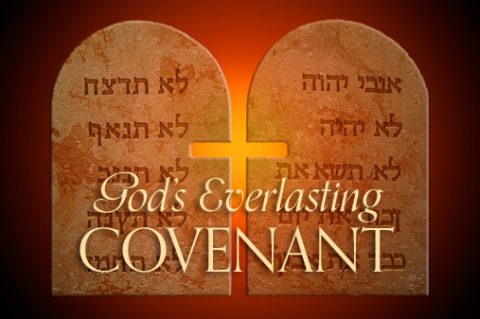
Covenant Revisited: Part I

God’s children are in a covenantal relationship with Him. It’s a committed, faithful bond in which God graciously promises to be with and for His people, and they respond with trust, obedience, and devotion. It’s not merely a contract but a living relationship marked by love, loyalty, and ongoing renewal. We’ll further unpack God’s relational nature and the covenant with Him in the next two articles, updated from the original 2021 publication.

God has sought partnership with His creation since the beginning of human time, when He charged the first man, Adam, with caring for what He had made. Adam cultivated the garden and named the animals (Genesis 1:26-30 and 2:15-20). From then on, a relational God who endowed humans with the ability to choose Him has regularly sought “I will if you will” engagements.

Probably the earliest example of a two-way covenant with God was the one He established with Abraham. In Genesis 15:1-21 and 17:1-14, we learn that God entered into a relationship with Abraham to fulfill a promise to provide a way back and to redeem creation after Adam and Eve’s rebellion. The covenant was based on an ancient Hittite suzerain-vassal framework that outlined the relationship between the lord of the land and its occupants. The lord demanded complete devotion and allegiance, along with a tithe (10%) of what the land produced. In return, subjects received protection and provision. This was the standard arrangement in Abraham’s time and included a preamble listing the parties involved and a historical prologue providing the “basis of obligation.”

Furthermore, the covenantal agreement included stipulations (terms and conditions), blessings for obedience, and curses for disobedience. Regular readings of the treaty were necessary to keep it foremost in participants’ minds. That God used it should come as no surprise, given that Father and Son have always employed human language, practices, and figures of speech in communicating with us. The lord-servant arrangement was what Abraham knew, and it would have made sense to him. God continued what He had started by reaffirming the agreement through Moses 500 years later.

God remembered His covenant with the people of Israel when they were captives in Egypt (Exodus 2:24). After their rescue by Moses, God confirmed the treaty using the same suzerain/vassal framework:

1.         Preamble/Title: “I am Yahweh your God . . .”          

2.         Prologue: “. . . who brought you up out of the land” (provides obligations and motive).

3.         Stipulations/Obligations: “You shall have no other gods before me. . . .”

4.         Periodic reading of the treaty.

5.         Witnesses.

6.         Curses and blessings.

Additional covenantal artifacts exist in scriptures such as Deuteronomy 4:32-40, 6:4-25, and chapter eight.

In summary, a God who exercises choice created humans with the same ability, and He sought reciprocal relationships with willing participants in the Old Covenant (Old Testament). Next time, we’ll see that this is still the case in the New Covenant.

Blessings and peace,

Dr. Ron Braley (MDiv; DMin)

The Covenant with God: Part I

Last week, I presented an exciting riddle about 3,000 souls lost, gained, and then lost again (on American soil). I also mentioned the related relational framework (covenant) that may dictate the presence or absence of God’s provision and protection. We’ll unpack it further in this and next week’s articles.

God has sought partnership with His creation from the beginning of human time when He charged the first man, Adam, with caring for what He had made. Adam cultivated the garden and named the animals (Genesis 1:26-30 and 2:15-20). From then, a relational God who endowed humans with the ability to choose Him has regularly sought “I will if you will” engagements.

Probably the earliest example of a covenantal relationship (two-way partnership with terms and conditions) with God was what He shared with Abraham. In Genesis 15:1-21 and 17:1-14, God engaged him to fulfill a promise to provide a way back and redeem creation after Adam and Eve’s rebellion.  The relationship was based on an ancient Hittite suzerain-vassal framework that outlined the arrangement between the lord of the land and its occupants. The lord demanded complete devotion and allegiance and a tithe (10%) of what the land produced. His subjects received, in return, protection and provision. It was the standard arrangement in place at Abraham’s time, and it had a preamble that listed affected parties and a historical prologue providing the “basis of obligation.” 

Furthermore, the covenantal agreement listed stipulations (terms and conditions), blessings for obedience, and curses for disobedience.  Regular readings of the treaty to keep it first and foremost in the participants’ minds was necessary.  That God used it should come as no surprise considering that Father and Son have always employed human language, practices, idioms, etc., in communicating with people.  The lord-servant arrangement was what Abraham knew. It would have made sense to him. God continued what He had started by reaffirming the agreement through Moses 500 years later.

God remembered His covenant with Israel when the people were captives in Egypt (Exodus 2:24). Upon their rescue via Moses, God confirmed the treaty using the same suzerain/vassal framework:

1.         Preamble/Title: “I am Yahweh your God . . .”          

2.         Prologue: “. . . who brought you up out of the land” (provides obligations and motive).

3.         Stipulations/Obligations: “You shall have no other gods before me. . . .”

4.         Periodic reading of the treaty.

5.         Witnesses.

6.         Curses and blessings.

Additional covenantal artifacts exist in scriptures such as Deuteronomy 4:32-40, 6:4-25, and chapter eight.

In summary, a God who exercises choice created humans in His image, and He sought reciprocal relationships with willing participants in the Old Covenant (Old Testament). Next week, we’ll see that this is still the case in the New Covenant (New Testament).