Tag Archives: heavenly armor

Heavenly Armor: Part Two

In part one, we learned that evil is everywhere and that we have protective armor and a spiritual sword. The armor consists of these elements:

  • Belt of Truth: Girds us with Christ’s foundational truth.
  • Breastplate of Righteousness: God’s standard that keeps us on the narrow path.
  • Shoes of the Gospel of Peace: The good news of God’s Kingdom being shared with humanity.
  • Shield of Faith: Guards us against fear, doubt, and anxiety.
  • Helmet of Salvation: Confidence in future rescue for those who seek God’s righteousness.
  • Sword of the Spirit: The Word of God that helps discern God’s truth from the lies of the Evil One.

Here, we’ll explore the Shield of Faith, which is built on belief—confidence. The apostle Paul explains that this enables us to hold firmly to the unseen aspects of our Christianity, whether through the Spirit or fulfilled prophecies (Hebrews 10:39 & 11:1). We trust in God and Christ because of what they’ve done, are doing, and will do. It’s like this: you strongly believe you’ll get a paycheck because you have received one consistently in the past. But why do we need a Shield of Faith?

A Shield of Faith helps us stay focused on what we know to be true. It enables us to persevere through trials as we pursue the ‘crown of life’ that awaits God’s children (James 1:12). Faith-driven perseverance also builds character and hope (Romans 5:3-4). Without a heavenly Shield of Faith, we would crumble in despair and doubt, unable to endure life’s struggles. Therefore, we need this shield to overcome difficulties and live spiritually. How do we attain this Shield of Faith?

Experience is essential for developing strong faith, and it can take various forms, such as biblical writings and the proclamation that God’s Kingdom is accessible. “But these [signs performed by Jesus] have been written so that you may believe that Jesus is the Christ, the Son of God; and that believing you may have life in His name.” (John 20:31) Additionally, a healthy fear of God and related knowledge are faith-builders: “The fear of the LORD is the beginning of wisdom, And the knowledge of the Holy One is understanding.” (Proverbs 9:10)

Additionally, we become stronger in everything through discipline; building faith is no different. Study the Bible. Don’t just read the words—study and seek understanding through prayer! Also, pray regularly to adore and thank God, intercede for yourself and others, and confess sinful behavior. Practice your faith through self-control and charity. And when you lack faith (perhaps due to discouragement, doubt, or spiritual immaturity), pray for faith-boosting wisdom (James 1:5-6).

In summary, a Shield of Faith is crucial for overcoming doubt and fear and for fueling our perseverance as we pursue the ‘crown of life.’ It is developed through experiencing God in various ways and through practice. Next time? Let’s explore the fears of a looming third world war from a biblical perspective.

Blessings and peace,

Dr. Ron Braley, MDiv, DMin.

Heavenly Armor: Part One

Evil is everywhere! For example, wicked spiritual beings in an unseen realm influence people and governments: “For our struggle is not against flesh and blood, but against the rulers, against the powers, against the world forces of this darkness, against the spiritual forces of wickedness in the heavenly places.” (Ephesians 6:12) Thankfully, God has provided us with various defenses and an offensive weapon to counteract trouble: heavenly armor. Here, I’ll introduce what can keep you safe from ungodly spiritual forces. In Part Two, we’ll focus on its ‘Shield of Faith.’

Here’s an interesting fact: Paul’s description of heavenly armor is partly based on Isaiah 59:16-17, which mentions the breastplate of righteousness and the helmet of salvation (below). The context of the Isaiah reference is God arming Himself in wrath as He deals with the unfaithful. This is in direct contrast to Paul’s use of the Old Testament text, which presents heavenly armor—including salvation and righteousness—that humans can wear to repel unwanted spiritual forces. Was Paul being careless or dishonest? No, he was simply using a text that the Jews would have recognized to emphasize clothing ourselves with the same armor God used when fighting evil.

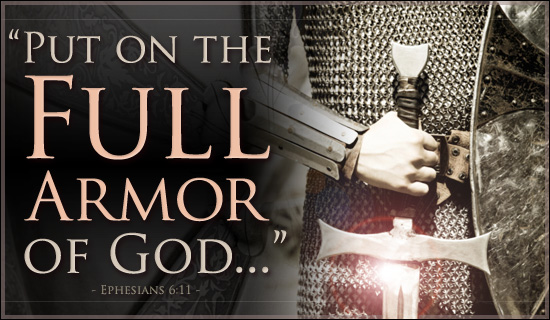
So, wear the six-piece spiritual armor described in Ephesians 6:11-13. There, Paul explains the protection God’s children automatically receive: “Put on the full armor of God, so that you will be able to stand firm against the schemes of the devil.” I want to emphasize that ALL of God’s children have access to the heavenly armor. It can be helpful to remember what God has given by imagining ourselves putting them on regularly—maybe every morning? Here are the individual pieces:

Belt of truth. Jesus Christ’s truth secures our faith and provides the foundation of the universal Christian Church.

Breastplate of Righteousness. Just as the breastplate protects the physical heart, the righteousness of Christ protects our mind (spiritual heart.

Shoes of the Gospel of Peace. When we wear them, we share the good news of God’s Kingdom brought near to people through Christ’s sacrifice and resurrection (primarily through behaving as Kingdom citizens).

Shield of Faith. Faith protects us from fear, doubt, or anxiety. God provides more of this when we’re low.

Helmet of Salvation. With it, we can take every thought captive and avoid sinful pursuits, knowing we will be rescued (saved) from God’s wrath.

Sword of the Spirit. This ‘offensive’ weapon is “able to judge the thoughts and intentions of the heart,” according to Hebrews 4:12. With it, we can discern God’s truth from the lies of the Evil One.

In summary, God has given us the good news of His Kingdom (the gospel of peace), His standard (righteousness), and His ultimate rescue (salvation). We also have the truth Christ taught, protection from doubt (faith), and God’s truth (to combat falsehoods). Next time, we’ll explore faith and the ‘shield of faith’ more deeply before explaining righteousness further.

Blessings and peace,

Dr. Ron Braley, MDiv, DMin.