
Tag Archives: jehovah

No King but YHVH

“We have no king but Caesar!” the Jewish high priests exclaimed to Pontius Pilate, who would send Jesus to be crucified. Conversely, we experienced a flurry of ‘No Kings!’ protests on June 14, 2025, in opposition to President Donald Trump’s authoritative measures. Have a king; don’t have a king … Which is it? Like it or not, the Creator of the universe is king and owns everything, whether people demand a human king or defy any kingly rule.

The Jewish people understood the Creator’s name to be represented by the four Hebrew consonants YHVH. We who have been adopted into His family pronounce it Yehovah or Yahweh, depending on how you consider the V. The apostle Paul explained nearly 2,000 years ago that YHVH made everything and is King over all in His realm and our created world (Acts 17:24). So, the heavens and the earth are His throne (Matthew 5:34). YHVH owns everything and was recognized by the Jews as their King until about 1,000 BCE.

Selfishly, we generally want what others have. Such was the case with the 10th-century BCE Jews, who decided to be governed by a human king like other nations: “Now appoint a king for us to judge us like all the nations … Give us a king to judge us.” The LORD said to Samuel, ‘… they have rejected Me from being king over them.’” (1 Samuel 8:5-7) The Jewish people would eventually have a puppet king under the Roman leaders and then … none.

Yet, YHVH was, is, and will be King, whether humans recognize His sovereignty. Old Testament king David expressed this in Psalm 47:2 & 7: “For the Lord Most High is awesome; He is a great King over all the earth” and “For God is the King of all the earth … God reigns over the nations, God sits on His holy throne.” Similarly, New Testament Paul wrote this about YHVH, the one true King, in 1 Timothy 6:15: “… He who is the blessed and only Sovereign, the King of kings and Lord of lords.”

So, what about the future? YHVH will eventually tire of our nonsense and immoralities and redo everything. Then, His realm and ours will become one again as was the case in Eden, as we find in Revelation 22:3-5: “There will no longer be any curse; and the throne of God and of the Lamb will be in it … And there will no longer be any night; and they will not have need of the light of a lamp nor the light of the sun, because the Lord God will illumine them; and they will reign forever and ever.”

Summary. Like it or not, you have a King that is above all and rules over everything, including you and even Trump! Soon, I’ll contrast what that King loves against what He hates: What He loves, first. Meanwhile, choose your king well!

God’s blessings and peace,

Dr. Ron Braley, MDiv, DMin.
The Supernatural God: An Introduction

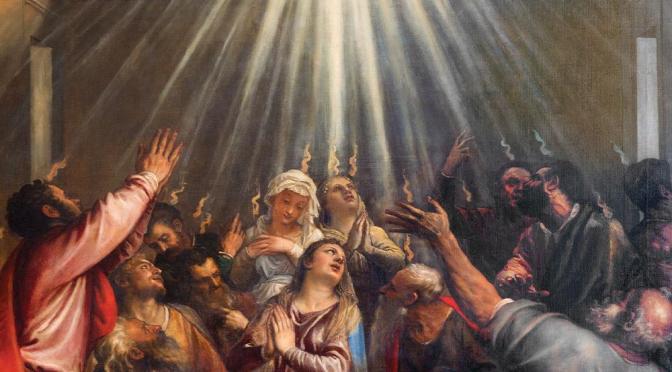
Look around. What you see exists within a single dimension. But what about what you can’t see? Are there other dimensions where beings create, advise, and influence people in this dimension? Yep!

Although humans reduce the supernatural God of creation to words and religion, there’s much more! Of course, written biblical texts inform our Christian walk. And religion helps us frame and practice our worship. But the texts and religion result from the speech and actions of a multi-dimensional supernatural God. His words were written down for people who could respond, in turn, with religious activities and right living. His actions, also documented, help us understand His nature. Regardless, the supernatural has driven what we read and do in the Christian faith. So, we’ll plumb the depths of God corporately as a heavenly council (Elohim) and individually as the Creator (YHVH).

This week, I’ll equip you to later explore Elohim, a biblical label for spiritual beings. We’ll then learn about the supernatural forces controlling earthly nations and rulers (except Israel) and how they received that authority. Finally, we’ll uncover the end-times supernatural players and events that will realign everything according to the Creator’s desire. But first, let’s look at two extremes that keep us from meeting or understanding our supernatural God: words alone and emotion mistaken for the Spirit. Words first.

A real risk of “worshipping the book” and missing God entirely exists when we dismiss the supernatural, earliest Christian traditions, faith experienced, and reason. I’ve witnessed extremes where the supernatural Spirit has no place in today’s Christianity. The supernaturally influenced Bible itself is elevated above practicing the precepts contained within, such as justice, love, and mercy. And countless rules, regulations, and bad theology abuse people and keep others from God’s Kingdom. On the other hand, ignoring the words in favor of pursuing perceived supernatural stuff alone is just as bad.

Without the Bible to frame and direct our faith, anything goes. I’ve witnessed severe abuses where people have barked, laughed hysterically, claimed to see gold dust, smelled stuff, fallen over, babbled unproductively, and much more. Add to the list fraudsters and adulterers because congregants were too Scripturally ignorant to recognize evil. However, there’s a better position where the supernatural God driving the creation of the words continues to interact spiritually with people who strive to understand and apply them correctly. In other words, balance is critical to rightly perceiving our supernatural God and imitating Him.

In summary, what we see in this dimension is a fraction of what exists here and in others—much of which drove what we read in the Bible and still influences people. In the following article, we’ll look closer at Elohim, that single-minded, one-mission group of supernaturals led by YHVH (Jehovah), God the Creator. We’ll also dig deeper into the gods that must take a backseat to Him.

Blessings and peace,

Dr. Ron Braley, MDiv, DMin.
God – the Heavenly Hierarchy

The word ‘God’ is used in two basic ways in the Bible.

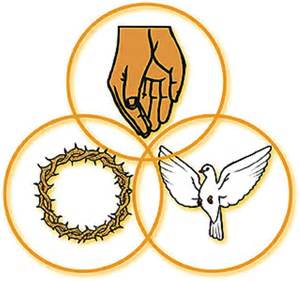
On one hand, it’s the corporate name given to the Father, Son, and Spirit who have worked together in the creation, care, and judgment of mankind. This is Hebrew el-o-heem – our God in plurality from the beginning (i.e. Genesis 1:1-2 & John 1:1-14).

Different beings labeled as ‘God’:
Father: the father of spirits (Hebrews 12:9), the father who gives us the Spirit (Luke 11:13), and the father who forgives (Matthew 6:14-15). The name of our Heavenly Father of Spirits: Jehovah. We, beginning with the Jews, are instructed to call Him by this name.

Son: came to earth and took human form (spirit in body like us) to become the sacrifice for all. He has earned the right to rescue us from judgment. He sits in the kingdom of heaven at the right side of God the father (Ephesians 1:19-20).

Spirit: described as the ‘breath of god’, He is currently on earth to guide and instruct those who follow the Christ (John 16:13).

But, they’re corporately the same just like company employees or a husband and wife may be of one mind. Jesus pointed this out when claiming that He and His father were one and the same (John 14:11).

On the other hand, God has been used as a title for our heavenly father, who is also labeled as the father of spirits. This makes sense considering His creation of the spirit in mankind.

Unfortunately, manmade doctrine has distorted our understanding of God – His character and name, and hierarchy alike. Jehovah, our creator, will one day judge all spirits for how they used the body while on earth whether for evil or good works. We’d better figure out who He is and what He wants . . . and in a hurry!

Keep an eye out for “Finding Answers to Stuff Churches Don’t Discuss!” scheduled for a mid-2015 publication. There, you’ll find roughly 60 topics related to daily life (such as sex, religion, finances, tattooing, and everything in between!) along with practical application of God’s guidance for navigating those difficult waters!

And, for a very comprehensive and detailed study of the very important topic of God’s judgment to come and being rescued from it, feel free to read my 2011 guide titled, “Finding the End of the World” available at Amazon, Barnes and Noble, and from http://www.ronbraley.com in paper and e-book formats. In the guide, you’ll find roughly 500 pages of building blocks to help you do your own complete and unbiased study based on Scripture and history!