Tag Archives: The Revelation

Apocalyptic Poster Children

I’m an ‘end times’ dude. Not an imperious date-setting soul, but someone interested in teaching people easy-to-understand truths about the end of this age and all it comprises. I published “Finding the End of the World” to do just that in 2011. Here, I’d like to clear up confusion about Revelation’s letters to seven churches to address real people with real problems.

Clearing the fog. Some teach that biblical history is divided into eras (dispensations) representing God’s interaction with people. Furthermore, historical dispensationalists insist that the seven churches of Revelation (chapters two and three) represent particular church ages from the apostles to Christ’s return. Don’t buy into it. The letters contain admonishments and praises to existing churches—nothing more, nothing less, although we can learn from them. Let’s begin our journey by introducing John’s Revelation and the letters.

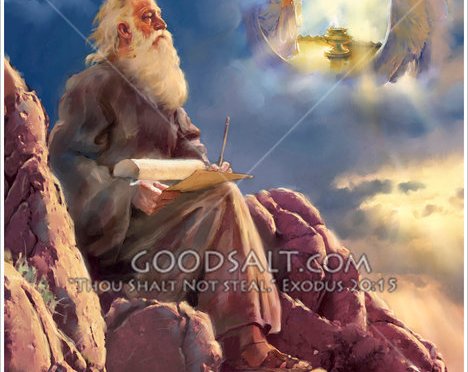
Introduction to the Revelation. In about 95 CE, Emporer Domitian exiled John (and his scribe Prochorus) to Patmos. They penned the Revelation within two years until Emporer Nerva freed them. What was unveiled? Last-day events from increasing false Christs, war, famine, and earthquakes to great judgment and the new age. Chapter one introduces the Revelation, chapters two and three contain instructions to seven of John’s Asia Minor churches, chapters 4 and 5 prepare to unveil the future, and chapters 6:1 through 22:5 detail a future hinted at by Jesus 70 years beforehand (e.g., Matthew 24-25). Now, the letters.

The Letters.

  • Ephesus. This ‘great’ city had an assembly that refused to follow heretics but whose love for God, Christ, and each other had grown cold.
  • Smyrna. This ‘loveliest’ city was home to prideful Christian-persecuting Jews (‘Synagogue of Satan’). Saints would have to persevere through a short tribulation to inherit God’s Kingdom.
  • Pergamum. Called “Satan’s throne,” it was the pagan worship center of Asia. Heresies and immorality abounded, as did self-indulgence. Jesus said, “Change!”
  • Thyatira. True Christians refusing paganism and immoralities couldn’t buy and sell in the marketplace, although prophetess Jezebel misled some to compromise. Others standing fast would avoid God’s future wrath.
  • Sardis. A legendarily wealthy and degenerate city with a dead church (except for a few). Overcome or be erased from the Book of Life!
  • Philadelphia. City of brotherly love, city of earthquakes … and another Synagogue of Satan against the Church. Believers would face tribulation but be empowered by Jesus to persevere.
  • Laodicea. “Lukewarm Laodicea” existed between hot and cold springs, producing undesirable lukewarm water. It was wealthy, self-centered, indifferent, and lukewarm in faith. Jesus to Laodicean Christians: “Overcome and rule with Me!”

Summary. God gave Jesus warnings and commendations to send to overseers of seven Asia Minor churches. They were contained in seven letters (Revelation chapters three and four). The immoral would suffer God’s wrath, while overcomers would inherit God’s Kingdom. Read and heed! What’s next? Let’s explore godly superstars on the fringe. In the meantime, be like the assemblies of Smyrna or Philadelphia or suffer the consequences.

God’s blessings and peace,

Dr. Ron Braley, MDiv, DMin.
The Mark of the Beast: Part II (What it means)

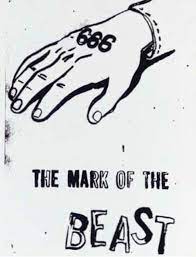
What exactly will the mark of the beast be? No one knows for sure, but there are a couple of things to consider:

1.                It will be a way of identifying someone who has intentionally aligned with the Antichrist or the authority (Revelation 13:18).

2.                It may be something physical on the right hand or forehead. Or it may instead indicate something you know (forehead analogy) and do in response (symbolized by the hand) (cf. Exodus 13:9 & 16, and Deuteronomy 6:8 & 11:18).

When trying to understand anything biblical, we must consider and compare all related Scriptures. The mark is no exception. God used the hand and forehead analogy when He gave the Israelites specific commandments after the exodus from Egypt (cf. Exodus 13:9 & 16 and Deuteronomy 6:8 & 11:18). For instance:

And it shall serve as a sign to you on your hand, and as a reminder on your forehead, that the law of the LORD may be in your mouth; for with a powerful hand the LORD brought you out of Egypt. Therefore, you shall keep this ordinance at its appointed time from year to year. —Exodus 13:9-10.

He told them to remember how He’d saved the nation and to remember His commandments forever. God used the tangible and familiar “forehead” to represent the receiving and committing His commandments to memory. Likewise, He used the “hand” as an identifier for acting upon that knowledge. The learning, retaining, and acting upon God’s commandments would prove allegiance to Him. So, the significance of forehead and hand may be a pledge of allegiance through the learning, agreeing, and acting upon a particular set of commandments initiated by the Antichrist’s authority.  So, what about the number—666?

The number is that of a human, and this one will be one part of an unholy trinity: Satan, Antichrist, and False Prophet (see Revelation chapter 13). The number 6 historically represented a human, whereas the number 7 represents God, indicating perfection. Because of this and the unholy trinity mentioned above, I suggest the number 666 represents some identification or sign of allegiance that will come from the Antichrist (empowered by Satan) through the False Prophet.

An alliance with the unholy trinity may enable buying and selling during the time of the Great Tribulation, but it will bring personal destruction by God. Therefore, we must increase our faith by learning of God’s ways to avoid end-times deception and should, therefore, watch out for anything that may require ungodly allegiance.

Next week, we’ll continue our end-times journey by comparing what Jesus told His disciples on the Mount of Olives to what He revealed to John about 60 years later.

Blessings and peace,

Dr. Ron Braley

John the Revelator – a Timeline

John, the son of Zebedee, was a disciple who humbly proclaimed Jesus’ love for him (John 13:23; 19:26; 20:2; 21:7 & 20). He was an obedient apostle and a caring surrogate son to Mary, Jesus’ mother. He penned his own gospel account, several letters to the early Church, and unveiled things to come. But when and where did he do all this??

First, John lived during Jesus’ time. Biblical scholars agree that Jesus was born in approximately 4 BCE. So, it stands to reason that John would’ve been born near this time, although we don’t know precisely when. Second, Jesus was 29 years old (about 30 (Luke 3:23)) when He called John to discipleship. John partnered with Jesus during his one-year ministry from just before Passover until the following Passover (see my article “Why so Long??” from August 12, 2020).

He then became an apostle when Jesus sent him and the other disciples to make more disciples (Matthew 28:18-20). Let’s assume this was about 26-27 AD. It would also be the year when Jesus charged John with caring for Mary (John 19:26-27), was crucified, and then raised by the Father.

Apostle John then went beyond Jerusalem to spread the good news of God’s Kingdom. He started the church in Ephesus (in modern-day Western Turkey) and likely started, or was instrumental in creating, others he would later oversee: Smyrna, Pergamum, Thyatira, Sardis, Philadelphia, and Laodicea. John and Mary settled in Ephesus until he was exiled to the Island of Patmos, where he continued to oversee the other churches and received his revelation from Jesus.

Emperor Domitian, who hated Christianity, exiled John to Patmos (a prison colony) in 94 AD, where he stayed for two years until freed by Emperor Nerva in 96 AD. Early Church Father Eusebius, who defers to Irenaeus, confirms this. John then returned to Ephesus, where he continued to care for Mary until her passing. John lived to be just over 100 years old. We know much about his life because of Prochorus, one of the 70 disciples Jesus sent out who later became John’s scribe.

So, what about his gospel account and three letters to the early Church? He wrote the gospel between 90 – 100 AD in Ephesus before being exiled to Patmos or immediately afterward. The same holds for his three epistles, although he most likely wrote them after returning from exile. What follows is an abbreviated and approximate timeline:

  • 4 BC: John’s birth
  • 26 AD: Called to discipleship
  • 27 AD: Charged with caring for Mary; becomes an apostle
  • 94 AD: Exiled to Patmos
  • 94-96 AD: Receives Jesus’ revelation
  • 96 AD: Freed; Returns to Ephesus
  • 90 – 100 AD: Writes, from Ephesus, his gospel and three letters to the Church

What about next week? I’ll tell you the woeful tale of “the Ghost Pepper that wasn’t!”

Blessings and peace,

Ron Braley