
All posts by ronboviscous

I'm a husband, father, grandfather, and doctor of the Church (Christian Leadership and Renewal). I'm passionate about the things of God, especially discipleship - the one thing the church is to equip its members for but typically doesn't. That's why I formed Finding Discipleship (https://www.findingdiscipleship.org) in 2010. Finally, in my love for the things of God, I am a teacher and disciple-maker. Find out more at https://www.ronbraley.com.

Puttin’ the ‘Be’ Back Into Be-Attitudes!

Most of us have heard of the ‘Beatitudes’ (Matthew 5: 3-11 or Luke 6:20-23). You may have even heard them read recently in liturgies. But hearing them reminded me that we may not fully understand them or the action-and-reward implications. And what is ‘Blessed?’ Who are the ‘poor in spirit?’ We’ll unpack those things as we explore each Beatitude, which I call “Be-Attitudes!”

Some religious teachers say the blessed in the Beatitudes are ‘happy people.’ In other words, ‘blessed’ means happy. For instance, that would mean that the ‘blessed who mourn’ in Matthew 5:4 are happy in their mourning. This isn’t necessarily true. Happy depends on happenstance—external influences. The mourner could be joyful, which comes from inside by the Holy Spirit, despite sorrow or tribulation. However, in the case of the Beatitudes, the blessed receive a reward for their ‘being.’

According to the original language and context, a blessing is something received. So the blessed have received something. For instance, in the beatitudes, the blessed are recipients of God’s good favor in various forms like His Kingdom, rule over the earth, satisfaction, mercy, and the right to be His child. Let’s look at each Beatitude in more detail, and you’ll see what I mean.

  • “Blessed are the poor in spirit, for theirs is the kingdom of heaven.” People more interested in the things of the spirit than earthly riches will receive something beyond wealth: God’s Kingdom.
  • “Blessed are those who mourn, for they shall be comforted.” God’s favor in comfort received (see also 2 Corinthians 1:3-4).
  • “Blessed are the gentle, for they shall inherit the earth” God’s favor in power and authority received.
  • “Blessed are those who hunger and thirst for righteousness, for they shall be satisfied.” God’s favor in righteousness received.
  • “Blessed are the merciful, for they shall receive mercy.” God’s favor in mercy received.
  • “Blessed are the pure in heart, for they shall see God.” God’s favor in His presence for purity—removing all that hinders His Spirit.
  • Blessed are the peacemakers, for they shall be called sons of God.” God’s favor in receiving adoption into His family for those who seek peace, not violence (including in religion!).
  • “Blessed are those who have been persecuted for the sake of righteousness, for theirs is the kingdom of heaven. Blessed are you when people insult you and persecute you, and falsely say all kinds of evil against you because of Me.” Like verse 3, these persevering folks will receive the Kingdom.

Summary: The blessed aren’t always happy but receive something more valuable than emotion. In the Beatitudes, they receive from God because they persevere and bless others according to His desires for peace, purity, and perfection. Next, we’ll prepare for Christmas by revisiting my December 2021 ‘Christmas, the Retold Story.’ Listen and do more and speak less in the meantime.

Blessings and peace,

Dr. Ron Braley, MDiv, DMin.

Experiencing Thanksgiving

Family. Turkey. Stuffing. Gravy. Pies. Tums! There are so many things to be thankful for, and the Thanksgiving holiday is here! Expressing thanksgiving is good for our relationships and mental health. And it’s what God desires: “… in everything give thanks; for this is God’s will for you in Christ Jesus.” (1 Thessalonians 5:18). Although people have always been thankful, the formal holiday stems from the gratitude early Spanish and European settlers showed to the indigenous American Indians for feeding them and acclimating them to a new land and new ways.

It’s hard to say precisely when the first Thanksgiving occurred. One account pinpoints the autumn of 1621 when “at least 90 Wampanoag joined 52 English people at what is now Plymouth, Massachusetts, to mark a successful harvest.” Another group in Berkeley Hundred (now Virginia) celebrated their arrival to the new world as early as 1619. Supposedly, the meal consisted of scant oysters and ham. But they were thankful even without abundant turkey, ham, pie, cranberry sauce, etc. We find another, even earlier, Thanksgiving celebration in 1565 with the Spanish settlers and the Seloy tribe. But who established the official Thanksgiving holiday, and when?

The first Federal Congress passed a Thanksgiving Holiday resolution on September 28, 1789. Consequently, President George Washington proclaimed Thursday, November 26, 1789, a day for public thanksgiving. But President Abraham Lincoln made the holiday a regular, recurring event (the last Thursday in November) in 1863. Of course, commerce prevailed, and President Franklin D. Roosevelt moved Thanksgiving to the second-to-last Thursday of November in 1939 to lengthen the Christmas shopping season.

Regardless, we must always give thanks for everything that is benevolent and brings innocent joy, including each other, God’s provision and mercy, our jobs, and every breath we take. As a community, we must express thanksgiving for those who protect us. Decision-makers who govern deserve our thanks, too. And in our gratitude, we must show love and be thankful when we receive it. This is worship, and it brings healing and expresses our love for God while healing our relationship with Him.

Worship comprises ‘worth’ and ‘ship.’ It means to give worth to what we value. We express worthiness to God by acknowledging His protection, provision, salvation, comfort, grace, and mercy. How should we do this? By showing (not just telling!) gratitude. In other words, ‘being’ thankful through our actions. Purity. Prayer. Loving others as God loves. Sacrifice. Note how worship is full of action, not words or music.

Summary: Have a blessed Thanksgiving Holiday! Be thankful and enjoy the festivities. But don’t stop there: be grateful every day through your actions. In your gratitude for what you have received from God, give the same to others. Next, let’s put the ‘Be’ back into ‘Be-Attitudes’ as we learn about righteous character and the benefits received through God’s favor. Until then, give more than you receive.

Blessings and peace,

Dr. Ron Braley, MDiv, DMin.

The Ultimate Sacrifice

Veterans Day is upon us (November 11)! Initially set apart to honor WWI veterans, ‘Armistice Day’ became dedicated to world peace and all war veterans. Jesus taught there’s no greater love than sacrificing life for others’ sake (John 15:13). Honoring those who’ve given their lives defending others makes sense. So, please do this on the 11th! Here, I’d like to introduce folks from the Christian community who’ve sacrificed life, limb, time, treasure, and talents to serve others and present God’s Kingdom to the unchurched: martyrs, missionaries, evangelists/apostles, and helpers. Martyrs first.

Martyrs. A martyr is someone killed for their beliefs (e.g., religious). Notable Christian martyrs include Stephen, stoned to death in about 30 AD, and eleven of the twelve original apostles killed for their faith. Later, faithful Lawrence was grilled to death in 258 AD. Perpetua was a 22-year-old nursing mother killed by a wild beast in the coliseum for her unshakable faith in the third century AD. Another example is Margaret Clitherow, pressed to death in 1586 for ‘illegally’ harboring priests in her home. Others suffer hardship, even if they don’t always die for their faith.

Missionaries. Jesus said, “GO and make disciples!” (e.g., Matthew 28:18-20). Some people do this close to home. Others travel to foreign lands or new communities. We call the latter missionaries, and they often sacrifice life, limb, and significant comfort and resources to serve God. Examples include 18th-century William Carey, known as the “Father of Modern Missions.” He was the first missionary to India and translated the Bible into Bengali. And there was David Livingstone—a 19th-century Scottish physician who evangelized Africa. Speaking of Africa, Joanne and I just returned from a two-week mission to Kenya and Uganda, Africa, training about 400 church leaders in Christian Leadership and Discipleship principles.

Evangelists and Apostles. These preachers of God’s Kingdom to the yet-to-be-churched are another sacrificial group (where they preach determines whether they’re an evangelist or apostle). An apostle is sent into new communities to start new churches; evangelists usually preach closer to home. These obedient folks often undergo hardships and sacrifice comfort and familiarity to introduce God’s Kingdom to the spiritually needy here and abroad.

Humble Helpers. We also must recognize the folks who work humbly, obediently, and quietly behind the scenes to support and promote God’s Kingdom. They don’t seek recognition but deserve it because they sacrifice time, treasures, and talents! These folks are rare, accounting for less than 20% of a typical congregation! You’ll find them teaching, cooking, cleaning, greeting, fixing, mowing—serving selflessly in these and many more ways!

Summary: On November 11, remember those who’ve died for others. We should also honor the people who willingly sacrifice everything to introduce God’s Kingdom to the lost. Next, in anticipation of the Thanksgiving holiday, I’ll write about being thankful. Meanwhile, remember that God expects you to BE the Church, not DO church.

Blessings and peace,

Dr. Ron Braley, MDiv, DMin.

How do we Know – Part II: The Most Reliable Texts!

In the first part of this series, I shared evidence that Jesus, the apostles, and other biblical characters were real. I also introduced a ‘chain of custody’ to link those people with others we know lived because of their connections and writings. Here, I’ll focus on the authenticity and reliability of the contents of the Bible.

Chain of Custody. Connections between known things can bring confidence in everything in between. For instance, Jesus’ disciple was John, and Polycarp was John’s disciple. Irenaeus was Polycarp’s disciple. From Polycarp, Irenaeus learned about the apostle Matthew and his gospel. He and Ignatius quoted from Luke’s letter, which we call the Acts. Plenty of writings by Polycarp and Irenaeus exist, so Jesus and John’s existence and the biblical texts John and Matthew authored are undeniable. The texts were written and circulated far earlier than some are willing to believe.

Timing. The Old Testament was written between 1430-400 BC and translated into Greek in about 170 BC. This is the Septuagint—the ‘Scriptures’ Jesus and the apostles quoted. What about the New Testament? More than 5,000 early fragments and manuscripts date to 125 AD, only about twenty years after John wrote his gospel and pastoral letters! In 130 AD, Papias (the bishop of Hierapolis) affirmed that Mark, Peter’s scribe who wrote his gospel, confirmed the accurate reflection of Peter’s words through Mark. Finally, a collection of fragments containing twenty-three New Testament books and Irenaeus’ writings existed around the same time. Let’s consider more that lend credibility to the biblical texts, making them undeniable and highly believable.

Accuracy & Believability. Jesus and the apostles quoted the Old Testament Scriptures. After Jesus was crucified and ascended, the Jewish leaders reported (in writing) that things in the Temple stopped working, beginning about 40 years before the Temple was destroyed in 70 AD. Doors opened independently, lights would go out, and priestly lots and religious artifacts malfunctioned. Something else worth considering: if there hadn’t been common knowledge and agreement on the details in the New Testament texts, contemporaries would’ve challenged (and perhaps killed) the authors. So, they had to tell the truth. Also, about 99 percent of the New Testament can be accurately reconstructed from fragments and manuscripts. Why do I say accurately? Even after considering minor differences in the copies, only about one percent involved meanings of the texts. Finally, historical and archeological research verified at least 84 facts about places and people in the last 16 Acts chapters.

Summary: Just like the biblical players, the texts are believable (and accurate). Chains of custody and history and geology say so. What’s next? Let’s pay homage to those who’ve sacrificed time, talents, and life to bring God’s Kingdom near to others. Meanwhile, let obedience to God trump religion and tradition. Let’s have coffee together if you’re unsure of how! Questions or comments?

Blessings and peace,

Dr. Ron Braley, MDiv, DMin.
How do we Know, Part I – People, Places, & Stuff!

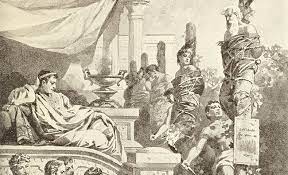
Some say Jesus is a myth and that biblical texts are fantasies. Much physical and circumstantial evidence exists to the contrary! So, I wonder what would fuel such a rejection of YHVH, Jesus, or the Bible’s contents. Regardless, I’m writing not about intentional spiritual blindness to truth but to share reasons to be confident in YHVH (God), Jesus, and biblical writings. In this first of a two-part series, we’ll consider people, places, and stuff of the Bible. In the second part, we’ll dig into why we can believe the Bible. People first.

People. My wife has a cousin who has an ex-wife. They have kids. The kids have significant ‘others.’ I don’t know the cousin, the ex-wife, the kids or the ‘others.’ But I know my wife. She knows the cousin, who knows the ex-wife, who knows the kids and so on. Through this relational chain of custody, I am confident that the cousin, the ex, the kids, and the others are real people, even though I’ve never met them. So it is with Jesus and the disciples/apostles.

Irenaeus was a Roman Christian who lived from 120-200 AD. He was a student of Polycarp, who lived from 69-155 AD. From Polycarp, Irenaeus learned about the apostle Matthew and the Hebrew version of the gospel that bears his name. He (and Ignatius of Antioch) quoted from the Acts that eventually became a Bible book. They knew about John Zebedee, one of Jesus’ disciples, because Polycarp had been John’s disciple. And, of course, apostles Matthew and John knew Jesus personally and were so sure of His death and resurrection that they willingly died for this belief. Let’s look at this chain of custody the other way around.

Jesus knew John. John knew Polycarp. Polycarp knew Irenaeus. Irenaeus, therefore, attests to at least Jesus, John, Matthew, Polycarp, and Ignatius’ existence besides validating what would become biblical texts. But, in case that’s not enough, historian Josephus wrote about Jesus, His half-brother James, and John the Baptist. If you need more, let’s consider confidence-building places and stuff.

Places & Stuff. The pools of Bethesda from biblical texts are a real thing. An Assyrian obelisk validates Jewish King Jehu mentioned in the Old Testament. Also written in the testament (2 Kings 20:20) is mention of existing Hezekiah’s tunnels. Jesus and the disciples (all Jews) understood the texts as true. And real people like the treasurer Erastus (Romans 16:23) corroborate those biblical texts. There’s more, so much more!

Summary: Real people validated by history and eyewitnesses attest to Jesus, His disciples, and biblical texts. Perhaps we should take seriously what they said about God and morality! In the second part of this two-parter, I’ll focus more on the believability of those biblical texts we call ‘the Scriptures.’ Meanwhile, love God, not religion.

Blessings and peace,

Dr. Ron Braley, MDiv, DMin.

Make a Difference!

God didn’t create us just to consume resources, tend only to ourselves, and then pass out of this life without making a difference. He made us to be like Him. He loves; we’re to love. He’s merciful; we’re to be merciful. He created us for partnership and to make a difference while we can—not suck air and be selfish. Check out what Paul wrote in Ephesians 2:10, and you’ll see that we’ve been created for good works. Read Matthew 25:31-40; you’ll discover the demise of all who don’t do them. By the way, Luke 10:28 tells us that we will live [spiritually] if we honor God and love people through our works.

Anyway, I thought, “Hey Ron—what examples of making a positive difference can you think of?” As it turns out, there are plenty! I’ll offer a few to encourage you. What follows is just a sample—plenty of organizations and people in Taylor and around the world make quite a difference. I’m not playing favorites (although I AM partial to Shepherd’s Heart!).

A Lucky Starfish. Do you ever feel that nothing you do matters? A boy once walked the beach throwing washed-up starfish back into the water. A man observing him yelled, “There are so many! You’ll never make a difference!” The boy responded while throwing another starfish into the sea: “Well, it matters to that one!” The smallest efforts can have the biggest impact!

The Good Samaritan. Ancient Jews and Samaritans were enemies. Yet, a Jewish Jesus spoke about a charitable Samaritan who found a man beaten, robbed, and left for dead (even bypassed by a Jewish priest) and nursed him back to health. I guess we CAN all get along!

“Good News” by Isabella Tebeau. Looking for encouragement and examples of positive differences and influences? Check out Isabella’s Taylor Press article, which has challenged us to “Always remember there is goodness everywhere and kindness matters!”

Shepherd’s Heart. Our renowned food pantry and thrift shop feeds hundreds of people every week. Money donated by good-hearted folks and earned in the thrift shop continues to provide utility relief for families in danger of being without electricity or water. Shepherd’s Heart certainly reflects God’s heart!

Anchored in Grace Fellowship. Albert and his small crew love the community in big ways! This fantastic church provides hygiene items such as soap and toothpaste to hundreds of people each year. They also often come to the rescue with socks, gloves, food, blankets, and school supplies. Look no further for a model of true love!

Summary: The world can seem dark and unloving at times. But there are always bright spots of love and difference-making. The following article will be the first of a two-parter addressing how we can be confident of the biblical texts and the people in them, including Jesus. Until then, be kind and pure.

Blessings and peace,

Dr. Ron Braley, MDiv, DMin.

I Pledge Allegiance to Who?

Remember when we always said the Pledge of Allegiance (at school, for instance)? “I pledge allegiance to the flag of the United States of America . . . one nation under God . . .” That was when we were a godly nation. What would make us godly again? Pledging allegiance to the One we call God before allying ourselves with anything or anyone else or chasing self-centered passions. But what would that look like? What would God (YHVH) require of anyone (and, collectively, a nation) wanting to be His ally? Good question—let’s find out!

First, YHVH told the prophet Micah something like: “Dude! I don’t want meaningless religious works—I want you to practice justice and mercy and walk with me humbly! (Micah 6:8). Before you give me grief about the whole ‘Dude!’ thing, there may be a Hebrew or Aramaic word for it—you never know. Regardless, the point is valid: humility, justice, and mercy are critical in allegiance to God!

Second, YHVH wants partners—allies—who bear His image. He’s looking for people who will do and say here what He does and says in His realm, like Jesus did, while empowered by the Holy Spirit. What else? We’re to honor our Creator (YHVH) with all we have and are. We see this in the Great Shema (Deuteronomy 6:5): “You shall love the LORD your God with all your heart and with all your soul and with all your might.” Jesus reiterated the theme in Matthew 22:37. So, we are to honor Him in purity, among other things: “For you have been bought with a price: therefore glorify God in your body” (1 Corinthians 6:20).

Is anything else required for allegiance with God? Yep! Honoring Him (and Christ) begins with complete devotion—not only in the words, “confess Jesus as Lord” (Romans 10:9-10) but in action. Why do I write this? The ancients understood that speech and action were coupled. So did we until recently when lying became the norm and our word stopped being our bond. At any rate, pledge allegiance to God and stay in the relationship: “If you keep My commandments, you will abide in My love” (John 15:10).

So, we are to pledge allegiance to God through action, devoting all we have and are, and through purity and charity. This requires learning about God and what He wants and establishing new habits. He has called; we must respond. Keep in mind that not responding or devoting will have devastating consequences!

Summary: Pledge allegiance to who? God alone! Then, stay aligned by honoring Him with all you have, are, and do. What’s next? Learning about YHVH (God) and His desires can sometimes be challenging and sobering. So, let’s lighten things up with some encouraging and uplifting moments through exploring making a difference in our world. Until then, do what pleases God.

Blessings and peace,

Dr. Ron Braley, MDiv, DMin.

Goin’ to the Spiritual Gym!

Want to get thinner? Eat better and less. Want to get fit? Move. Want to get stronger? Work out at the gym. These excellent disciplines can improve physical, mental, and emotional health. Easy? Nope! I wouldn’t be writing this if they were! But discipline, hard as it may be, is crucial to developing good habits—even for spiritual growth. So, today, we’ll go to the ‘spiritual gym,’ beginning with foundational discipleship.

Discipleship. Everything needs a solid foundation, including your house, vocation, relationships, and Christianity. Most things wither or fail without one! Christian foundation is formed through discipleship. But discipleship, with ‘discipline’ at its core, happens intentionally through training and imitation. Learn and imitate what? Prayer. Study. Charity. Purity. Operating by God’s Spirit. Discipling others. How did Jesus disciple people? Tell, demonstrate, test, correct, and send.

Spiritual Formation. But, at some point, ongoing formation geared toward maturity must take over and build upon the foundation: “Therefore leaving the elementary teaching about the Christ, let us press on to maturity . . .” (Hebrews 6:1). Ongoing formation seeks to build spiritual muscles to help the God-fearing Christ-follower endure until the end of this world. We must discipline ourselves to build good, Godly habits like athletes, according to the apostle Paul: “Everyone who competes in the games exercises self-control in all things. . . . Therefore I run in such a way, as not without aim; I box in such a way, as not beating the air; but I discipline my body and make it my slave, so that, after I have preached to others, I myself will not be disqualified.” (1 Corinthians 9:25-27) Of course, no one wants to be disqualified from salvation (God’s rescuing) to come (1 Peter 1:3-5)! So, let’s briefly address the spiritual formation He expects.

In loving ourselves (so we can obediently honor God and love others), we must be relationally, emotionally, physically, financially, and spiritually healthy. Weakness in any of these areas can distract us from bearing God’s image, being an ambassador of His Kingdom, or honoring our part of the two-way covenantal relationship with Him. We begin our journey to wellness in all areas by “presenting our bodies a living and holy sacrifice” and remapping our brains (Romans 12:1-2). How do we do that? By disciplining ourselves to pray regularly and study the Bible often (praying all the while for illumination). And, by being continually charitable with time, talents, and treasures while pursuing purity according to God’s righteousness—His standards.

Summary: Here, we went to the spiritual gym for foundational discipleship and ongoing spiritual formation to be healthy enough to please God. What’s next? It’s way past Independence Day, but let’s see what it means to say, “I pledge allegiance to God!” in the following article. In the meantime, be kind, just, merciful, and pure above being religious.

Blessings and peace,

Dr. Ron Braley, MDiv, DMin.

Like Elijah: Are You the Only One Left?

In an ‘anything goes’ world interested in pursuing pleasure more than God, even inside the Church, it’s easy to feel isolated. Overwhelmed. Like you’re the only one chasing purity, charity, and transformation as YHVH desires (e.g., Hebrews 13:16, Romans 12:1-2, 1 Corinthians 6:18-20, and 1 Timothy 4:12). It’s easy to feel like He’s far away and disinterested! If that’s you, you’re in good company! Allow me to introduce the eighth-century BCE prophet Elijah, who thought he stood alone against the wickedness of his day.

Let’s set the stage first. Israel’s king was Ahab, and his pagan wife Jezebel introduced Baal worship. Bad? Yep! They were to have only ONE Elohim: YHVH. And they killed infants and engaged in the sexual perversions and deviances we see today. Don’t be surprised. King Solomon wrote about 100 years earlier: “. . . there is nothing new under the sun.” Anyway, YHVH withheld rain for 3.5 years because of Israel’s rebellion. Enter Elijah.

Read 1 Kings 18:20-40, and you’ll find an elated prophet who overcame 450 of Baal’s prophets by YHVH’s power. Victory! Rain! On the other hand, continue reading 1 Kings 19:4-18, and you’ll find a depressed Elijah on the run from Ahab. In verses 10 and 14, he cries, “Am I the only one?” In a small, still voice, mighty YHVH whispers: “No! Seven thousand others are like you!” (1 Kings 19:11-18) Similarly, you are not alone!

You are not alone! Statistically, up to 90% of a church’s congregation is passive, spiritually lethargic, unfruitful, and doomed. But that means that 10% or more are authentic God-fearing, Christ-following partners and not pew-warming freeloaders . . . They’re disciples. They study, pray, care for others, and devote their bodies to YHVH. You are not alone! Others love justice and mercy and salvation, too!

You are not alone! You’ll see! Jesus revealed this post-end-times rescuing to John: “After these things I looked, and behold, a great multitude which no one could count, from every nation and all tribes and peoples and tongues, standing before the throne and before the Lamb . . .” (Revelation 7:9-10)

You are not alone! You’re not the only one! Stay the course! “. . . the one who endures to the end . . . will be saved.” (Matthew 24:13)

Summary: Elijah believed he was the only God-fearing, righteous person left. He was mistaken. If you think you’re the only one today, you, too, are wrong. You are not alone! But I encourage you to encourage others: tell them they’re not alone as you’re not! Now what? I mentioned discipleship and transformation in this article, so we’ll consider the relationship between foundational discipleship and formational spiritual disciplines as we go to the ‘spiritual gym’ next. Meanwhile, remember that if you claim Christianity, you and yours belong to Christ, not to yourself for carnal pleasure.

Blessings and peace,

Dr. Ron Braley, MDiv, DMin.

Back to Eden: After Antichrist

We began this series by foreseeing a return to Eden and its perfection. Then, we returned to Jesus’ time to uncover what He said about the journey to that future. A terrible several-year time of Antichrist trouble for God’s people will come when deception, violence, and economic hardship peak. But God will save His people and execute His own wrath against evil. Finally, He’ll judge and sentence or reward all people from all time for how they’ve used their bodies for good or bad. Then, Eden! Let’s unpack the time from Antichrist’s end until everything is renewed.

What will mark the end of the Antichrist’s reign of terror and salvation for God’s own? Complete darkness heralding the brightness of the returning King (Matthew 24:29-31 and Revelation 6:12-17 (seal #6)). A remnant of YHVH’s (God’s) Old Covenant Israel will be gathered and kept from harm at that time (Revelation 7:1-8). Jesus’ New Covenant followers will also find rescue (salvation), as seen in Matthew 24:31 and Revelation 7:9-17 (and 1 Peter 1:3-5). What then?

After YHVH’s people are rescued, He’ll unleash His anger against those who had persecuted and killed them. Revelation refers to this time of God’s punishment in two phases: seven initial trumpeted events and seven bowl judgments to finish things off. At the end of the first phase (the seventh trumpet), Jesus will reclaim the nations and establish His earthly kingdom and long-running peace (Revelation 11:15). Then, at the end of the final phase (the bowl judgments), Antichrist’s master, Satan, will be bound and kept at bay during Jesus’ reign here (Revelation 20:2-3).

After what the Bible calls 1,000 years, Satan will be released to gather the nations once again against YHVH (Revelation 20:7-10). Why? It’s hard to say. However, His first round of wrath was against Satan’s puppet (Antichrist). Perhaps the second round against Satan will be to address the puppet master himself and weed out everyone not in allegiance with God. This would make sense, understanding that final judgment is about to occur, and re-creation is on the horizon.

And we’re back where we started: Eden. In the beginning, I mentioned that all the prophecies and apocalyptic stuff are meant to give hope: YHVH will keep a promise to rescue His people and make all things new. No more suffering, sadness, or immoralities. Just perfection and peace!

Summary: A terrible time of trouble for God’s people will come when deception, violence, and economic hardship peak. How will it end? With Jesus’s appearing and our gathering when the lights go out (Revelation seal #6). Then, God’s turn and re-creation. With that, our end-times series has ended. In the following article, I’ll introduce you to Elijah, who believed he was the only God-fearing righteous person alive. Do you ever feel that way? In the meantime, be a disciple, make disciples, and honor God with everything while you can!

Blessings and peace,

Dr. Ron Braley, MDiv, DMin.