
Category Archives: Finding the End of the World

Blogging about stuff related to my book, “Finding the End of the World”

Apocalyptic Poster Children

I’m an ‘end times’ dude. Not an imperious date-setting soul, but someone interested in teaching people easy-to-understand truths about the end of this age and all it comprises. I published “Finding the End of the World” to do just that in 2011. Here, I’d like to clear up confusion about Revelation’s letters to seven churches to address real people with real problems.

Clearing the fog. Some teach that biblical history is divided into eras (dispensations) representing God’s interaction with people. Furthermore, historical dispensationalists insist that the seven churches of Revelation (chapters two and three) represent particular church ages from the apostles to Christ’s return. Don’t buy into it. The letters contain admonishments and praises to existing churches—nothing more, nothing less, although we can learn from them. Let’s begin our journey by introducing John’s Revelation and the letters.

Introduction to the Revelation. In about 95 CE, Emporer Domitian exiled John (and his scribe Prochorus) to Patmos. They penned the Revelation within two years until Emporer Nerva freed them. What was unveiled? Last-day events from increasing false Christs, war, famine, and earthquakes to great judgment and the new age. Chapter one introduces the Revelation, chapters two and three contain instructions to seven of John’s Asia Minor churches, chapters 4 and 5 prepare to unveil the future, and chapters 6:1 through 22:5 detail a future hinted at by Jesus 70 years beforehand (e.g., Matthew 24-25). Now, the letters.

The Letters.

  • Ephesus. This ‘great’ city had an assembly that refused to follow heretics but whose love for God, Christ, and each other had grown cold.
  • Smyrna. This ‘loveliest’ city was home to prideful Christian-persecuting Jews (‘Synagogue of Satan’). Saints would have to persevere through a short tribulation to inherit God’s Kingdom.
  • Pergamum. Called “Satan’s throne,” it was the pagan worship center of Asia. Heresies and immorality abounded, as did self-indulgence. Jesus said, “Change!”
  • Thyatira. True Christians refusing paganism and immoralities couldn’t buy and sell in the marketplace, although prophetess Jezebel misled some to compromise. Others standing fast would avoid God’s future wrath.
  • Sardis. A legendarily wealthy and degenerate city with a dead church (except for a few). Overcome or be erased from the Book of Life!
  • Philadelphia. City of brotherly love, city of earthquakes … and another Synagogue of Satan against the Church. Believers would face tribulation but be empowered by Jesus to persevere.
  • Laodicea. “Lukewarm Laodicea” existed between hot and cold springs, producing undesirable lukewarm water. It was wealthy, self-centered, indifferent, and lukewarm in faith. Jesus to Laodicean Christians: “Overcome and rule with Me!”

Summary. God gave Jesus warnings and commendations to send to overseers of seven Asia Minor churches. They were contained in seven letters (Revelation chapters three and four). The immoral would suffer God’s wrath, while overcomers would inherit God’s Kingdom. Read and heed! What’s next? Let’s explore godly superstars on the fringe. In the meantime, be like the assemblies of Smyrna or Philadelphia or suffer the consequences.

God’s blessings and peace,

Dr. Ron Braley, MDiv, DMin.
Know Your Enemy: Part One

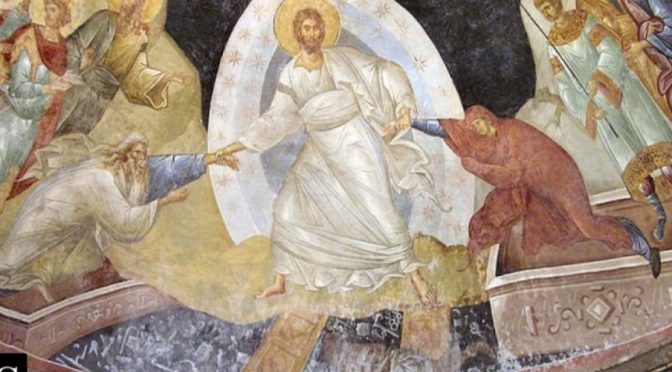
If you belong to God, you war against principalities from another dimension. The apostle Paul wrote about this in Ephesians 6:12: “For our struggle is not against flesh and blood, but against the rulers, against the powers, against the world forces of this darkness, against the spiritual forces of wickedness in the heavenly places.” Evil spiritual forces move people to oppose God. How did this happen? What is the genealogy of their evil and leader?

Background. God and other disembodied spirits called Elohim were part of a divine council before our time (Job 38:4-7; Genesis 1:26). The one we’d eventually call Satan rebelled, taking others with him (e.g., Ezekiel 28:12-16). Then, angelic watchers, sent to oversee humanity after their exile from Eden, also rebelled (Genesis 3:22-23; 6:1-2 & 4). After the Great Flood, meant to eliminate their offspring, God disinherited all the nations except Israel.

Those Elohim in charge of the disinherited nations have caused people (especially rulers) to rebel against God ever since. Think of them as other-worldly puppets. Their puppet master and ruler of this world is called in Hebrew Ha Satan—The Adversary. He’s your main enemy—don’t underestimate him, as he and his minions search diligently for the spiritually weak and isolated (1 Peter 5:8)! Let’s consider these things in more detail.

The Course of Evil: Until the Watchers. Initially, God and others comprised an innumerable council of spiritual Elohim. There was no apparent rebellion until one Elohim became an adversary. He fell from grace and tricked humans into revolting, too. Their disobedience caused their expulsion from Eden (Genesis 3:22-24). Other Elohim sent to watch over them afterward also disobeyed. Then, the Great Flood came, after which God distanced Himself from most of creation.

The Course of Evil: Disinheritance, Influence, and the End. Read Deuteronomy 32:8-9 and Psalm 82, and you’ll learn that God temporarily gave control of nearly the entire world to other Elohim. He kept what would become Israel, though. Evil persists because those spirits are now in authority (e.g., Psalm 82). For instance, in Daniel 10:13, we read of the spiritual principalities manipulating Persian rulers in Daniel’s time. And we read that Satan will empower the Beast—Antichrist in Revelation 13:3-4. Finally, 1 John 5:19 reminds us that the world lies in Satan’s authority for now.

The good news is that The Enemy won’t prevail, as we see in Revelation 20:10: “And the devil who deceived them was thrown into the lake of fire and brimstone, where the beast and the false prophet are also; and they will be tormented day and night forever and ever.”

Summary. Evil exists because of free will gone wrong when Elohim rebelled and the one we call Satan became God’s adversary. Next? I’ll equip you to resist your spiritual enemy! Meanwhile, pray that God will protect you from that evil one as you resist him.

Blessings and peace,

Dr. Ron Braley, MDiv, DMin.

When Two Kingdoms Collide

Initially, God’s world and ours intersected and cohabitated. This was Eden until humankind rebelled and broke its relationship with the Creator. Now, the two separate realms (kingdoms) have two kings: God and Satan. Because we’re made of mammal fleshiness and God-made spirit, we feel the draw of this appealing-to-the-flesh earth ruled by Satan and heaven ruled by God. We can’t serve two masters and must choose one. And not choosing God’s Kingdom will put you in the other by default. Let’s learn more about each to help you choose well. By the way, I published “The Supernatural God: Rebellion & Disinheritance!” in May 2023. You might want to revisit it for more background.

Satan’s Kingdom. After the dispersion at Babel, God disinherited most of the earth and its people (except for Israel), giving them to others in His council (Deuteronomy 32:7-12; Psalm 82). Those other spiritual beings have managed most of humanity ever since. Satan is their ruler; he has authority over the earth and anyone who isn’t God’s. He couldn’t have offered Jesus his earthly kingdom in Matthew 4:8-10 otherwise! Other biblical examples of Satan’s rulership: “Satan, the ruler of this world . . .” (John 12:31) and “Jesus said, ‘The ruler of this world approaches . . .’” (John 14:30). Jesus also confirms “My kingdom is not of this realm” in John 18:36 and “the whole world lies in the power of the evil one.” (1 John 5:19) But, this won’t always be the case!

God’s (YHVH’s) Kingdom. Despite Satan’s temporary rulership of this earth, God’s Kingdom has been attainable since Jesus gave His life to satisfy our debt to the Creator. Why did He do that? To return us to our Maker (1 Peter 3:18). For now, His Kingdom is ‘already, but not yet’ because it is available through Jesus but isn’t physically among us. One day, the two kingdoms will engage in a final conflict, and the ruler of this world will be ousted and destroyed. God’s realm and ours will intersect again as they did in Eden. When? We don’t know for sure, but here are reminders of the certainty:

  • “Then the seventh angel sounded; and there were loud voices in heaven, saying, ‘The kingdom of the world has become the kingdom of our Lord and of His Christ; and He will reign forever and ever.’” (Revelation 11:15)
  • “Now the salvation, and the power, and the kingdom of our God and the authority of His Christ have come . . .” (Revelation 12:10)

To summarize, the Devil runs things on earth for now, establishing lots of wickedness inside and outside the churches. However, God will one day reclaim what’s His and recombine His realm and ours in a new world. Where should we go next? Let me share my Orthodox Lent journey with you in an enlightening multi-parter. Meanwhile, choose your king and kingdom wisely and stay!

Blessings and peace,

Dr. Ron Braley, MDiv, DMin.

Dirt & Fruit

I once heard the saying, “No root, no fruit!” It’s true, especially where God is concerned. Dirt that lacks nutrients, whether natural earth or spiritual soil, stunts root growth. Here, we’ll look at the spiritual stuff.

Jesus addressed spiritual seeds, sowers, and receivers in Matthew 13:1-9 and 18-23. The “seed” is an introduction to God’s Kingdom made by a sower (e.g., teacher, evangelist, or disciple-maker); the soil is the recipient. Depending on the sower and receiver, the result can be spiritual fruit or fuel for the burn pile (John 15:4-6). In Matthew 13, Jesus offered examples of the different seed recipients and their conditions to illustrate growth opportunities and outcomes. I’ll present each scenario one at a time.

Roadside (13:4 and 19): “When anyone hears the word of the kingdom and does not understand it, the evil one comes and snatches away what has been sown in his heart.” A lack of wisdom hides God’s Kingdom; erroneous church leaders and teachers can be at fault. Flawed or incomplete evangelism, encouraging someone to enter a one-sided selfish relationship with God without understanding the terms and conditions, is also at fault. The cure? Find a mature Christ-follower and imitate what you see and hear!

Rocks (13:5-6 and 20-21): “… this is the man who hears the word and immediately receives it with joy; yet he has no firm root in himself, but is only temporary…” This person understands at least the appealing parts of Christianity and perhaps entered it emotionally. Once the feelings are gone, so is any motivation for growth. As with the roadside receiver, causes include bad teaching, inadequate evangelism, and the absence of discipleship.

Thorns (13:7 and 22): “… this is the man who hears the word, and the worry of the world and the deceitfulness of wealth choke the word, and it becomes unfruitful.” This person probably understands the Kingdom but chooses self-centeredness, where the “lust of the flesh and eyes” rules over all else (1 John 2:15-17).

Good soil (13:8 and 23): “… this is the man who hears the word and understands it; who indeed bears fruit and brings forth, some a hundredfold, some sixty, and some thirty.” This person likely benefitted from truthful teaching and has a fertile heart, ready to take in and put to work what they learn about God and His Kingdom! No burn pile in their future!

To summarize, receive truth and engage in foundational discipleship and formational spiritual disciplines to grow fruit! Live and prosper by imitating authentic Christians who teach and model the Kingdom. What’s next? It’s often difficult to reconcile God’s realm “in the skies” and Satan’s kingdom on the earth and see how all things will be fixed one day as God takes back what’s His. So, let’s go there next time. Meanwhile, always test what you hear or read to ensure it resonates with God’s nature and desires.

Blessings and peace,

Dr. Ron Braley, MDiv, DMin.
God Versus Evil: Part One

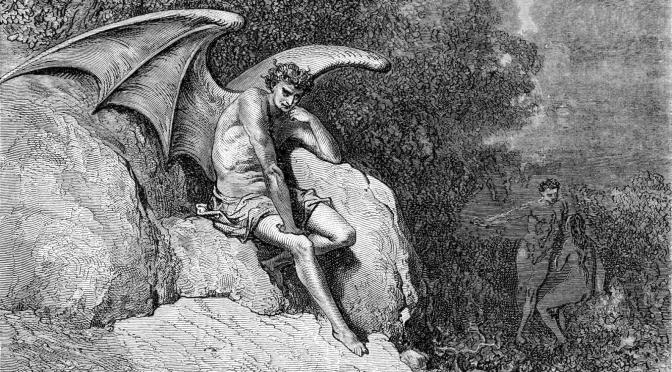
Just as the word ‘God’ can conjure different ideas from a benevolent cosmic dude to a celestial judge, ‘evil’ may mean various things—usually because of different cultures and worldviews. The truth is that ‘evil’ probably doesn’t mean what you think, and its use By YHVH (God) has produced good. Let’s dig in by defining it first.

Evil defined. The word usually evokes responses like ‘scary’ or ‘spooky’ and images of fiery demons or people with spinning heads. However, these aren’t biblical representations of evil but imaginations working overtime. The truth is worse because evil is more subtle and can sneak up on you! Original biblical language and contexts suggest that it more or less represents something bad, adversarial, distressful, or disagreeable. Not spooky or frightening, but trouble often clothed in beauty that can be disguised as good despite the distress it brings.

Who’s evil, anyway? The disobedient Elohim (spiritual beings from God’s Divine Counsel) were evil. The devil we call Satan is evil. So were the ancients who opposed God’s instructions. And so is anyone behaving in wicked ways that oppose God whether they call their actions ‘good.’ Church leaders and teachers allowing distressful, adversarial, and disagreeable-to-God doctrine and people into the assembly of believers are evil. The apostle Paul called them out 2,000 years ago while also reminding Christ-followers that evil and its deceit can be beautiful: “For such men are false apostles, deceitful workers, disguising themselves as apostles of Christ. No wonder, for even Satan disguises himself as an angel of light. Therefore, it is not surprising if his servants also disguise themselves as servants of righteousness, whose end will be according to their deeds.” (2 Corinthians 11:13-15)

Guarding against evil. It’s easy to be deceived by evil or call bad good if you don’t know what good looks like! This is why a solid Christian foundation is critical to discerning good from bad and righteousness from evil. Learn well and surround yourself with godly people, practicing what you see and hear. Deal with temptation in the mind before thoughts produce bad speech or behavior. Don’t give the adversary—the ‘evil one’ of Matthew 6:13 —a foothold! And always determine how your thinking or actions will affect your relationships with God or people.

Can evil be used for good? God doesn’t test or tempt people, trip them up, or do evil to them. However, He has used distress or adversity (often termed ‘evil’) and evil people to accomplish His plans. From Joseph’s brothers and Abimelech and Saul to the prophets of King Ahab, God has turned evil into good. I’ll explain more about this in Part Two.

In summary, evil can be anything opposed to good (e.g., God’s instructions). Next time, we’ll examine how God has used evil (adversarial things) for good in Part Two.  Meanwhile, behave, be kind, and beware of evil—inside the church and out!

Blessings and peace,

Dr. Ron Braley, MDiv, DMin.

At the End of the Day … God!

Tenth-century King Solomon can teach us much about meaningful (or useless!) life pursuits. Read his letter (biblical Ecclesiastes), and you’ll learn that, despite great riches, wealth, power, and women, he realized that only God truly satisfies. Let’s begin at the beginning.

The beginning. God gave Solomon wisdom and great wealth (1 Kings 3:5-13). He amassed incredible treasure and many women (300 concubines and 700 wives!). And his extraordinary wisdom brought exceptional fame. But Solomon found that pursuits of fame, fortune, and pleasure were pointless and vain—like spitting in the wind.

Vanity and uselessness. Solomon wrote that much of what he chased was vanity, which, in context, means ‘empty’ or ‘unsatisfactory.’ Again, pointless stuff. Things that bring little advantage and die with the generations, yet aren’t new: “There is nothing new under the sun.” Again, all vanity, according to Solomon: “I have seen all the works which have been done under the sun, and behold, all is vanity and striving after wind.” (Ecclesiastes 1:14). Let’s visit some of the vain, meaningless things.

Vain stuff. Topping Solomon’s list of vain pursuits is chasing madness and folly. Lusting after laughter and pleasure (including wine!) is up there are silly and wasteful things. And building projects didn’t bring satisfaction but grief. Solomon: “So I hated life, for the work which had been done under the sun was grievous to me; because everything is futility and striving after wind.” No matter what we do or acquire, we’ll leave this earth with nothing!

Where everything ends up. From dust we were formed, to dust we’ll return. The fate is the same for all mammals, including humans (Ecclesiastes 3:19-20). And the spirit within the body will return to its Maker. We’ll take nothing with us, and all we leave behind will eventually rot or be forgotten. So, what’s Solomon’s advice for good living in the meantime?

At the end of the day: God. According to Solomon, rest is better than striving after stuff in vain. And a healthy fear of God is a good thing:  “Although a sinner does evil a hundred times and may lengthen his life, still I know that it will be well for those who fear God, who fear Him openly” (Ecclesiastes 8:12). Don’t love or hoard money—share. Enjoy the fruits of your labor and what God has given, including the marriage relationship. Whatever you do, do it with all your might! Solomon’s conclusion: “Fear God and keep His commandments, because this applies to every person. For God will bring every act to judgment . . .” (Ecclesiastes 12:13-14)

In summary, the wisest man suggested fearing God and keeping His commandments for a fruitful, meaningful life. My next article will explore God’s Kingdom versus culture and differentiate between descriptive and prescriptive biblical texts. Until then, don’t be vain: chase only Godly stuff! Don’t know what that means? Ask me!

Blessings and peace,

Dr. Ron Braley, MDiv, DMin.

I Pledge Allegiance to Who?

Remember when we always said the Pledge of Allegiance (at school, for instance)? “I pledge allegiance to the flag of the United States of America . . . one nation under God . . .” That was when we were a godly nation. What would make us godly again? Pledging allegiance to the One we call God before allying ourselves with anything or anyone else or chasing self-centered passions. But what would that look like? What would God (YHVH) require of anyone (and, collectively, a nation) wanting to be His ally? Good question—let’s find out!

First, YHVH told the prophet Micah something like: “Dude! I don’t want meaningless religious works—I want you to practice justice and mercy and walk with me humbly! (Micah 6:8). Before you give me grief about the whole ‘Dude!’ thing, there may be a Hebrew or Aramaic word for it—you never know. Regardless, the point is valid: humility, justice, and mercy are critical in allegiance to God!

Second, YHVH wants partners—allies—who bear His image. He’s looking for people who will do and say here what He does and says in His realm, like Jesus did, while empowered by the Holy Spirit. What else? We’re to honor our Creator (YHVH) with all we have and are. We see this in the Great Shema (Deuteronomy 6:5): “You shall love the LORD your God with all your heart and with all your soul and with all your might.” Jesus reiterated the theme in Matthew 22:37. So, we are to honor Him in purity, among other things: “For you have been bought with a price: therefore glorify God in your body” (1 Corinthians 6:20).

Is anything else required for allegiance with God? Yep! Honoring Him (and Christ) begins with complete devotion—not only in the words, “confess Jesus as Lord” (Romans 10:9-10) but in action. Why do I write this? The ancients understood that speech and action were coupled. So did we until recently when lying became the norm and our word stopped being our bond. At any rate, pledge allegiance to God and stay in the relationship: “If you keep My commandments, you will abide in My love” (John 15:10).

So, we are to pledge allegiance to God through action, devoting all we have and are, and through purity and charity. This requires learning about God and what He wants and establishing new habits. He has called; we must respond. Keep in mind that not responding or devoting will have devastating consequences!

Summary: Pledge allegiance to who? God alone! Then, stay aligned by honoring Him with all you have, are, and do. What’s next? Learning about YHVH (God) and His desires can sometimes be challenging and sobering. So, let’s lighten things up with some encouraging and uplifting moments through exploring making a difference in our world. Until then, do what pleases God.

Blessings and peace,

Dr. Ron Braley, MDiv, DMin.
Back to Eden: After Antichrist

We began this series by foreseeing a return to Eden and its perfection. Then, we returned to Jesus’ time to uncover what He said about the journey to that future. A terrible several-year time of Antichrist trouble for God’s people will come when deception, violence, and economic hardship peak. But God will save His people and execute His own wrath against evil. Finally, He’ll judge and sentence or reward all people from all time for how they’ve used their bodies for good or bad. Then, Eden! Let’s unpack the time from Antichrist’s end until everything is renewed.

What will mark the end of the Antichrist’s reign of terror and salvation for God’s own? Complete darkness heralding the brightness of the returning King (Matthew 24:29-31 and Revelation 6:12-17 (seal #6)). A remnant of YHVH’s (God’s) Old Covenant Israel will be gathered and kept from harm at that time (Revelation 7:1-8). Jesus’ New Covenant followers will also find rescue (salvation), as seen in Matthew 24:31 and Revelation 7:9-17 (and 1 Peter 1:3-5). What then?

After YHVH’s people are rescued, He’ll unleash His anger against those who had persecuted and killed them. Revelation refers to this time of God’s punishment in two phases: seven initial trumpeted events and seven bowl judgments to finish things off. At the end of the first phase (the seventh trumpet), Jesus will reclaim the nations and establish His earthly kingdom and long-running peace (Revelation 11:15). Then, at the end of the final phase (the bowl judgments), Antichrist’s master, Satan, will be bound and kept at bay during Jesus’ reign here (Revelation 20:2-3).

After what the Bible calls 1,000 years, Satan will be released to gather the nations once again against YHVH (Revelation 20:7-10). Why? It’s hard to say. However, His first round of wrath was against Satan’s puppet (Antichrist). Perhaps the second round against Satan will be to address the puppet master himself and weed out everyone not in allegiance with God. This would make sense, understanding that final judgment is about to occur, and re-creation is on the horizon.

And we’re back where we started: Eden. In the beginning, I mentioned that all the prophecies and apocalyptic stuff are meant to give hope: YHVH will keep a promise to rescue His people and make all things new. No more suffering, sadness, or immoralities. Just perfection and peace!

Summary: A terrible time of trouble for God’s people will come when deception, violence, and economic hardship peak. How will it end? With Jesus’s appearing and our gathering when the lights go out (Revelation seal #6). Then, God’s turn and re-creation. With that, our end-times series has ended. In the following article, I’ll introduce you to Elijah, who believed he was the only God-fearing righteous person alive. Do you ever feel that way? In the meantime, be a disciple, make disciples, and honor God with everything while you can!

Blessings and peace,

Dr. Ron Braley, MDiv, DMin.

Back to Eden: Antichrist Wrath

We began this series by returning to the perfection of future Eden in the coming age. Then, in the last article, we went back to Jesus’ time and began moving forward toward the end of this age. I introduced John the Revelator and gave you a few tools to study the Revelation given to Him by Jesus. I also mentioned that life will continue until deception, violence, and environmental issues spiral out of control (Revelation seals 1-3). What comes next? The time of the Antichrist’s wrath against God’s people (Revelation seals 4-5)!

He or it will control much of the earth for about seven years when the religious deception, international conflicts, and economic chaos revealed in Revelation seals 1-3 crest. That time will begin with a Middle Eastern peace agreement broken in the middle (Daniel 9:27). So, things will seem pretty good for the first several of the seven years. Then, all hell will break loose (literally!).

The prophet Daniel and Jesus foresaw a time when Satan-driven Antichrist will bring great wrath upon YHVH’s people (Jew and Christian). The Bible refers to this destructive period in several ways: Great tribulation, 42 [30-day lunar] months, 1260 days (42X30), and 3.5 years. Check out these biblical references:

  • Great Tribulation/time of Jacob’s (Jewish) trouble: Jeremiah 30:7; Matthew 24:21 & 29.
  • 42 months: Revelation 11:2 and 13:5.
  • 1260 days: Daniel 12:11-23 (1260+30 days); Revelation 11:3 and 12:6.
  • 3.5 years (one year plus two years plus half a year): Daniel 7:25 and 12:7, and Revelation 12:14.

Daniel received his vision of the future Antichrist’s time in about 500 BCE. Then, Jesus referred to this period of coming wrath about 2,000 years ago and retold it to John in a revelatory vision about 70 years later. Paul also taught about the Antichrist’s time of authority. You can read about it in 2 Thessalonians 2:1-12. Let’s consider important things that will happen during those 3.5 years.

In Matthew 24:10-26 and Revelation 6:7-12, Jesus revealed a terrible time of persecution and death for God’s people by a Satan-empowered Antichrist. Heavenly witnesses will issue final warnings to all people during that time and oppose the Antichrist, who will demand allegiance against YHVH. Those who refuse will die a human death but enter the next age with YHVH. Those who side with Antichrist for food and material security will likely experience physical death during God’s great wrath and spiritual destruction at His great judgment.

Summary: A terrible time of trouble for God’s people will come when deception, violence, and economic hardship peak. How will that three-and-a-half-year time of Antichrist’s wrath end? With Jesus’s appearing and our gathering at a complete darkening of the natural lights (Revelation seal six). More about this and coming peace next time. In the meantime, be a disciple, make disciples, and honor God with everything while you can!

Blessings and peace,

Dr. Ron Braley, MDiv, DMin.

Back to Eden: Until The Antichrist

In my last article, I taught that YHVH walked with people before they turned away. I also mentioned that He will someday destroy this realm and re-create perfection. Here, we’ll unfold the last days as we begin to explore what Jesus revealed about the future. I’ll also introduce John the Revelator and guide you in your own end-times study. John first.

Jesus’ disciple John Zebedee wrote the Revelation in about 95 CE while exiled to the Grecian Island of Patmos. Roman Emperor Domitian sent him there, and Emperor Nerva released the exiles a couple of years later. John then returned to Ephesus to live out his days. While in the spirit, Jesus had revealed the future to John to give to his Asian churches. But he had heard much of this before!

Before Jesus’ crucifixion, several disciples asked Him about the Temple’s eventual destruction and His future return. You can read Jesus’ response in Matthew chapters 24-25, Mark 13, or Luke 21. He revealed a forthcoming departure from the Faith and diminishing true love. Also, that life will continue as it always has until religious deception, war, and environmental issues increase significantly just before the end. Here’s how Matthew 24:5-7 and Revelation 6:2-6 (part of a seven-sealed scroll) reveal Jesus’ time until Antichrist:

  • Deception: Matthew 24:5 and Revelation 6:2 (behind seal #1).
  •  Violence: Matthew 24:6-7a and Revelation 6:3-4 (behind seal #2).
  •  Environmental and geological chaos: Matthew 24:7b and Revelation 6:5-6 (behind seal #3).

Now, I’ll introduce you to the Revelation. Don’t let anyone tell you that it’s all symbolic, already happened, or not sequential! Very little is purely symbolic, and most are explained there or elsewhere. Accept what you read as literally as possible unless there’s a reason not to. And compare Scriptures to Scriptures to get a clearer understanding. It’s easier than you think! You may want to check out my 2011 book, Finding the End of the World, to learn more about the end of the age and aid your own study. Here’s a breakdown of the Revelation, which comprises eight primary sections:

  • Revelation 1 – 5. Introduction, instructions, and an invitation to see the future.
  • Revelation 6 – 8:1. Sequence until the end and the protection of God’s people.
  • Revelation 8:2 – 10. Trumpet judgments 1-6 (God’s wrath begins).
  • Revelation 11 – 13. Three perspectives (two witnesses, Satan, and the Antichrist) and details of the Antichrist’s 3.5-year authority ending with trumpet judgment #7.
  • Revelation 14 – 16. Events just before and after the end of Antichrist authority; vial judgments 1-6 (almost the end of God’s wrath).
  • Revelation 17 – 19. Immoralities and the final showdown (God’s wrath ends with vial #7).
  • Revelation 20 – 22. Christ’s physical kingdom, judgment, and re-creation; closure.

Summary: Life will continue until deception, violence, and environmental issues spiral out of control. Next, we’ll deep-dive into the time of the Antichrist’s authority and mayhem revealed by the prophet Daniel, apostle Paul, and revelator John. Meanwhile, honor God and love people more than religion.

Blessings and peace,

Dr. Ron Braley, MDiv, DMin.