God – the Christ

No one’s perfect and everyone will sin – miss the ‘mark’. Because of this and God’s desire to dwell with us, Jesus became the ultimate sacrifice for the forgiveness of sin. All we have to do is believe that, act appropriately out of our faith, and repent of sinful behavior for God to save you from His future wrath.

You’ll find several references in the Bible to Jesus: Messiah, the Christ, His Christ, our Christ, and Jesus. Why so many names and titles? It’s important first to understand that His name isn’t Jesus Christ.  It isn’t as though someone named Jesus was born to Mr. and Mrs. Christ.

The name of Jesus is just a loose translation of the Greek word Iēsous for Jehoshua, Jesus’ proper Hebrew name. The word Christ is a title, not a proper name, which comes from the Greek word Christos – anointed one, or Messiah.  So, Jesus Christ is a loose translation of Yehoshua the Messiah. Interestingly, the Bible also refers to Jesus as God’s Christ (His Christ):

And the people stood by, looking on. And even the rulers were sneering at Him, saying, “He saved others; let Him save Himself if this is the Christ of God, His Chosen One.” —Luke 23:35.

I think the reference to Jehoshua as God’s Christ is appropriately used to label the Son of God sent as the Christos – Messiah – to save mankind through His sacrifice and resurrection. God asked Him to do this; Jesus was obedient to live and die among men so God could raise Him on the third day to fulfill a promise and serve as a sign for all who would believe and follow.

So also Christ did not glorify Himself so as to become a high priest, but He who said to Him, “YOU ARE MY SON, TODAY I HAVE BEGOTTEN YOU”; just as He says also in another passage, “YOU ARE A PRIEST FOREVER ACCORDING TO THE ORDER OF MELCHIZEDEK.” In the days of His flesh, He offered up both prayers and supplications with loud crying and tears to the One able to save Him from death, and He was heard because of His piety. Although He was a Son, He learned obedience from the things which He suffered. And having been made perfect, He became to all those who obey Him the source of eternal salvation —Hebrews 5:5-9.

Yehoshua’s reward for His obedience? A seat at the right hand of God the Father of Spirits, a right earned by redeeming and reconciling mankind to the one true God, which is certainly His one overarching will.

The God of our fathers raised up Jesus, whom you had put to death by hanging Him on a cross. He is the one whom God exalted to His right hand as a Prince and a Savior, to grant repentance to Israel, and forgiveness of sins. —Acts 5:30-31.

Son of God. Redeemer. Savior. These are all good ways to refer to the one who has offered everlasting life. Believe and follow!

Keep an eye out for “Finding Answers to Stuff Churches Don’t Discuss!” scheduled for a mid-2015 publication. There, you’ll find roughly 60 topics related to daily life (such as sex, religion, finances, tattooing, and everything in between!) along with practical application of God’s guidance for navigating those difficult waters!

And, for a very comprehensive and detailed study of the very important topic of God’s judgment to come and rescue from it, feel free to read my 2011 guide titled, “Finding the End of the World” available at Amazon, Barnes and Noble, and from www.ronbraley.com in paper and e-book formats. In the guide, you’ll find roughly 500 pages of building blocks to help you do your own complete and unbiased study based on Scripture and history!
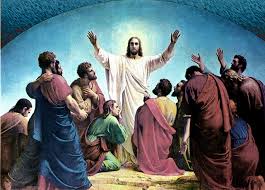
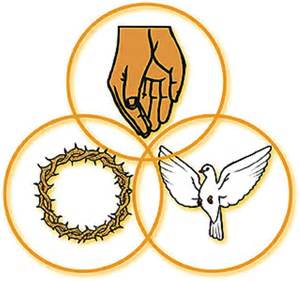
God – the Heavenly Hierarchy

The word ‘God’ is used in two basic ways in the Bible.

On one hand, it’s the corporate name given to the Father, Son, and Spirit who have worked together in the creation, care, and judgment of mankind. This is Hebrew el-o-heem – our God in plurality from the beginning (i.e. Genesis 1:1-2 & John 1:1-14).

Different beings labeled as ‘God’:
Father: the father of spirits (Hebrews 12:9), the father who gives us the Spirit (Luke 11:13), and the father who forgives (Matthew 6:14-15). The name of our Heavenly Father of Spirits: Jehovah. We, beginning with the Jews, are instructed to call Him by this name.

Son: came to earth and took human form (spirit in body like us) to become the sacrifice for all. He has earned the right to rescue us from judgment. He sits in the kingdom of heaven at the right side of God the father (Ephesians 1:19-20).

Spirit: described as the ‘breath of god’, He is currently on earth to guide and instruct those who follow the Christ (John 16:13).

But, they’re corporately the same just like company employees or a husband and wife may be of one mind. Jesus pointed this out when claiming that He and His father were one and the same (John 14:11).

On the other hand, God has been used as a title for our heavenly father, who is also labeled as the father of spirits. This makes sense considering His creation of the spirit in mankind.

Unfortunately, manmade doctrine has distorted our understanding of God – His character and name, and hierarchy alike. Jehovah, our creator, will one day judge all spirits for how they used the body while on earth whether for evil or good works. We’d better figure out who He is and what He wants . . . and in a hurry!

Keep an eye out for “Finding Answers to Stuff Churches Don’t Discuss!” scheduled for a mid-2015 publication. There, you’ll find roughly 60 topics related to daily life (such as sex, religion, finances, tattooing, and everything in between!) along with practical application of God’s guidance for navigating those difficult waters!

And, for a very comprehensive and detailed study of the very important topic of God’s judgment to come and being rescued from it, feel free to read my 2011 guide titled, “Finding the End of the World” available at Amazon, Barnes and Noble, and from http://www.ronbraley.com in paper and e-book formats. In the guide, you’ll find roughly 500 pages of building blocks to help you do your own complete and unbiased study based on Scripture and history!

Evangelism: When enough is enough . . .

I’ve often witnessed someone focusing on trying to maintain what ends up being a tumultuous and unhealthy relationship because they believe they’ll eventually ‘lead the other person to Christ’. In business, this could be considered a bad ROI – Return on Investment – of the resources spent trying to ‘save’ someone.
We’re not responsible for saving people, only for passing on the good news of salvation from God’s wrath to come. The receiver must choose what to do with the information and any prompting by the Spirit of God. Granted, evangelizing that good news will benefit from relationships; however, you may reach a point when ‘enough is enough’ – especially if the relationship is emotionally or spiritually harmful to you. And, your time may be better spent in moving forward in telling others the good news and discipling those who become willing participants in a covenant with God through the Christ.

Then He said to His disciples, “The harvest is plentiful, but the workers are few. Therefore beseech the Lord of the harvest to send out workers into His harvest.” —Matthew 9:37-38.

“Whoever does not receive you, nor heed your words, as you go out of that house or that city, shake the dust off your feet.” —Matthew 10:14.

“Do not give what is holy to dogs, and do not throw your pearls before swine, or they will trample them under their feet, and turn and tear you to pieces.” —Matthew 7:6.

Keep an eye out for “Finding Answers to Stuff Churches Don’t Discuss!” scheduled for a mid-2015 publication. There, you’ll find roughly 60 topics related to daily life (such as sex, religion, finances, tattooing, and everything in between!) along with practical application of God’s guidance for navigating those difficult waters!
And, for a very comprehensive and detailed study of the very important topic of God’s judgment to come and being rescued from it, feel free to read my 2011 guide titled, “Finding the End of the World” available at Amazon, Barnes and Noble, and from http://www.ronbraley.com in paper and e-book formats. In the guide, you’ll find roughly 500 pages of building blocks to help you do your own complete and unbiased study based on Scripture and history!

Evangelism: Playing the Detective

As we’ve already learned, evangelism is absolutely critical to our salvation and that of others we witness to . . . or don’t.

“Therefore everyone who confesses Me before men, I will also confess him before My Father who is in heaven. But whoever denies Me before men, I will also deny him before My Father who is in heaven.” —Matthew 10:32-33.

“Go therefore and make disciples of all the nations, baptizing them in the name of the Father and the Son and the Holy Spirit, teaching them to observe all that I commanded you” —Matthew 28:19-20.

One great way (but not the only way!) to evangelize the Gospel message is to build a relationship between yourself and those you to whom you express the good news. This will build trust and present opportunities to share and teach. Building that trust and seeking those golden opportunities will require you to get to know the other person. What is their background? What are their fears – especially regarding God or Christianity? What are their perceptions around religion? What physical, financial, emotional, or spiritual needs do they have? ‘Playing the detective’ will help you learn the answers to these questions and more in your relationship-building exercise.
Playing the detective requires that you ask open-ended questions, listen carefully to the responses, and then respond with additional questions as you ‘build their story’ and then relate your experiences and the Gospel to it. For instance:
“What do you think about God?”
“I don’t know. I’ve heard a lot of stuff and think he’s probably some higher power somewhere.”
“I know what you mean. The concept of God can be confusing – especially when so many people seem to have personal opinions about Him or be involved in different manmade religions. Tell me more about what you’ve heard.”

Well, I think you get the idea . . . Additional help in playing the detective can be found this highly-effective habit expressed by Dr. Stephen Covey: “Seek first to understand, and then to be understood”.
The following biblical advice can also help you treat your fellow man appropriately as you build evangelistic relationships:

Do nothing from selfishness or empty conceit, but with humility of mind regard one another as more important than yourselves; do not merely look out for your own personal interests, but also for the interests of others. Have this attitude in yourselves which was also in Christ Jesus —Philippians 2:4-5.

Keep an eye out for “Finding Answers to Stuff Churches Don’t Discuss!” scheduled for a mid-2015 publication. There, you’ll find roughly 60 topics related to daily life (such as sex, religion, finances, tattooing, and everything in between!) along with practical application of God’s guidance for navigating those difficult waters!
And, for a very comprehensive and detailed study of the very important topic of God’s judgment to come and being rescued from it, feel free to read my 2011 guide titled, “Finding the End of the World” available at Amazon, Barnes and Noble, and from http://www.ronbraley.com in paper and e-book formats. In the guide, you’ll find roughly 500 pages of building blocks to help you do your own complete and unbiased study based on Scripture and history!

Back from mission ‘Disciple Africa’

Back from mission ‘Disciple Africa’ and, as Joanne says, “Our eyes have seen things our minds can’t comprehend“.

Please check out a summary of the trip and some photos at

http://findingrevelation.com/FindingDiscipleship/Africa%202015.htm

Remember: We’re ALL called to preach the good news of salvation, and some are called to teach. Those who don’t/can’t travel to evangelize or teach can still be obedient to the commandment for the Church to do so by funding those who can!  Will you consider partnering with us to return to Kenya and Uganda in 2016 to ‘train the trainer’ as we’ll teach nearly 300 pastors to train their villagers in discipleship and evangelism?

Blessings,

Ron Braley

Evangelism 101

What is evangelism? It’s proclaiming what we know about God and our Christ . . . out loud (i.e. Psalm 96 and 1John 1:1-5). Who has been called to evangelize? Everyone!

but sanctify Christ as Lord in your hearts, always being ready to make a defense to everyone who asks you to give an account for the hope that is in you, yet with gentleness and reverence — 1Peter 3:15.

Go therefore and make disciples of all the nations, baptizing them in the name of the Father and the Son and the Holy Spirit, teaching them to observe all that I commanded you —Matthew 28:19-20.

Why is evangelism necessary?
•To enable mankind to be reconciled to God (2Corinthians 5:18-20).
• No one will hear if no one tells . . . (Romans 10:12-15).
• To help build faith (Romans 10:17; 2 Timothy 3:14-17).
• For our relationship with God & Christ (i.e. Matthew 10:32).
• Jesus commanded it (Matthew 28:19-20)!

How do we evangelize?
• Prepare – be convinced (2 Timothy 3:14-17 and 1Peter 3:15-16). We can’t tell what we don’t know or believe. That ‘convincing’ is rooted in discipleship, mentoring, Bible study, fellowship, etc.
• Build relationships. Those you tell the Gospel message to must trust you. Remember, blind faith is useless. And, discipleship, which requires trust too, will only be possible through relationship.
• Live the life – walk the talk and be consistent! However, just being a ‘good person’ and hoping people will somehow know Jesus as a result doesn’t work. We MUST tell about the hope within us and the ‘why’ . . .
• Use what you know. Take advantage of your experiences. “Dude! I was a drunk and lost until I heard about our creator and how He wants us back even though we walked away from a relationship with Him thousands of years ago. I’ve given my life back to Him and have promised to walk in His ways. My life has changed as a result – I am definitely a new person with a renewed hope! Want to hear more?” Everyone has a story, and we can all give a basic salvation elevator pitch . . .
• Look for opportunities to share God’s message of salvation and hope.

Summary: We are all called to proclaim God’s glory and spread the news of eternal life through Jesus. So, we learn and tell others what we know. We can also support evangelists (3John 1:7-8; Philippians 4:14-19; 1Corinthians 9:1-14). Those who tell others about God’s just nature and salvation from His wrath will enjoy a relationship with Him and all it brings including the Spirit and salvation from that wrath.

Keep an eye out for “Finding Answers to Stuff Churches Don’t Discuss!” scheduled for a mid-2015 publication. There, you’ll find roughly 60 topics related to daily life (such as sex, religion, finances, tattooing, and everything in between!) along with practical application of God’s guidance for navigating those difficult waters!
And, for a very comprehensive and detailed study of the very important topic of God’s judgment to come and being rescued from it, feel free to read my 2011 guide titled, “Finding the End of the World” available at Amazon, Barnes and Noble, and from http://www.ronbraley.com in paper and e-book formats. In the guide, you’ll find roughly 500 pages of building blocks to help you do your own complete and unbiased study based on Scripture and history!

Hooking Up With Wickedness

We live in a world filled with people ignorant of God’s ways or the gift of salvation Jesus offers. Without our influence through relationship, they’ll likely never know these truths. But, we must not let influence work the other way around by allowing ourselves to be lured into sinful behavior.

First and foremost, we’re to spread the good news of God’s grace and mercy through the Christ to those around us. This wasn’t a nice suggestion – it was an order by Jesus (Matthew 28:19-20). And as Paul pointed out, how will people learn of the Gospel – that great news – if no one tells them? We’re all called to preach (proclaim and display) the Gospel. How can we do this if we don’t interact with others who need to hear the message (Romans 10:13-15)?

We’re also to be a shining example – a light to those around us. There’s no way to be that light without being visible to the world.

“You are the light of the world. A city set on a hill cannot be hidden; nor does anyone light a lamp and put it under a basket, but on the lampstand, and it gives light to all who are in the house. Let your light shine before men in such a way that they may see your good works, and glorify your Father who is in heaven.” —Matthew 5:14-16.

so that you will prove yourselves to be blameless and innocent, children of God above reproach in the midst of a crooked and perverse generation, among whom you appear as lights in the world —Philippians 2:15.

Keep your behavior excellent among the Gentiles, so that in the thing in which they slander you as evildoers, they may because of your good deeds, as they observe them, glorify God in the day of visitation. —1Peter 2:12.

Again, we can’t isolate ourselves and therefore shield our light from the world. We must be in the world to provide an example, but not of the world (duplicating any of its ungodly values and behaviors). In fact, Paul reminded the church in Corinth that they must exist in the world, but not to be of the world by tolerating sinful behavior from those who should know better.

I wrote you in my letter not to associate with immoral people; I did not at all mean with the immoral people of this world, or with the covetous and swindlers, or with idolaters, for then you would have to go out of the world. But actually, I wrote to you not to associate with any so-called brother if he is an immoral person, or covetous, or an idolater, or a reviler, or a drunkard, or a swindler–not even to eat with such a one. —1Corinthians 5:9-11.

Paul also explained that although we need to be flexible and enter into relationships to preach the Gospel, we must be careful not to practice sin found in the world and therefore give up the gift of salvation (1Corinthians 9:19-27).

In another related admonishment, Paul tells the same church that they must not enter into very close relationships with unbelievers. Associate, yes – be bound together, no. The Greek word for ‘bound’ below is heterozugeō, which implies unequal yoking. This is important to understanding Paul’s intent. Yoking together dissimilar creatures would be counterproductive and, while the act may help the weakest of the pair, may bring down the stronger (or more righteous in this case).

Do not be bound together with unbelievers; for what partnership have righteousness and lawlessness, or what fellowship has light with darkness? Or what harmony has Christ with Belial, or what has a believer in common with an unbeliever? —2Corinthians 6:14-15.

Do not be deceived: “Bad company corrupts good morals. —1Corinthians 15:33.

Who shouldn’t be bound together with unbelievers? Probably the best example is a follower of Jesus in marriage. This relationship will do nothing positive for the believer and may cause them to fall from their faith (although I’m sure there have been some exceptions).

Another sobering example that hits close to home for me is that of a relationship with atheists. These people are enemies of God and are not to be your associates! You won’t convert them. Their twisted agenda and abuse of God’s words trip up and confuse the faith of many. “Dude! You’ve gotta help me – my faith is shaken!” still rings in my ears . . .

Also included in unequal relationships that should be avoided between followers and unbelievers are business partnerships and those entering legal agreements. Why? A follower of the Christ operates under direction from the Holy Spirit and probably by a different set of moral guidelines than an unbeliever would follow. Their misaligned spiritual goals and different motivations could result in serious trouble in business, finances, friendships, or salvation.

Who are your friends and business partners? Remember to be a light to the world, but take measures to avoid having your faith corrupted and, therefore, jeopardizing your rescuing from God’s wrath to come!

Keep an eye out for “Finding Answers to Stuff Churches Don’t Discuss!” scheduled for a mid-2015 publication. There, you’ll find roughly 60 topics related to daily life (such as sex, religion, finances, tattooing, and everything in between!) along with practical application of God’s guidance for navigating those difficult waters!

And, for a very comprehensive and detailed study of the very important topic of God’s judgment to come and being rescued from it, feel free to read my 2011 guide titled, “Finding the End of the World” available at Amazon, Barnes and Noble, and from www.ronbraley.com in paper and e-book formats. In the guide, you’ll find roughly 500 pages of building blocks to help you do your own complete and unbiased study based on Scripture and history!

Purity & Holiness

God desires righteousness and blamelessness from us. Therefore, purity would describe the level of attainment of that state whatever the thing we want to be pure in. Think of it this way: in nature, something nearly pure (like fine gold or diamonds for instance) has little if anything else mixed with it. The purer, the more desirable the object is.

We, in covenant with our God through the Christ, must be set apart from worldly behavior (be holy, by definition). It’s not a mere suggestion, but a mandate. Those who practice immorality and sinful behavior will perish; the righteous who pursue purity and holiness through discipleship and application will live and enjoy their reward.

Be an example through purity, which may come at least in part through understanding of the Word of God.

Let no one look down on your youthfulness, but rather in speech, conduct, love, faith and purity, show yourself an example of those who believe. Until I come, give attention to the public reading of Scripture, to exhortation and teaching. —1Timothy 4:12-13.

As followers of Jesus, we should be ‘dead’ to immorality and impurity.

Therefore consider the members of your earthly body as dead to immorality, impurity, passion, evil desire, and greed, which amounts to idolatry. For it is because of these things that the wrath of God will come upon the sons of disobedience, and in them you also once walked, when you were living in them. But now you also, put them all aside: anger, wrath, malice, slander, and abusive speech from your mouth. —Colossians 5:3-8 (see also Ephesians 5:19-5).

Be pure, and therefore set apart from wicked behavior.

Therefore, having these promises, beloved, let us cleanse ourselves from all defilement of flesh and spirit, perfecting holiness in the fear of God. —2Corinthians 7:1.

So, just how do we learn and apply God’s ways in the pursuit of holiness?

Finally, brethren, whatever is true, whatever is honorable, whatever is right, whatever is pure, whatever is lovely, whatever is of good repute, if there is any excellence and if anything worthy of praise, dwell on these things. —Philippians 4:8.

Now for this very reason also, applying all diligence, in your faith supply moral excellence, and in your moral excellence, knowledge, and in your knowledge, self-control, and in your self-control, perseverance, and in your perseverance, godliness, and in your godliness, brotherly kindness, and in your brotherly kindness, love. —2Peter 1:5-7.

Speaking of self-control in application of what we learn: Just as our belief in Jesus must result in obedience to be effective, our desire for purity must be put into action through self-control of the body and its desires. When we didn’t know better, it was easy to become slaves to lusts of our body. Paul had a lot to say about this in Romans Chapter 6 (definitely worth a read!). Other excellent Scriptures that highlight the importance of self-control in the pursuit of holiness include the following.

  • Exercise self-control to avoid being disqualified from the race and prize Paul equates to righteousness and eternal life. 1Corinthians 9:25-27.
  • Self-control is one of the fruits of the Spirit of God (Galatians 5:22-23).
  • We should always ask whether what we’ll use our body for will be pleasing to God. 1Corinthians 6:18-20.
  • We must no longer be enslaved by our body and its lusts but the other way around. Romans 6:6 & 12-13.

Purity and holiness are possible when we learn God’s ways and apply them consistently. Like the body builder in pursuit of an exceptional physique, application can be difficult and painful at first; however, the rewards far outweigh the pain of achieving them.

What’s your pursuit?

Keep an eye out for “Finding Answers to Stuff Churches Don’t Discuss!” scheduled for a mid-2015 publication. There, you’ll find roughly 60 topics related to daily life (such as sex, religion, finances, tattooing, and everything in between!) along with practical application of God’s guidance for navigating those difficult waters!

And, for a very comprehensive and detailed study of the very important topic of God’s judgment to come and being rescued from it, feel free to read my 2011 guide titled, “Finding the End of the World” available at Amazon, Barnes and Noble, and from www.ronbraley.com in paper and e-book formats. In the guide, you’ll find roughly 500 pages of building blocks to help you do your own complete and unbiased study based on Scripture and history!

Who’s Your Life Coach?

Everyone (even the casual Christian) seems to be looking for the latest self-help book or some kind of life coach these days. A silver-bullet approach to fixing ourselves or quick, easy fix toward self-improvement are high on the list of priorities for many.

Seems like a good pursuit. Right? I guess that depends on why we think we need ‘fixing’ or the standard to which we’re comparing ourselves and repairing what we perceive as damaged. And it could be anything from physical improvement to emotional well-being . . .

Well, if this describes you and your direction, you’re in luck! Your creator – the Father of Spirits – has provided you with everything you need to know to redirect your steps toward righteousness, perfection, and the ultimate self-help path that will also keep you from His incredible judgment and destruction to come!

For instance, Jesus tells us that we’re to be obedient to His commandments if we want to live (John 14:21-24). And, He and the Apostle Paul warn us of the behaviors that will land us in hell (Matthew 25:31-46 and 1Corinthians 6:9-10). Going further back in time, we can even learn about behaviors that can aid in healthy living (e.g. the books of Leviticus and Deuteronomy).

Speaking of the Apostle Paul: We learn from him that immersing ourselves in the Scriptures (the Torah from which the Old Testament was formed) can keep us on the right track and help us discern right from wrong and truth from fable (2Timothy 3:16 and 1Timothy 4:6-7).

So, what do we do when we realize we’re heading down the wrong path? We repent – a change in behavior that comes from a change of heart (Acts 3:19 and 11:18; Romans 2:5).

The Spirit of God can also provide us with tools and gifts we can use to live well and for eternity (John 14:26 and 1Corinthians 12:7-11). In fact, those who believe in, and follow, our God, and, therefore, receive His Spirit, display characteristics such as peace, joy, and self-control (John 7:39; Acts 19:2; Galatians 5:22-23).

So, allow the words of God, and His Spirit, to be your life coaches. Learn. Commit. Grow. Improve. Live!

Keep an eye out for “Finding Answers to Stuff Churches Don’t Discuss!” scheduled for a mid-2015 publication. There, you’ll find roughly 60 topics related to daily life (such as sex, religion, finances, tattooing, and everything in between!) along with practical application of God’s guidance for navigating those difficult waters!

And, for a very comprehensive and detailed study of the very important topic of God’s judgment to come and being rescued from it, feel free to read my 2011 guide titled, “Finding the End of the World” available at Amazon, Barnes and Noble, and from www.ronbraley.com in paper and e-book formats. In the guide, you’ll find roughly 500 pages of building blocks to help you do your own complete and unbiased study based on Scripture and history!

In Loving Fairness (previously “Apocalyptic Misquote: God is Love”)

In our feel-good experiential Christian culture, I’ve often heard said, “God is Love!

Actually, God IS love; however, this ‘love’ is grossly misunderstood. And, the common misunderstanding of the love that God is and does lends itself to a dangerous and pervasive view that anyone in His good favor should never suffer and will have anything they want . . . Please see my earlier blogs titled “God has a plan for me!”, “I can do all things Through Christ”, “No Weapon Formed Against me will Prosper” and “In Jesus’ Name” in Apocalyptic Misquotes Parts I, IV, and VI for more information related to this prosperity Gospel and spiritual rock star mentality so prevalent in churches today.

This misunderstanding is based on 1John – 1John 4:8 and 16 in particular. The first thing we must do is understand the context of John’s comments about God being love. The next thing we’ll do is explore the meaning of that ‘love’, which you’ll learn is consistent, appropriate action – not emotion.

The theme and context of 1John Chapter 4 boils down to a fair and just God that will judge the world and save the righteous. This text serves as a reminder that our actionable love, which is obedience to Jesus’ commandments out of our faith, mirrors God’s just nature and is the basis for our coming salvation. Here’s a breakdown of the verses.

Verses 1-6: Differentiating ourselves from the world.

Verses 7-17: God is actionable love. He has promised a savior for mankind and kept His promise.  We should be like Him and actionably love one another because He has done the same for us as we abide in Him and He in us through the Spirit.

Verses 18-21: A sobering reminder that actionable love born of our faith is critical to salvationrescuing from God’s judgment to come. Being nice, feeling spiritual, belief alone, or having lots of knowledge about the Bible kept private are of no use to God, our Christ, or the Church.

I keep mentioning ‘actionable’ love, which is based on the Greek agape and agapao (is love and action born of love). Nowhere does Scripture or the New Testament Gospel or letters suggest God is ‘nice’ or that we should be that way. With the exception of a few uses of a Greek-based phil love (i.e. Philadelphia – brotherly love), the only ‘love’ you’ll see related to God and our Christ is actionable, non-emotion-based, agape/agapao love. This is one that equates to, “I’ll treat you appropriately despite how I feel.” Instead, we’re to be fair, kind, patient, repentant, self-controlled, etc.  Hmmm . . . sounds a lot like the actions (fruits) shown by those who belong to God and, therefore, have the Spirit as they abide in God and He in them . . .

So, God is love because He has treated us appropriately and kept His promise to send a savior despite the way He has ‘felt’ toward mankind at times throughout history. He is just to save and to forgive when we are in covenant with Him as so many of the New Testament letters show. Please see my earlier blog titled, “True Love” for more background on the kind  of love God had and has for us, and we should have for each other.

Act fairly, justly, kindly, and consistently as our God also has done for us . . . and live!

Keep an eye out for “Finding Answers to Stuff Churches Don’t Discuss!” scheduled for a mid-2015 publication. There, you’ll find roughly 60 topics related to daily life (such as sex, religion, finances, tattooing, and everything in between!) along with practical application of God’s guidance for navigating those difficult waters!

And, for a very comprehensive and detailed study of the very important topic of God’s judgment to come and being rescued from it, feel free to read my 2011 guide titled, “Finding the End of the World” available at Amazon, Barnes and Noble, and from www.ronbraley.com in paper and e-book formats. In the guide, you’ll find roughly 500 pages of building blocks to help you do your own complete and unbiased study based on Scripture and history!

Biblical Truth by Ron Braley