Tag Archives: END OF THE WORLD

Here Comes the Bride!

We’ve made it through four of seven feasts or festivals ordained by God. Well done! Let’s pause before going to the final three feasts in the fall. Why? Because Jesus’ consummation of the springtime feasts and His departure and impending return fulfill something else: the Jewish wedding process, beginning with betrothal. In other words, He and we are fulfilling a dress rehearsal for our relationship with Him and entrance into the age to come. Please allow me to share this unfolding love story with you.

God called Israel His ‘bride.’ We are Christ’s bride because He and we have fulfilled the marriage covenant since Jesus’ time on earth. No other relationship between humans should be as close as husband and wife, so it makes sense. Here are but a few parts of the ancient ceremony that have, and will be, completed:

  • The father of a potential groom would search for a wife for his son. When a suitable bride had been found, the two families would meet to discuss the possible union. If the young man and woman agreed, they would essentially say, “I will be yours if you will be mine!” This is akin to what God said to His bride, Israel. Our selection for the groom can be seen in 2Corinthians 11:2.
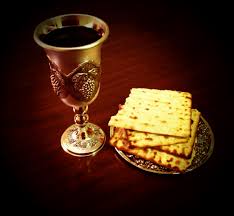
  • To cement the deal, the couple would drink from a cup of wine called the “cup of the covenant” (Matthew 26:27-28). This was the Cup of Redemption, the third of four cups of the Passover Jesus took with His disciples, and it is the foundation of today’s Communion cup. What about the fourth cup? We’ll enjoy that at the marriage ceremony at the transition of the ages (Matthew 26:29; Revelation 19:6-9).
  • After vows, gifts, and ceremonial bathing (like baptism), the couple separated. The boy and his father would build a home for the couple (John 14:2-3 for fulfillment). This separation would typically last a year; however, we continue to wait. Why? Because God’s timing is His timing, He’ll delay until those who’ll accept His mercy have had the opportunity (2Peter 3:7-9).
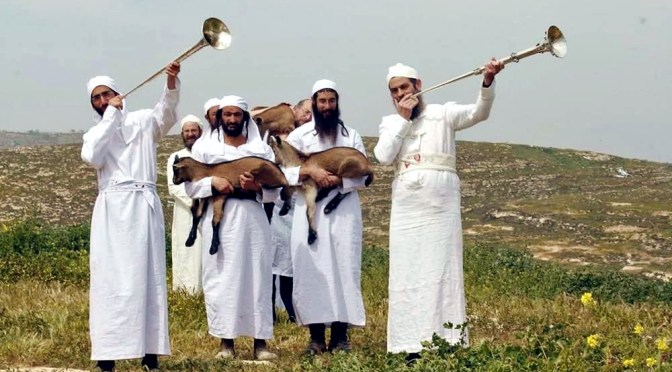
  • Then, at a time known only to him, the groom’s father summoned the groomsmen to announce the wedding ceremony with shouts and trumpets. We see this in the future in Matthew 24:31. The father started the process; he’ll finish it when he’s ready. So, Jesus’ comment, “But of that day or hour no one knows, not even the angels in heaven, nor the Son, but the Father alone” (Mark 13:32) made sense to the disciples.

I realize that some people use Jesus’ statement to support an anytime, imminent return and judgment. However, there will be a sequence and signs, as we’ll see in the fall feast articles. Next week, we’ll move to the fall feasts, likely related to Christ’s eventual return and the transition of the ages, including the marriage feast I mentioned above.

Blessings and peace,

Dr. Ron Braley
Jesus in the Passover

Last week, I introduced the feasts and festivals God ordained about 3,500 years ago. Four happen in the springtime and three in the fall. The spring feasts/festivals are Passover, Unleavened Bread, First Fruits, and Pentecost. The fall festivals are Trumpets, Atonement, and Booths (Sukkot). The feasts and festivals were types (dress rehearsals) to be fulfilled by Jesus: the spring feasts at His first coming and the fall feasts upon His return. In this column, we’ll take a deeper look at how He fulfilled the feast of Passover about 2,000 years ago.

First, the original Passover in about 1445 BCE was part of the final plague in God’s plan to free the Israelites from Egyptian slavery. In the 10th plague, God took the life of every firstborn male, both human and animal. That is unless a God-fearing person such as the Israelite put the blood of a blemish-free lamb above the door and on the doorposts as a sign that death should ‘pass over.’

Second, Jews were (and are) to remember what God did for them through the annual Passover feast. The priests would select blemish-free lambs from a holding pen at the appropriate time in March or April (depending on the lunar calendar). They would then inspect them for four days before sacrificing the animals to be cooked and eaten during an evening meal to remember the original Passover. Jesus became the blemish-free lamb (sacrificially speaking) inspected for four days by the religious leaders and slaughtered to spill His blood to free God-fearing Christ-followers from sin and death. His sacrifice has released them from the bondage of sin just as God freed the Israelites from the bondage of the Egyptians.

Third, the bread had to be cooked in a hurry without yeast. There was no time to let it rise before the Israelites had to ‘beat feet’ in a hurry to escape the wrath of the Egyptian Pharoah. This flatbread, still cooked and eaten during the annual Passover feast, has tiny holes in it and the stripes made by cooking over a fire and grating. Some believe that these represent the piercings and stripes Isaiah foretold (Isaiah 53:5) and Jesus fulfilled.

Finally, the Passover feast incorporates four cups of wine. The third is called the ‘Cup of Redemption’ and is likely the one Jesus presented to His disciples as the cup of the new covenant (Matthew 26:27-28). Just afterward, He explained that He would not drink with them again until they are together in heaven in the future (verse 29). Indeed, we see in Revelation that God-fearing Christ-followers will celebrate the marriage feast in heaven together when all will be fulfilled (Revelation 19:6-9), and we will enjoy this fourth cup of wine, aptly named the Cup of Praise.  Next week, let’s dive head-first into the next feast/festival ordained by God in the spring feasts: Feast of Unleavened Bread.

Blessings and peace,

Dr. Ron Braley (www.ronbraley.com)
The Feasts of God, an Introduction

God appointed certain times for specific things (Leviticus 23:4) and put stars, planets, and constellations in a particular order and position to mark them. (Genesis 1:14). For instance, some seasons and feasts were, and are, dress rehearsals for fulfilling God’s words. Jesus’ first coming in the 1st century AD and his second coming to occur at the end of our current age/world (Colossians 2:16-17) have fulfilled (and will fulfill) them. What about the feasts?

God ordained seven of them. Four occur in springtime: Passover, Unleavened Bread, Firstfruits, and Pentecost. Three more happen in the fall:  Trumpets (Rosh Hashanah), Atonement, and Tabernacles (Sukkot). The Jews were required to visit the Temple in Jerusalem for three feasts: Passover, Pentecost, and Tabernacles. Let’s take a brief peek at each of the seven events.

Spring Feasts of the Lord (fulfilled by Jesus’ first coming): Roughly March to May)

Feasts of Passover and Unleavened Bread: These first two spring feasts commemorate the salvation of the Hebrews from God’s judgment against Pharaoh and their exodus from Egypt in about 1445 BC. Passover commences on the 14th day of the first month at twilight. The Feast of Unleavened Bread lasts for seven days, beginning the day after Passover.

Feast of Firstfruits: This marks the beginning of the harvest period and allows Israel to present the first fruits of that harvest to God in thanksgiving. It occurs 50 days before the Feast of Weeks.

The Feast of Weeks (Pentecost): This feast happens 50 days after the feast of Firstfruits to signal the end of the grain harvest and give thanks to God for His provision.

Fall Feasts of the Lord (will be fulfilled by Jesus’ return to earth): September or October

The Feast of Trumpets: This ‘memorial of blowing of trumpets’ happens on the first day of the seventh month (usually September).

The Day of Atonement: The event is meant to be a time of atonement for the Jews and will most likely mark the manifestation of salvation and reconciliation between God and Israel at the end of the ‘time of the gentiles’ (cf. Luke 21:24 and Romans 11:25-27).

The Feast of Tabernacles: Finally, this feast commemorates the Israelites’ time in the desert just before entering the land of Canaan. During the festival, which lasts seven days, Jews are compelled to live in structures (booths) made of branches, twigs, and leaves. The event will most likely be fulfilled when God makes all things new and once again resides with people in combined heaven and earth.

Where will we go next week? Let’s kick off our deep dive into God’s ordained feasts by learning of Jesus in the Passover!

Blessings and peace,

Dr. Ron Braley

Living Water: Refreshing & Transformative

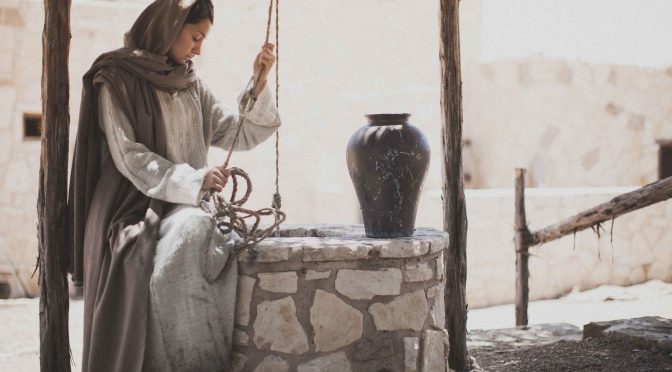
Have you ever heard of the ‘woman at the well’—the Samaritan woman who believed in Jesus and ran throughout the town telling the good news of the Kingdom of Heaven to anyone who would listen? I thought so! But what do you know about the ‘living water’ God offered her (and still does through Jesus)?

“Jesus answered and said to her, ‘If you knew the gift of God, and who it is who says to you, ‘Give Me a drink,’ you would have asked Him, and He would have given you living water.’” (John 4:10) “But whoever drinks of the water that I will give him shall never thirst; but the water that I will give him will become in him a well of water springing up to eternal life.” (John 4:14)

The ‘living water’ is the life that comes only through God. The Old Testament folks knew this through their prophets, and they looked forward to the day when the Living Water (the manifestation of God’s promise through Jesus) would come. The Samaritan woman, not knowing of the Old Testament references, believed that Jesus was talking about fresh, running water like the spring that fed the well. So, why didn’t the Samaritan woman understand what Jesus said?

The Samaritans honored only the first five books of the Bible. So, they didn’t know about the Living Water promise through the prophets. For instance, through Jeremiah’s prophecies, we learn that God was, and is, the fountain of Living Waters (Jeremiah 2:13 & 17:13). And from Isaiah, we learn of the Living Water as springs of salvation (Isaiah 12:2-3). According to the Apostle John, Jesus is the One who can give Living Water that comes from the Father above, and our faith in Him and the resulting faithfulness bring the rivers of Living Water by the Spirit. (Joh 4:10, 7:38, & 3:5).

Also, consider Jesus’ glimpse into the future when all who are God’s in the age to come will be continually refreshed by this Living Water: “Then he showed me a river of the water of life, clear as crystal, coming from the throne of God and of the Lamb … The Spirit and the bride say, “Come.” And let the one who hears say, “Come.” And let the one who is thirsty come; let the one who wishes take the water of life without cost.” (Revelation 22:1 & 17)

So, the Living Water is the refreshing God gives. How do we receive it? By answering God’s call with complete devotion to Him. He will then provide you with His Spirit (hence, the regeneration from above and the Spirit from John 3:5). Where will we go next week? Well, Passover is coming. So, I thought I’d introduce the feasts and festivals ordained by God and then dive into each one in the following weeks.

Blessings and peace,

Dr. Ron Braley

How Dry I Am! How Dry . . .

“Dude! I don’t I feel God’s presence? Maybe He has left me!” You’d be surprised at how often these thoughts or questions come up! Perhaps you’ve wondered or asked them yourself. It’s OK. Let’s talk about why we think we need to ‘feel’ the presence of God.

Our creator designed us to bear His image.

“Then God said, “Let Us make man in Our image, according to Our likeness . . . God created man in His image, in the image of God He created him; male and female He created them.” (Genesis 1:26-27)

Do you know that He and the One we know as Jesus felt emotion (and, logically, still do)?

God: “Just as a father has compassion on his children, So the Lord has compassion on those who fear Him.” (Psalm 103:13)

Jesus: “Looking at him, Jesus felt a love for him . . .” (Mark 10:21); “When the Lord saw her, He felt compassion for her, and said to her, ‘Do not weep.’” (Luke 7:13)

We are imagers of God. He operates by free will; so do we (with good or bad consequences!). He feels; we feel. So God understands our emotions. The downside is that we can mistake feeling for Spirit and go into a tailspin when we don’t ‘feel’ Him. The truth is that, although our interaction with God can produce human feelings, the Spirit of God isn’t an emotion. He is either with us or not, regardless of what we feel. Old Covenant Elijah and David exemplify this reality.

God was with Elijah, as evidenced by His destruction of pagan priests and an animal sacrifice (1 Kings 18:20-40). He was probably on top of the world! Yet, he had a complete reversal when running from King Ahab soon afterward. Elijah was so depressed that he wished to die. He didn’t ‘feel’ the presence of God. However, he learned that God had not left Him as revealed in a ‘gentle wind’ (1 Kings 19:11-13).

David? Within the first 100 Psalms, you’ll discover quickly that David’s emotions were up one minute, down the next. He knew that God was his foundation (e.g., Psalm 18), but, later, he cries, “Where are you?!?” (as in Psalm 13).

And then there’s my dear wife, who felt like she was in a ‘spiritual desert’ for several years. Once she realized that God had been with her all the time and was waiting for her to do her job of introducing His Kingdom to others in work, play, and life, her outlook changed, and she’s been fine ever since.

In summary, our emotions (or lack thereof!) may keep us from remembering that God gives His Spirit to His own; feelings are ours. Next week, we’ll take a deep dive into Jesus’ washings in the upper room as we contrast born-again forgiveness and continued forgiveness.

Blessings and peace,

Dr. Ron Braley

White Robes & Green Thumbs

What do white robes and green thumbs have to do with each other? Lots! In our Christian faith, you must have both to grow and persevere until the rescue (salvation) that will come when Christ returns (1Peter 1:3-5). Allow me to explain.

White robes imply a setting apart (holiness) from worldly things for the things of God. And the things for which we’re to be set apart are purity and good works and spiritual growth and maturity.

“For we are His workmanship, created in Christ Jesus for good works, which God prepared beforehand so that we would walk in them.” —Ephesians 2:10.

Don’t be fooled into thinking that belief without productive faith will buy ‘fire insurance!’ Jesus said that would result in destruction (John 15:2-6). James confirmed that knowledge without action is dead (James 2:14-26). But righteousness (abiding by God’s standard) and holiness will earn a white robe and rescue at the end of this world and an eternity with God:

“After these things, I looked, and behold, a great multitude which no one could count, from every nation and all tribes and peoples and tongues, standing before the throne and before the Lamb, clothed in white robes, and palm branches were in their hands … And he said to me, “These are the ones who come out of the great tribulation, and they have washed their robes and made them white in the blood of the Lamb.” —Revelation 7:9-14.

White robes are good. But where does the ‘green thumb’ fit in? Well, living by God’s standard and doing good works out of faith don’t come naturally. They happen because of a change of heart (mind) and spiritual maturity. We must decide to receive the wisdom of God and learn how to grow it and put it to work. Jesus explained this in a parable about spiritual soil (Matthew 13:1-9 (parable) and 18-23 (explanation)).

Briefly, the parable showcases four kinds of people as an analogy of sowing and soil. The first is on no ground, the person who doesn’t understand the things of God and rejects them. The second is rocky soil: receiving wisdom but being unproductive. The third is thorny ground, representing the worrisome and greedy, intentionally and selfishly unfruitful. The fourth is good soil: the person who receives the good news of God’s Kingdom and matures accordingly. The green thumb in good soil earns a white robe.

Do you have a ‘white robe?’ Well, it depends on your soil and willingness to receive truth and grow in it. What kind of soil are you? Let me know if you need some fertilizer! I realized too late that I was to address healthy conflict resolution and dealing with anger last week. So, let’s go there next week.

Blessings and peace,

Dr. Ron Braley
“I Am” or “I Will Be”??

You may have heard God referred to as “The Great I AM.” In fact, Exodus 3:14 states that God is “I AM WHO I AM” in most if not all Bibles. But did God really call Himself the “I AM” in the original language as if He needed to prove His existence? Or did the Hebrew phrase mean something else? Let’s see.

About 500 years after God formed a covenant with Abram, Moses encountered God. He asked about His name in Exodus 3:13-14: “Then Moses said to God, “Behold, I am going to the sons of Israel, and I will say to them, ‘The God of your fathers has sent me to you.’ Now they may say to me, ‘What is His name?’ What shall I say to them?” God said to Moses, “I AM WHO I AM;” and He said, “Thus you shall say to the sons of Israel, ‘I AM has sent me to you.’”

The ancient Hebrew language in Exodus 3:13-14 refers to God as Ehyeh:  “And God said to Moses, ‘Ehyeh-Asher-Ehyeh.’” He continued, “Thus shall you say to the Israelites, ‘Ehyeh sent me to you.’”

The Hebrew word Ehyeh was understood, and, I believe, is best translated as, “I WILL BE—not “I AM.” Ehyeh-Asher-Ehyeh should be understood as “I WILL BE WHAT I WILL BE.” There’s evidence showing that early Church Fathers wrote it this way. This rendering is also present in the first modern English translation of the Bible (Myles Coverdale, 1535).

Now, I realize we’re told that God is the ‘Great I Am.’ But this translation may not follow the intended meaning of the Hebrew text. And, it implies that God needs to convince people that He exists. The rendering of “I WILL BE” makes much more sense when we remember that God is a God of action, of kept promises. For instance, He will be a provider (Matthew 6:26), be a shepherd (Psalm 23), and be a healer (Exodus 15:26). Here are two other examples:

“And I will bring them back and they will live in the midst of Jerusalem; and they shall be My people, and I will be their God in truth and righteousness.” (Zechariah 8:8)

“FOR THIS IS THE COVENANT THAT I WILL MAKE WITH THE HOUSE OF ISRAEL AFTER THOSE DAYS, SAYS THE LORD: I WILL PUT MY LAWS INTO THEIR MINDS, AND I WILL WRITE THEM ON THEIR HEARTS. AND I WILL BE THEIR GOD, AND THEY SHALL BE MY PEOPLE.” (Hebrews 8:10)

God will indeed be yours if you will be His! Reach out to take the next step! So, what will we dive into next week? We’ll explore our deadly consumeristic “McDonalds” Christianity.

Blessings and peace,

Dr. Ron Braley
Christmas, the Retold Story!

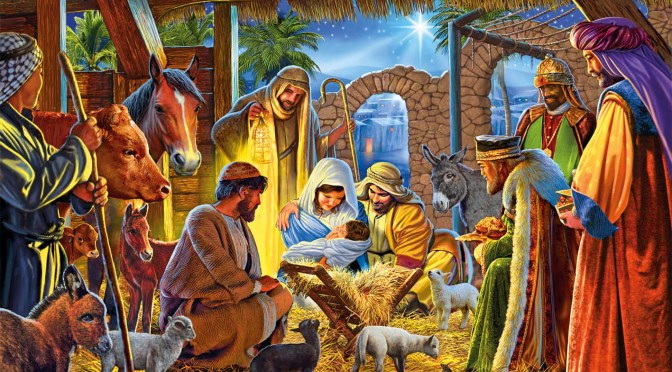
Christmas is full of traditions, including the story depicting Jesus’ birth. Some renderings sport sheep, camels, and donkeys with costume-clad humans for effect. The event makes us feel good, and it can be a great time of fun and family. But is there more to the story—perhaps stuff behind the scenes that would make it more meaningful if known? Let’s see.

First, the Son of God, born a son of man, has been around since our universe’s creation (John 1:1-4).

Second, this Son of God had to become human for a reason: to restore the relationship between Creator and creation by paying the penalty for the first humans’ rebellion, and crushing evil (e.g., Genesis 3:15).

But paying the price could only be done by someone who lived sin-free. God began to send clues about this coming perfect Savior through various prophets like Isaiah:

“Therefore the Lord Himself will give you a sign: Behold, a virgin will be with child and bear a son, and she will call His name Immanuel.” (Isaiah 7:14)

This Prince would be born in about 4 BC and eventually crucified, as shown to the prophet Daniel 500 years before Jesus came to earth (Daniel 9:25-26). His birth brings God’s peace to people with whom He is pleased (Luke 2:14), but it prompted the wrath of a man, Herod (Matthew 2:1-12). For Jesus’ safety, an angel told Joseph and Mary to escape to Egypt until Herod’s death (Matthew 2:13-15). How would the journey be possible? After all, travel and daily life required resources, then just as they do now. Allow me to introduce the wise men.

To fully appreciate their contribution, we must return to Persia 500 years earlier, when Daniel earned great respect and treasure. He was also well-trained in Babylonian arts, including astronomy. He knew when Jesus would be born and would’ve been familiar with Micah’s prophecy about Jesus’ birth in Bethlehem (Micah 5:2). 

So, Daniel, the Jew who spent his life in Persia, had treasure, knew how to chart star movements, and knew where Jesus would be born as well as the timeframe. Therefore, we should not be surprised that Persian magi (wise men) knew that Jesus would be the promised King and the alignment of the stars at the time and place of His birth. Daniel’s great wealth was likely the resource that funded Jesus’ trip to Egypt until Herod’s death. Our great God is indeed the master orchestrator who crafts all things according to His good pleasure!

“And we know that God causes all things to work together for good to those who love God, to those who are called according to His purpose.” (Romans 8:28)

Are you interested in making a fresh start physically, emotionally, or spiritually? Perhaps you’re interested in keeping personal goals. Join me next week when we’ll readdress fresh starts in Renewed Beginnings.

Blessings and peace,

Dr. Ron Braley

The Dangers of Being Ill-prepared

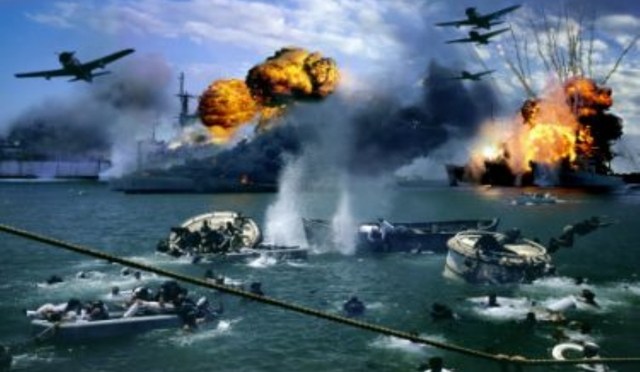
December seventh marks the 81st anniversary of the Japanese attack on Pearl Harbor, Oahu, Hawaii. Approximately 3,581 people were killed or wounded, 169 aircraft destroyed, and 19 ships destroyed or damaged (https://www.census.gov/history/pdf/pearl-harbor-fact-sheet-1.pdf). We must honor those who lost their lives defending our great nation! But as horrific and destructive as the attack was, the extent of the carnage was possible only because the island was unprepared for the enemy.

According to pearlharbor.org, the imminent attack appeared on newly installed radar equipment but was quickly dismissed as American aircraft (at the very least). The lack of training added to being unprepared for what was coming. Another challenge was the unpreparedness of aircraft, which were ill-parked, not fully fueled, and unarmed. As catastrophic as the December 7, 1941 events were, though, being unprepared for what will come at the end of this world will yield unimaginable physical and spiritual destruction!

In Matthew 25:1-13, Jesus used a parable to foretell how unprepared humanity will be at the end of this age before the great judgment (Matthew 25:31-46). In the parable, ten potential brides (humankind) anticipate the arrival of the bridegroom (Jesus). However, half are unprepared, missing their opportunity to attend the marriage ceremony (Revelation 19:6-10). Being prepared to make it through this life and enter the one to come requires complete devotion to God. We must stay that way, loving others and being transformed. If you’re unsure how to proceed, contact me through the Taylor Press editor or at Northview Christian Church (www.nvcc.church), and I’ll happily make time for you!

Anyway, those who belong to Christ (not just know of Him!) must also stay equipped to fend off spiritual attacks. According to the apostle Paul, we can do this by donning the complete protection God offers: His truth, righteousness (God’s standard), peace, faith, salvation, and teaching (Ephesians 6:10-18). We must pray regularly and often and be alert against subtle wickedness, such as the immoralities so prevalent today.

In summary, let’s decide to return to our God before it’s too late and then stand firm and prepared to resist what He hates. What’s next? Christmas is approaching, and some of us will celebrate the birth of One who suffered on our behalf. So, let’s consider that it is The Sufferer’s Holiday.

Blessings and peace,

Dr. Ron Braley,

ron@ronbraley.com  || ronbraley.blog

Fig Trees & The End of the World

“Ron, what do fig trees have to do with the end of the world and God’s judgment?” Lots! In the Bible’s New Testament, we find multiple end-of-the-world and fig events.

First, in Peter’s account that bears the name of his scribe, Mark, we find an interesting parable about Jesus cursing a fig tree on the Mount of Olives (Mark 11:12-14). Jesus picks out one tree of probably thousands to make a point about the nation of Israel. Although the figs weren’t ready to be picked (verse 13), there should’ve been fruit because there were leaves. The tree was like the Pharisees who gave an outward impression of [spiritual] fruit where none existed. Jesus, in an active parable, cursed the tree to demonstrate judgment that would come soon through Rome and at the end of this world. Think of this as a near-far prophecy revealed by Jesus with the fruitless fig tree. Are there other instances? Yep!

Second, Jesus explained days later to His disciples that any unproductive—unfruitful—person, including self-proclaimed Christians, would be destroyed in the last-days judgment:

If anyone does not abide in Me, he is thrown away as a branch and dries up; and they gather them, and cast them into the fire and they are burned (John 15:6). Also, read Matthew 25:31-46.

Or … If you keep My commandments, you will abide in My love; just as I have kept My Father’s commandments and abide in His love (John 15:10).

So, the one who bears spiritual fruit by obeying God’s commandments will not suffer the same fate (destruction) as the cursed fig tree. Alright—one more end-of-the-world figgie thingie!

Finally, Jesus used the blossoming of the fig tree at springtime in a when you see this, you will see that comparison to explain that the generation of people to see the signs He had just prophesied in verses 14-27 will also see His return:

Now learn the parable from the fig tree: when its branch has already become tender and puts forth its leaves, you know that summer is near. Even so, you too, when you see these things happening, recognize that He is near, right at the door. Truly I say to you, this generation will not pass away until all these things take place. (Mark 13:28-30).

I understand that some Christians believe that “this generation” in verse 30 refers to the disciples’ generation. However, “this generation” will be the one to see the end-of-the-world signs, which haven’t occurred. By the way: this fig tree instance is a Jewish idiom (figure of speech) just like Matthew 24:28 (dead bodies and vultures).

In summary, we who desire to abide with God must bear fruit or suffer destruction by our own choice. What’s next? Let’s have some fun with being thankful in all circumstances in A Gratitude Attitude for Latitude!

Blessings and peace,

Dr. Ron Braley