
Tag Archives: faith

Revisiting Thanksgiving

Family. Turkey. Stuffing. Gravy. Pies. Tums! There are so many things to be thankful for, and the Thanksgiving holiday is upon us! Expressing thanksgiving is good for our relationships and mental health. And it’s what God desires: “… in everything give thanks; for this is God’s will for you in Christ Jesus.” (1 Thessalonians 5:18). Although people have tended to be thankful, the formal holiday stems from the gratitude early Spanish and European settlers showed to the indigenous American Indians for feeding them and acclimating them to a new land and new ways.

It’s hard to say precisely when the first Thanksgiving occurred. One account pinpoints the autumn of 1621 when “at least 90 Wampanoag joined 52 English people at what is now Plymouth, Massachusetts, to mark a successful harvest.” Another group in Berkeley Hundred (now Virginia) celebrated their arrival to the new world as early as 1619. Supposedly, the meal consisted of scant oysters and ham. But they were thankful even without abundant turkey, ham, pie, cranberry sauce, etc. We find another, even earlier, Thanksgiving celebration in 1565 with the Spanish settlers and the Seloy tribe. But who established the official Thanksgiving holiday, and when?

The first Federal Congress passed a Thanksgiving Holiday resolution on September 28, 1789. Consequently, President George Washington proclaimed Thursday, November 26, 1789, a day for public thanksgiving. But President Abraham Lincoln made the holiday a regular, recurring event (the last Thursday in November) in 1863. Of course, commerce prevailed, and President Franklin D. Roosevelt moved Thanksgiving to the second-to-last Thursday of November in 1939 to lengthen the Christmas shopping season.

Regardless, we must always give thanks for everything that is benevolent and brings innocent joy, including each other, God’s provision and mercy, our jobs, and every breath we take. As a community, we must express thanksgiving for those who protect us. Decision-makers who govern deserve our thanks, too. And in our gratitude, we must show love and be thankful when we receive it. This is worship, and it brings healing and expresses our love for God while healing our relationship with Him.

Worship comprises ‘worth’ and ‘ship.’ It means to give worth to what we value. We express worthiness to God by acknowledging His protection, provision, salvation, comfort, grace, and mercy. How should we do this? By showing (not just telling!) gratitude. In other words, ‘being’ thankful through our actions. Purity. Prayer. Loving others as God loves. Sacrifice. Note how worship is full of action, not passivity.

Summary: Have a blessed Thanksgiving Holiday! Be thankful and enjoy the festivities. But don’t stop there: be grateful every day through your actions. In your gratitude for what you have received from God, give the same to others. Next time, I’ll share more about our diminishing Western Christianity and its evaporating sea of gray. Until then, give more than you receive.

Blessings and peace,

Dr. Ron Braley, MDiv, DMin.                                                                 

Growth Under Pressure: Rise & Fall of the Western Church

The Rise. Dr. Martin Luther King Jr. stated, “Change does not roll in on the wheels of inevitability, but comes through continuous struggle.” For the early Church, the struggle was between an ungodly world and Christ’s Kingdom. The tension brought Rome’s wrath, whose leaders murdered Christians and severely limited their ability to engage in commerce. Yet, Christianity grew at about 40% per year!

How? Christians understood that adversity is a natural part of the journey and that perfection and hope emerge (Romans 5:3-5; James 1:2-4). They took the mandate to image God through imitation and replication seriously. For the compassionate, newly transformed, there was no other way. Being a costly faith and valuable religion also contributed to growth. Dietrich Bonhoeffer explains this well in The Cost of Discipleship: “Costly grace is the treasure hidden in the field; for the sake of it, a man will go and sell all that he has. … Such grace is costly because it calls us to follow… It is costly because it costs a man his life, and it is grace because it gives a man the only true life. It is costly because it condemns sin, and grace because it justifies the sinner. Above all, it is costly because it cost God the life of his Son.”

The Fall. Conversely, Western Christianity declines by about 20% each year. Only 5% of churces make disciples who make disciples, and a mere 15% of most memberships live obediently. Spiritual lethargy through passivity has removed tension and stunted growth. Casting Crowns’ song Start Right Here states things well: “We want our coffee in the lobby. We watch our worship on a screen. We got a Rockstar preacher who won’t wake us from our dreams. We want our blessings in our pocket. We keep our missions overseas. But for the hurting in our cities, would we even cross the street?”

Spiritual lethargy and focusing on ‘nickels and noses’ produce a cheap grace that embraces comfort but opposes growth (in numbers or maturity!). Deitrich Bonhoeffer’s take: “Cheap grace means grace sold on the market like cheapjacks’ wares. The sacraments, the forgiveness of sin, … can be had for nothing. … Cheap grace is the preaching of forgiveness without requiring repentance, baptism without church discipline . . . Cheap grace is grace without discipleship …”

The Cure. Growth would require a shift that naturally creates tension between our ungodly world and Christ’s Kingdom introduced through Christ-followers. No more immoralities. No more business-minded attractional buildings, programs, or religions—just discipleship-born imitation, replication, and growth out of adversity.

Summary. The early Church grew astoundingly because of discipleship’s imitation, replication, and growth from persecution. Today’s Western Church will die if it doesn’t do the same. The Thanksgiving holiday is coming, so let’s explore it next time. Until then, fight the good fight, struggle victoriously, and embrace change.

God’s blessings and peace,

Dr. Ron Braley, MDiv, DMin.

Unify to Magnify – Part Three!

In part one, I wrote that God wants His children unified as one diverse but single Body. In part two, I explained why this is primarily absent today: Human religion. Can we return to an authentic Christianity that shared Communion elements, prioritized devotion over format, and unified despite minor differences? Maybe. Let’s begin our reunification journey by separating essential from non-essential beliefs and practices.

Big-T versus little-t truths. Some things are absolute ‘Big-T’ truths. For instance, a Son of God was sacrificed as a son of man to reconcile us to God. He arose three days later, giving us hope. But, how we practice commemorating Jesus’ death and our new covenant with God is a subjective ‘little-t’ thing. The same holds for how we’re baptized or praise God. Don’t get your underwear in a twist over these things, but understand and appreciate the differences. This requires education.

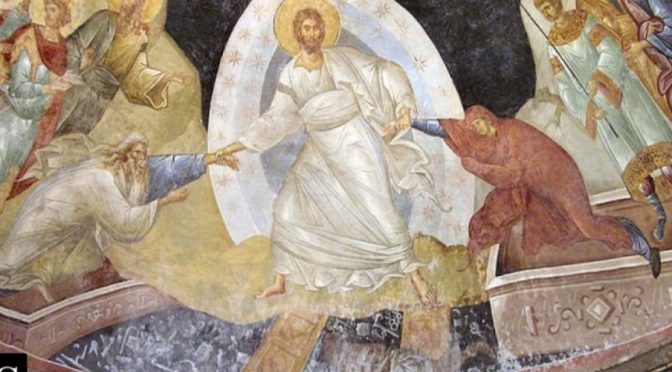
Education. We shun what we don’t understand. Education can resolve this. What Big-T truths should we stick to? Why do some churches practice little-t things like baptism, Communion, or praise differently? We should know. Some Christians use icons or pictures to focus prayers and worship. You might assume they’re worshipping idols if you don’t know the truth. Additionally, people and churches can contribute to reunification.

People. Here are things individuals can do to reduce disunity and be better ambassadors to God’s Kingdom:

  • Become educated: Understand where religious traditions came from and prioritize Christ’s Law of Love above them. Engage others in dialogue about beliefs and practices.
  • Appreciate little-t differences, and don’t shun people for them.
  • Participate in community love efforts.
  • Help with community disaster recovery efforts.

Churches. Disunity is fixed here! Prioritize reunification and Christian community by doing these things:

  • Be transparent about your traditions and prioritize biblical, not human, practices and Christ’s Law of Love.
  • Hold community training in Big-T stuff such as biblical languages, bible study principles, history, and the Scriptures.
  • Facilitate community praise events.
  • Facilitate community evangelistic efforts (focusing on Big-T fundamentals!).
  • Encourage dialogue with Christians outside your church; perhaps have speakers share their practices to break down barriers.
  • Collaborate on community love and recovery efforts.

Unity examples. Here are examples of unification and love over religion:

  • A local Thursday night home-based fellowship comprises Catholic, Baptist, Church of Christ, and non-denominational members who enjoy prayer, Communion, testimonies, and interactive learning. We also charitably love each other and, collectively, the community.
  • Multi-denominational pregnancy centers that show Christ’s love while working to mitigate abortion.
  • Multiple churches serving the community through Shepherd’s Heart.
  • The earliest Church, diverse but loving and irreligious.

Summary. Churches must unite in Big-T truths while enjoying diverse little-t practices through education and love. What’s next? Learn how original Christianity as a costly faith flourished because of godly modeling and endurance under incredible pressure—not praise bands, light shows, motivational speakers, or other consumeristic attractions. Meanwhile, be an active and collaborative member of Christ’s Body.

God’s blessings and peace,

Dr. Ron Braley, MDiv, DMin.
Unify to Magnify – Part Two!

In part one, I wrote that God wants His children unified as one diverse but single Body, sharing spiritual gifts, talents, and treasures. Metaphoric eyes, ears, feet, and hands, all different but working together to accomplish God’s desires. However, the Church has been drawn, quartered, and segregated. The ‘arms’ congregate and despise the ‘legs;’ the ‘eyes’ deprive the ‘hands’ of vision.  And we relegate many to hell because of differing religious practices and beliefs. This is a far cry from the original love and simplicity that characterized the Church, however. What happened?

Hands down, the root cause is people. We differ in beliefs and experiential pursuits, and like-minded folks assemble to create and share common traditions and practices. This is the heart of culture—faith, in our case. Let’s focus on cultural differences in how we praise God and engage religious theories and experiences.

Cultural Differences: Praise. Many people honor God in song or dance. Some prefer a gospel genre, while others swear that musical instrumentation is of the devil. Others enjoy hymns, while another church uses contemporary popular songs during services. Regardless, differences in how we praise God are primarily matters of personal taste and don’t generally pose a divisive threat to Western Christianity. Religious differences are another matter.

Cultural Differences: Religion. This presents the Body as ugly to the yet-to-be-churched, who marvel at our disunity. There are many Western Christian splinters, some prompted by one person’s beliefs in the fourth to fifth centuries CE. A Stoic by nature, he spawned new and contentious religious theories like original sin spread through sex and predeterminism (you have no hand in your final spiritual destination). Other church fathers rejected the latter theory, which was revitalized and formalized in the Protestant Reformation. Also, contention in baptism and communion remains.

  • Baptism. Water immersion is a public sign of intentional, saving devotion to God. One early Christian guide suggests cold, running water. Otherwise, warm or standing water is fine. None of the above? Spit! Now? We divide over infant baptism, whether water saves, and baptism’s effectiveness should any body part miss the water.
  • Communion. Early Christians remembered Christ’s sacrifice and a new covenant with God by sharing wine and bread, often as part of a ‘love feast.’ Now? We divide over how and where to take it, who can serve it, and how it works. You’ll be excommunicated in some circles if you share Communion elements with believers outside your church. My, how we’ve abandoned authentic and intimate sharing among believers for religion!

Summary. Christians congregate and isolate with like-minded people, often praising God through diverse musical traditions. However, the most divisive force is the different beliefs implemented by humans, not God. Religious contention has greatly splintered Christ’s Body, but that’s not God’s desire! In part three, we’ll explore ways individuals and churches can unify despite differences in practices and non-essential beliefs.

Blessings and peace,

Dr. Ron Braley, MDiv, DMin.

Faith-based Computer Networking

Decades ago, I managed computer systems and network teams at the University of North Dakota’s Aerospace College. Many intelligent people worked with and for me. Me? Not so much. I needed supernatural help on occasion (usually late at night when I was in way over my head!). I’d share those Spirit-enabled success stories with my wife but never labeled the practice until one particular evening.

I had invited a network administrator and his girlfriend to join us for a church-sponsored Valentine’s dinner. During the meal, my wife said, “You know how you pray because you don’t know what you’re doing?” My cohort blurted out, “Ah – faith-based network administration!” I’ll take it. After all, why break what works? But is praying for what I need wrong or selfish? It depends.

God encourages us to pray in our time of need—in dire straights or innocent desire for good things, not selfish gain or ambition. Praying to find car keys to rush a sick child to the hospital would be good and selfless. Asking God for a red sport car when you only need to repair the car you have probably crosses a line. Let me offer some quick guidance about asking for Godly help before continuing.

Someone recently said something like, “If God can love people how I think He should, then I can love Him!” Well, we don’t set moral standards; God does. He doesn’t owe us anything, let alone His ear, and He certainly doesn’t work for us! If our motives are impure or selfish, or we intend to rebel against His standards, God will not listen to us (Psalm 66:18; 1Peter 3:7; James 4:3). And we must be someone God knows in a complete (perfect) relationship if we expect anything from Him. Here are a few verses encouraging those in fellowship with God to ask for direction.

Remember that Jesus taught us to pray for deliverance from temptation and the evil one (Matthew 6:13). One Psalmist begs for God to order his steps and keep sin from overcoming him (Psalm 119:133). And Jesus’ brother James encourages us to ask God for wisdom and discernment (James 1:5). At the same time, Paul admonishes us to ‘pray about everything’ (Philippians 4:6). Do we have examples of this at work? Yep!

Paul got direction from God’s Spirit to go to Macedonia instead of Asia (Acts 16:6-10). Gideon, seeking guidance from God, asked for certain conditions (dry fleece, wet fleece) to confirm the future (Judges 6:36-40). The Jews similarly cast lots to receive guidance from God because they understood that He would direct the outcome according to His desires. Finally, King David continually sought wisdom from God. So should we.

In summary, God listens to His own and gives wisdom accordingly. What about the following article? Since we’ve touched on what God desires, let’s talk about how He seeks partners, not affirmation, zombies, or spiritual couch potatoes!

Blessings and peace,

Dr. Ron Braley

Faith, Hope, & Love, Part III: Love

Last week, we considered hope – confidence in our future with God. This week’s look at the love of faith, hope, and love, comes from an article I wrote several months ago titled, “How do I love Thee?” In particular, we’ll look at the unconditional, charitable action that must come as a result of our Christian faith.

Unconditional Love. This love doesn’t come and go with an emotional wind. It’s doing the right thing for the right reason despite feelings. Greek noun agape is this love that God has for all creation. Verb agapao is love action. God is love (agape); God loved and loves as we should (agapao).

For instance, God hasn’t always been happy with humanity but still loves so much that He gave His Son for all people and takes His time before bringing judgment.

We love, because He first loved us (1 John 4:19).

For God so loved the world, that He gave His only begotten Son, that whoever believes in Him shall not perish, but have eternal life (John 3:16).

The Lord is not slow about His promise, as some count slowness, but is patient toward you, not wishing for any to perish but for all to come to repentance (2 Peter 3:9).

… Peter said: “I most certainly understand now that God is not one to show partiality, but in every nation the man who fears Him and does what is right is welcome to Him (Acts 10:34-35).

So, how should we love?

… ‘YOU SHALL LOVE THE LORD YOUR GOD WITH ALL YOUR HEART, AND WITH ALL YOUR SOUL, AND WITH ALL YOUR MIND.’ This is the great and foremost commandment. The second is like it, ‘YOU SHALL LOVE YOUR NEIGHBOR AS YOURSELF.’ (Matthew 22:37-39).

According to Jesus and the apostles, we are to be kind and charitable to others besides honoring the Father with all we are and have. So, we will behave in specific ways if we remain with Christ and have the Spirit of God working within us. We will be patient, kind, charitable, gentle, and self-controlled (Galatians 5:22-23). Being self-controlled is essential to bringing the Kingdom of God to those who don’t know Christ (yet). We must not react angrily or speak hatefully – especially in this day of social media when and where we’re on public display! One hateful word, especially attacking character over behaviors, can make God’s Kingdom unattainable for so many people!

Remember that God has loved us first. In response, we must love people and give Him complete devotion. Do the right thing and watch what we say and write, understanding that we must remain patient, kind, gentle, and self-controlled despite how we feel. Finally, our love from faith must move us to care for others.

Next week, we’ll have a ‘whale’ of a time with Jonah!

Faith, Hope, & Love, Part I: Faith

Faith is something to which we belong or have. I am of the Christian faith, and I have faith. Many of us will say that we have faith, but what is it? How do we get it, and how does it relate to our relationship to God and people?

First, faith is belief – confidence. The apostle Paul tells us that it is why we hold on tight to the unseen things of our Christianity, whether of spirit or fulfilled prophecies (Hebrews 10:39 & 11:1).

Second, it is not meant to be blind faith! The Bible repeatedly teaches that we must learn wisdom and knowledge that lead to a healthy fear of God and salvation (2Timothy 3:13-17). Why? So that we can stand firm in persecution and confusion and walk in God’s ways and not be deceived, something that Paul warns will happen in the last days (1Timothy 4:1). Be forewarned: deceit can come from within our churches too, but we can stand firm by knowing the truth of God (Colossians 2:6-8).

Where does our non-blind faith come from? It comes from hearing, and hearing by the word of Christ (Romans 10:17), prayer, the Holy Spirit (for illumination), meditation (Psalm 1:1-2), discipleship (Ephesians 4:11-16), testimonies, and applying what we learn or experience.

Finally, faith MUST lead to action! All knowledge is useless to God and others if it doesn’t move us to act. That action is the agape, unconditional love, that feeds, houses, clothes, teaches, doesn’t react in anger, listens and encourages, and is kind. Here’s what Jesus’ brother James says about faith-born action:

Even so faith, if it has no works, is dead, being by itself. But someone may well say, “You have faith and I have works; show me your faith without the works, and I will show you my faith by my works.” You believe that God is one. You do well; the demons also believe, and shudder. But are you willing to recognize, you foolish fellow, that faith without works is useless?James 2:17-20.

But prove yourselves doers of the word, and not merely hearers who delude themselves. For if anyone is a hearer of the word and not a doer, he is like a man who looks at his natural face in a mirror; for once he has looked at himself and gone away, he has immediately forgotten what kind of person he was. But one who looks intently at the perfect law, the law of liberty, and abides by it, not having become a forgetful hearer but an effectual doer, this man will be blessed in what he does.James 1:22-25.

Next week, we’ll continue our faith, hope, and love journey by exploring how our confidence (faith) in what God has done and is doing assures us that He will do all that He has promised.

Blessings and peace,

Ron Braley

Why Bad Things Happen, Part II: Why??

Last week, we began examining “Why do bad things happen to me or any good person?” and learned that humanity separated from God, which introduced death and pain. We walked away from perfection and must deal with the consequences. This week, we’ll dig deeper into why bad things happen.

First, everyone is subject to fortune and misfortune, blessings, and catastrophe. Some wicked people will prosper – often because of deceit and injustice. Others will suffer from natural disasters or others’ bad choices despite their love for God and people.

Second, we experience the actions of others. Anyone can choose to harm us or who live carelessly.  But we know this – otherwise, there would be no need for end-of-the-world judgment and consequences. People will drive drunk and take lives. Some will steal and cause poverty and hunger. Others will, out of their anger or addictions, cause harm.

Third, we suffer from our actions at times (e.g., Matthew 26:52). Our lifestyles introduce risk. People who drive or ride in vehicles run the risk of being maimed or killed in accidents. Those who jump out of airplanes may die. Sportspeople may be killed or seriously injured, and so might those of us who participate in the national or local defense.

Also, our technology creates many risks! Cancer increases may be related to chemicals and carcinogens with which we pollute the air, water, and food. Genetic engineering may increase crop and livestock bounty but introduces the risk of human mutation and illnesses. God didn’t force us to employ electricity, vehicles, or chemical or genetic engineering, and yet we blame Him when we reap the consequences associated with our lifestyles and environments!

Finally, faithful followers of Jesus may suffer trouble out of faith (Luke 14:27-30):

Whoever does not carry his own cross and come after Me cannot be My disciple. For which one of you, when he wants to build a tower, does not first sit down and calculate the cost to see if he has enough to complete it? Otherwise, when he has laid a foundation and is not able to finish, all who observe it begin to ridicule him, saying, “This man began to build and was not able to finish.”

Next week, we’ll continue this train by considering how we can restrict, or enable, the presence of God in our lives. So, join me for Part III!

Blessings and peace,

Ron Braley

The “A-B-C’s” of Sin and Righteousness

What is righteousness? What is sin? What do the two have to do with each other?

~ Sin Defined ~

Make no mistake – there’ll be a reckoning at the end of this current age, or era. (Please refer to my book Finding the End of the World for details regarding the end of our world as we know it!) It’ll come as judgment and consequence both to those who were and are obedient to God’s instructions and those who’ve been disobedient. This disobedience, rebellion, or sin must be dealt with one way or another – either through a true change of heart that leads to a change of behavior (repentance) and resulting forgiveness, or by judgment and sentencing.

Many things are often loosely defined as sin because they contradict manmade doctrine even if there’s no apparent rebellion against God’s ways. Some core behaviors should be called sin but aren’t. Understanding what sin really is and how it often manifests itself will be crucial to avoiding it and keeping our eyes on the prize of eternal life with God and His Christ. Here are the primary forms of sin as identified by the Strong’s Concordance for the Old and New Testaments (‘H’ = Hebrew Old Testament; ‘G’ = Greek New Testament):

Hebrew or Greek Word for Sin Primary Meaning Strong’s #
khat-aw-aw’ offense Η2401
khaw-taw’ to miss Η2398
hamartia offense G266
hamartanō missing the mark G264

For the most part, sin is defined as an offense or ‘missing the mark’. But missing what mark? Offending whom? In this author’s opinion, sin is missing the standard (mark) set by God and is therefore offensive to Him. Wherever there’s sinful behavior, there’ll be something contrary to God’s ways or commandments. Let’s look at these standards and commandments in more detail in order to gain a better understanding of what we’re to strive for.

Jesus said, “If you love me, you’ll obey my commandments.” (cf. John 14:15 & 23). This implies that not keeping His commandments will reflect a lack of love, or rebellious behavior – sin. What were these commandments? That we love God appropriately and man charitably (cf. Matthew 22:35-40). He tells us that the Law [of Moses] and teachings of the prophets are summed up in those two statements. This makes sense since nearly everything we can think of to do is related to our treatment of God and man. Here’s an interesting and related tidbit: the first five of the Ten Commandments relate to our treatment of, and obedience to, God; the last five dictate some basic guidelines for how we should treat our fellow man. Everything we do – or want to do – should be measured against those two categories. Want to know whether a particular action (whether intended or carried out) is a sin? Just consider how it will affect God or fellow human beings. Is it really that cut and dry?

Scripture clearly teaches that there’s a distinction between an isolated rebellion against God (sinful action that we need to repent of and be forgiven for) and practicing sinful behavior. While the former can be resolved along the journey toward righteousness, the latter will bring clear separation from God and invoke judgment! Practicing sinful behavior, which certainly implies a lack of repentance, will, as I’ve said several times, result in God’s wrath at the end-of-the-age judgment to come (see 1Corininthians 6:9-10 and Galatians 5:19-21, for instance).

We know that sin is rebellion against God and His ways. Sin without repentance and the practice of sin will lead to separation from God and ultimate judgment. But how do we gain an understanding of God’s ways – the standards by which we should compare all we think and do? We can only come to know the mind of God and His instructions through two ways: (1) Communication with Him through the Spirit that resides in us once we’ve truly believed in the Christ and His incredible gift of salvation; (2) knowledge of God’s instructions and ways through exposure to the messages and testimonies found in the Bible.

 “But the Helper, the Holy Spirit, whom the Father will send in My name, He will teach you all things, and bring to your remembrance all that I said to you.” —John 14:26.

So faith comes from hearing, and hearing by the word of Christ. —Romans 10:17.

You, however, continue in the things you have learned and become convinced of, knowing from whom you have learned them, and that from childhood you have known the sacred writings which are able to give you the wisdom that leads to salvation through faith which is in Christ Jesus. All Scripture is inspired by God and profitable for teaching, for reproof, for correction, for training in righteousness; so that the man of God may be adequate, equipped for every good work. —2 Timothy 3:14-17.

~ Righteousness Defined ~

“ . . . for correction, for training in righteousness; so that the man of God may be adequate, equipped for every good work. —2 Timothy 3:14-17.

By Strong’s definition, righteousness is ‘equity of character or action; by implication innocent and holy – just and right; right – justice and its execution’ (see the Strong’s definitions and related verses below).

Essentially, we’re righteous if we’re living right and are just in our actions. This is the opposite of sinful behavior. Sin and righteousness are incompatible – we can’t be both at the same time!

Want to be righteous? Learn God’s ways (again, see 2Timothy 3:14-17 and others that tell us to immerse ourselves in the Scriptures of the Torah – Old Testament – and letters and Gospel accounts of the New Testament to accomplish this).

The righteous will be rewarded; the sinful will be punished. Sheep or goat – which will you be in the last days?

Keep an eye out for “Finding Answers to Stuff Churches Don’t Discuss!” scheduled for a mid-2015 publication. There, you’ll find roughly 60 topics related to daily life (such as sex, religion, finances, tattooing, and everything in between!) along with practical application of God’s guidance for navigating those difficult waters!

And, for a very comprehensive and detailed study of the very important topic of God’s judgment to come and being rescued from it, feel free to read my 2011 guide titled, “Finding the End of the World” available at Amazon, Barnes and Noble, and from www.ronbraley.com in paper and e-book formats. In the guide, you’ll find roughly 500 pages of building blocks to help you do your own complete and unbiased study based on Scripture and history!

Apocalyptic Misquotes . . . Part XII “Nothing can separate us From Jesus!”

Misquote: Nothing can separate us From Jesus!” This misunderstanding hinges on taking Romans 8:35-39 out of context and paves the way for dangerous doctrines. Here’s the abused reference:

Who will separate us from the love of Christ? . . . neither death, nor life, nor angels, nor principalities, nor things present, nor things to come, nor powers, nor height, nor depth, nor any other created thing, will be able to separate us from the love of God, which is in Christ Jesus our Lord. —Romans 8:35-39.

Actually, WE can separate ourselves from the love of God (which is action – not emotion!) through disobedience and our own lack of faith-born action.

To understand and apply Paul’s intended message, we must answer these questions:

  1. “Who was Paul speaking to and in what context?”
  2. “What is the ‘love of God’?
  3. “Who are ‘we’ who can’t be separated from God’s love?”

Let’s tackle the question regarding Paul’s audience and the context of his letter to the Church in Rome first. Paul was speaking to both Jew and non-Jew (Gentile) believers, and the overarching theme of his letter was the gift of salvation and eternal life to those who choose to follow, being led by the Spirit. This theme included a reminder that nothing can keep the righteous from God’s mercy and protection. Here’s a breakdown of the first eight chapters of Paul’s letter.

Chapter One: The righteous live by faith; all others will experience God’s judgment (v.17-18).

Chapter Two: More about the judgment of the righteous, who “by perseverance in doing good seek for glory and honor and immortality” will attain eternal life (v.7) and the unrighteous who practice evil and will suffer God’s wrath.

Chapter Three: All – both Jews and Gentiles – have sinned and fallen short of God’s glory. Righteousness isn’t attained through works of the Law (note: this is a reference to the Law of Moses and NOT ammunition to claim that belief needs not result in action!).

Chapter Four: More about righteousness through faith (not works under the Law).

Chapter Five: The gift of redemption through our Christ. Also included is a reminder about what the faithful may need to endure and the growth that comes as a result: “. . . tribulation brings about perseverance; and perseverance, proven character; and proven character, hope; . . . through the Holy Spirit who was given to us.” (v.3-5).

Chapter Six: God’s grace offers no leeway to continue in sinful behavior. We are to be obedient and not sinful (see “live by faith” in Chapter One; “doing good” in Chapter Two; perseverance in Chapter Five, etc.). “. . .  But thanks be to God that though you were slaves of sin, you became obedient from the heart to that form of teaching to which you were committed . . .” (v.16-17).

Chapter Seven: Comparing and contrasting the law of God and the law of sin.

Chapter Eight: No condemnation for those who are in Christ Jesus. By the way: the way ‘in’ is used implies that there’s no distinction between us and our Christ with regard to our behavior . . . “However, you are not in the flesh but in the Spirit, if indeed the Spirit of God dwells in you. But if anyone does not have the Spirit of Christ, he does not belong to Him.” (v.9)  “For all who are being led by the Spirit of God, these are sons of God.” (v.14)

Next, we need to define the ‘love of God’ the righteous can’t be separated from. This is the action-based agape love made manifest by God’s grace through Jesus’ sacrifice. It has nothing to do with emotion and is the same kind of ‘love’ we’re told by Jesus to have for him and our God through obedience (John 13:34-35 and 14:15-31, James 2:14-26, and many others). This is the ‘fruit’ resulting from the Spirit at work in the lives of the righteous. No obedience to God and Christ’s commandments, no Spirit. No Spirit, no fruit . . .

Finally, although it should be clear now, let’s look at ‘who’ can’t be kept from God’s saving grace. As we saw in several chapters climaxing with Chapter Eight, they are the righteous – those who are led by the Spirit, live by faith, do good, persevere, and are obedient to our God and Christ. They don’t practice sin and aren’t those who only believe and yet don’t act.

In summary, these early chapters of the letter to the Romans establish a baseline of righteousness and unrighteousness and introduce the choice that can bring life. Those who choose to accept God’s gift of redemption through an ongoing covenant by being will be rescued from God’s judgment to come, and nothing can change that. Conversely, the unrighteous disobedient (including those ‘believe’ but are inactive) will experience God’s wrath. Be righteous and live!

For a very comprehensive and detailed study of the very important topic of God’s judgment to come, feel free to read my 2011 guide titled, “Finding the End of the World” available at Amazon, Barnes and Noble, and from www.ronbraley.com in paper and e-book formats. In the guide, you’ll find roughly 500 pages of building blocks to help you do your own complete and unbiased study based on Scripture and history!