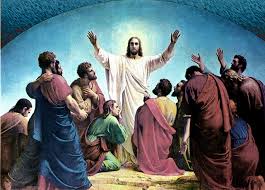
Tag Archives: Jesus

Christian Nation? Really??

Amazingly, I still hear people refer to our country as a “Christian nation”.

To be known as a “Christian nation”, most of our citizens must be followers of Jesus. Note my use of the word follower. This implies action from faith, not just belief itself. Those who only believe join the ranks of the demons God created hell for (James 2:19 and Matthew 25:41).

So, are we a nation of followers of Jesus? No! Statistics show the majority of people in America believe in some higher power or a God. That makes us a nation of believers . . . in something. But, are we followers?

Jesus said that if we love Him, we’ll obey His commands to treat our heavenly father appropriately and fellow man charitably, and tell others of the good news of Salvation and disciple them (Matthew 22:36-40, 25:31-46, and 28:19-20). This is action out of faith and outward-bound as opposed to the trend of inward-bound prosperity gospels, blessings for hire, emotion mistaken for the Spirit, and entertainment mistaken for worship prevalent in our western Christian culture. Following implies we look away from ourselves and act as God would act, condone what He condones, and hate what He hates. Is this the case in America?

Our nation promotes abortion, homosexuality, and excessive entitlements – all of which contradict God’s ways.  Leadership reflects the morality of those that those who elected them. So, let’s consider what they condone. Exit polls taken after the 2012 election (http://www.cnn.com/election/2012/results/race/president) showed this of voters supporting the winning party:

–          They are 62% of those who never attend religious services.

–          They are 67% of those who support legal abortion. There should be no doubt as to how God feels about murder – especially when don out of convenience.

–          They are 73% of those who support legalizing same-sex marriage, and 76% of that group admit to being homosexual. This behavior is in direct opposition to God’s intent and one of the specific behaviors He actually says He ‘hates’ through the use of the word abomination (Leviticus 18:22). It’s also one practice that will earn a one-way ticket to God’s judgment and hell (1Corinthians 6:9-10 and Revelation 21:8). Please note that there are other behaviors we can practice (i.e. murder, theft, other sexual immoralities, etc.) that will also earn God’s wrath.

We’re also painfully aware of the increase in taxes and national debt to support an alarming amount of entitlements. Although we could also discuss the moral and legal aspects of taking money from some people to hand to others, Scripture tells us that those who can but choose to not work shouldn’t eat (2Thessalonians 3:10).

So, because I doubt a nation could be identified by its minority, it’s safe to say we’re absolutely NOT a Christian nation. For the moral minority that actually follows our Christ: your rest is coming – persevere! Peace and blessings to you!  rb

God gets the Final Word!

We hear the phrase, “the Word of God!” quite often. And, we quote Paul who told Timothy that, “All Scripture is inspired by God . . .” But, what is that Word of God or Scripture? The fourth-century Vulgate? The 1560 Geneva Bible? The 1611 King James Bible? ‘Our Daily Bread’ devotional? None of them, actually.

The Scripture Paul referred to is the Torah, or Old Testament, available in Hebrew and in Greek in the first century. It was what the Bereans used to hold Paul accountable for his teachings of the prophetic fulfillment of the coming Christ by Jesus.

The word (lower-case ‘w’) represents the words spoken by God as when He spoke the world into existence or when He spoke of the coming Christ and our reconciliation with God through Him. In fact, the Word (upper-case ‘W’) is the manifestation of the reconciliation word(s) of God (i.e. Revelation 19:13).

So, what is the Bible and where does it come into play if not necessarily the Word of God? It’s a collection of ancient texts consolidated by groups of men after much arguing and debate; it contains the Torah and many first and second-century documents.

The Old Testament Torah is a collection of oral traditions, historical documentation, personal reflections of wisdom and love and lamentations, and prophecies – both current to the times and futuristic in nature. These were inspired by God and written by men.

The New Testament is a similar collection of historical and eyewitness accounts, letters full of wisdom from apostles, and prophetic and apocalyptic literature. The Gospel accounts of Jesus’ life, death, resurrection, and ascension were reiterations of what was spoken of or influenced by Jesus as was the Revelation given to John later. This collection was also recorded by men.

We’re creatures of free will and of differing intelligence levels and backgrounds. So, it’s truly amazing that God entrusted us to record anything related to Him or our Christ. But, despite that and the transliterations, translations, and interpretations that have introduced minor discrepancies in today’s Bible, the core words of God that promise hope of the future through the Word – our Christ – stands untarnished and remains intact.

What Word do you subscribe to?

Two Witnesses – Better Than One . . .

The savior of mankind, Jesus, foretold of two last-days witnesses who will proclaim the everlasting Gospel of reconciliation between God and man one last time before God’s incredible wrath against creation is poured out.

The two witnesses are identified as the two olive trees and two candlesticks that stand before God. You’ll find references to the two olive trees that stand before God in Revelation 11:4 and Zechariah 4:11-14:

Then I said to him, “What are these two olive trees on the right of the lampstand and on its left?” And I answered the second time and said to him, “What are the two olive branches which are beside the two golden pipes, which empty the golden oil from themselves?” So he answered me, saying, “Do you not know what these are?” And I said, “No, my lord.” Then he said, “These are the two anointed ones who are standing by the Lord of the whole earth.” —Zechariah 4:11-14.

These are the two olive trees and the two lampstands that stand before the Lord of the earth. —Revelation 11:4.

We can only guess at who these two end-times witnesses will be. Some believe they’ll be Enoch and Elijah because they were taken to heaven by God without suffering physical death. Others believe they’ll be Moses and Elijah because they were the ones who appeared on the mountain with Jesus and Peter (cf. Matthew 17:1-3) and because the miracles of the witnesses mirror those performed by Moses and Elijah.

What we do know is that the two witnesses will prophesy for three and a half years during the entire Great Tribulation sponsored by the Antichrist. They will have the supernatural ability to control the rain, turn water to blood, and smite the earth with plagues (this sounds a lot like what happened in Egypt during the exodus).

BEHOLD, HE IS COMING WITH THE CLOUDS, and every eye will see Him, even those who pierced Him; and all the tribes of the earth will mourn over Him. So it is to be. Amen

Let the Feasting Begin!

In His covenant with His bride, Israel, God ordained 7 feasts and festivals: 4 in the spring, and 3 in the fall.  While followers of Jesus aren’t forced to observe them, knowing of the events and their past, present, and future significance will help understand where we’ve come from and God’s covenant with Israel and our Christ’s covenant with the world are related.

~ Spring Feasts of the Lord (fulfilled by Jesus’ first coming) ~

Feasts of Passover and Unleavened Bread: These first two spring feasts commemorate the salvation of the Hebrews from God’s judgment against Pharaoh and their exodus from Egypt in about 1445 BC. Passover commences on the 14th day of the first month at twilight. The Feast of Unleavened Bread lasts for 7 days beginning on the day after Passover. Jesus fulfilled the role of Passover lamb sacrificed for the choice of salvation (just as with the Hebrews in Egypt), and He represented the removal of leaven (yeast) – sin, as we see in 1Corinthians 5:6-8.

Feast of First fruits: This marks the beginning of the harvest period and gives Israel an opportunity to present the first fruits of that harvest to God in thanksgiving. It occurs 50 days prior to the Feast of Weeks. Jesus fulfilled this event as the first fruits of the resurrected dead presented to the Father (1Corinthians 15:20 & 35-48).

The Feast of Weeks (Pentecost): This particular feast occurs 7 weeks and a day (50 days total) after the feast of First Fruits. The purpose is to signal the end of the grain harvest and give thanks to God for His provision. It’s also marked the fulfillment of Jesus’ promise to send the Spirit of God to empower His followers for ministry (John 14:16).

~ Fall Feasts of the Lord (will be fulfilled by Jesus’ return to earth) ~

The Feast of Trumpets: This ‘memorial of blowing of trumpets’ is to happen on the first day of the 7th month (usually September) and will most likely signal our Christ’s return to earth and the gathering of His bride at the ‘last trumpet’ (cf. Matthew 24:30-31 and 1Thessalonians 4:16-17).

The Day of Atonement: The event is meant to be a time of atonement for the Jews and will most likely mark the manifestation of salvation and reconciliation between God and Israel at the end of the ‘time of the gentiles’ (cf. Luke 21:24 and Romans 11:25-27).

The Feast of Tabernacles: Finally, this feast commemorates the Israelites’ time in the desert just before entering the land of Canaan. During the festival, which lasts 7 days, Jews are compelled to live in structures – booths – made of branches, twigs, and leaves. This practice most likely also represents the time of Jesus’ kingdom where He will dwell with man and once again be the protector and provider for Israel.

Which will it be for you – feast or famine (spiritually-speaking)?

Foods_(cropped)

Trinity . . . Exactly WHO or WHAT is our God??

God . . . Three in one? One in three? Slivers of the same? Or three distinct beings?

Despite the fact that religious leaders have gotten their underwear in a bunch over the trinity debate for centuries, Biblical texts refer to God in two ways: Corporately at the beginning of creation – Hebrew el-o-heem (Genesis 1:1-2 & John 1:1-14) and as God the Father. Different heavenly beings under corporate God are as follows.

  • Father: The father of spirits (Hebrews 12:9), the father who gives us the Spirit (Luke 11:13), and the father who forgives (Matthew 6:14-15).
  • Son: Took human form to live and die as a man in order to give humankind the choice of life through covenant with Him.
  • Spirit: Described as the ‘breath of god’, He is currently on earth to guide and instruct those who follow the Christ (John 16:13).

They’re corporately the same just like company employees or a husband and wife may be of one mind. Jesus pointed this out when claiming that He and His father were one and the same (John 14:11).  However, each is a distinct entity with beautiful attributes.

Different titles for God the Father based on His character and actions:

  • His true name, Jehovah/Yahweh – “I am that I am” – “I exist” (Genesis 2:4)
  • Creator and Father of spirits (Genesis 6:7, Ecclesiastes 12:5-7 & Hebrews 12:9)
  • Healer, Jehovah-Rapha  (Exodus 15:26)
  • Provider, Jehovah-Jireh  (Genesis 22:14)
  • Judge of the world through Jesus the Christ (Acts 17:30-31)

Regarding the Son of God: He came to earth and took human form (spirit in body like us) to become the final sacrifice for sin. He has earned the right to rescue us from judgment (Revelation 5) and sits in the kingdom of heaven at the right side of God the father (Ephesians 1:19-20).

What about the Spirit of corporate God? The Spirit is given by God the Father at the moment of true belief (Luke 11:13) and Acts 19:2).  He is also a teacher & helper to Jesus’ Followers (John 14:26 and 16:13, and 2Peter 1:21). Finally, the Holy Spirit also gives gifts to the Followers of Jesus to strengthen them. These include the tongues of men and angels along with interpretations, wisdom, knowledge, faith, healing, miracles, prophecy, and discerning of spirits (Acts 2:4 & 13, and 1Corinthians 12:7-10).

El-o-heem God corporately describes creator, savior, and helper – three distinct individuals working together to reconcile with mankind.  Who’s your god?

Generation Gap

On the Mount of Olives, just before His crucifixion and resurrection, Jesus answered these questions from His disciples: “When will the destruction of the Temple happen?” “What will be the sign of your return and the end of the world?

In a near-far prophecy that will span thousands of years, Jesus attempted to provide answers that will comprise many events from the Roman siege of Jerusalem and destruction of the Temple in 70 CE to the end-times judgment. These milestones, among others, can be found in complementary texts Matthew Chapters 24-25 and Revelation 6-22:5.

After providing many signs to come including the persecution of the saints by Satan through the future Antichrist (cf. Matthew 24:15-31, Mark 13:14-27, and Luke 21:24-28), Jesus said, “Truly I say to you, this generation will not pass away until all these things take place.” (Matthew 24:34, Mark 13:30, and Luke 21:32).

Be careful here! “This generation” is tied to the audience addressed in the previous passages – not to the disciples’ generation. The future generation that will see “these things” (e.g. the Antichrist, signs in the heavens, etc.) will also witness Jesus’ return. To support a belief that He returned in 70 CE, some have claimed that “this generation” depicts the generation of the disciples Jesus was talking to.

As we’ve previously discussed in another blog, the purpose of the parable of the fig tree given by Jesus (just after He provided signs of the end) was to illustrate that, “when you see this, you will see that . . .” In other words, the generation that sees the signs of the end (Antichrist’s persecution and destruction, darkening of the natural lights, etc.) will also see Jesus return to gather His faithful. It wasn’t some kind of cryptic, figurative reference to Israel becoming a nation as some have suggested. Again, it was just an association by Jesus of the last-days events to come to the generation that will witness them along with His coming.

Now learn the parable from the fig tree: when its branch has already become tender and puts forth its leaves, you know that summer is near; so, you too, when you see all these things, recognize that He is near, right at the door. (cf. Matthew 24:32-33, Mark 13:28-29, and Luke 29-31).

Be ready . . .

Mark of the Beast

The “mark of the beast” has been speculated about and sensationalized throughout the ages through such movies as The Omen and over the Internet. Although Scripture tells us that understanding the number of the beast will take wisdom, we’ve seen it in the form of a 666 tattooed into the head of a small boy on TV (as in The Omen), believed it to be the Social Security number, and also reasoned it will take the form of an embedded microchip. Sigh. But what will it be really? What does Scripture tell us about this mark associated with the Antichrist? What will be its purpose?

Just as God will seal the 144,000 “redeemed from the earth” for protection before His wrath, the Antichrist will have sealed his followers for their protection, both physically and fiscally, as he unleashes his terror. That will be the purpose of the mark of the beast – to identify those who’ve made a choice to follow the Antichrist for the sake of their lives, forsaking the one true God.

The Bible tells us that the mark of the beast will be on the forehead or right hand and that it will be the number of man: 666. Is there significance to the number or location? Yes.

God gave the Israelites certain commandments after the exodus from Egypt (cf. Exodus 13:9 & 16 and Deuteronomy 6:8 & 11:18). He told the Israelites to remember how He’d saved them, and to remember His commandments – part of the covenant with Israel – and teach them to subsequent generations. God used the tangible and familiar “forehead” to represent the receiving and committing of His commandments to memory. Likewise, He used the “hand” as an identifier for action related to that knowledge. The learning, retaining, and acting upon God’s commandments would prove allegiance to Him while also completing the covenant.

What about the number itself – ‘666’? Remember that the number is that of a man, and that the Antichrist will be one part of an unholy trinity: Satan, Antichrist, and False Prophet. The number used historically to represent man is ‘6’, whereas God is represented by the number ‘7’ to indicate perfection. Because of this and the unholy trinity mentioned above, I suggest the number 666 was used in Scripture as a way to represent some kind of identification or sign of allegiance that will come from the Antichrist (empowered by Satan) through the False Prophet.

With whom will your allegiance rest during the 3 years or so before Jesus returns?

“When You See This, You’ll See That”

Two thousand years ago, Jesus answered His disciples’ questions about the impending destruction of Jerusalem and His return at the end of our world as we know it.  Jesus painted a picture of false messiahs, war, and famine that will increase with frequency and intensity as the end grows near. He then gave other signs to include a terrible time of destruction like never seen before or again and put it in the context of the terrible ruler we like to call the Antichrist.

He then gave hope by revealing that He would return and gather the faithful just after that terrible time. Probably wanting to get His disciples’ attention, Jesus said something to the effect of, “. . . when you see this, you’ll see that.” Jesus actually used the following analogy, which had been used for centuries by the likes of Job and probably others (i.e. Job 39:27-30): “Wherever the corpse is, there the vultures (eagles in some translations) will gather.” This is the first “when you see this, then you’ll see that” moment. The first occurrence is misused to support a Preterist end-times theology. The second, which utilizes the fig tree, has been misused by many to support a pre-tribulation rapture theology:

But when these things begin to take place, straighten up and lift up your heads, because your redemption is drawing near. Then He told them a parable: Behold the fig tree and all the trees; as soon as they put forth leaves, you see it and know for yourselves that summer is now near. So you also, when you see these things happening, recognize that the kingdom of God is near. —Luke 21:28-31.

Again, Jesus is only stating, “When you see this, then you’ll see that” in a similar fashion as the verse about the eagle and carcass in Matthew 24:28. Unfortunately, some allegorize the budding fig tree parable to symbolize Israel and its becoming a nation in 1948.

So, when we see the signs of the times such as the terrible time of destruction and oppression by the Antichrist and the darkening of the sun, moon, and stars, we’ll know our redemption and gathering will be near. Again, when we see this, we’ll then see that.

Will you recognize the events that signal Jesus’ return and our gathering?

Which ‘Racial Persuasion’ Checkbox Would Jesus Choose?

What color was Jesus’ skin? Ask around and the answers will vary from white, brown, or black. Although it shouldn’t matter, I thought I’d remind everyone of some basic information that may help solve the puzzle and put things into perspective. The timing is awesome considering many people are about to celebrate His birth!

First, remember that Jesus only had DNA from one human: His mother, Mary. And she was a Jew born and raised in Israel. Her skin would’ve been olive-colored and her hair black. Her eyes probably were brown. The rest of Jesus’ genetic makeup came from God through the Spirit. Who knows what our creator engineered to complete Jesus’ physical outer shell; however, He looked enough like a Jew to be accepted by His countrymen. So, suffice to say, he would’ve had an olive complexion, dark eyes, and dark hair. And, in keeping with physical characteristics of other Jewish men, Jesus’ hair was probably curly, not straight, blonde, or extremely long.

Second, remember that Jesus was indeed a Jew by birth and religion. He was very familiar with the Law of Moses and Jewish faith, and He lived accordingly. So, Jesus (Jeshuah, actually) looked like a Jew and acted like a Jew. But, are complexion and demeanor that important? I don’t think so. In the immortal words of Paul Harvey, let’s find out the rest of the story.

Anyone stressing about Jesus’ nationality and color is definitely worried about the wrong thing. Again, He was a Jew by birth and religion, and his complexion was darker than fair framed by dark, curly hair and dotted by dark-colored eyes. His nationality was important to the fulfilling of prophecies related to the salvation of mankind, but that’s where the criticality stops. Jesus could’ve been any nationality, color, or racial persuasion and still have offered mankind the same choice of eternal life because of His sacrifice and resurrection.

So, the spirit that inhabited the earthly body of Jeshuah is now in heaven with the Father of Spirits. The physical body with a Mediterranean hue is no longer needed and has been gone for centuries. While in the flesh, Jesus might’ve checked a box next to “Jewish” or “Not Caucasian” or “Other” had He been completing a job application in the first century AD. What would He check now? Perhaps a box titled, “Not of this world”? Maybe one that states, “Of the Light Persuasion”?

Which “Racial Persuasion” box will you check if asked to after your body becomes dust?