All posts by ronboviscous

I'm a husband, father, grandfather, and doctor of the Church (Christian Leadership and Renewal). I'm passionate about the things of God, especially discipleship - the one thing the church is to equip its members for but typically doesn't. That's why I formed Finding Discipleship (https://www.findingdiscipleship.org) in 2010. Finally, in my love for the things of God, I am a teacher and disciple-maker. Find out more at https://www.ronbraley.com.

Is God Judging Us?

Someone recently asked, “Ron – things seem pretty bad with wacky weather patterns, the Coronavirus, and ridiculous politics. Is God judging us?”It is an interesting inquiry considering all that’s happening these days. But is God judging us directly? Indirectly? Or are we just suffering from the stuff that happens in a fallen world?

My response. I don’t believe that we’re under God’s direct judgment. Stuff happens. We are no longer a Christian nation as I’ve written about recently. Americans often oppose God’s ways as a people. So we can’t expect Him to intercede in our broken, rebellious world. Also, things are better than you might think. What is the basis for my answer?

Our fault. Humans rebelled against the Creator near the beginning of our time and left His provision, protection, and partnership (Genesis 3:1-21). To make sure the rebellious people and their offspring couldn’t live forever, He removed their access from the Tree of Life by kicking them out of the Garden (Genesis 3:22-24). Human death then became a thing, as did perpetual human rebellion and trouble in the world not directly attributable to God.

Not God’s fault. As I presented a few weeks ago, the covenant with God requires commitments, and there are consequences for rejecting the partnership – walking away from His protection and provision or not honoring and loving as commanded (e.g., Matthew 22:34-40 and 25:31-46). Add to that the fact that evil abounds and Satan still attempts to corrupt God’s creation (1 Peter 5:8), and you’ve got quite a mess, none of which is God’s fault or direct judgment.

Not so bad. Finally, things are pretty good these days. We aren’t suffering from the mini-ice age of the 17th – 18th centuries, nor are we dying in droves from the famines and plagues that killed about half of Europe’s population in the Middle Ages. We’re not in the middle of either world war, and even the poorest people in the U.S. likely live better than most of the world’s population. And if you don’t like the state of American politics, remember that you live in a democracy and enjoy freedoms not realized by many citizens of other countries.

Hope. The good news is that God wants us back and has provided a way through the one we know as Jesus, who came from heaven, lived as a perfect human, died to pay the price for human rebellion, and was raised. Anyone devoted to God in response may suffer the things of this broken world but get something others don’t: His Spirit to guide and teach in this age and partnership in the one to come.

Next week, we’ll continue this train of thought by exploring why bad things happen to seemingly good people.

Blessings and peace,

Ron Braley
Covenant: Part II (New Covenant)

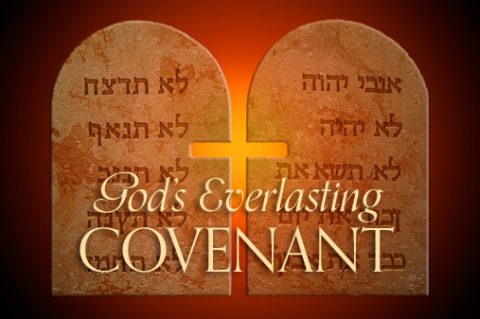
This week, we continue exploring the two-way relationship with the Father through faith in the Son and holding up our part of that relationship.

Quick review: the Old Covenant relationship was modeled after the human suzerain-vassal (lord-servant) treaty in place at Abraham’s time. The New Covenant connection to the Father by way of the Son is a continuation because Father, Son, and mission are the same in both, and so are the terms.

Terms. God’s obligation was to send a savior and love humans (John 3:16; 1 John 4:19). He has honored the terms and continues to keep close to Him anyone who chooses to remain (John 10:27-29; Romans 8:38-39). Jesus expects devotees to profess Christ to others openly (Matthew 10:32), confess sins, and bear each other’s burdens (James 5:13-16). They are to honor the Father with everything they are and have in complete devotion and charitably love one another (Matthew 22: 37-40).  Loving actions born of faith prove allegiance to the Father through Christ (e.g., John 14:15 and 21; 15:8).  Finally, Christ-followers are obligated to grow in spirit and make disciples who, in turn, create more disciples (e.g., Ephesians 4:11-16 and Matthew 28:18-20).

Blessings. Blessings by way of God’s knowing Christ-followers include receiving His Spirit, eternal life, and partnership in the age to come.  However, curses also exist for those whom God does not know—anyone who has rejected Him, whether intentionally or unintentionally. Knowing of God isn’t enough – He must ‘know’ us by our obedient love (1 Corinthians 8:3).

Curses. Negative consequences exist for refusing or walking away from a relationship with God. For instance, Jesus teaches that anyone who does not obey the call to be charitable to others will suffer judgment and destruction (John 15:6; Matthew 25:41-46). The same fate awaits those whose practices oppose God’s standard.  The Psalmist David calls for the unrighteous to be removed from the Book of Life (Psalm 69:28). Similarly, Jesus tells John that He will not remove the name of the righteous from the Book (Revelation 3:5). Finally, the names of the people who will choose poorly and align with the end-times Antichrist will be absent from it (Revelation 13:8 and 17:8).

Remain. A fruitful and continuing relationship demands that both parties remain in, and true to, the agreement. The covenant with the Father through Christ is no exception. The language used to denote the need to stay in a relationship with the Father refers to remaining or staying put. In scriptures like John 15:4-10, Jesus explains the need to stay with Father and Son, sometimes using conditional statements that insist people can choose to remain or leave.  The apostle John continues the theme in 1 John 4:16.

In summary, your Creator has called by giving you a way back to Him through Jesus. It’s your turn: devote, love, and stay.

Blessings and peace,

Ron Braley

The Covenant with God: Part I

Last week, I presented an exciting riddle about 3,000 souls lost, gained, and then lost again (on American soil). I also mentioned the related relational framework (covenant) that may dictate the presence or absence of God’s provision and protection. We’ll unpack it further in this and next week’s articles.

God has sought partnership with His creation from the beginning of human time when He charged the first man, Adam, with caring for what He had made. Adam cultivated the garden and named the animals (Genesis 1:26-30 and 2:15-20). From then, a relational God who endowed humans with the ability to choose Him has regularly sought “I will if you will” engagements.

Probably the earliest example of a covenantal relationship (two-way partnership with terms and conditions) with God was what He shared with Abraham. In Genesis 15:1-21 and 17:1-14, God engaged him to fulfill a promise to provide a way back and redeem creation after Adam and Eve’s rebellion.  The relationship was based on an ancient Hittite suzerain-vassal framework that outlined the arrangement between the lord of the land and its occupants. The lord demanded complete devotion and allegiance and a tithe (10%) of what the land produced. His subjects received, in return, protection and provision. It was the standard arrangement in place at Abraham’s time, and it had a preamble that listed affected parties and a historical prologue providing the “basis of obligation.” 

Furthermore, the covenantal agreement listed stipulations (terms and conditions), blessings for obedience, and curses for disobedience.  Regular readings of the treaty to keep it first and foremost in the participants’ minds was necessary.  That God used it should come as no surprise considering that Father and Son have always employed human language, practices, idioms, etc., in communicating with people.  The lord-servant arrangement was what Abraham knew. It would have made sense to him. God continued what He had started by reaffirming the agreement through Moses 500 years later.

God remembered His covenant with Israel when the people were captives in Egypt (Exodus 2:24). Upon their rescue via Moses, God confirmed the treaty using the same suzerain/vassal framework:

1.         Preamble/Title: “I am Yahweh your God . . .”          

2.         Prologue: “. . . who brought you up out of the land” (provides obligations and motive).

3.         Stipulations/Obligations: “You shall have no other gods before me. . . .”

4.         Periodic reading of the treaty.

5.         Witnesses.

6.         Curses and blessings.

Additional covenantal artifacts exist in scriptures such as Deuteronomy 4:32-40, 6:4-25, and chapter eight.

In summary, a God who exercises choice created humans in His image, and He sought reciprocal relationships with willing participants in the Old Covenant (Old Testament). Next week, we’ll see that this is still the case in the New Covenant (New Testament).

3,000 Souls!

Here’s a weird but real riddle: When in human history with God have we seen a single loss of 3,000 souls (human beings), then the additional of 3,000 souls, and then perhaps the loss of 3,000 souls on American soil? The answer hints at the importance of remaining in the covenant (two-way marriage-like relationship) with God.

First, God told the Israelites that He would be their God (King) if they would be His people. The arrangement was based on the ancient Hittite suzerain-vassal (lord-servant) covenant in Abraham’s day renewed through Moses. The Israelites agreed and then committed spiritual immorality by worshiping a golden calf while Moses worked with God to receive His Instructions written in stone. Moses commanded that all who aligned with God join him and worship God as they had promised. The rebellious died for breaking their word to God and leaving the covenant. Guess how many people died that day? Yep – 3,000 (Exodus 32:26-28).

Second, and conversely, 3,000 people gained their lives so-to-speak by embracing the covenant during the post-resurrection Pentecost celebration (cf. Acts 2:36-41). Alright – 3,000 lost souls replaced. Good. But have we then lost 3,000 again at any time on our turf in the U.S., perhaps because we’ve left God’s protection? Maybe.

About 3,000 (2,996) people died in the horrific September 11, 2001 attacks (https://www.history.com/topics/21st-century/9-11-attacks). You’re probably thinking something like, “But, Ron! Aren’t we a godly nation and in God’s good graces and protection?” Not really. We might have been hundreds of years ago.  After all, our nation was founded on Christian principles by God-fearing people. Schoolbooks used the Bible to teach anything from the alphabet to morality, and Harvard and Yale were Christian institutions. Abortion was not a consideration, and divorce was uncommon. Sexual immorality existed but wasn’t pervasive or acceptable behavior.

Today? Christianity in the United States is declining, and churches are closing their doors at an alarming rate. Abortion is legal and commonplace, and divorce frequently divides families inside the Church and out. Most schools cannot teach about Christianity, allow prayer, or tolerate Christian gatherings. Universities like Yale and Harvard discourage the faith and even teach against it occasionally. And we engage in or condone immoralities, not unlike that of Sodom and Gomorrah or Emperor Caligula’s Rome. Was the loss of 3,000 souls on September 11, 2001, related to a decaying morality and departure from God? Who knows? Still, the 3,000-soul death toll and our nation’s direction make interesting bedfellows!

The Exodus and Acts messages’ thrust is the covenant (two-way relationship) and dedication to the Lord God. Next week, we’ll explore that relational framework that began with Abraham and continues today. Why? So that you too may choose well.

Blessings and peace,

Ron Braley

New Beginnings

Last week, I shared with you the untold Christmas story – kind of a ‘behind the scenes’ look at God’s peace and redemption Jesus set into motion with His arrival on earth. Because the new year will begin a week after Christmas, I thought we should now look at new beginnings. Here are a few examples of New Year celebrations and why we use them to make resolutions.

American/European: January 1st. We tend to gather the evening before and ‘bring in the new year’ with shouts, parties, countdowns, and resolutions. And some of those parties bring regrets and spawn resolutions of their own.

Chinese (Also known as the Spring Festival): 23rd day of the 12th lunar month of the Chinese calendar. The idea is like that of the American and European New Year celebrations.

Jewish, Religious – Pesach (Passover): The 1st Jewish month, when the time of the covenant between God and His ‘bride’ Israel began. It was a new beginning for her.

Jewish, Agricultural – Rosh Hashanah: The 7th month of the Jewish calendar. Interestingly, while this is the official state New Year, it also closely relates to God’s covenant. This New Year begins with the Feast of Trumpets and introduces a time of repentance, forgiveness, and rest.

Because we know of the good and bad things we’ve done or that the current year has brought, the thought of a ‘better’ new year can bring anticipation of good things to come! We want to change what we don’t like, which is where ‘repentance’ (even for the non-religious) comes into play. We’re sorry for the behaviors we don’t like and, therefore, vow to change. It’s harder than it seems! Here are three guidelines for helping you achieve your dreams and goals.

First, you must set goals for yourself. Follow the SMART principle:

Specific. Be clear about what you would like to accomplish!

Measurable. How will you know whether you’re succeeding?

Attainable. You probably won’t be a millionaire by the age of 50 – especially if you’re, well, 60.

Relevant. Why try to be a better poker player if your goal is to overcome gambling addiction?

Timely. When would you like to achieve your goals?

Second, if you intend to have a new beginning in Christ or embrace a lifestyle change, you must PLAN to achieve your goals! To quote some silly movie line: “Those who fail to plan, plan to fail!”

Third, we can rarely accomplish large tasks on our own, especially when they deal with weaknesses. The Spirit of God can provide strength and guidance, and accountability partners give us direction, wisdom, strength, and discipline to be successful.

Join me next week for an exciting look at 3,000 souls lost, then saved, then lost again.

Christmas: The Untold Story

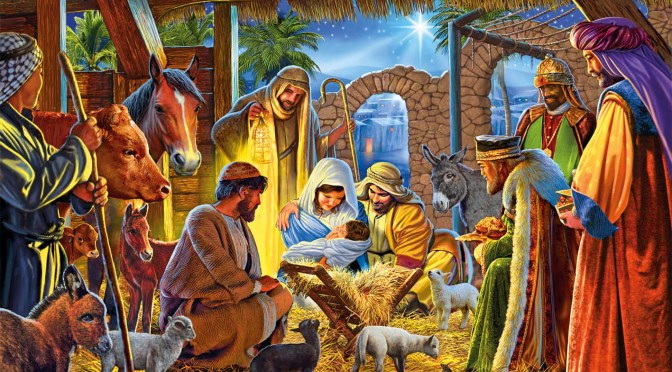
Christmas is full of traditions, including the story depicting Jesus’ birth. Some renderings sport sheep, camels, and donkeys with costume-clad humans for effect. The event makes us feel good, and it can be a great time of fun and family. But is there more to the story – perhaps stuff behind the scenes that would make it more meaningful if known? Let’s see.

First, the Son of God, born a son of man, participated in our universe’s creation (John 1:1-4).

Second, this Son of God had to become human for a reason: restore the relationship between Creator and creation by paying the penalty for the first humans’ rebellion, and crushing evil (e.g., Genesis 3:15).

But paying the price required someone who could live sin-free. God began to send clues about this coming perfect Savior through various prophets like Isaiah:

Therefore the Lord Himself will give you a sign: Behold, a virgin will be with child and bear a son, and she will call His name Immanuel. —Isaiah 7:14.

This Prince would be born in about 4 BC and eventually crucified as shown to the prophet Daniel 500 years before Jesus came to earth (Daniel 9:25-26). His birth brings God’s peace to those with whom He is pleased (Luke 2:14) but prompted the wrath of a man, Herod (Matthew 2:1-12). For Jesus’ safety, an angel told Joseph and Mary to escape to Egypt until Herod’s death (Matthew 2:13-15). But how would the journey be possible? After all, travel and daily life required resources, then just as they do now. Allow me to introduce the wise men.

To fully appreciate their contribution, we must go back to Persia 500 years earlier when Daniel had earned great respect and treasure. He was also well-trained in Babylonian arts, including astronomy. He knew when Jesus would be born and would’ve been familiar with Micah’s prophecy about Jesus’ birth in Bethlehem (Micah 5:2). 

So, Daniel, the Jew who spent his life in Persia, had treasure, knew how to chart star movements, and knew where Jesus would be born as well as the rough time frame. Therefore, we should not be surprised that Persian magi knew that Jesus would be the King of the Jews and of the alignment of the stars at the time and place of His birth. Daniel’s great wealth was likely the resource that funded Jesus’ trip to Egypt until Herod’s death. Our great God is indeed the master orchestrator who crafts all things according to His good pleasure!

And we know that God causes all things to work together for good to those who love God, to those who are called according to His purpose. —Romans 8:28.

Are you interested in making a fresh start physically, emotionally, or spiritually? Perhaps in keeping personal goals? Join me next week when we’ll explore New Beginnings.

Blessings and peace,

Ron Braley

How Do I love Thee??

Last week, we looked at non-negotiable faith practices and contrasted them against subjective ways we worship. I also mentioned the phrase “Christian love.” We say that it is unconditional, but what does that mean? What are the different kinds of love?

“I love my car!”

“I love my friend!”

“I love Jesus!”

Several meanings, one word! Our English language limits how we express feelings and actions, including love. However, the Bible presents three primary loves: lust, fondness, and unconditional love. Let’s examine each.

Lust. Greek epithumia represents a firm intention to have something. Jesus tells us that someone who lusts after (intends to have) another’s spouse has sinned, even if the act falls through (Matthew 5:27-28). Intent (heart/mind) matters!! Our legal system tries people for intending to murder even if the plan was thwarted.

Fondness. Think words that begin with phil. These Greek words represent a fondness for something. For instance, philadelphia is a fondness for brothers and sisters in Christ (Hebrews 13:1). Indeed, you’ve heard of or visited Philadephia, PA, the City of Brotherly Love! Fondness for humankind is philanthropea (Titus 3:3-5), and of money, philaguria (Hebrews 13:5).

Lust and fondness are emotion-driven and, therefore, come and go. You may like me now but hate me tomorrow – especially if my articles conflict with your beliefs. So, neither love is the unconditional love God has shown or that we must have for each other.

Unconditional Love. This love doesn’t come and go with an emotional wind. It’s doing the right thing for the right reason despite feelings. Greek noun agape is this love that God has for all creation. Verb agapao is love action. God is love (agape); God loved and loves as we should (agapo).

For instance, God hasn’t always been happy with humanity but still loves so much that He gave His Son for all people and takes His time before bringing judgment.

We love, because He first loved us (1 John 4:19).

For God so loved the world, that He gave His only begotten Son, that whoever believes in Him shall not perish, but have eternal life (John 3:16).

The Lord is not slow about His promise, as some count slowness, but is patient toward you, not wishing for any to perish but for all to come to repentance (2 Peter 3:9).

… Peter said: “I most certainly understand now that God is not one to show partiality, but in every nation the man who fears Him and does what is right is welcome to Him (Acts 10:34-35).

So, how should we love?

… ‘YOU SHALL LOVE THE LORD YOUR GOD WITH ALL YOUR HEART, AND WITH ALL YOUR SOUL, AND WITH ALL YOUR MIND.’ This is the great and foremost commandment. The second is like it, ‘YOU SHALL LOVE YOUR NEIGHBOR AS YOURSELF.’ (Matthew 22:37-39).

Next week, I’ll share the untold Christmas story.

Blessings and peace,

Ron Braley

The Value of Worship

Last week, we explored the history behind our fractured Christianity. This week, we’ll take a brief look at the ‘Big-T’ non-negotiable practices of shared faith and contrast them against ‘little-t’ subjective truths of how we engage in religion, how we worship. But first, let’s define the term.

It is a 16th-century compound word that combines ‘worth’ and ‘ship.’ Basically, the word is action-oriented and represents how we assign worth to what we value. In the Bible, worship was actionable: bowing down, singing, praying, giving, sexual purity, kindness, etc. Jesus’ related point was that we tend to put our resources (worth) into what we value (Matthew 6:21). Let’s go back to the first century to contrast Christian mandates with today’s religious practices.

Two thousand years ago, Christians were charged with honoring their heavenly Father with all they were and had and to treat each other with the love of Christ (Matthew 22:34-40). They were to make disciples and baptize new converts into the faith (e.g., Matthew 28:18-21); those faithful newbies received the Spirit of God in return for regeneration (e.g., Acts 5:32 & Titus 3:5). Simple devotion, baptism, charity, and disciple-making while walking by the Spirit of God in the Christian community were essential Christian activities. Being a community, Christ-followers enjoyed table fellowship that brought the remembrance of what Jesus did for humankind and why, initially on Saturday evenings during corporate worship (prayer, teaching, singing, etc. (see Colossians 3:16 for a foundation)). No mystery or magic; no strict religious focus or a one-to-many format – well, not yet anyway.

By the fourth century, candles, chants, and rituals turned baptism into a solemn religious experience, although the primary intent remained: devote to God and renounce sin. Similarly, simple table fellowship and a communal remembrance of Jesus’ sacrifice and the covenant it enabled became a formalized and mystical experience that not everyone could administer or enjoy. Corporate prayer where members in a Christian assembly participated has ceased to be a shared, communal experience. Collaborative teaching and the sharing of spiritual gifts have given way to preaching and a strict format that leaves little if any room for in-depth and applicable biblical teaching or movements by the Spirit of God.

“But, Ron – does how we sing, teach, pray, baptize, or take Communion in a worship service matter?” The answer depends on whether biblical teaching in disciple-making, heartfelt prayer, faith-fueled baptism, intimate sharing in covenantal remembrance or corporate singing and exercising spiritual gifts occur in true worship while involved in religious activities. We may practice our faith differently depending on religious culture. But, we must never forsake Communion’s intimate sharing, the devotion of baptism, communal prayer and singing, or the maturity found in discipleship.

Oh – I mentioned the phrase “Christian love.” Please join me next week to look at the different ways we do, and should, love!

Blessings and peace,

Ron Braley

One body, 30,000 toes??

“Ron: Why do we have so many different kinds of churches??” Wow! Where on earth do I begin in answering this question? One source estimates that 30,000 or more different Christian organizations exist globally, and another states that more than 200 different church flavors make their home in the United States. The short answer is that it was never meant to be this way and wasn’t until about 400 years ago. Since then, a tendency toward individualism and a theological ‘wild, wild, west’ have led to many personal interpretations of the Bible and segregated churches. Add to that unchecked personal beliefs that God has given special revelation to some, and we end up with more Body of Christ fractures than the oil fields of western North Dakota! Perhaps a little church history would help us understand how we got here in such a short time – in about one-fifth of Christianity’s history.

The earliest and simplest Christianity modeled Christ in community and trained and then baptized anyone devoting their lives to the Father through the Son. Of course, there were occasional heresies and rebellions, but that was the basic approach. Over time, the Church split over differences in faith practices. For about 1,600 years, only two primary partitions of Christianity existed: Orthodoxy in the east and Roman Catholicism from about Rome westward.

Sixteenth-century Roman Catholicism, like many institutions, suffered corruption and some supposed unbiblical practices. Protestor Martin Luther (and others) pushed back against such things as indulgences and the idea that good deeds or money could earn a ticket to heaven. Although it doesn’t appear that Luther intended the eventual splintering of Christianity that we’ve witnessed over the last 400-ish years, this is what ensued. What began as an intended reformation of the Roman Catholic church brought on many unintended theological divisions and different worship practices.

Today, many Christian fragments exist, even within denominations. And they fall along a continuum of extremes. For some congregations, humans have no free will to choose a partnership with God. At the other end of the spectrum, God has no influence and exists only to make people feel good and respond when they need Him. Perhaps we should stop deciding for God how He will use His authority! He is indeed the Lord of all, and He seeks relationships with those who choose to receive the Living Water of Christ and walk by the Holy Spirit.

To summarize, there are 30,000 Christian ‘toes’ because each has a mind of its own and often wiggles to its own beat. Now, it isn’t all bad: some Christ-minded cultures that devote to God and love others have provided diverse and meaningful ways to put true faith into practice. Next week, we’ll explore worship and contrast Big-T truths of the Christian faith against the little-t truths of those worshipful practices.

Blessings and peace,

Ron Braley

Liar, Liar, Pants on Fire!

People lie with incredible ease these days. Empty, unkept promises fill the air, and it’s common to speak what we believe people want to hear. Flattery brings a smile or manipulates but leaves the victim empty and the liar or flatterer headed for destruction. Let me give you a couple of personal examples.

Years ago, a pastor would say, “Ron, I love you!” during each visit. The words, empty as I soon discovered, made me feel good at first. However, he regularly didn’t honor his word in our relationship. Outright lying and not fulfilling promises had become his way. I recently had a negative experience with a local business and was promised a call by one manager who didn’t keep his word. A second manager also made empty, unmet promises. The situation was finally addressed, but distrust had set in. Perhaps many of you have had similar experiences of flattery, empty promises, lies, broken contracts, or deceit in relationships. Maybe it’s a phone call that never came or an email that never materialized. I’m sorry if so! It wasn’t always this prevalent and certainly isn’t what God intends!

“A man’s word is his bond” was a common phrase once upon a time. And a handshake was as good as a contract because people kept their word. The understanding was that if a person could not be trusted, they would be of little value as a community member. God-fearers and Christ-followers understood that God valued honesty and word-keeping and that anything else would bring deadly consequences.

Telling the truth has always been important to God. At the beginning of time, He spoke, and stuff happened. The heavens and earth appeared, as did all creatures on land and sea and in the air. God spoke through the prophets and what He said through them came true. God promised to provide a way back to Him. Once again, He kept His word. God is fair and just; He does what He says He will do. Honoring His promise to send a savior is one reason why God is love – the kind of love He desires from us (1John 4:17-21). He has no use for liars and deceivers in this world, His Kingdom, or the coming age:

He who overcomes will inherit these things, and I will be his God and he will be My son. But for the cowardly and unbelieving and abominable and murderers and immoral persons and sorcerers and idolaters and all liars, their part will be in the lake that burns with fire and brimstone, which is the second death. —Revelation 21:7-8.

So, keep your promises, do what you say you’ll do. Don’t lie or deceive others but be trustworthy as God is trustworthy. In that, we can love as God loves and join Him in this age and the next.

Questions or comments? Email publisher@taylorpress.net.

Blessings and peace,

Pastor Ron Braley, Northview Christian Church