Category Archives: discipleship

Christmas: The Untold Story

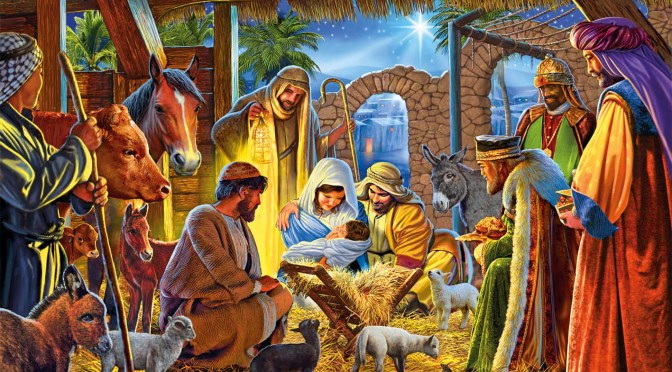
Christmas is full of traditions, including the story depicting Jesus’ birth. Some renderings sport sheep, camels, and donkeys with costume-clad humans for effect. The event makes us feel good, and it can be a great time of fun and family. But is there more to the story – perhaps stuff behind the scenes that would make it more meaningful if known? Let’s see.

First, the Son of God, born a son of man, participated in our universe’s creation (John 1:1-4).

Second, this Son of God had to become human for a reason: restore the relationship between Creator and creation by paying the penalty for the first humans’ rebellion, and crushing evil (e.g., Genesis 3:15).

But paying the price required someone who could live sin-free. God began to send clues about this coming perfect Savior through various prophets like Isaiah:

Therefore the Lord Himself will give you a sign: Behold, a virgin will be with child and bear a son, and she will call His name Immanuel. —Isaiah 7:14.

This Prince would be born in about 4 BC and eventually crucified as shown to the prophet Daniel 500 years before Jesus came to earth (Daniel 9:25-26). His birth brings God’s peace to those with whom He is pleased (Luke 2:14) but prompted the wrath of a man, Herod (Matthew 2:1-12). For Jesus’ safety, an angel told Joseph and Mary to escape to Egypt until Herod’s death (Matthew 2:13-15). But how would the journey be possible? After all, travel and daily life required resources, then just as they do now. Allow me to introduce the wise men.

To fully appreciate their contribution, we must go back to Persia 500 years earlier when Daniel had earned great respect and treasure. He was also well-trained in Babylonian arts, including astronomy. He knew when Jesus would be born and would’ve been familiar with Micah’s prophecy about Jesus’ birth in Bethlehem (Micah 5:2). 

So, Daniel, the Jew who spent his life in Persia, had treasure, knew how to chart star movements, and knew where Jesus would be born as well as the rough time frame. Therefore, we should not be surprised that Persian magi knew that Jesus would be the King of the Jews and of the alignment of the stars at the time and place of His birth. Daniel’s great wealth was likely the resource that funded Jesus’ trip to Egypt until Herod’s death. Our great God is indeed the master orchestrator who crafts all things according to His good pleasure!

And we know that God causes all things to work together for good to those who love God, to those who are called according to His purpose. —Romans 8:28.

Are you interested in making a fresh start physically, emotionally, or spiritually? Perhaps in keeping personal goals? Join me next week when we’ll explore New Beginnings.

Blessings and peace,

Ron Braley

How Do I love Thee??

Last week, we looked at non-negotiable faith practices and contrasted them against subjective ways we worship. I also mentioned the phrase “Christian love.” We say that it is unconditional, but what does that mean? What are the different kinds of love?

“I love my car!”

“I love my friend!”

“I love Jesus!”

Several meanings, one word! Our English language limits how we express feelings and actions, including love. However, the Bible presents three primary loves: lust, fondness, and unconditional love. Let’s examine each.

Lust. Greek epithumia represents a firm intention to have something. Jesus tells us that someone who lusts after (intends to have) another’s spouse has sinned, even if the act falls through (Matthew 5:27-28). Intent (heart/mind) matters!! Our legal system tries people for intending to murder even if the plan was thwarted.

Fondness. Think words that begin with phil. These Greek words represent a fondness for something. For instance, philadelphia is a fondness for brothers and sisters in Christ (Hebrews 13:1). Indeed, you’ve heard of or visited Philadephia, PA, the City of Brotherly Love! Fondness for humankind is philanthropea (Titus 3:3-5), and of money, philaguria (Hebrews 13:5).

Lust and fondness are emotion-driven and, therefore, come and go. You may like me now but hate me tomorrow – especially if my articles conflict with your beliefs. So, neither love is the unconditional love God has shown or that we must have for each other.

Unconditional Love. This love doesn’t come and go with an emotional wind. It’s doing the right thing for the right reason despite feelings. Greek noun agape is this love that God has for all creation. Verb agapao is love action. God is love (agape); God loved and loves as we should (agapo).

For instance, God hasn’t always been happy with humanity but still loves so much that He gave His Son for all people and takes His time before bringing judgment.

We love, because He first loved us (1 John 4:19).

For God so loved the world, that He gave His only begotten Son, that whoever believes in Him shall not perish, but have eternal life (John 3:16).

The Lord is not slow about His promise, as some count slowness, but is patient toward you, not wishing for any to perish but for all to come to repentance (2 Peter 3:9).

… Peter said: “I most certainly understand now that God is not one to show partiality, but in every nation the man who fears Him and does what is right is welcome to Him (Acts 10:34-35).

So, how should we love?

… ‘YOU SHALL LOVE THE LORD YOUR GOD WITH ALL YOUR HEART, AND WITH ALL YOUR SOUL, AND WITH ALL YOUR MIND.’ This is the great and foremost commandment. The second is like it, ‘YOU SHALL LOVE YOUR NEIGHBOR AS YOURSELF.’ (Matthew 22:37-39).

Next week, I’ll share the untold Christmas story.

Blessings and peace,

Ron Braley

The Value of Worship

Last week, we explored the history behind our fractured Christianity. This week, we’ll take a brief look at the ‘Big-T’ non-negotiable practices of shared faith and contrast them against ‘little-t’ subjective truths of how we engage in religion, how we worship. But first, let’s define the term.

It is a 16th-century compound word that combines ‘worth’ and ‘ship.’ Basically, the word is action-oriented and represents how we assign worth to what we value. In the Bible, worship was actionable: bowing down, singing, praying, giving, sexual purity, kindness, etc. Jesus’ related point was that we tend to put our resources (worth) into what we value (Matthew 6:21). Let’s go back to the first century to contrast Christian mandates with today’s religious practices.

Two thousand years ago, Christians were charged with honoring their heavenly Father with all they were and had and to treat each other with the love of Christ (Matthew 22:34-40). They were to make disciples and baptize new converts into the faith (e.g., Matthew 28:18-21); those faithful newbies received the Spirit of God in return for regeneration (e.g., Acts 5:32 & Titus 3:5). Simple devotion, baptism, charity, and disciple-making while walking by the Spirit of God in the Christian community were essential Christian activities. Being a community, Christ-followers enjoyed table fellowship that brought the remembrance of what Jesus did for humankind and why, initially on Saturday evenings during corporate worship (prayer, teaching, singing, etc. (see Colossians 3:16 for a foundation)). No mystery or magic; no strict religious focus or a one-to-many format – well, not yet anyway.

By the fourth century, candles, chants, and rituals turned baptism into a solemn religious experience, although the primary intent remained: devote to God and renounce sin. Similarly, simple table fellowship and a communal remembrance of Jesus’ sacrifice and the covenant it enabled became a formalized and mystical experience that not everyone could administer or enjoy. Corporate prayer where members in a Christian assembly participated has ceased to be a shared, communal experience. Collaborative teaching and the sharing of spiritual gifts have given way to preaching and a strict format that leaves little if any room for in-depth and applicable biblical teaching or movements by the Spirit of God.

“But, Ron – does how we sing, teach, pray, baptize, or take Communion in a worship service matter?” The answer depends on whether biblical teaching in disciple-making, heartfelt prayer, faith-fueled baptism, intimate sharing in covenantal remembrance or corporate singing and exercising spiritual gifts occur in true worship while involved in religious activities. We may practice our faith differently depending on religious culture. But, we must never forsake Communion’s intimate sharing, the devotion of baptism, communal prayer and singing, or the maturity found in discipleship.

Oh – I mentioned the phrase “Christian love.” Please join me next week to look at the different ways we do, and should, love!

Blessings and peace,

Ron Braley

One body, 30,000 toes??

“Ron: Why do we have so many different kinds of churches??” Wow! Where on earth do I begin in answering this question? One source estimates that 30,000 or more different Christian organizations exist globally, and another states that more than 200 different church flavors make their home in the United States. The short answer is that it was never meant to be this way and wasn’t until about 400 years ago. Since then, a tendency toward individualism and a theological ‘wild, wild, west’ have led to many personal interpretations of the Bible and segregated churches. Add to that unchecked personal beliefs that God has given special revelation to some, and we end up with more Body of Christ fractures than the oil fields of western North Dakota! Perhaps a little church history would help us understand how we got here in such a short time – in about one-fifth of Christianity’s history.

The earliest and simplest Christianity modeled Christ in community and trained and then baptized anyone devoting their lives to the Father through the Son. Of course, there were occasional heresies and rebellions, but that was the basic approach. Over time, the Church split over differences in faith practices. For about 1,600 years, only two primary partitions of Christianity existed: Orthodoxy in the east and Roman Catholicism from about Rome westward.

Sixteenth-century Roman Catholicism, like many institutions, suffered corruption and some supposed unbiblical practices. Protestor Martin Luther (and others) pushed back against such things as indulgences and the idea that good deeds or money could earn a ticket to heaven. Although it doesn’t appear that Luther intended the eventual splintering of Christianity that we’ve witnessed over the last 400-ish years, this is what ensued. What began as an intended reformation of the Roman Catholic church brought on many unintended theological divisions and different worship practices.

Today, many Christian fragments exist, even within denominations. And they fall along a continuum of extremes. For some congregations, humans have no free will to choose a partnership with God. At the other end of the spectrum, God has no influence and exists only to make people feel good and respond when they need Him. Perhaps we should stop deciding for God how He will use His authority! He is indeed the Lord of all, and He seeks relationships with those who choose to receive the Living Water of Christ and walk by the Holy Spirit.

To summarize, there are 30,000 Christian ‘toes’ because each has a mind of its own and often wiggles to its own beat. Now, it isn’t all bad: some Christ-minded cultures that devote to God and love others have provided diverse and meaningful ways to put true faith into practice. Next week, we’ll explore worship and contrast Big-T truths of the Christian faith against the little-t truths of those worshipful practices.

Blessings and peace,

Ron Braley

Liar, Liar, Pants on Fire!

People lie with incredible ease these days. Empty, unkept promises fill the air, and it’s common to speak what we believe people want to hear. Flattery brings a smile or manipulates but leaves the victim empty and the liar or flatterer headed for destruction. Let me give you a couple of personal examples.

Years ago, a pastor would say, “Ron, I love you!” during each visit. The words, empty as I soon discovered, made me feel good at first. However, he regularly didn’t honor his word in our relationship. Outright lying and not fulfilling promises had become his way. I recently had a negative experience with a local business and was promised a call by one manager who didn’t keep his word. A second manager also made empty, unmet promises. The situation was finally addressed, but distrust had set in. Perhaps many of you have had similar experiences of flattery, empty promises, lies, broken contracts, or deceit in relationships. Maybe it’s a phone call that never came or an email that never materialized. I’m sorry if so! It wasn’t always this prevalent and certainly isn’t what God intends!

“A man’s word is his bond” was a common phrase once upon a time. And a handshake was as good as a contract because people kept their word. The understanding was that if a person could not be trusted, they would be of little value as a community member. God-fearers and Christ-followers understood that God valued honesty and word-keeping and that anything else would bring deadly consequences.

Telling the truth has always been important to God. At the beginning of time, He spoke, and stuff happened. The heavens and earth appeared, as did all creatures on land and sea and in the air. God spoke through the prophets and what He said through them came true. God promised to provide a way back to Him. Once again, He kept His word. God is fair and just; He does what He says He will do. Honoring His promise to send a savior is one reason why God is love – the kind of love He desires from us (1John 4:17-21). He has no use for liars and deceivers in this world, His Kingdom, or the coming age:

He who overcomes will inherit these things, and I will be his God and he will be My son. But for the cowardly and unbelieving and abominable and murderers and immoral persons and sorcerers and idolaters and all liars, their part will be in the lake that burns with fire and brimstone, which is the second death. —Revelation 21:7-8.

So, keep your promises, do what you say you’ll do. Don’t lie or deceive others but be trustworthy as God is trustworthy. In that, we can love as God loves and join Him in this age and the next.

Questions or comments? Email publisher@taylorpress.net.

Blessings and peace,

Pastor Ron Braley, Northview Christian Church

The Holy Spirit Part III: No Root, No Fruit!

Last week, I explained that the Spirit of God is our heavenly equipper. He enables capabilities through skills and dynamic heavenly gifts such as divine and human languages and interpretation, wisdom, knowledge, faith, healing, miracles, prophecy, and discerning spirits. The Father still gives Christ-followers His Spirit for service by way of the gifts I just mentioned. The Spirit also helps us in our transformation. What kind of transformation? A changed heart (mind) that drives changed behavior according to God’s ways. This is what God desires – not empty belief-only. “But Ron – if the Spirit is at work in a Christ-follower’s life, shouldn’t he or she look and act differently?” Yep!

Some people in Christian communities work according to the Spirit, and some don’t. Those who do walk by the Spirit of God produce loving action out of their faith. And, their behaviors and demeanor reflect the Spirit at work within them. The Bible calls those fruit-producing, Spirit-driven Christ-followers children of God (e.g., John 1:12; Acts 17:29; Romans 8:16-17; Matthew 13:38). They love, house, feed, clothe, sow peace, grow in faith, and make disciples who do the same.

On the other hand, many people are Christ-believersonly, producing nothing of value for God. His Spirit is not at work in their lives, as shown by the lack of fruit – manifestations of a Spirit-enabled faith. The Bible calls them spiritual ‘weeds’ (Matthew 13:24-30 & 41-42), and their fate is inevitable.

“Then He will also say to those on His left, ‘Depart from Me, accursed ones, into the eternal fire which has been prepared for the devil and his angels; for I was hungry, and you gave Me nothing to eat; I was thirsty, and you gave Me nothing to drink; I was a stranger, and you did not invite Me in; naked, and you did not clothe Me; sick, and in prison, and you did not visit Me.’”Matthew 25:41-43.

“Alright, Ron – I get it. True followers of Jesus can be identified by what they do, how they live, and how they love because of their faith. What kind of behaviors and activities should we see from them?” Here are the fruits (manifestations) of a Spirit-enabled Christian according to the Apostle Paul (notice that they are action-related in some way!):

But the fruit of the Spirit is love, joy, peace, patience, kindness, goodness, faithfulness, gentleness, self-control; against such things there is no law. Now those who belong to Christ Jesus have crucified the flesh with its passions and desires. If we live by the Spirit, let us also walk by the Spirit. —Galatians 5:22-25.

In summary, no root (Spirit), no fruit (Godly behaviors and output). Pray that the Father will give His Spirit to produce fruit that will stand the test of time! Next week, we’ll explore lying and empty promises in Liar, Liar, Pants on Fire!

Blessings and peace,

Ron Braley

The Holy Spirit Part II: The Ultimate Equipper!

Last week, I introduced the Spirit of God, our connection to the Kingdom of Heaven, as we await a new age when the Father and Son will dwell with all creation. Meanwhile, the Spirit instructs and convicts and gives lovely gifts. He brings comfort, knowledge, and the ability to discern between right and wrong. Here are a few glimpses into a contemporary yet ancient Spirit:

God’s Spirit was at creation (Genesis 1:1-2): In the beginning, God created the heavens and the earth. The earth was without form and void, and darkness was over the face of the deep. And the Spirit of God was hovering over the face of the waters.

He filled the Jews with wisdom and craftsmanship (Exodus 31:3-5): I have filled him with the Spirit of God, with ability and intelligence, with knowledge and all craftsmanship, to devise artistic designs, to work in gold, silver, and bronze, in cutting stones for setting, and in carving wood, to work in every craft.

He enabled the prophets (Numbers 11:25): Then the LORD came down in the cloud and spoke to him, and took some of the Spirit that was on him and put it on the seventy elders. And as soon as the Spirit rested on them, they prophesied. But they did not continue doing it.

Even today, the Spirit’s gifts include human languages (for preaching and teaching those of other nations) and that of heaven along with interpretation, wisdom, knowledge, faith, healing, miracles, prophecy, and discerning spirits. But the Spirit gifts according to the Father’s purposes, not ours. He will do what He will do through the Spirit to suit His excellent pleasure (will). Here are gifts of the Spirit for the common good of the Church (1 Corinthians 12:7-11):

To each is given the manifestation of the Spirit for the common good. For to one is given through the Spirit the utterance of wisdom, and to another the utterance of knowledge according to the same Spirit, to another faith by the same Spirit, to another gifts of healing by the one Spirit, to another the working of miracles, to another prophecy, to another the ability to distinguish between spirits, to another various kinds of tongues, to another the interpretation of tongues. All these are empowered by one and the same Spirit, who apportions to each one individually as he wills.

Here are additional resources:

Acts 2:4 – 13 (other languages to preach the Gospel).

Ephesians 4:1-6 and 11-16 (use the Spirit’s gifts for God’s purpose, equipping, and unity within the Church).

Regeneration by the Spirit enables access to the Kingdom of Heaven. Spiritual growth and equipping by the Spirit through gifts, talents, and the Church keep us heading in the right direction. Next week, we’ll uncover the discernible effects of walking by the Spirit and what the Bible calls the fruit of the Spirit.

Blessings and peace,

Ron Braley

The Holy Spirit Part I: a Life-saving Gift!

Last week, I mentioned that the Ruler of heaven gives His Spirit to anyone who is wholly devoted to Him and His Kingdom. We often allow humanmade doctrine and a lack of knowledge to complicate the simple, pollute the pure. The subject of the Holy Spirit is no exception. So, I thought I’d devote the next three weeks to providing clarity.

This week, we’ll learn about the Holy Spirit and why He is necessary for our transformation now and salvation to come. Next week, we’ll explore if and how the Spirit gifts and equips us for God’s good pleasure and our spiritual growth in this life. Finally, in the third week, we’ll uncover the fruit (manifestations) of the Spirit at work in Christ-followers as well as the consequence of being unfruitful.

First, the Holy Spirit is a gift from God to Christ-followers. By the way: I’ll write about the Bride of Christ soon to help you understand that gifting is part of a holy betrothal process!

And Peter said to them, “Repent and be baptized every one of you in the name of Jesus Christ for the forgiveness of your sins, and you will receive the gift of the Holy Spirit.”Acts 2:38.

Second, the Spirit of God regenerates the one who receives the living water of heaven, Christ. No regeneration, no heaven or dwelling with God in the new age to come.

Jesus answered, “Truly, truly, I say to you, unless one is born of water and the Spirit he cannot enter into the kingdom of God. —John 3:5.

Since you have been born again, not of perishable seed but of imperishable, through the living and abiding word of God1 Peter 1:23.

He saved us, not on the basis of deeds which we have done in righteousness, but according to His mercy, by the washing of regeneration and renewing by the Holy SpiritTitus 3:5.

Third, rejection of the Spirit of God = spiritual death.

Truly I say to you, all sins shall be forgiven the sons of men, and whatever blasphemies they utter; but whoever blasphemes against the Holy Spirit never has forgiveness, but is guilty of an eternal sinMark 3:28-29.

Why is the rejection of God’s Spirit the only rebellion against Him that is unforgivable? Because God’s forgiveness requires repentance (change in behavior because of a changed heart), no repentance is possible while someone rejects God.

So far, we’ve learned that the Spirit of God is our connection to the Kingdom of Heaven. Regeneration by the Spirit after devoting to the Father in response to Christ the living water is the only way to enter. So, learn, decide, and devote. But what then? Next week, we’ll see how the Holy Spirit of God equips for spiritual growth, faithfulness, and service.

Blessings and peace,

Ron Braley

The Kingdom of God

“Ron – what is God’s Kingdom?” The easy answer is: “Where God rules!” Fair enough, but you might want to know where that is and more about the Kingdom itself. Let’s start with a bit of information about what is the Kingdom of God.

Indeed, the Kingdom of God is where God the Father rules. His Kingdom is where the Bible calls the 3rd heaven.

I know a man in Christ who fourteen years ago–whether in the body I do not know, or out of the body I do not know, God knows–such a man was caught up to the third heaven. … was caught up into Paradise … —2 Corinthians 12:2-4.

The first heaven is the space above where birds fly; the second is the cosmos where the constellations hang.

… both humans and beasts, creeping thing and birds of heaven (Genesis 6:7, ESV).

And take heed, lest you lift up your eyes to heaven, and when you see the sun, the moon, and the stars, all the host of heaven … (Deuteronomy 4:19, NASB).

The Father rules the third heavenly domain with the Son – the one we English-speaking folks call Jesus, the Christ.

When Christ had offered for all time a single sacrifice for sins, he sat down at the right hand of God —Hebrews 10:12.

 You might ask, “Doesn’t Jesus reign here on earth – in our hearts?”

Sort of … First, Jesus made clear that He and the Father are ‘preparing a place’ for the faithful. When ready, He will gather them. So, the Kingdom of Heaven isn’t physically here. But, you could say that the Kingdom of Heaven is ‘already within reach although it’s not here yet.’

Second, the Spirit of God given by the Father connects the faithful to His Kingdom and helps them persevere while they wait for Father and Son’s physical reign.

Third, heaven and earth will become one (in a sense) when evil, the world, and death are destroyed, and God makes all things new, returning creation to the perfection it enjoyed at the very beginning of human time. When that happens, the Kingdom of Heaven will be on the new earth and Father and Son will reign and dwell among creation.

To tie everything together, the Kingdom of God (the Kingdom of Heaven) is physically in the ‘third heaven’ but will be on the new earth in the coming age when the Father makes all things new and dwells with His creation. That Kingdom is now within reach for those who acknowledge Him as the King of their lives, entirely devoting all they are and have to Him (see Matthew 22:37). The Spirit He gives in return becomes the connection to the Kingdom until the new age comes.

Blessings and peace, Ron Braley

The Way it Is (Discipleship, Part III)

Over the last several weeks, I’ve written that a disciple of Jesus Christ is to be a copycat who makes more copycats and offered three essential tips for effective discipleship:

Tip #1: Be a Sold-out Copycat (of good stuff)!

Tip #2: Follow Jesus’ Model to Make More Copycats!

Tip #3: GO!

Together, we’ve also explored how the earliest Church discipled using Jesus’ approach. Now, let’s talk about how you can be and make disciples today.

First, it’s essential that we continuously develop ourselves spiritually through Bible study, prayer, accountability, and discipleship. After all, we can’t live, model, or share what we don’t know!

Second, we must be incarnational. What I mean is that we must be integral in our communities, whether at work, play, or anything else. That way, we can develop trust-building relationships that will allow dialogue about what we believe and why.

Third, we must be contextual. “Say what??” Exactly! We must be and communicate in the same ways as others so that they’ll understand what we’re showing and telling. Think about it: Jesus spoke in farming terms and figures of speech when He taught the good news of God’s Kingdom to farmers. And he used fishing sayings when talking to fishermen. He used examples to make His points more apparent and applicable.

Without being incarnational, there’s little chance of building the kind of relationships that will allow ongoing, deep and personal discipleship. Without being contextual – meeting and communicating with people where they are instead of expecting them to come, our modeling and evangelism will likely fall on blind eyes and deaf ears. “But Ron – how can I be incarnational and contextual?” Great question!

One way to build relationships incarnationally is to be involved in the lives of others by following a BELLS principle: Bless, Eat, Listen, Learn, and Sent. Make friends, not numbers. Bless multiple people each day. Eat with others (it’s a great way to show care and deepen relationships!). Listen to the Spirit of God as He directs your discipleship steps. Learn about God and His ways, so that you’ll have something to model and tell those people with whom you’re building relationships. And make sure you GO (sent)!!

To be contextual in your modeling and telling, understand the dress, traditions, figures of speech, customs, and desires of those you hope to witness to and disciple. Show interest. Use terminology familiar to them, not Christianese. Finally, consider an ongoing Life Transformation Group of 2-3 people of the same sex for weekly prayer, accountability, and Bible study.