Tag Archives: Holy Spirit

God – the Heavenly Hierarchy

The word ‘God’ is used in two basic ways in the Bible.

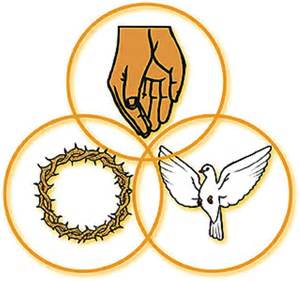
On one hand, it’s the corporate name given to the Father, Son, and Spirit who have worked together in the creation, care, and judgment of mankind. This is Hebrew el-o-heem – our God in plurality from the beginning (i.e. Genesis 1:1-2 & John 1:1-14).

Different beings labeled as ‘God’:
Father: the father of spirits (Hebrews 12:9), the father who gives us the Spirit (Luke 11:13), and the father who forgives (Matthew 6:14-15). The name of our Heavenly Father of Spirits: Jehovah. We, beginning with the Jews, are instructed to call Him by this name.

Son: came to earth and took human form (spirit in body like us) to become the sacrifice for all. He has earned the right to rescue us from judgment. He sits in the kingdom of heaven at the right side of God the father (Ephesians 1:19-20).

Spirit: described as the ‘breath of god’, He is currently on earth to guide and instruct those who follow the Christ (John 16:13).

But, they’re corporately the same just like company employees or a husband and wife may be of one mind. Jesus pointed this out when claiming that He and His father were one and the same (John 14:11).

On the other hand, God has been used as a title for our heavenly father, who is also labeled as the father of spirits. This makes sense considering His creation of the spirit in mankind.

Unfortunately, manmade doctrine has distorted our understanding of God – His character and name, and hierarchy alike. Jehovah, our creator, will one day judge all spirits for how they used the body while on earth whether for evil or good works. We’d better figure out who He is and what He wants . . . and in a hurry!

Keep an eye out for “Finding Answers to Stuff Churches Don’t Discuss!” scheduled for a mid-2015 publication. There, you’ll find roughly 60 topics related to daily life (such as sex, religion, finances, tattooing, and everything in between!) along with practical application of God’s guidance for navigating those difficult waters!

And, for a very comprehensive and detailed study of the very important topic of God’s judgment to come and being rescued from it, feel free to read my 2011 guide titled, “Finding the End of the World” available at Amazon, Barnes and Noble, and from http://www.ronbraley.com in paper and e-book formats. In the guide, you’ll find roughly 500 pages of building blocks to help you do your own complete and unbiased study based on Scripture and history!

Hooking Up With Wickedness

We live in a world filled with people ignorant of God’s ways or the gift of salvation Jesus offers. Without our influence through relationship, they’ll likely never know these truths. But, we must not let influence work the other way around by allowing ourselves to be lured into sinful behavior.

First and foremost, we’re to spread the good news of God’s grace and mercy through the Christ to those around us. This wasn’t a nice suggestion – it was an order by Jesus (Matthew 28:19-20). And as Paul pointed out, how will people learn of the Gospel – that great news – if no one tells them? We’re all called to preach (proclaim and display) the Gospel. How can we do this if we don’t interact with others who need to hear the message (Romans 10:13-15)?

We’re also to be a shining example – a light to those around us. There’s no way to be that light without being visible to the world.

“You are the light of the world. A city set on a hill cannot be hidden; nor does anyone light a lamp and put it under a basket, but on the lampstand, and it gives light to all who are in the house. Let your light shine before men in such a way that they may see your good works, and glorify your Father who is in heaven.” —Matthew 5:14-16.

so that you will prove yourselves to be blameless and innocent, children of God above reproach in the midst of a crooked and perverse generation, among whom you appear as lights in the world —Philippians 2:15.

Keep your behavior excellent among the Gentiles, so that in the thing in which they slander you as evildoers, they may because of your good deeds, as they observe them, glorify God in the day of visitation. —1Peter 2:12.

Again, we can’t isolate ourselves and therefore shield our light from the world. We must be in the world to provide an example, but not of the world (duplicating any of its ungodly values and behaviors). In fact, Paul reminded the church in Corinth that they must exist in the world, but not to be of the world by tolerating sinful behavior from those who should know better.

I wrote you in my letter not to associate with immoral people; I did not at all mean with the immoral people of this world, or with the covetous and swindlers, or with idolaters, for then you would have to go out of the world. But actually, I wrote to you not to associate with any so-called brother if he is an immoral person, or covetous, or an idolater, or a reviler, or a drunkard, or a swindler–not even to eat with such a one. —1Corinthians 5:9-11.

Paul also explained that although we need to be flexible and enter into relationships to preach the Gospel, we must be careful not to practice sin found in the world and therefore give up the gift of salvation (1Corinthians 9:19-27).

In another related admonishment, Paul tells the same church that they must not enter into very close relationships with unbelievers. Associate, yes – be bound together, no. The Greek word for ‘bound’ below is heterozugeō, which implies unequal yoking. This is important to understanding Paul’s intent. Yoking together dissimilar creatures would be counterproductive and, while the act may help the weakest of the pair, may bring down the stronger (or more righteous in this case).

Do not be bound together with unbelievers; for what partnership have righteousness and lawlessness, or what fellowship has light with darkness? Or what harmony has Christ with Belial, or what has a believer in common with an unbeliever? —2Corinthians 6:14-15.

Do not be deceived: “Bad company corrupts good morals. —1Corinthians 15:33.

Who shouldn’t be bound together with unbelievers? Probably the best example is a follower of Jesus in marriage. This relationship will do nothing positive for the believer and may cause them to fall from their faith (although I’m sure there have been some exceptions).

Another sobering example that hits close to home for me is that of a relationship with atheists. These people are enemies of God and are not to be your associates! You won’t convert them. Their twisted agenda and abuse of God’s words trip up and confuse the faith of many. “Dude! You’ve gotta help me – my faith is shaken!” still rings in my ears . . .

Also included in unequal relationships that should be avoided between followers and unbelievers are business partnerships and those entering legal agreements. Why? A follower of the Christ operates under direction from the Holy Spirit and probably by a different set of moral guidelines than an unbeliever would follow. Their misaligned spiritual goals and different motivations could result in serious trouble in business, finances, friendships, or salvation.

Who are your friends and business partners? Remember to be a light to the world, but take measures to avoid having your faith corrupted and, therefore, jeopardizing your rescuing from God’s wrath to come!

Keep an eye out for “Finding Answers to Stuff Churches Don’t Discuss!” scheduled for a mid-2015 publication. There, you’ll find roughly 60 topics related to daily life (such as sex, religion, finances, tattooing, and everything in between!) along with practical application of God’s guidance for navigating those difficult waters!

And, for a very comprehensive and detailed study of the very important topic of God’s judgment to come and being rescued from it, feel free to read my 2011 guide titled, “Finding the End of the World” available at Amazon, Barnes and Noble, and from www.ronbraley.com in paper and e-book formats. In the guide, you’ll find roughly 500 pages of building blocks to help you do your own complete and unbiased study based on Scripture and history!

Freedom Fighters

We celebrated this Independence Day by rejoicing in our freedom and remembering the sacrifice of so many! As Jesus said, there’s no greater love than giving our lives if necessary for one another (John 15:12-13). This is exactly what Jesus did to free us from the bonds of sin – rebellion against God and the resulting judgment – through choice (Romans 5:6-9).

What does freedom mean in the context of our Christ and His death for us? The Hebrew text (Isaiah 61:1) quoted by Jesus (Luke 16:4-21) gives a glimpse: “To proclaim liberty to captives and freedom to prisoners . . .”

The Hebrew word for freedom in this case means ‘opening’ and ‘jail delivery’ (figuratively salvation from sin according to Strong’s Concordance). We are set free from slavery (Galatians 5:1) to sin (John 8:32-36 and 1Peter 2:16).

You’ll encounter the word ‘law’ in related study. What law . . . or laws? Here are at the two you’ll be faced with:

  1. The ‘Law of Moses’ necessary to teach the people of Israel how to honor God and treat their fellow man. We learn that one of two of Jesus’ commandments sums up this ‘law’: Galatians 5:13-14. That ‘law’ also served to show that it’s impossible to meet every single piece and work your way into salvation (Romans 3:19-25 and 5:19-21). This idea of the Law and its conviction of sin and inability to save from God’s wrath are confirmed by Paul (Romans 8:1-4).
  1. So, if the Law of Moses can’t set us free by obedience to it, what will? Obedience to the perfect law written on our hearts by the Spirit of God, given to all who believe and follow Jesus. (James 1:21-25).

True freedom summed up: it’s the freedom to choose the alternative to sin and its death sentence. That alternative is eternal life and righteousness that comes from doing what we ought, not what we want, through guidance of the Spirit. It’s this freedom that enables us to deal effectively with temptation as a result.

Remember those who gave their lives for your freedom: your fellow human and your Christ. Honor; believe; follow.

Keep an eye out for “Finding Answers to Stuff Churches Don’t Discuss!” scheduled for a mid-2015 publication. There, you’ll find roughly 60 topics related to daily life (such as sex, religion, finances, tattooing, and everything in between!) along with practical application of God’s guidance for navigating those difficult waters!

And, for a very comprehensive and detailed study of the very important topic of God’s judgment to come and being rescued from it, feel free to read my 2011 guide titled, “Finding the End of the World” available at Amazon, Barnes and Noble, and from www.ronbraley.com in paper and e-book formats. In the guide, you’ll find roughly 500 pages of building blocks to help you do your own complete and unbiased study based on Scripture and history!
The “A-B-C’s” of the Trinity

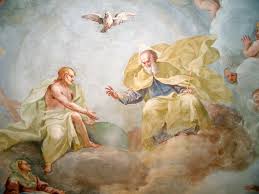
God . . . Three in one? One in three? Slivers of the same? Or three distinct beings?

Despite man’s centuries-old trinity debate, the Bible refers to God in two ways: Corporately at the beginning of creation – Hebrew el-o-heem (Genesis 1:1-2 & John 1:1-14) and as God the Father. Different heavenly beings under corporate God (el-o-heem) are as follows.

  • Father: The father of spirits (Hebrews 12:9), the father who gives us the Spirit (Luke 11:13), and the father who forgives (Matthew 6:14-15).
  • Son: Took human form to live and die as a man in order to give humankind the choice of life through covenant with Him.
  • Spirit: Described as the ‘breath of God’, He is currently on earth to guide and instruct those who follow the Christ (John 16:13).

They’re corporately the same just like company employees or a husband and wife may be of one mind. Jesus pointed this out when claiming that He and His father were one and the same (John 14:11).  However, each is a distinct entity with beautiful attributes.

Different titles for God the Father based on His character and actions:

  • His true name, Jehovah/Yahweh – “I am that I am” – “I exist” (Genesis 2:4)
  • Creator and Father of spirits (Genesis 6:7, Ecclesiastes 12:5-7 & Hebrews 12:9)
  • Healer, Jehovah-Rapha (Exodus 15:26)
  • Provider, Jehovah-Jireh (Genesis 22:14)
  • Judge of the world through Jesus the Christ (Acts 17:30-31)

Regarding the Son of God: He came to earth and took human form (spirit in body like us) to become the final sacrifice for sin. He has earned the right to rescue us from judgment (Revelation 5) and sits in the kingdom of heaven at the right side of God the father (Ephesians 1:19-20).

What about the Spirit of corporate God? The Spirit is given by God the Father at the moment of true belief (Luke 11:13) and Acts 19:2). He is also a teacher & helper to Jesus’ Followers (John 14:26 and 16:13, and 2Peter 1:21). Finally, the Holy Spirit also gives gifts to the Followers of Jesus to strengthen them. These include the tongues of men and angels along with interpretations, wisdom, knowledge, faith, healing, miracles, prophecy, and discerning of spirits (Acts 2:4 & 13, and 1Corinthians 12:7-10).

El-o-heem God corporately describes creator, savior, and helper – three distinct individuals working together to reconcile God the Father of Spirits with His creation. Who – or what – is your god?

Keep an eye out for “Finding Answers to Stuff Churches Don’t Discuss!” scheduled for a mid-2015 publication. There, you’ll find roughly 60 topics related to daily life (such as sex, religion, finances, tattooing, and everything in between!) along with practical application of God’s guidance for navigating those difficult waters!

And, for a very comprehensive and detailed study of the very important topic of God’s judgment to come and being rescued from it, feel free to read my 2011 guide titled, “Finding the End of the World” available at Amazon, Barnes and Noble, and from www.ronbraley.com in paper and e-book formats. In the guide, you’ll find roughly 500 pages of building blocks to help you do your own complete and unbiased study based on Scripture and history!

Trinity . . . Exactly WHO or WHAT is our God??

God . . . Three in one? One in three? Slivers of the same? Or three distinct beings?

Despite the fact that religious leaders have gotten their underwear in a bunch over the trinity debate for centuries, Biblical texts refer to God in two ways: Corporately at the beginning of creation – Hebrew el-o-heem (Genesis 1:1-2 & John 1:1-14) and as God the Father. Different heavenly beings under corporate God are as follows.

  • Father: The father of spirits (Hebrews 12:9), the father who gives us the Spirit (Luke 11:13), and the father who forgives (Matthew 6:14-15).
  • Son: Took human form to live and die as a man in order to give humankind the choice of life through covenant with Him.
  • Spirit: Described as the ‘breath of god’, He is currently on earth to guide and instruct those who follow the Christ (John 16:13).

They’re corporately the same just like company employees or a husband and wife may be of one mind. Jesus pointed this out when claiming that He and His father were one and the same (John 14:11).  However, each is a distinct entity with beautiful attributes.

Different titles for God the Father based on His character and actions:

  • His true name, Jehovah/Yahweh – “I am that I am” – “I exist” (Genesis 2:4)
  • Creator and Father of spirits (Genesis 6:7, Ecclesiastes 12:5-7 & Hebrews 12:9)
  • Healer, Jehovah-Rapha  (Exodus 15:26)
  • Provider, Jehovah-Jireh  (Genesis 22:14)
  • Judge of the world through Jesus the Christ (Acts 17:30-31)

Regarding the Son of God: He came to earth and took human form (spirit in body like us) to become the final sacrifice for sin. He has earned the right to rescue us from judgment (Revelation 5) and sits in the kingdom of heaven at the right side of God the father (Ephesians 1:19-20).

What about the Spirit of corporate God? The Spirit is given by God the Father at the moment of true belief (Luke 11:13) and Acts 19:2).  He is also a teacher & helper to Jesus’ Followers (John 14:26 and 16:13, and 2Peter 1:21). Finally, the Holy Spirit also gives gifts to the Followers of Jesus to strengthen them. These include the tongues of men and angels along with interpretations, wisdom, knowledge, faith, healing, miracles, prophecy, and discerning of spirits (Acts 2:4 & 13, and 1Corinthians 12:7-10).

El-o-heem God corporately describes creator, savior, and helper – three distinct individuals working together to reconcile with mankind.  Who’s your god?