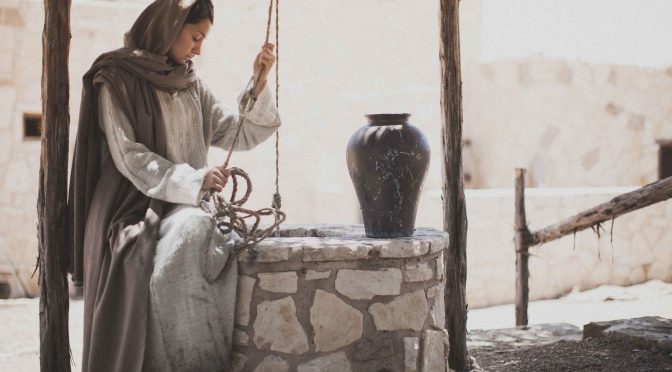
Tag Archives: judgment

Jesus in the Feast of First Fruits

Welcome to week three of learning about the feasts and festivals ordained by God! Last week, we moved from Passover to the Feast of Unleavened Bread, which Passover initiates. Unleavened Bread is all about removing leaven—yeast—sin from our lives. Jesus came 2,000 years ago to fulfill the feast and make possible a way for us to be free and rejoin the Creator. I’ll introduce the third event (First Fruits) and connect it to the first two feasts and Jesus’ fulfillment.

Passover occurs at twilight (about 6:00 PM) on Nisan 14 of the Jewish calendar. At dusk, the date becomes 15 Nisan. The seven-day feast of Unleavened Bread is part of Passover and begins at that time. First Fruits happens the day after the Jewish Sabbath following Unleavened Bread. Sabbath runs from twilight on Friday to the same time Saturday evening. So, First Fruits occurs on Sunday, the day Jesus was raised from the dead. Considering this and what I wrote last week, here’s a snapshot of the week from Jesus’ entry into Jerusalem until First Fruits:

  • Sunday: enter Jerusalem
  • Monday through Thursday: four days of inspection by religious leaders (to fulfill foreshadowing).
  • Thursday day (14 Nisan): Day of Preparation. Crucified when the Passover lambs were slaughtered. In this, Jesus became our Passover (1 Corinthians 5:7).
  • Thursday night (15 Nisan): Passover; the Feast of Unleavened Bread starts.
  • Thursday, Friday, and Saturday nights: three nights in the grave.
  • Friday, Saturday, and Sunday days: three days in the grave; raised on the third (Matthew 28:1-6).
  • Sunday Day (17 Nisan): First Fruits.

First Fruits celebrates what God has provided (Leviticus 23:9-14) and represents resurrection like Passover represents redemption, and Unleavened Bread speaks of being set apart for God. Sheaves of barley are cut just before sunset late Saturday afternoon and ceremoniously waved before God on the first day of the new week (Sunday). Just as the priests presented the first of the barley harvest to God that day, Jesus presented Himself to the Father as the first of those who would also die and be raised to new life (1 Corinthians 15:20-23). The fulfillment heralded a new era of being set apart for purity and good works in Christ Jesus (e.g., Ephesians 2:10).

How can we apply the concept of new life in Jesus as ‘first fruits?’ First, recognize that we have been ‘crucified’ with Christ when we devote ourselves to God through Him (Galatians 2:20). We become a “new creature; the old things passed away; behold, new things have come” (2 Corinthians 5:17) and put on the new self with its likeness to God (Ephesians 4:24). In other words, we can become ‘first fruits’ to God when we devote, stay, and change.

Next week? Let’s continue our journey with Jesus in the Pentecost.

Blessings and peace,

Dr. Ron Braley

Jesus in the Feast of Unleavened Bread

Last week, I introduced the Feast of Passover—the first of seven ordained by God. It kicks off the Feast of Unleavened Bread. Passover and the first night of Unleavened Bread are known as ‘high sabbaths.’ They do not happen on an actual Sabbath, which begins on Friday night. This, and the fact that Jesus was buried in the ground for three nights (Thursday, Friday, and Saturday) and three days (Friday, Saturday, and Sunday) and raised on the third day, help us understand that Jesus was crucified and buried Thursday day, not Friday, as is our tradition.

So, what prompted the connected Feasts of Passover and Unleavened Bread? As I mentioned previously, the Israelites had to make a hasty departure from Egypt after God completed ten judgments against the Pharoah. They didn’t have time to use yeast (leaven) to let the bread for the journey rise. Eventually, yeast came to signify the old life of bondage in Egypt and sin.

How is the yeast-less-bread feast celebrated? Deep house cleaning is done by the 14th of Nisan in preparation for the Passover and the first day of Unleavened Bread on the 15th. Special dishes and utensils are used to ensure no contamination. Then, pieces of yeast are hidden to be found during the Feast of Passover after sundown (the start of the 15th).  A ceremonial search for leaven and removal that night (part of the Passover feast) is done by candlelight and with a feather and wooden spoon; all are placed into a bag and burned. The head of the household then says a prayer.

The theme of old and new is an emphatic order to be free of corruption. So, how did Jesus fulfill the feast to stress that? First, He is the ‘Bread of Life’ who did not sin—leaven (John 6:32-35). Second, He had to take on sin—ours—to satisfy a sinful humanity’s debt to the Creator: “He made Him who knew no sin to be sin on our behalf so that we might become the righteousness of God in Him” (2 Corinthians 5:21). Because of His sinless nature, God didn’t allow His body to decay (such as leaven-oriented fermentation causes). Therefore, He was buried in a rich man’s grave, not thrown onto the trash heap like other crucified criminals (Isaiah 53:8-9), and raised. Most important, Jesus removes the spiritual yeast/leaven/sin from our house, our lives.

How can we apply this? We can start by “. . . lay[ing] aside the old self, which is being corrupted in accordance with the lusts of deceit” (Ephesians 4:22) and become new. Why? If nothing else, practicing sin, no matter what we may believe about Jesus, will earn a spiritual death sentence (Galatians 5:19-21).

What about next week? We’ll continue exploring God’s ordained feasts and festivals with “Jesus in the Feast of First Fruits.”

Blessings and peace,

Dr. Ron Braley

www.ronbraley.com

http://www.findingdiscipleship.org

Living Water: Refreshing & Transformative

Have you ever heard of the ‘woman at the well’—the Samaritan woman who believed in Jesus and ran throughout the town telling the good news of the Kingdom of Heaven to anyone who would listen? I thought so! But what do you know about the ‘living water’ God offered her (and still does through Jesus)?

“Jesus answered and said to her, ‘If you knew the gift of God, and who it is who says to you, ‘Give Me a drink,’ you would have asked Him, and He would have given you living water.’” (John 4:10) “But whoever drinks of the water that I will give him shall never thirst; but the water that I will give him will become in him a well of water springing up to eternal life.” (John 4:14)

The ‘living water’ is the life that comes only through God. The Old Testament folks knew this through their prophets, and they looked forward to the day when the Living Water (the manifestation of God’s promise through Jesus) would come. The Samaritan woman, not knowing of the Old Testament references, believed that Jesus was talking about fresh, running water like the spring that fed the well. So, why didn’t the Samaritan woman understand what Jesus said?

The Samaritans honored only the first five books of the Bible. So, they didn’t know about the Living Water promise through the prophets. For instance, through Jeremiah’s prophecies, we learn that God was, and is, the fountain of Living Waters (Jeremiah 2:13 & 17:13). And from Isaiah, we learn of the Living Water as springs of salvation (Isaiah 12:2-3). According to the Apostle John, Jesus is the One who can give Living Water that comes from the Father above, and our faith in Him and the resulting faithfulness bring the rivers of Living Water by the Spirit. (Joh 4:10, 7:38, & 3:5).

Also, consider Jesus’ glimpse into the future when all who are God’s in the age to come will be continually refreshed by this Living Water: “Then he showed me a river of the water of life, clear as crystal, coming from the throne of God and of the Lamb … The Spirit and the bride say, “Come.” And let the one who hears say, “Come.” And let the one who is thirsty come; let the one who wishes take the water of life without cost.” (Revelation 22:1 & 17)

So, the Living Water is the refreshing God gives. How do we receive it? By answering God’s call with complete devotion to Him. He will then provide you with His Spirit (hence, the regeneration from above and the Spirit from John 3:5). Where will we go next week? Well, Passover is coming. So, I thought I’d introduce the feasts and festivals ordained by God and then dive into each one in the following weeks.

Blessings and peace,

Dr. Ron Braley

How Dry I Am! How Dry . . .

“Dude! I don’t I feel God’s presence? Maybe He has left me!” You’d be surprised at how often these thoughts or questions come up! Perhaps you’ve wondered or asked them yourself. It’s OK. Let’s talk about why we think we need to ‘feel’ the presence of God.

Our creator designed us to bear His image.

“Then God said, “Let Us make man in Our image, according to Our likeness . . . God created man in His image, in the image of God He created him; male and female He created them.” (Genesis 1:26-27)

Do you know that He and the One we know as Jesus felt emotion (and, logically, still do)?

God: “Just as a father has compassion on his children, So the Lord has compassion on those who fear Him.” (Psalm 103:13)

Jesus: “Looking at him, Jesus felt a love for him . . .” (Mark 10:21); “When the Lord saw her, He felt compassion for her, and said to her, ‘Do not weep.’” (Luke 7:13)

We are imagers of God. He operates by free will; so do we (with good or bad consequences!). He feels; we feel. So God understands our emotions. The downside is that we can mistake feeling for Spirit and go into a tailspin when we don’t ‘feel’ Him. The truth is that, although our interaction with God can produce human feelings, the Spirit of God isn’t an emotion. He is either with us or not, regardless of what we feel. Old Covenant Elijah and David exemplify this reality.

God was with Elijah, as evidenced by His destruction of pagan priests and an animal sacrifice (1 Kings 18:20-40). He was probably on top of the world! Yet, he had a complete reversal when running from King Ahab soon afterward. Elijah was so depressed that he wished to die. He didn’t ‘feel’ the presence of God. However, he learned that God had not left Him as revealed in a ‘gentle wind’ (1 Kings 19:11-13).

David? Within the first 100 Psalms, you’ll discover quickly that David’s emotions were up one minute, down the next. He knew that God was his foundation (e.g., Psalm 18), but, later, he cries, “Where are you?!?” (as in Psalm 13).

And then there’s my dear wife, who felt like she was in a ‘spiritual desert’ for several years. Once she realized that God had been with her all the time and was waiting for her to do her job of introducing His Kingdom to others in work, play, and life, her outlook changed, and she’s been fine ever since.

In summary, our emotions (or lack thereof!) may keep us from remembering that God gives His Spirit to His own; feelings are ours. Next week, we’ll take a deep dive into Jesus’ washings in the upper room as we contrast born-again forgiveness and continued forgiveness.

Blessings and peace,

Dr. Ron Braley

Just Breathe!

Close your eyes. Breathe in for four seconds. Hold for four seconds. Breath out for four seconds. Hold for four seconds. As I understand, this is one way that folks like Navy Seals and military snipers stay calm under highly stressful situations. Breathing to stay calm can help you too. When? Whenever you begin to feel stressed, angry, or anxious. And calming down instead of reacting is good for your body and mind and relational and spiritual health. The last two areas will be our focus today, even though all four areas touch our relationship with God and Christian maturity. In the process, I’ll offer some tips for healthy conflict resolution.

In Matthew 5:21-26, Jesus explained that we must not allow anger to manifest in slander or physical harm. The text also tells us to correct any wrong we’ve done against other people. In other words: resolve conflicts and reverse sinful actions against others. Open confrontation helps keep little misunderstandings or minor infractions from becoming gaping wounds that may never heal. Healthy confrontation to resolve conflicts can also reduce the likelihood of practicing anti-God behavior against others, which will earn a spiritual death sentence and exclusion from God’s Kingdom (Revelation 22:14-15; Galatians 5:19-23).

Here’s an example of how this can work: Breathe in. 1-2-3-4. Hold 1-2-3-4. Breathe out. 1-2-3-4. Hold. 1-2-3-4. “Excuse me: I need to let you know that accusing me of stealing without proof hurt. Next time, please talk to me first.” And then breathe. Or “Your hateful comments and gossip tear down and don’t build up. Let’s talk.” Breathe . . . Now, the other person may not be receptive or may react negatively. You can’t control that. The point is that we must do our best to calmly but firmly address issues to help ensure that minor conflicts don’t get out of control and result in sin (rebellion against God’s ways). Is there anything else you can do to reduce tensions and not sin? Sure!

Besides the breathing I mentioned, you can remove yourself from a toxic situation to avoid reacting out of anger. If that’s not possible, remain calm and do your best not to react to keep from sinning. Allow reconciliation to work. Here’s what Jesus said about this in Matthew 5:39: “. . . whoever slaps you on your right cheek, turn the other to him also.” And Paul reminded the Ephesian church not to sin out of anger and retain healthy relationships by “not letting the sun go down on your anger.” (4:26).

On a different note, you may occasionally feel ‘spiritually dry’—that God has left you or that you’re not performing some spiritual purpose. So, let’s go there next week!

Blessings and peace,

Dr. Ron Braley

White Robes & Green Thumbs

What do white robes and green thumbs have to do with each other? Lots! In our Christian faith, you must have both to grow and persevere until the rescue (salvation) that will come when Christ returns (1Peter 1:3-5). Allow me to explain.

White robes imply a setting apart (holiness) from worldly things for the things of God. And the things for which we’re to be set apart are purity and good works and spiritual growth and maturity.

“For we are His workmanship, created in Christ Jesus for good works, which God prepared beforehand so that we would walk in them.” —Ephesians 2:10.

Don’t be fooled into thinking that belief without productive faith will buy ‘fire insurance!’ Jesus said that would result in destruction (John 15:2-6). James confirmed that knowledge without action is dead (James 2:14-26). But righteousness (abiding by God’s standard) and holiness will earn a white robe and rescue at the end of this world and an eternity with God:

“After these things, I looked, and behold, a great multitude which no one could count, from every nation and all tribes and peoples and tongues, standing before the throne and before the Lamb, clothed in white robes, and palm branches were in their hands … And he said to me, “These are the ones who come out of the great tribulation, and they have washed their robes and made them white in the blood of the Lamb.” —Revelation 7:9-14.

White robes are good. But where does the ‘green thumb’ fit in? Well, living by God’s standard and doing good works out of faith don’t come naturally. They happen because of a change of heart (mind) and spiritual maturity. We must decide to receive the wisdom of God and learn how to grow it and put it to work. Jesus explained this in a parable about spiritual soil (Matthew 13:1-9 (parable) and 18-23 (explanation)).

Briefly, the parable showcases four kinds of people as an analogy of sowing and soil. The first is on no ground, the person who doesn’t understand the things of God and rejects them. The second is rocky soil: receiving wisdom but being unproductive. The third is thorny ground, representing the worrisome and greedy, intentionally and selfishly unfruitful. The fourth is good soil: the person who receives the good news of God’s Kingdom and matures accordingly. The green thumb in good soil earns a white robe.

Do you have a ‘white robe?’ Well, it depends on your soil and willingness to receive truth and grow in it. What kind of soil are you? Let me know if you need some fertilizer! I realized too late that I was to address healthy conflict resolution and dealing with anger last week. So, let’s go there next week.

Blessings and peace,

Dr. Ron Braley

Change of Heart, Change of Mind

What do you think of when you hear or read the word “heart?” I guess that feelings come to mind. Perhaps an afterthought is “my heart hurts” or “you have my heart” or “it warms my heart.” That’s fine. After all, we’re emotional creatures. But what about a change of heart—especially that transformation God desires of us? And how does ancient Christianity primarily view the ‘heart’ anyway?

You’ll find that heart, mind, and intent are very closely related and can be synonymous in the Bible. For instance, “Therefore repent of this wickedness of yours, and pray the Lord that, if possible, the intention of your heart may be forgiven you.” (Acts 8:22)

An intent to do something is to have a heart, or mind, for action. We behave accordingly when our mind (heart) is set on a course of action or thing. The pure heart (mind) will see God (Matthew 5:8). On the other hand, the heart (mind or intent) is closely related to what we pursue. It could be things like money, love, stuff, sports, etc. (Matthew 6:21). So, why is the word ‘heart’ (Greek cardia) often used to represent our thoughts or intentions? It is the core of our being and where everything we do begins:

“But the things that proceed out of the mouth come from the heart, and those defile the man. For out of the heart come evil thoughts, murders, adulteries, fornications, thefts, false witness, slanders.” (Matthew 15:18-19)

Those who God knows have a heart (mind) for Him and have devoted all to Him: “. . . if you confess with your mouth Jesus as Lord, and believe in your heart that God raised Him from the dead, you will be saved; for with the heart a person believes . . .” (Romans 19:9-10), And we are of one mind (Acts 4:32).

Yet, some intend to continue rebellion against God; it won’t end well: “But because of your stubbornness and unrepentant heart you are storing up wrath for yourself in the day of wrath and revelation of the righteous judgment of God” (Romans 2:5)

Finally, a right mind (heart) makes possible a deep and lasting understanding of God’s Kingdom: “But the seed in the good soil, these are the ones who have heard the word in an honest and good heart, and hold it fast, and bear fruit with perseverance.” Luke 8:15)

It’s nearly springtime. So, let’s continue to talk about soil and seed and growing spiritual stuff next week in “White Robes & Green Thumbs.”

Blessings and peace,

Dr. Ron Braley

Vengeance is God’s Alone!

My cat is pretty funny … and vindictive! She insists on having the last ‘word.’ If she has just been scolded, she’ll likely hide behind a corner and lash out as the discipliner walks by. Or she may whelp a disapproving “meeooowwwuuuuuhhhh.” I’m not sure I want to know what she’s saying at that moment! Anyway, she reminds me that we’re often aggressive toward other people—even inside the church.

People who should know better gossip against others and retaliate in litigation (think about the Corinthians I wrote about last week!). They often throw hurtful speech or punches despite the order to be kind, patient, and loving. Vengeance flies even though we’re commanded to turn the other cheek to give reconciliation a chance and be quicker to listen than speak.

“This you know, my beloved brethren. But everyone must be quick to hear, slow to speak and slow to anger; for the anger of man does not achieve the righteousness of God.” (James 1:19-20)

“But the fruit of the Spirit is love, joy, peace, patience, kindness, goodness, faithfulness, gentleness, self-control; against such things there is no law.” (Galatians 5:22-23)

“But I say to you, do not resist an evil person; but whoever slaps you on your right cheek, turn the other to him also.” (Matthew 5:39)

These are some active ways we can be aggressive to God’s creation. There are others too.

My cat is aggressive in her retaliation. But sometimes, she’s passive in her attacks, withdrawing her affection or displaying ‘attitude’ in non-verbal or covert unkindness. We often do the same to each other. There’s the gossiper who will whisper unpleasantries or the ugly truth disguised in “Christian love.” I’ve heard these things spoken aloud in prayers to avoid the accusations of gossip. Some people, like my cat, will withhold their affections or stop helping in passive retaliation. And there’s the congregant who will selectively clap for one worship music artist while refraining when the person they dislike offers their gift. Aggressions like those I’ve mentioned are ungodly and hurtful, whether active or passive. So, who does have the right to be the aggressor?

Only God has the authority to issue vengeance, retribution, or judgment:

“For we know Him who said, ‘VENGEANCE IS MINE, I WILL REPAY.’ And again, ‘THE LORD WILL JUDGE HIS PEOPLE.’” (Hebrews 10:30)

“Therefore having overlooked the times of ignorance, God is now declaring to men that all people everywhere should repent, because He has fixed a day in which He will judge the world in righteousness through a Man whom He has appointed, having furnished proof to all men by raising Him from the dead.” (Acts 17:30-31)

Whether victim or aggressor, some of you may be frustrated at what I’ve written. So, join me next week to explore healthy conflict resolution and dealing with anger.

Blessings and peace,

Dr. Ron Braley

That’s Heavy, Man!

“Ron! Why do you write about such serious stuff? Just remind us that Jesus loves us no matter what and then tell a cute story or write something funny!” Indeed, my topics are often serious or deep. Why? I sometimes address a specific need or balance our lopsided Christianity that usually tells only half the story. Yes, Jesus loves us no matter what we’ve done or where we are. But we’re not meant to stay there! According to King Solomon, there’s nothing new under the sun. And the need to respond to current issues or provide guidance dates to the earliest days of the New Covenant.

New Testament (Covenant) letter writers usually addressed a particular audience to inform or solve a problem. They would often provide balance in a Christianity warped by heresies or immoralities of the day. Take Paul, for instance. He wrote to the Church in Rome to steer a predominantly Jewish congregation from focusing on religious format or works. Sure, God had predestined the nation of Israel to carry out His plan of salvation (Romans 8:18-30 – similarly, see Ephesians 1:4-6, 11). Its people—especially those who entered the Christian faith—probably felt special and believed that adherence to the Jewish religious Law was still necessary for the New Covenant. However, a focus on works negated the unmerited gift of life offered through Jesus.

The Corinthian Church was another recipient of Paul’s written guidance and correction. These believers, mostly Greek, often engaged in things like sexual immoralities (e.g., 1Corinthians 5:1-13 and 6:12-20). Many filed lawsuits against each other. Still, others practiced gluttony and self-centeredness and rebelled against customs like how women should respond in church or keep their hair. Why did he write against violating local traditions? Because the violations caused problems in the culture and could make God’s Kingdom unattractive to the locals. Paul’s letters addressed those issues (and more) to correct bad behavior and provide a clearer view of a righteous walk of faith. What about today?

We still misbehave toward one another, abuse our bodies, and neglect spiritual formation believing all the while, selfishly, that God has a unique plan for each of us and that He works all things for our personal good. The practices are unrighteous, and the beliefs are gross misunderstandings of Jeremiah 29:11 and Romans 8:28 taken out of context. Yes, God Has a plan and has invited us to join Him in it, but it’s His plan for all, not personal spiritual elevation.

So, I write to you to offer balance and guidance and partner with you to practice your faith according to God’s good pleasure. I promise to lighten it up where I can! What’s next? Let’s learn how not to be aggressive—even passively aggressive—in “Vengeance is God’s, not ours—even in church!”

Blessings and peace,

Dr. Ron Braley
Ask Away!

Once upon a time, I didn’t study (or regularly read!) my Bible. I didn’t ask questions. Maybe it was because I didn’t know what to ask or why. I believed that I just needed to believe in Jesus with no other relational or growth requirements. And no one challenged my resulting lack of faith, which, as it turns out, must be based on wisdom about God. So, my faith was blind and shallow. Then, the dam broke one day, and the floodwaters of grief, joy, and passion rushed in. “What happened?” you ask. Good question! Let your inquiry be the first of many to come.

Decades ago, a friend challenged my faith by bringing to light my lack of understanding about the end of the world and Jesus’ return … or anything else biblical, for that matter. He was right. But I decided to become ‘found’ by devoting myself and all I am to God and vowing to learn about His ways and teach others what I discovered. I learned during the process that we must challenge what we’re taught in church—especially where good biblical knowledge is lacking, or wrong, or things just don’t make sense. I suggest that discovering the source of church traditions is a great way to start. There are many excellent reasons to question these things.

First, blind faith can lead to spiritual death. On the other hand, asking questions can make us wiser and aid our discipleship. And a healthy fear of God is the beginning of wisdom. Why else would we go through the effort??

“Give instruction to a wise man and he will be still wiser, teach a righteous man and he will increase his learning. The fear of the LORD is the beginning of wisdom, And the knowledge of the Holy One is understanding.” (Proverbs 9:9-10)

Second, our inquiries can hold Christian preachers and teachers, who God holds to a higher standard (e.g., James 3:1), accountable. Your questioning can help them focus. We learn of one group, applauded for doing this:

“The brethren immediately sent Paul and Silas away by night to Berea, and when they arrived, they went into the synagogue of the Jews. Now these were more noble-minded than those in Thessalonica, for they received the word with great eagerness, examining the Scriptures daily to see whether these things were so. Therefore many of them believed, along with a number of prominent Greek women and men.” (Acts 17:10-12)

Finally, others are probably wondering the same things you are. Your questions and correct answers can benefit many others too. In summary, wisdom about God and spiritual transformation is a matter of life and death. Questioning what you hear and asking new questions can aid wisdom, provide accountability, and benefit others. What’s next? I’ll explain why so many of my topics seem serious or hard-hitting in “That’s Heavy, Man!”

Blessings and peace,

Dr. Ron Braley