Category Archives: Finding the End of the World

Blogging about stuff related to my book, “Finding the End of the World”

There’s Nothing Original About Sin: The Cure

In my last article, I taught that sin is rebellion against God—initially by a spirit and then by humans. We continue to sin against God and people through enlightenment and choice. Before we delve into a sin cure, I need to stress that we’re talking about two categories of sin: the first that separated us from God and created a debt we couldn’t satisfy, and ongoing sins that threaten to keep us from God. Both are settled differently.

The initial human sin. Our Creator promised that One would eventually make things right and offer a way back. We call Him Jesus, and He willingly sacrificed Himself for ALL people (John 3:16 and 12:32; Acts 17:30-31; 1 Timothy 2:3-11 and 4:10; Hebrews 2:9; 2 Peter 3:9; 1 John 2:2-6). This was God’s call and love for us. He then raised Jesus from the dead to give hope to all who would become His. How? By responding in complete devotion (e.g., 1 Peter 1:3-5). The resulting ‘cleansing’ is the ‘bathing’ in Jesus and Peter’s upper room discussion (Greek ‘louo’ in John 13:10—see my article “Been Cleaned, Being Cleaned!”(March 2022)). This and the ongoing category of sin have one thing in common: a relationship with God through devotion and perseverance. Curing persistent sin can be difficult, though, because it requires permanent change.

Ongoing sin. God gives His Spirit to those who are His for guidance and change—transformation (Romans 12:1-2). In our journey forward, we must learn what God desires and do that, what He hates, and DON’T do that! Enlightenment and growth help us to deal with temptations so they don’t turn into sin in the first place.

But when we sin (and we will!), we must repent—change our behavior to enable forgiveness. This is the ‘washing’ in John 13:5-10 (Greek nipto), and it’s necessary to ensure we don’t practice sin! Regardless of the offense, practicing it will earn a spiritual death sentence (e.g., Galatians 5:16-17 and 1 Corinthians 6:9-10). Besides enlightenment by the Spirit, avoiding sin, and repentance, there’s another aid in sin cure: other people.

Christians are to assess other Christians’ behavior and help them remain in a relationship with God (1 Corinthians 5:6-13; James 5:19-20; Matthew 18:15-17). Unfortunately, we usually misinterpret Jesus’ “Do not judge” and “first take the log out of your own eye” of Matthew 7:1-5 and, therefore, don’t change our behavior or help others avoid or resolve sin. Yet, we are first to resolve our sinful behavior so that we can help others resolve theirs.

In summary, the debt incurred by the first human rebellion against God was covered by Jesus. He has called, so respond well! Ongoing rebellion (sin) is satisfied through repentance: a change in behavior from a new heart. What’s next? Let’s lighten things up a bit and encourage you diamonds in the making!

Blessings and peace,

Dr. Ron Braley, MDiv, DMin.
There’s Nothing Original About Sin: The Ailment

Few Christian things are more misunderstood or weaponized than the idea of sin. What is simple rebellion against God out of awareness of good and bad possibilities became polluted and misapplied by the fourth century CE. And many people or institutions today will gladly determine which behaviors are sinful. But what is sin? Was there an ‘original sin?’ How did religion distort a simple understanding of it and its cure? We’ll explore the answers in this first of two articles.

What is sin? Simply put, based on the original language and biblical contexts, it’s rebellion—intentionally missing a mark. What mark? God’s righteousness (His standard). Miss it but correct course, and [spiritually] live. Miss it repeatedly, and self-imposed permanent separation from God awaits (e.g., Galatians 5:19-21).

Was there an ‘original’ sin? Yes, but perhaps not like you’ve learned. Augustine was responsible for our Western understanding of ‘original sin.’ For him, the first sin was Adam’s rebellion in the garden, and its perpetual curse must be transmitted through sexual intercourse. His theory involved mistranslating and, therefore, misinterpreting the biblical Greek of Romans 5:12. The problem? Instead of consequences occurring BECAUSE of Adam’s rebellion, the misinterpretation prompted Augustine to teach that a perpetual sex-reproduced sin curse started THROUGH Adam. The truth about sin and its origin is simpler, however.

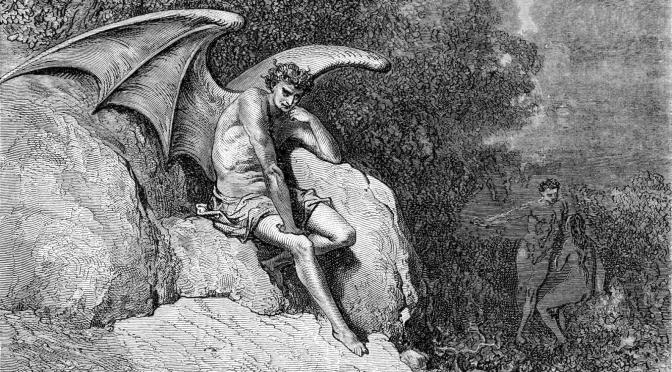
The original sin wasn’t human but spiritual. Lucifer (aka Satan) rebelled (sinned) against God and lost his heavenly position. He tempted Eve to sin; she tempted Adam. They rebelled against God’s instructions by eating from the ‘tree of all knowledge’ (Genesis 3:1-7). As a result, humans lost access to the Tree of Life and, therefore, suffer physical death (Genesis 3:22-24). Because we no longer live and walk with God as the first humans did before their rebellion, we also suffer spiritual separation from Him that requires resolution. The enlightenment gleaned by Adam and Eve remains available to be abused by choice.

How has religion distorted sin and its cure? The only remedy for Augustine’s original sin was, and is, baptism—even for infants. For many, the unbaptized are hell-bound, even from birth. For others, sin isn’t a manifestation of a heart or mind issue but actions themselves, regardless of intention: “Don’t drink; don’t smoke; don’t dance; don’t play cards . . .” Some religious leaders will tell you that sin and hell are nonexistent. And others will insist that you’ll go to hell if you don’t say or do something after each ‘sin.’ All these ‘miss the mark.’

In summary, sin is rebellion against God. The first was by a spiritual being, and sin by humans followed. We continue to rebel against God because of enlightenment and choice. In the following article, we’ll conclude by exploring the cure for the initial human rebellion that separated us from God and the ongoing sins that ail us.  

Blessings and peace,

Dr. Ron Braley, MDiv, DMin.
Why Did Jesus Die Anyway?

If I had a dollar for every time I’d heard, “Jesus died to forgive my sins!” I’d be rich! But that isn’t directly why He came; it shouldn’t be our focus! He died to bring us back to His Father, the Creator, not specifically to forgive personal sins: “For Christ also died for sins once for all, the just for the unjust, so that He might bring us to God . . .” (1 Peter 3:18).

Our heavenly Father has worked to reconcile with us since the rebellion in Eden. Forgiveness of sin has been just one step in the process. It was, and is, an ongoing benefit of Jesus’ work at the cross done solely for making a way back to God, but it wasn’t the prime directive.

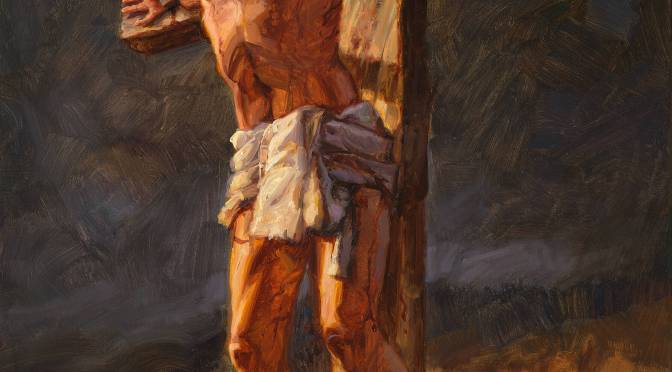
Why die? According to the Lord-servant covenant that God struck with Abram, death was the consequence of breaking it. We owed God, but Jesus paid our debt that began way back in Eden (“Don’t eat or else!”). Why is it important to understand that personal sin forgiveness wasn’t the priority? If we believe Jesus died explicitly to forgive individual sins instead of humanity’s rebellion, then we may feel, as we tend to in the West, that there’s nothing left to do; we owe God nothing.

On the other hand, if we understand that Jesus died to bring us back to the Father, even though the benefits can include personal forgiveness and transformation now, and salvation from His wrath to come, the focus is redirected to Him, not us. It becomes easier to understand that we must discover what He desires in return and then do that! But what do we who belong to God get in return besides forgiveness, transformation, and salvation? The gifts of His righteousness (standard), the Holy Spirit, and life in the coming age. (Acts 2:38; Romans 5:17; John 3:15-16)

Anyway, here’s a brief history of our reconciliation and Jesus’ mission from beginning to end:

  • Our rebellion.
  • Our sacrifices for sporadic forgiveness.
  • Jesus’ permanent satisfaction of our debt through the cross for ALL! (John 1:29; 1 John 2:2).
  • Our hope through His resurrection.
  • Our choosing God through Jesus (making Him ‘Lord’) brings righteousness and the Spirit.
  • Our ongoing repentance brings ongoing forgiveness.
  • Our renewed mind and the Spirit bring transformation and obedience for salvation.
  • Our outcome (if God knows us) will be a resurrection and eternal existence with Father and Son.

In summary, Jesus died to bring us back to God, and all that entails. Death paid off our debt, and resurrection gives us hope. Father raised the Son; He’ll raise the rest of us who are His! In the meantime, righteousness, the Spirit, and ongoing sin forgiveness are rewards for devotion. Personal sin forgiveness wasn’t the objective; transformation is. Since we’re on the topic of Jesus, let’s explore His genealogy and legacy in the next article.

Blessings and peace,

Dr. Ron Braley, MDiv, DMin.
Be Careful Little Eye What You See, Ear What You Hear!

As a little boy, I (and probably many of you!) learned a song that began: “Oh, be careful little eyes what you see . . . Oh, be careful little ears what you hear . . .”

I’ve learned the value of guarding what I see and hear. Take in good things, and good things will likely come out. The opposite is akin to the programming concept of “garbage in, garbage out.” Regardless, the more we take the same things in, the more we become them. Why? Neuroplasticity. The brain remaps itself based on practices and preferences. Feed it garbage, and you’ll likely become garbage in thought and deed. This is likely the case here:

“For they exchanged the truth of God for a lie . . . God gave them over to degrading passions; for their women exchanged the natural function for that which is unnatural . . . men abandoned the natural function of the woman and burned in their desire toward one another . . . God gave them over to a depraved mind . . .” (Romans 1:25-28).

 The ears? We listen to what sounds (or feels) good and were warned that people will chase whatever sounds good in the last days (2 Timothy 4:3).

The eyes? Jesus explained in Matthew 6:22-23 that what we watch reflects our inner being: “The eye is the lamp of the body; so then if your eye is clear, your whole body will be full of light. But if your eye is bad, your whole body will be full of darkness. . . .” Pornography and its sexual immoralities. Violence. Gossip. Conspiracies. You get the idea. The eyes and ears can cause spiritual death if we’re not careful.

But there’s a way out. We don’t have to habitually take in what will kill us spiritually. Jesus teaches that we are to remove stumbling blocks—those practices that will keep us from God’s Kingdom: “If your eye causes you to stumble, pluck it out and throw it from you. It is better for you to enter life with one eye, than to have two eyes and be cast into the fiery hell.” (Matthew 18:9; 5:29)

How? We can, like Job, make a righteous deal with our eyes and ears (Job 31:1 NIV) to not “look at anything vile and vulgar.” (Psalm 101:3) Here’s Paul’s advice: “This I say then, Walk in the Spirit, and you shall not fulfill the lust of the flesh.” (Galatian 5:17). Discipline yourself to see, hear, and practice good things and live, or choose depravity and die. Let me know if I can help you decide!

In summary, be careful little eye what you see, ear what you hear, to enter the coming age! In the following article, we’ll uncover that Jesus died to make that possible for you.

Blessings and peace,

Dr. Ron Braley, MDiv, DMin.

Weed Patrol – Weeds Beget Weeds! Part Two (Sexual Immorality)

In this final Weed Patrol article, I’ll address sexual immorality, which includes incest, adultery, bestiality, prostitution, and homosexuality. God detests these things that blatantly contradict His desires for how we use our bodies. He and others have said as much (e.g., Leviticus 18:6-17 & 23; Hebrews 13:4; 1Corinthians 6:15-16). Although practicing any sexual immorality will earn separation from God, I’ll spend most of this space addressing homosexuality. I honor God and care for people despite sexual preferences that are none of my business … unless practitioners identify as Christian. My job as a teacher and disciple-maker is to pass on truth and model it. Again, this article is only aimed at people inside the church—those who claim to fear God and follow Jesus.

Here are a few ways homosexuality in the church is rationalized:

“Love is Love.” Not quite. Our limited language has one word for love; biblical Greek uses three: lust, fondness, and ‘unconditional’ love. The latter insists upon doing the right thing no matter what we ‘feel’—unlike those who don’t control their passions.

“Homosexuality has always been an accepted lifestyle.” Untrue. It was tolerated in portions of pagan Greek and Roman cultures between grown men and young boys until the latter grew facial hair and were expected to pursue heterosexual relationships. However, most cultures found, and still find, homosexuality repulsive and shunned or outlawed it. This has always been the case (until recently) in Jewish and Christian cultures.

“Biblical homosexuality referred to only rape.” Nope! This is an attempt to redefine an instruction that’s unpalatable to some. Paul calls out male same-sex intimacy—those who “practice homosexuality” (1Corinthians 6:9; 1Timothy 1:10). He reiterates this and addresses similar female behavior and consequences in Romans 1:22-32. By context and definition, the word/act (Greek ἀρσενοκοίτης) is “a male partner in homosexual intercourse.” Force isn’t the issue, only abusing God’s intention for human sexuality. Admonishments against this behavior are found in the Old Covenant (Leviticus 18:22 and 20:13). The undesirable conduct pervasive in Sodom and Gomorrah became the stuff of admonishments by Paul and Jesus’ half-brother Jude: “just as Sodom and Gomorrah and the surrounding cities, which likewise indulged in sexual immorality and pursued unnatural desire, serve as an example by undergoing a punishment of eternal fire” (Jude 1:7).

“Sodom and Gomorrah were about being inhospitable, not sexually immoral!” Double nope! In Genesis 19:1-11, men of Sodom sought sexual encounters with angels they thought were male (19:4-5) despite being offered women instead (19:8). Check out all the biblical references in this article (please!). You’ll find that homosexual behavior incited God’s wrath then, as it will at the end of this age.

In summary, if we believe in a Creator, we should behave as He intends. What’s next? Even the godliest folks experience emotional highs and lows! Let’s look at one example in “Elijah: From Elation to Depression!”

Blessings and peace,

Dr. Ron Braley, MDiv, DMin.
Weed Patrol – Weeds Beget Weeds! Part One

Lately, I’ve written about ‘weeds in the church’—faux Christians who destroy it from the inside by introducing, tolerating, and perpetuating what God hates. Allow them to fester, and they’ll breed more weeds who tolerate and rebel, too, until the church’s DNA is damaged and spiritual transformation and purity become nearly impossible. So, it’s critical to recognize them.

In this and the next article, I’ll address certain weedy behaviors. I have no “stake in the game” or animosity toward anyone, regardless of lifestyle. I’m just a well-trained messenger wanting to relay God’s ways and protect His people. Who’s this and the following article for? People INSIDE the church (God will judge those outside (1Corinthians 5:12-13)). They’re for pastors, ministers, and other leaders and disciple-makers who must influence God’s people in love, purity, and morality and protect ‘the flock.’ In the process, we must love people as God loves them, hating ungodly behavior and reconciling practitioners to Him. If you’re outside God’s community, I’d love for you to know Him and for Him to know you! Let’s have coffee together and discuss this further! Now, onto the weeds!

Most weeds are easily recognized. They include people who practice lying, hurting others, stealing, causing division, and feeding addictions (among others):

  • “Or do you not know that the unrighteous will not inherit the kingdom of God? Do not be deceived; neither fornicators, nor idolaters, nor adulterers, nor effeminate, nor homosexuals, nor thieves, nor the covetous, nor drunkards, nor revilers, nor swindlers, will inherit the kingdom of God.” (1 Corinthians 6:9-10)
  • “Now the deeds of the flesh are evident, which are: immorality, impurity, sensuality, idolatry, sorcery, enmities, strife, jealousy, outbursts of anger, disputes, dissensions, factions, envying, drunkenness, carousing, and things like these, of which I forewarn you . . .” (Galatians 5:19-21)

 These activities are contrary to God’s ways, and God’s got no use for anyone who practices them: “just as I have forewarned you that those who practice such things will not inherit the kingdom of God.” (Galatians 5:21 – see also 1 Corinthians 6:10)

 But there’s a more dangerous and covert weed (1Corinthians 6:18-20): the sexually immoral believer. God’s clear about how we must use our bodies, even intimately! More on that destructive weed in the following article.

In summary, churchy weeds can breed more weeds and choke the life out of God’s community. This week, I introduced some of them that also make more weeds by breeding bad behavior. These include liars, cheats, thieves, slanderers, gossipers, and others who practice hateful things against their own bodies and other people. In the second part of this final section on “Weeds Beget Weeds!,” I’ll address the most pervasive, covert, and destructive one: the sexually immoral practitioner.

Blessings and peace,

Dr. Ron Braley, MDiv, DMin.

Weed Patrol – Christian Style!

A lot is expected of pastors. I taught and shepherded but also patched sheetrock and fixed toilets. And I embarked on regular weed patrol from March to November. Why? Because the parking lot was full of cracks that offered freedom to the little critters that resembled green welcome things but weren’t. They would overtake the parking area if I didn’t identify and kill them.

On the other hand, my wife patrols for weeds in our yard. Not so easy! It’s all green, albeit different shades of the stuff. Separating weeds from flowers and grass takes skill and determination. I can tell the difference between green and asphalt, but Joanne can segregate harmful green from good green and irradicate the unwanted (thankfully!). What does effective weed patrol have to do with Christianity? Plenty!

Anyone who practices rebellion against God’s ways invites destruction. You might think that person is easy to spot, but a weed can’t spot a weed, and there are plenty in the Church! Here’s what Jesus said about the subject: . . . “The kingdom of heaven may be compared to a man who sowed good seed in his field, but while his men were sleeping, his enemy came and sowed weeds among the wheat and went away. . . . So the servants said to him, ‘Then do you want us to go and gather them?’ But he said, ‘No, lest in gathering the weeds you root up the wheat along with them. Let both grow together until the harvest, and at harvest time I will tell the reapers, “Gather the weeds first and bind them in bundles to be burned, but gather the wheat into my barn.”’” (Matthew 13:24-30, ESV).

The weeds are there and destructive. Let me give you an example. Decades ago, a weed named James invaded our church. He said the right things and impressed church leadership but ruined marriages, stole money, and poisoned people. Thankfully, faithful Christ-followers recognized the bad from the good, asked questions, and tested James and his motives. The challenges brought out incredible weediness. He was busted and ousted . . . but not before leaving a path of destruction and pain.

So, true God-fearing Christ-followers must exist with the sinful (even inside the church) until the end of time. But they’re always on weed patrol. They’re in tune with God by the Spirit and know His ways—so much so that they know when something doesn’t belong. They’re so focused on bearing His image and pleasing Him that the weeds become obvious. Be that wary person! Learn your weeds! Learn your wheat—the good stuff of God. Learn to tell the two apart.

In summary, recognize a weed to keep from becoming one. We all know what happens to weeds! In the following article, we’ll go ‘further into the weeds’ as we discuss what to do with churchy weeds.

Blessings and peace,

Dr. Ron Braley, MDiv, DMin.

No Affirmation or Couch Potatoes!

Many Christians live at one spiritual extreme or another that could rob God of the partners He seeks. One supposes that Christians don’t have to do anything but admit Jesus is their Savior and that they are sinners. This dangerous position where most Western Evangelical Christians live produces spiritual “couch potatoes” and flies in the face of Father and Son’s commandments to honor, grow, love, and obey. How did THAT happen? Well, it’s been coming for many decades through gross misapplications of foundational principles such as salvation by grace, a lack of discipleship, bad teaching, and plain self-centeredness. Father and Son know who they are and what They’ve done—They don’t need our affirmation but DO want our partnership!

God seeks partners for reconciling His creation in this age and rulership in the next:

  • “Now all these things are from God, who reconciled us to Himself through Christ and gave us the ministry of reconciliation, . . . Therefore, we are ambassadors for Christ, as though God were making an appeal through us; we beg you on behalf of Christ, be reconciled to God.” (2Corinthians 5:18-20)
  • “He who overcomes, and he who keeps My deeds until the end, TO HIM I WILL GIVE AUTHORITY OVER THE NATIONS” (Revelation 2:26; see also Revelation 3:21 and 1Corinthians 6:2-3).

The partnership role requires training and transformation through discipleship, which should be each Christian’s highest priority as a disciple and disciple-maker. All else flows from it, from worship to spiritual growth. But statistically, fewer than 20% of churchgoers regularly engage in discipleship or related activities like small groups, Bible study, fellowship, prayer, and accountability (https://www.barna.com/research/state-church-2016/). Additionally, only 14% of today’s Christians appear to represent the actions and attitudes Barna researchers found consistent with those of Jesus (https://www.barna.com/research/christians-more-like-jesus-or-pharisees). The statistics suggest that little discipleship is taking place, and imitation of the One we claim as Savior is even rarer. No spiritually-lazy people are allowed in God’s Kingdom, though!

  • “Every branch in Me that does not bear fruit, He takes away . . . If anyone does not abide in Me, he is thrown away as a branch and dries up; and they gather them, and cast them into the fire and they are burned. (John 15:2-16)
  • “Then He will also say to those on His left, ‘Depart from Me, accursed ones, into the eternal fire which has been prepared for the devil and his angels; for I was hungry, and you gave Me nothing to eat; I was thirsty, and you gave Me nothing to drink; I was a stranger, and you did not invite Me in; naked, and you did not clothe Me; sick, and in prison, and you did not visit Me.’” (Matthew 25:41-43)

In summary, God doesn’t need our affirmation, nor will He tolerate Christian laziness! In my next article, we’ll have fun going on weed patrol, Christian-style!

Blessings and peace,

Dr. Ron Braley, MDiv, DMin.

The Future: Jesus in the Feast of Tabernacles

Over the last couple of weeks, I’ve written about God’s rescue and rest—the heart of His ordained fall festivals. Trumpets and Atonement deal with His rescue. The final festival, Tabernacles/Booths (Hebrew Sukkoth), celebrates the rest God gave Israel when He rescued her from Egypt about 3,500 years ago. Importantly, it looks forward to the rest God will give His people in the new age. Before exploring the feast’s significance, let’s look at some details and its background.

God implemented the feast so that Israel would remember His provision and shelter during the 40 years they wandered in the desert. It begins five days after Atonement on 15 Tishri, is eight days long, and identifies a completion of the harvest and, therefore, the agricultural year. In the ‘feast context,’ Trumpets happens on 1 Tishri, Atonement happens ten days later on 10 Tishri after the ‘ten days of awe’ for repentance, and Tabernacles occurs five days later.

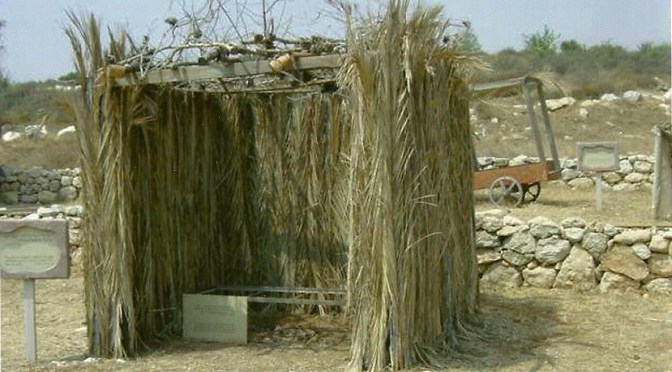
Today, Tabernacles is Israel’s Thanksgiving for the fall harvest. It’s a party, as people are invited to come and eat and drink and enjoy God’s harvest provision and view creation at night. How do they do that? Well, per God’s instructions, they sleep in a three-sided booth. A relatively open roof made of sticks and leaves allows the inhabitants to see God’s handiwork. This reminds me of Psalm 19:1-2:

“. . . The heavens are telling of the glory of God; And their expanse is declaring the work of His hands. Day to day pours forth speech, And night to night reveals knowledge.”

The feast celebrates God’s rest for His Old Covenant people, Israel. It also looks forward to fulfillment when God returns His creation to perfection and once again dwells with His people:

“Then I saw a new heaven and a new earth; for the first heaven and the first earth passed away, and there is no longer any sea. . . . And I heard a loud voice from the throne, saying, ‘Behold, the tabernacle of God is among men, and He will dwell among them, and they shall be His people, and God Himself will be among them, and He will wipe away every tear from their eyes; and there will no longer be any death; there will no longer be any mourning, or crying, or pain; the first things have passed away.’” (Revelations 21:1-4)

To summarize the fall feasts of God, terrible times happen, and worse are coming, but God will insert Himself into human history when He’s ready and bring rescue and rest for everyone who is His. Where will we go next week? I mentioned the word ‘perfection’ in this article, so let’s learn what the word means in the original language and explore character traits that can keep our fellowship with God perfect.

Blessings and peace,

Dr. Ron Braley

The Future: Jesus in the Feast of Atonement

The fall feasts of God celebrate and look forward to rescue and rest. They occur in September or October, depending on the near-total darkness of the sun and moon over Israel and begin with the Feast of Trumpets, which marks the new year and is called the ‘in-gathering.’ In the future, it will announce the rescue of God’s people before His judgment, which will fulfill the Feast of Atonement.

Atonement happens ten days after Trumpets. The time between the two is called the ‘ten days of awe’ used for repentance. On the annual Day of Atonement, the priest entered the innermost part of the Temple to atone for Israel’s sins (temporarily cover the debt to God, so to speak, with the blood of animal sacrifices). Significantly, the Jews believed that God’s final judgment would happen on the Day of Atonement in the future. It makes sense considering that all the other intentional feast days by God were, or will be, fulfilled.

Indeed, Jesus told His disciples in about 26AD and showed the apostle John in a vision in roughly 90AD about this judgment following the future ingathering and subsequent resurrection of all humans:

“But when the Son of Man comes in His glory, and all the angels with Him, then He will sit on His glorious throne. All the nations will be gathered before Him; and He will separate them from one another, as the shepherd separates the sheep from the goats” (Matthew 25:31-32)

“Then I saw a great white throne and Him who sat upon it, from whose presence earth and heaven fled away, and no place was found for them. And I saw the dead, the great and the small, standing before the throne, and books were opened; and another book was opened, which is the book of life; and the dead were judged from the things which were written in the books, according to their deeds.” (Revelation 20:11-12)

So, how did or does Jesus fulfill this feast? By willingly dying on a horrible instrument of Roman torture and death 2,000 years ago. It’s important to understand that atonement means ‘reparation’ or to make right. In a sense, it’s to repay a debt or settle the books. Jesus began this atoning work by being the one perfect sacrifice to satisfy humanity’s debt to the Creator, who will complete it through His judgment preceding the new age. More on that next week when we dive into the final God-ordained feast and the one we genuinely look forward to, Tabernacles.

Blessings and peace,

Dr. Ron Braley