Category Archives: Finding the End of the World

Blogging about stuff related to my book, “Finding the End of the World”

The Future, Jesus in the Feast of Trumpets

Rescue. Rest. God has, does, and will save people who are His and renew them. The spring feast of Passover celebrates God’s power to do just that, beginning with rescuing His people from Egypt nearly 3,500 years ago. Unleavened Bread and Pentecost, also in the springtime, remind us to be set apart for God’s purpose: partnership with Him in returning creation to the perfection it once enjoyed before we messed everything up. If we do this, we too will find rescue and rest at the end of this world to which the fall feasts of God look forward.

There are three God-ordained fall feasts: Feast of Trumpets (often called Rosh Hashanah because it heads up the new year), Atonement (Yom Kippur), and the Feast of Tabernacles (Sukkoth). And just like “Passover” comprises Passover, Unleavened Bread, and First Fruits, “Tabernacles” comprises Trumpets, Atonement, and Tabernacles.

The fall feasts beginning with Trumpets happen within 28 days in September or October, depending on the lunar calendar. Trumpets begins on the first of Tishri, the seventh month of the Jewish calendar, and is the only holiday on the first day of the month at the new moon. This time of near-total darkness will be significant to Christ’s future fulfillment of the fall feasts upon His return.

Anyway, this time called the “in-gathering” celebrates the harvest of the earth and is a shadow (forerunner) of the harvest of humans at the end of this age—some for destruction (by their choices) and some for eternal life with God. Again, the three fall feasts together celebrate rescue and rest in the past and to come. The feast and future fulfillment begin with a blasting of the trumpets.

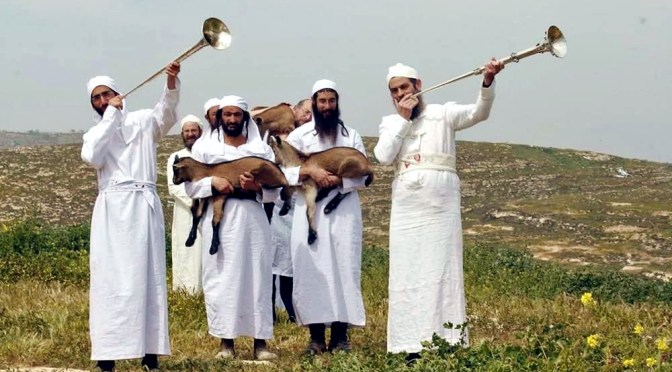
“Ron, why trumpets??” Trumpets in the Old Covenant represented God’s voice and power in warfare (e.g., Numbers 10). Blowing them was a warning that something extraordinary was about to take place. In the beginning, it was the ingathering of God’s people at Sinai to be in His presence (Exodus 19). It will announce the gathering of God’s people at the end of this age (e.g., Matthew 24:31; 1Thessalonians 4:16).

For more information about Christ’s return and God’s coming rescue and rest, please consider studying Finding the End of The World—the result of decades of research, writing, and teaching on the subject. Next week, we’ll continue our fall festival discussion with Atonement (Yom Kippur).

Blessings and peace,

Dr. Ron Braley

Here Comes the Bride!

We’ve made it through four of seven feasts or festivals ordained by God. Well done! Let’s pause before going to the final three feasts in the fall. Why? Because Jesus’ consummation of the springtime feasts and His departure and impending return fulfill something else: the Jewish wedding process, beginning with betrothal. In other words, He and we are fulfilling a dress rehearsal for our relationship with Him and entrance into the age to come. Please allow me to share this unfolding love story with you.

God called Israel His ‘bride.’ We are Christ’s bride because He and we have fulfilled the marriage covenant since Jesus’ time on earth. No other relationship between humans should be as close as husband and wife, so it makes sense. Here are but a few parts of the ancient ceremony that have, and will be, completed:

  • The father of a potential groom would search for a wife for his son. When a suitable bride had been found, the two families would meet to discuss the possible union. If the young man and woman agreed, they would essentially say, “I will be yours if you will be mine!” This is akin to what God said to His bride, Israel. Our selection for the groom can be seen in 2Corinthians 11:2.
  • To cement the deal, the couple would drink from a cup of wine called the “cup of the covenant” (Matthew 26:27-28). This was the Cup of Redemption, the third of four cups of the Passover Jesus took with His disciples, and it is the foundation of today’s Communion cup. What about the fourth cup? We’ll enjoy that at the marriage ceremony at the transition of the ages (Matthew 26:29; Revelation 19:6-9).
  • After vows, gifts, and ceremonial bathing (like baptism), the couple separated. The boy and his father would build a home for the couple (John 14:2-3 for fulfillment). This separation would typically last a year; however, we continue to wait. Why? Because God’s timing is His timing, He’ll delay until those who’ll accept His mercy have had the opportunity (2Peter 3:7-9).
  • Then, at a time known only to him, the groom’s father summoned the groomsmen to announce the wedding ceremony with shouts and trumpets. We see this in the future in Matthew 24:31. The father started the process; he’ll finish it when he’s ready. So, Jesus’ comment, “But of that day or hour no one knows, not even the angels in heaven, nor the Son, but the Father alone” (Mark 13:32) made sense to the disciples.

I realize that some people use Jesus’ statement to support an anytime, imminent return and judgment. However, there will be a sequence and signs, as we’ll see in the fall feast articles. Next week, we’ll move to the fall feasts, likely related to Christ’s eventual return and the transition of the ages, including the marriage feast I mentioned above.

Blessings and peace,

Dr. Ron Braley

Jesus in the Pentecost

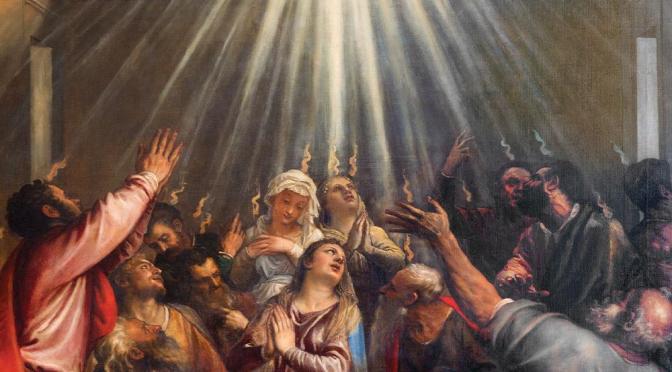
Last week, we learned that First Fruits celebrates what God has provided (Leviticus 23:9-14). It represents resurrection like Passover represents redemption, and Unleavened Bread speaks of being set apart for God. The final spring festival, and the second of three that required visiting the Temple in Jerusalem, is Pentecost, meaning ‘fiftieth.’ The Hebrew name is Shavuot. It is also called the Feast of Weeks (Leviticus 23:15), and it occurs fifty days after the Saturday before the First Fruits gathering. Like First Fruits, priests wave the first of the new crop (wheat this time) to thank God for the harvest. It is about much more than thanksgiving, though—it’s about the power and authority of God passed, and passes, to His own.

The first Pentecost brought God’s power through His instructions via the Law. By the way: the original language presents the ‘Law’ as an ‘instruction,’ not debilitating rules and regulations! Anyway, the post-resurrection Pentecost brought God’s power not only through the Law (still valid for civility and morality) but by His Spirit, who began to dwell within anyone who belongs to Him through Jesus. The Spirit enables right living and God’s power and authority. I’ll give you a cool Pentecost tidbit since I’ve still got some room in this week’s article.

After rescuing the Israelites from Egypt, God gave the people ten basic commandments in stone and by proxy through Moses at the first Pentecost. Following them would help keep God’s people from falling prey to the rebellious ways of the non-God-fearing residents of the land that would eventually be theirs. At that Pentecost in about 1445 BCE, 3,000 people lost their lives because they disobeyed God’s standard (Exodus 32:26-28). However, 3,000 people gained their lives by embracing the instructions ‘written on their hearts’ by the Spirit during the post-resurrection Pentecost celebration (Jeremiah 31:31-34; Acts 2:36-41). God always puts things right—even after 1,500 years!

How did Jesus fulfill the feast? By giving us the power of God through Spirit and instruction (e.g., Acts 1:4-8), which had become His right to do so after His sacrifice and resurrection. Jesus’ gift at the post-resurrection Pentecost also put right the deficit of 3,000 souls suffered at the first Pentecost.

What about us? Choose to devote yourself to God through Jesus, receive His Spirit with all guidance and power He brings, and stay there!

Next week? Before we move to the fall feasts, likely related to Christ’s eventual return and the transition of the ages, I’ll share a love story and take the mystery out of some end-times stuff in Here Comes the Bride!

Blessings and peace,

Dr. Ron Braley

Jesus in the Passover

Last week, I introduced the feasts and festivals God ordained about 3,500 years ago. Four happen in the springtime and three in the fall. The spring feasts/festivals are Passover, Unleavened Bread, First Fruits, and Pentecost. The fall festivals are Trumpets, Atonement, and Booths (Sukkot). The feasts and festivals were types (dress rehearsals) to be fulfilled by Jesus: the spring feasts at His first coming and the fall feasts upon His return. In this column, we’ll take a deeper look at how He fulfilled the feast of Passover about 2,000 years ago.

First, the original Passover in about 1445 BCE was part of the final plague in God’s plan to free the Israelites from Egyptian slavery. In the 10th plague, God took the life of every firstborn male, both human and animal. That is unless a God-fearing person such as the Israelite put the blood of a blemish-free lamb above the door and on the doorposts as a sign that death should ‘pass over.’

Second, Jews were (and are) to remember what God did for them through the annual Passover feast. The priests would select blemish-free lambs from a holding pen at the appropriate time in March or April (depending on the lunar calendar). They would then inspect them for four days before sacrificing the animals to be cooked and eaten during an evening meal to remember the original Passover. Jesus became the blemish-free lamb (sacrificially speaking) inspected for four days by the religious leaders and slaughtered to spill His blood to free God-fearing Christ-followers from sin and death. His sacrifice has released them from the bondage of sin just as God freed the Israelites from the bondage of the Egyptians.

Third, the bread had to be cooked in a hurry without yeast. There was no time to let it rise before the Israelites had to ‘beat feet’ in a hurry to escape the wrath of the Egyptian Pharoah. This flatbread, still cooked and eaten during the annual Passover feast, has tiny holes in it and the stripes made by cooking over a fire and grating. Some believe that these represent the piercings and stripes Isaiah foretold (Isaiah 53:5) and Jesus fulfilled.

Finally, the Passover feast incorporates four cups of wine. The third is called the ‘Cup of Redemption’ and is likely the one Jesus presented to His disciples as the cup of the new covenant (Matthew 26:27-28). Just afterward, He explained that He would not drink with them again until they are together in heaven in the future (verse 29). Indeed, we see in Revelation that God-fearing Christ-followers will celebrate the marriage feast in heaven together when all will be fulfilled (Revelation 19:6-9), and we will enjoy this fourth cup of wine, aptly named the Cup of Praise.  Next week, let’s dive head-first into the next feast/festival ordained by God in the spring feasts: Feast of Unleavened Bread.

Blessings and peace,

Dr. Ron Braley (www.ronbraley.com)

The Feasts of God, an Introduction

God appointed certain times for specific things (Leviticus 23:4) and put stars, planets, and constellations in a particular order and position to mark them. (Genesis 1:14). For instance, some seasons and feasts were, and are, dress rehearsals for fulfilling God’s words. Jesus’ first coming in the 1st century AD and his second coming to occur at the end of our current age/world (Colossians 2:16-17) have fulfilled (and will fulfill) them. What about the feasts?

God ordained seven of them. Four occur in springtime: Passover, Unleavened Bread, Firstfruits, and Pentecost. Three more happen in the fall:  Trumpets (Rosh Hashanah), Atonement, and Tabernacles (Sukkot). The Jews were required to visit the Temple in Jerusalem for three feasts: Passover, Pentecost, and Tabernacles. Let’s take a brief peek at each of the seven events.

Spring Feasts of the Lord (fulfilled by Jesus’ first coming): Roughly March to May)

Feasts of Passover and Unleavened Bread: These first two spring feasts commemorate the salvation of the Hebrews from God’s judgment against Pharaoh and their exodus from Egypt in about 1445 BC. Passover commences on the 14th day of the first month at twilight. The Feast of Unleavened Bread lasts for seven days, beginning the day after Passover.

Feast of Firstfruits: This marks the beginning of the harvest period and allows Israel to present the first fruits of that harvest to God in thanksgiving. It occurs 50 days before the Feast of Weeks.

The Feast of Weeks (Pentecost): This feast happens 50 days after the feast of Firstfruits to signal the end of the grain harvest and give thanks to God for His provision.

Fall Feasts of the Lord (will be fulfilled by Jesus’ return to earth): September or October

The Feast of Trumpets: This ‘memorial of blowing of trumpets’ happens on the first day of the seventh month (usually September).

The Day of Atonement: The event is meant to be a time of atonement for the Jews and will most likely mark the manifestation of salvation and reconciliation between God and Israel at the end of the ‘time of the gentiles’ (cf. Luke 21:24 and Romans 11:25-27).

The Feast of Tabernacles: Finally, this feast commemorates the Israelites’ time in the desert just before entering the land of Canaan. During the festival, which lasts seven days, Jews are compelled to live in structures (booths) made of branches, twigs, and leaves. The event will most likely be fulfilled when God makes all things new and once again resides with people in combined heaven and earth.

Where will we go next week? Let’s kick off our deep dive into God’s ordained feasts by learning of Jesus in the Passover!

Blessings and peace,

Dr. Ron Braley

Living Water: Refreshing & Transformative

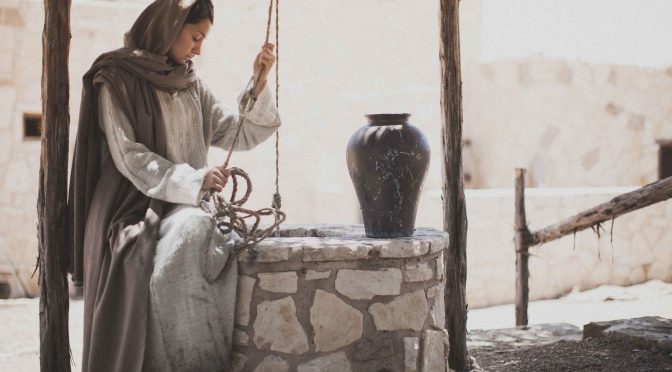
Have you ever heard of the ‘woman at the well’—the Samaritan woman who believed in Jesus and ran throughout the town telling the good news of the Kingdom of Heaven to anyone who would listen? I thought so! But what do you know about the ‘living water’ God offered her (and still does through Jesus)?

“Jesus answered and said to her, ‘If you knew the gift of God, and who it is who says to you, ‘Give Me a drink,’ you would have asked Him, and He would have given you living water.’” (John 4:10) “But whoever drinks of the water that I will give him shall never thirst; but the water that I will give him will become in him a well of water springing up to eternal life.” (John 4:14)

The ‘living water’ is the life that comes only through God. The Old Testament folks knew this through their prophets, and they looked forward to the day when the Living Water (the manifestation of God’s promise through Jesus) would come. The Samaritan woman, not knowing of the Old Testament references, believed that Jesus was talking about fresh, running water like the spring that fed the well. So, why didn’t the Samaritan woman understand what Jesus said?

The Samaritans honored only the first five books of the Bible. So, they didn’t know about the Living Water promise through the prophets. For instance, through Jeremiah’s prophecies, we learn that God was, and is, the fountain of Living Waters (Jeremiah 2:13 & 17:13). And from Isaiah, we learn of the Living Water as springs of salvation (Isaiah 12:2-3). According to the Apostle John, Jesus is the One who can give Living Water that comes from the Father above, and our faith in Him and the resulting faithfulness bring the rivers of Living Water by the Spirit. (Joh 4:10, 7:38, & 3:5).

Also, consider Jesus’ glimpse into the future when all who are God’s in the age to come will be continually refreshed by this Living Water: “Then he showed me a river of the water of life, clear as crystal, coming from the throne of God and of the Lamb … The Spirit and the bride say, “Come.” And let the one who hears say, “Come.” And let the one who is thirsty come; let the one who wishes take the water of life without cost.” (Revelation 22:1 & 17)

So, the Living Water is the refreshing God gives. How do we receive it? By answering God’s call with complete devotion to Him. He will then provide you with His Spirit (hence, the regeneration from above and the Spirit from John 3:5). Where will we go next week? Well, Passover is coming. So, I thought I’d introduce the feasts and festivals ordained by God and then dive into each one in the following weeks.

Blessings and peace,

Dr. Ron Braley

White Robes & Green Thumbs

What do white robes and green thumbs have to do with each other? Lots! In our Christian faith, you must have both to grow and persevere until the rescue (salvation) that will come when Christ returns (1Peter 1:3-5). Allow me to explain.

White robes imply a setting apart (holiness) from worldly things for the things of God. And the things for which we’re to be set apart are purity and good works and spiritual growth and maturity.

“For we are His workmanship, created in Christ Jesus for good works, which God prepared beforehand so that we would walk in them.” —Ephesians 2:10.

Don’t be fooled into thinking that belief without productive faith will buy ‘fire insurance!’ Jesus said that would result in destruction (John 15:2-6). James confirmed that knowledge without action is dead (James 2:14-26). But righteousness (abiding by God’s standard) and holiness will earn a white robe and rescue at the end of this world and an eternity with God:

“After these things, I looked, and behold, a great multitude which no one could count, from every nation and all tribes and peoples and tongues, standing before the throne and before the Lamb, clothed in white robes, and palm branches were in their hands … And he said to me, “These are the ones who come out of the great tribulation, and they have washed their robes and made them white in the blood of the Lamb.” —Revelation 7:9-14.

White robes are good. But where does the ‘green thumb’ fit in? Well, living by God’s standard and doing good works out of faith don’t come naturally. They happen because of a change of heart (mind) and spiritual maturity. We must decide to receive the wisdom of God and learn how to grow it and put it to work. Jesus explained this in a parable about spiritual soil (Matthew 13:1-9 (parable) and 18-23 (explanation)).

Briefly, the parable showcases four kinds of people as an analogy of sowing and soil. The first is on no ground, the person who doesn’t understand the things of God and rejects them. The second is rocky soil: receiving wisdom but being unproductive. The third is thorny ground, representing the worrisome and greedy, intentionally and selfishly unfruitful. The fourth is good soil: the person who receives the good news of God’s Kingdom and matures accordingly. The green thumb in good soil earns a white robe.

Do you have a ‘white robe?’ Well, it depends on your soil and willingness to receive truth and grow in it. What kind of soil are you? Let me know if you need some fertilizer! I realized too late that I was to address healthy conflict resolution and dealing with anger last week. So, let’s go there next week.

Blessings and peace,

Dr. Ron Braley
Change of Heart, Change of Mind

What do you think of when you hear or read the word “heart?” I guess that feelings come to mind. Perhaps an afterthought is “my heart hurts” or “you have my heart” or “it warms my heart.” That’s fine. After all, we’re emotional creatures. But what about a change of heart—especially that transformation God desires of us? And how does ancient Christianity primarily view the ‘heart’ anyway?

You’ll find that heart, mind, and intent are very closely related and can be synonymous in the Bible. For instance, “Therefore repent of this wickedness of yours, and pray the Lord that, if possible, the intention of your heart may be forgiven you.” (Acts 8:22)

An intent to do something is to have a heart, or mind, for action. We behave accordingly when our mind (heart) is set on a course of action or thing. The pure heart (mind) will see God (Matthew 5:8). On the other hand, the heart (mind or intent) is closely related to what we pursue. It could be things like money, love, stuff, sports, etc. (Matthew 6:21). So, why is the word ‘heart’ (Greek cardia) often used to represent our thoughts or intentions? It is the core of our being and where everything we do begins:

“But the things that proceed out of the mouth come from the heart, and those defile the man. For out of the heart come evil thoughts, murders, adulteries, fornications, thefts, false witness, slanders.” (Matthew 15:18-19)

Those who God knows have a heart (mind) for Him and have devoted all to Him: “. . . if you confess with your mouth Jesus as Lord, and believe in your heart that God raised Him from the dead, you will be saved; for with the heart a person believes . . .” (Romans 19:9-10), And we are of one mind (Acts 4:32).

Yet, some intend to continue rebellion against God; it won’t end well: “But because of your stubbornness and unrepentant heart you are storing up wrath for yourself in the day of wrath and revelation of the righteous judgment of God” (Romans 2:5)

Finally, a right mind (heart) makes possible a deep and lasting understanding of God’s Kingdom: “But the seed in the good soil, these are the ones who have heard the word in an honest and good heart, and hold it fast, and bear fruit with perseverance.” Luke 8:15)

It’s nearly springtime. So, let’s continue to talk about soil and seed and growing spiritual stuff next week in “White Robes & Green Thumbs.”

Blessings and peace,

Dr. Ron Braley
Vengeance is God’s Alone!

My cat is pretty funny … and vindictive! She insists on having the last ‘word.’ If she has just been scolded, she’ll likely hide behind a corner and lash out as the discipliner walks by. Or she may whelp a disapproving “meeooowwwuuuuuhhhh.” I’m not sure I want to know what she’s saying at that moment! Anyway, she reminds me that we’re often aggressive toward other people—even inside the church.

People who should know better gossip against others and retaliate in litigation (think about the Corinthians I wrote about last week!). They often throw hurtful speech or punches despite the order to be kind, patient, and loving. Vengeance flies even though we’re commanded to turn the other cheek to give reconciliation a chance and be quicker to listen than speak.

“This you know, my beloved brethren. But everyone must be quick to hear, slow to speak and slow to anger; for the anger of man does not achieve the righteousness of God.” (James 1:19-20)

“But the fruit of the Spirit is love, joy, peace, patience, kindness, goodness, faithfulness, gentleness, self-control; against such things there is no law.” (Galatians 5:22-23)

“But I say to you, do not resist an evil person; but whoever slaps you on your right cheek, turn the other to him also.” (Matthew 5:39)

These are some active ways we can be aggressive to God’s creation. There are others too.

My cat is aggressive in her retaliation. But sometimes, she’s passive in her attacks, withdrawing her affection or displaying ‘attitude’ in non-verbal or covert unkindness. We often do the same to each other. There’s the gossiper who will whisper unpleasantries or the ugly truth disguised in “Christian love.” I’ve heard these things spoken aloud in prayers to avoid the accusations of gossip. Some people, like my cat, will withhold their affections or stop helping in passive retaliation. And there’s the congregant who will selectively clap for one worship music artist while refraining when the person they dislike offers their gift. Aggressions like those I’ve mentioned are ungodly and hurtful, whether active or passive. So, who does have the right to be the aggressor?

Only God has the authority to issue vengeance, retribution, or judgment:

“For we know Him who said, ‘VENGEANCE IS MINE, I WILL REPAY.’ And again, ‘THE LORD WILL JUDGE HIS PEOPLE.’” (Hebrews 10:30)

“Therefore having overlooked the times of ignorance, God is now declaring to men that all people everywhere should repent, because He has fixed a day in which He will judge the world in righteousness through a Man whom He has appointed, having furnished proof to all men by raising Him from the dead.” (Acts 17:30-31)

Whether victim or aggressor, some of you may be frustrated at what I’ve written. So, join me next week to explore healthy conflict resolution and dealing with anger.

Blessings and peace,

Dr. Ron Braley
Jesus Said What??

We love to read or hear that Jesus loves us. We love to read or hear that Jesus forgives us. Forgiveness by others, including God, can be music to our soul. But Jesus and others like Peter, James, and Paul also told us stuff we may not be so eager to receive. However, heeding them is a matter of life and death. Here are but a few of the lifesaving tips:

  • Honor God and be charitable to others (Matthew 22:36-40). We are to honor God with our bodies and by good works born of faith (Matthew 5:16; Ephesians 2:10; 1Timothy 6:18) … period.
  • Introduce God’s Kingdom everywhere by word and deed (Matthew 5:13-16). If the Spirit of God is within us, we will have no choice but behave that way (produce fruit). Godly behavior presents God’s Kingdom to people; arrogant, ungodly, self-centered, or self-righteous behavior makes the Kingdom unattractive and often unattainable.
  • Be and make disciples (Matthew 28:16-20; Ephesians 4:11-16; Hebrews 5:11-14; 2Timothy 3:14-17). As with honoring God and loving people, this is non-negotiable!
  • Count the cost of being a disciple, which anticipates appropriate responses to God and provides consequences, both good and bad, like any other relationship (Luke 14:25-33).
  • Forgive to be forgiven (Matthew 6:12-15; Colossians 3:12-13). We must give back what we’ve been freely given.
  • There will be trouble in life (John 16:33; 1Peter 4:12-19; Psalm 34:19; James 1:2-4 & 12; Romans 5:3-5 and 12:9-21).
  • But stand firm through that trouble to grow stronger and wiser and be saved from coming judgment (Matthew 10:22 and 24:13; Romans 5:3-4; Hebrews 3:14; 2Timothy 2:12).
  • Be productive in the Kingdom of God . . . or else. (Matthew 25:41-46; John 15:1-8).
  • Choose to stay (abide) in the relationship with God (John chapter 15). He seeks active, fruitful partners in a reciprocal relationship. Persevere and live!

So, according to Jesus and others, we’re to enter a relationship with God through Jesus and stay. And as we remain, we are disciples who make them as well. Finally, we must be productive by honoring God with all we have and are and love other people. Otherwise, we’re of no use to God. The good news is that He gives His Spirit to help us do all the things I just mentioned and be successful in our spiritual growth and obedience. What do we have to look forward to if we remain in a fruitful relationship with God? His peace and rest now, and rescue from judgment at the end of this world.

What’s next? Let’s understand better why we’re to challenge what we see or hear—especially where God is concerned—in next week’s article, “Ask Away!!”

Blessings and peace,

Dr. Ron Braley