Category Archives: Finding the End of the World

Blogging about stuff related to my book, “Finding the End of the World”

Change of Heart, Change of Mind

What do you think of when you hear or read the word “heart?” I guess that feelings come to mind. Perhaps an afterthought is “my heart hurts” or “you have my heart” or “it warms my heart.” That’s fine. After all, we’re emotional creatures. But what about a change of heart—especially that transformation God desires of us? And how does ancient Christianity primarily view the ‘heart’ anyway?

You’ll find that heart, mind, and intent are very closely related and can be synonymous in the Bible. For instance, “Therefore repent of this wickedness of yours, and pray the Lord that, if possible, the intention of your heart may be forgiven you.” (Acts 8:22)

An intent to do something is to have a heart, or mind, for action. We behave accordingly when our mind (heart) is set on a course of action or thing. The pure heart (mind) will see God (Matthew 5:8). On the other hand, the heart (mind or intent) is closely related to what we pursue. It could be things like money, love, stuff, sports, etc. (Matthew 6:21). So, why is the word ‘heart’ (Greek cardia) often used to represent our thoughts or intentions? It is the core of our being and where everything we do begins:

“But the things that proceed out of the mouth come from the heart, and those defile the man. For out of the heart come evil thoughts, murders, adulteries, fornications, thefts, false witness, slanders.” (Matthew 15:18-19)

Those who God knows have a heart (mind) for Him and have devoted all to Him: “. . . if you confess with your mouth Jesus as Lord, and believe in your heart that God raised Him from the dead, you will be saved; for with the heart a person believes . . .” (Romans 19:9-10), And we are of one mind (Acts 4:32).

Yet, some intend to continue rebellion against God; it won’t end well: “But because of your stubbornness and unrepentant heart you are storing up wrath for yourself in the day of wrath and revelation of the righteous judgment of God” (Romans 2:5)

Finally, a right mind (heart) makes possible a deep and lasting understanding of God’s Kingdom: “But the seed in the good soil, these are the ones who have heard the word in an honest and good heart, and hold it fast, and bear fruit with perseverance.” Luke 8:15)

It’s nearly springtime. So, let’s continue to talk about soil and seed and growing spiritual stuff next week in “White Robes & Green Thumbs.”

Blessings and peace,

Dr. Ron Braley

Vengeance is God’s Alone!

My cat is pretty funny … and vindictive! She insists on having the last ‘word.’ If she has just been scolded, she’ll likely hide behind a corner and lash out as the discipliner walks by. Or she may whelp a disapproving “meeooowwwuuuuuhhhh.” I’m not sure I want to know what she’s saying at that moment! Anyway, she reminds me that we’re often aggressive toward other people—even inside the church.

People who should know better gossip against others and retaliate in litigation (think about the Corinthians I wrote about last week!). They often throw hurtful speech or punches despite the order to be kind, patient, and loving. Vengeance flies even though we’re commanded to turn the other cheek to give reconciliation a chance and be quicker to listen than speak.

“This you know, my beloved brethren. But everyone must be quick to hear, slow to speak and slow to anger; for the anger of man does not achieve the righteousness of God.” (James 1:19-20)

“But the fruit of the Spirit is love, joy, peace, patience, kindness, goodness, faithfulness, gentleness, self-control; against such things there is no law.” (Galatians 5:22-23)

“But I say to you, do not resist an evil person; but whoever slaps you on your right cheek, turn the other to him also.” (Matthew 5:39)

These are some active ways we can be aggressive to God’s creation. There are others too.

My cat is aggressive in her retaliation. But sometimes, she’s passive in her attacks, withdrawing her affection or displaying ‘attitude’ in non-verbal or covert unkindness. We often do the same to each other. There’s the gossiper who will whisper unpleasantries or the ugly truth disguised in “Christian love.” I’ve heard these things spoken aloud in prayers to avoid the accusations of gossip. Some people, like my cat, will withhold their affections or stop helping in passive retaliation. And there’s the congregant who will selectively clap for one worship music artist while refraining when the person they dislike offers their gift. Aggressions like those I’ve mentioned are ungodly and hurtful, whether active or passive. So, who does have the right to be the aggressor?

Only God has the authority to issue vengeance, retribution, or judgment:

“For we know Him who said, ‘VENGEANCE IS MINE, I WILL REPAY.’ And again, ‘THE LORD WILL JUDGE HIS PEOPLE.’” (Hebrews 10:30)

“Therefore having overlooked the times of ignorance, God is now declaring to men that all people everywhere should repent, because He has fixed a day in which He will judge the world in righteousness through a Man whom He has appointed, having furnished proof to all men by raising Him from the dead.” (Acts 17:30-31)

Whether victim or aggressor, some of you may be frustrated at what I’ve written. So, join me next week to explore healthy conflict resolution and dealing with anger.

Blessings and peace,

Dr. Ron Braley

Jesus Said What??

We love to read or hear that Jesus loves us. We love to read or hear that Jesus forgives us. Forgiveness by others, including God, can be music to our soul. But Jesus and others like Peter, James, and Paul also told us stuff we may not be so eager to receive. However, heeding them is a matter of life and death. Here are but a few of the lifesaving tips:

  • Honor God and be charitable to others (Matthew 22:36-40). We are to honor God with our bodies and by good works born of faith (Matthew 5:16; Ephesians 2:10; 1Timothy 6:18) … period.
  • Introduce God’s Kingdom everywhere by word and deed (Matthew 5:13-16). If the Spirit of God is within us, we will have no choice but behave that way (produce fruit). Godly behavior presents God’s Kingdom to people; arrogant, ungodly, self-centered, or self-righteous behavior makes the Kingdom unattractive and often unattainable.
  • Be and make disciples (Matthew 28:16-20; Ephesians 4:11-16; Hebrews 5:11-14; 2Timothy 3:14-17). As with honoring God and loving people, this is non-negotiable!
  • Count the cost of being a disciple, which anticipates appropriate responses to God and provides consequences, both good and bad, like any other relationship (Luke 14:25-33).
  • Forgive to be forgiven (Matthew 6:12-15; Colossians 3:12-13). We must give back what we’ve been freely given.
  • There will be trouble in life (John 16:33; 1Peter 4:12-19; Psalm 34:19; James 1:2-4 & 12; Romans 5:3-5 and 12:9-21).
  • But stand firm through that trouble to grow stronger and wiser and be saved from coming judgment (Matthew 10:22 and 24:13; Romans 5:3-4; Hebrews 3:14; 2Timothy 2:12).
  • Be productive in the Kingdom of God . . . or else. (Matthew 25:41-46; John 15:1-8).
  • Choose to stay (abide) in the relationship with God (John chapter 15). He seeks active, fruitful partners in a reciprocal relationship. Persevere and live!

So, according to Jesus and others, we’re to enter a relationship with God through Jesus and stay. And as we remain, we are disciples who make them as well. Finally, we must be productive by honoring God with all we have and are and love other people. Otherwise, we’re of no use to God. The good news is that He gives His Spirit to help us do all the things I just mentioned and be successful in our spiritual growth and obedience. What do we have to look forward to if we remain in a fruitful relationship with God? His peace and rest now, and rescue from judgment at the end of this world.

What’s next? Let’s understand better why we’re to challenge what we see or hear—especially where God is concerned—in next week’s article, “Ask Away!!”

Blessings and peace,

Dr. Ron Braley

Christmas, the Retold Story!

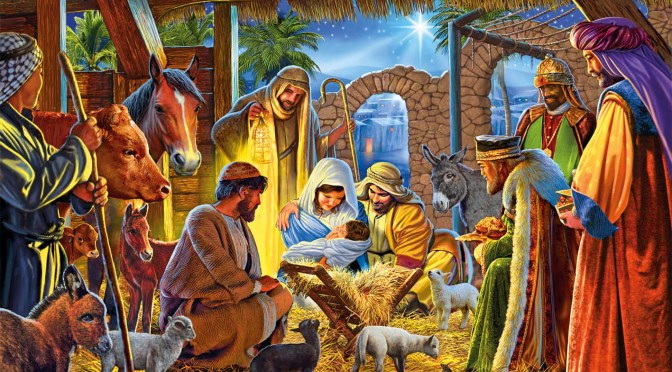
Christmas is full of traditions, including the story depicting Jesus’ birth. Some renderings sport sheep, camels, and donkeys with costume-clad humans for effect. The event makes us feel good, and it can be a great time of fun and family. But is there more to the story—perhaps stuff behind the scenes that would make it more meaningful if known? Let’s see.

First, the Son of God, born a son of man, has been around since our universe’s creation (John 1:1-4).

Second, this Son of God had to become human for a reason: to restore the relationship between Creator and creation by paying the penalty for the first humans’ rebellion, and crushing evil (e.g., Genesis 3:15).

But paying the price could only be done by someone who lived sin-free. God began to send clues about this coming perfect Savior through various prophets like Isaiah:

“Therefore the Lord Himself will give you a sign: Behold, a virgin will be with child and bear a son, and she will call His name Immanuel.” (Isaiah 7:14)

This Prince would be born in about 4 BC and eventually crucified, as shown to the prophet Daniel 500 years before Jesus came to earth (Daniel 9:25-26). His birth brings God’s peace to people with whom He is pleased (Luke 2:14), but it prompted the wrath of a man, Herod (Matthew 2:1-12). For Jesus’ safety, an angel told Joseph and Mary to escape to Egypt until Herod’s death (Matthew 2:13-15). How would the journey be possible? After all, travel and daily life required resources, then just as they do now. Allow me to introduce the wise men.

To fully appreciate their contribution, we must return to Persia 500 years earlier, when Daniel earned great respect and treasure. He was also well-trained in Babylonian arts, including astronomy. He knew when Jesus would be born and would’ve been familiar with Micah’s prophecy about Jesus’ birth in Bethlehem (Micah 5:2). 

So, Daniel, the Jew who spent his life in Persia, had treasure, knew how to chart star movements, and knew where Jesus would be born as well as the timeframe. Therefore, we should not be surprised that Persian magi (wise men) knew that Jesus would be the promised King and the alignment of the stars at the time and place of His birth. Daniel’s great wealth was likely the resource that funded Jesus’ trip to Egypt until Herod’s death. Our great God is indeed the master orchestrator who crafts all things according to His good pleasure!

“And we know that God causes all things to work together for good to those who love God, to those who are called according to His purpose.” (Romans 8:28)

Are you interested in making a fresh start physically, emotionally, or spiritually? Perhaps you’re interested in keeping personal goals. Join me next week when we’ll readdress fresh starts in Renewed Beginnings.

Blessings and peace,

Dr. Ron Braley

The Dangers of Being Ill-prepared

December seventh marks the 81st anniversary of the Japanese attack on Pearl Harbor, Oahu, Hawaii. Approximately 3,581 people were killed or wounded, 169 aircraft destroyed, and 19 ships destroyed or damaged (https://www.census.gov/history/pdf/pearl-harbor-fact-sheet-1.pdf). We must honor those who lost their lives defending our great nation! But as horrific and destructive as the attack was, the extent of the carnage was possible only because the island was unprepared for the enemy.

According to pearlharbor.org, the imminent attack appeared on newly installed radar equipment but was quickly dismissed as American aircraft (at the very least). The lack of training added to being unprepared for what was coming. Another challenge was the unpreparedness of aircraft, which were ill-parked, not fully fueled, and unarmed. As catastrophic as the December 7, 1941 events were, though, being unprepared for what will come at the end of this world will yield unimaginable physical and spiritual destruction!

In Matthew 25:1-13, Jesus used a parable to foretell how unprepared humanity will be at the end of this age before the great judgment (Matthew 25:31-46). In the parable, ten potential brides (humankind) anticipate the arrival of the bridegroom (Jesus). However, half are unprepared, missing their opportunity to attend the marriage ceremony (Revelation 19:6-10). Being prepared to make it through this life and enter the one to come requires complete devotion to God. We must stay that way, loving others and being transformed. If you’re unsure how to proceed, contact me through the Taylor Press editor or at Northview Christian Church (www.nvcc.church), and I’ll happily make time for you!

Anyway, those who belong to Christ (not just know of Him!) must also stay equipped to fend off spiritual attacks. According to the apostle Paul, we can do this by donning the complete protection God offers: His truth, righteousness (God’s standard), peace, faith, salvation, and teaching (Ephesians 6:10-18). We must pray regularly and often and be alert against subtle wickedness, such as the immoralities so prevalent today.

In summary, let’s decide to return to our God before it’s too late and then stand firm and prepared to resist what He hates. What’s next? Christmas is approaching, and some of us will celebrate the birth of One who suffered on our behalf. So, let’s consider that it is The Sufferer’s Holiday.

Blessings and peace,

Dr. Ron Braley,

ron@ronbraley.com  || ronbraley.blog

Fig Trees & The End of the World

“Ron, what do fig trees have to do with the end of the world and God’s judgment?” Lots! In the Bible’s New Testament, we find multiple end-of-the-world and fig events.

First, in Peter’s account that bears the name of his scribe, Mark, we find an interesting parable about Jesus cursing a fig tree on the Mount of Olives (Mark 11:12-14). Jesus picks out one tree of probably thousands to make a point about the nation of Israel. Although the figs weren’t ready to be picked (verse 13), there should’ve been fruit because there were leaves. The tree was like the Pharisees who gave an outward impression of [spiritual] fruit where none existed. Jesus, in an active parable, cursed the tree to demonstrate judgment that would come soon through Rome and at the end of this world. Think of this as a near-far prophecy revealed by Jesus with the fruitless fig tree. Are there other instances? Yep!

Second, Jesus explained days later to His disciples that any unproductive—unfruitful—person, including self-proclaimed Christians, would be destroyed in the last-days judgment:

If anyone does not abide in Me, he is thrown away as a branch and dries up; and they gather them, and cast them into the fire and they are burned (John 15:6). Also, read Matthew 25:31-46.

Or … If you keep My commandments, you will abide in My love; just as I have kept My Father’s commandments and abide in His love (John 15:10).

So, the one who bears spiritual fruit by obeying God’s commandments will not suffer the same fate (destruction) as the cursed fig tree. Alright—one more end-of-the-world figgie thingie!

Finally, Jesus used the blossoming of the fig tree at springtime in a when you see this, you will see that comparison to explain that the generation of people to see the signs He had just prophesied in verses 14-27 will also see His return:

Now learn the parable from the fig tree: when its branch has already become tender and puts forth its leaves, you know that summer is near. Even so, you too, when you see these things happening, recognize that He is near, right at the door. Truly I say to you, this generation will not pass away until all these things take place. (Mark 13:28-30).

I understand that some Christians believe that “this generation” in verse 30 refers to the disciples’ generation. However, “this generation” will be the one to see the end-of-the-world signs, which haven’t occurred. By the way: this fig tree instance is a Jewish idiom (figure of speech) just like Matthew 24:28 (dead bodies and vultures).

In summary, we who desire to abide with God must bear fruit or suffer destruction by our own choice. What’s next? Let’s have some fun with being thankful in all circumstances in A Gratitude Attitude for Latitude!

Blessings and peace,

Dr. Ron Braley
Cheap Grace

Now, I’m a Protestant Christian by default, but we live in a Protestant ‘get saved quick’ culture whereby someone may be told to say a silent and unbiblical ‘sinner’s prayer’ to avoid hell and go to heaven. There’s often an invitation to invite Jesus ‘in’ instead of an outward devotion of all we are and have to the King (e.g., Matthew 22:37; Romans 10:9-10). Few understand the cost of a relationship with God, so that’s where things usually stall. For about 85% of people who ‘get saved,’ there’s no discipleship, disciple-making, or charitable activity. This grace is one-sided and cheap, and it devalues our ransom paid by Christ. The Bible tells of costly grace, though—something about which Dietrich Bonhoeffer addressed in his book, The Cost of Discipleship:

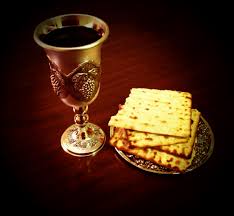
Cheap grace is the grace we bestow on ourselves. Cheap grace is the preaching of forgiveness without requiring repentance, baptism without church discipline, Communion without confession, absolution without personal confession. Cheap grace is grace without discipleship, grace without the cross, grace without Jesus Christ, living and incarnate. Costly grace is the treasure hidden in the field; for the sake of it a man will gladly go and sell all that he has. . . . Costly grace is the gospel which must be sought again and again, the gift which must be asked for, the door at which a man must knock. Such grace is costly because it calls us to follow, and it is grace because it calls us to follow Jesus Christ.

What about the ‘get saved’ history? It was never a thing until after the formal Protestant Reformation. From the beginning of Christian history until then, converts were either part of the universal Church or not. They responded appropriately to God’s call through Christ and lived transformed lives within their communities until they died, or they didn’t. The idea of an instant and permanent one-sided passive salvation wasn’t, and still isn’t, a thing in many Christian circles, including Roman Catholic and Eastern Orthodox faiths. “So, Ron—then how do I become part of Christ’s universal Church?” Good question!

There’s nothing ‘quick’ about entering God’s rest now and rescuing from His wrath at the end of this world. The lifelong process appears to be: (1) become equipped for decision-making through things such as Scriptures and evangelism (e.g., John 20:30-31), (2) decide to respond to God’s call through devotion, love, and discipleship (Matthew 22:34-40; Romans 10:9-10), and (3) remain in the relationship (John chapter 15). In other words, understand well, choose well, and then stay and grow spiritually, no matter the cost.

What’s next? Well, I’m an end-of-the-world guy (Finding the End of the World, 2011) and recently ate some fig bars on a mini vacation. So, I’m motivated to write about Fig Trees & The End of The World. See you next week!

Blessings and peace,

Dr. Ron Braley
Corroborating Apocalypses

What do you think of when you hear or read the word apocalypse? Nuclear war? Missiles, tanks, death, and other violent stuff? The basic form of the ancient word means “to reveal.” In the Revelation given by God to Jesus to give to John to pass on to the churches in Asia Minor (phew!) in about 90CE, Jesus revealed events to come later. That’s why Revelation is apocalyptic. But do you know that Jesus had already told much of the Revelation events or characteristics when He was on earth about 60 years earlier? It’s true!

During the week of His crucifixion, Jesus and perhaps several of His closest disciples walked from the Temple complex to the Mount of Olives. He had said that the Temple would eventually be destroyed and not one of its stones left in place (Matthew 24:1-2). On the Mount of Olives, His disciples asked several related questions: 1. When would this happen, 2. What will signal Jesus’ return to earth, and 3. When will be the end of the age (Matthew 24:3)?

Jesus answers their questions in Matthew chapters 24 and 25, which inform of the beginning of hard times (‘birth pains,’ according to Jesus (Matthew 24:5-8)) to the judgment at the end of this age (Matthew 25:31-46). He gave much more detail about the same timeframe in visions to John about 60 years later. Here’s a brief comparison of what Jesus revealed on earth to what He revealed to John in about 90CE:

  • False saviors (Christs):                                                                 Matthew 24:5 & Revelation 6:2
  • War/violence:                                                                                    Matthew 24:6-7a & Revelation 6:3-4
  • Famine/pestilence:                                                                         Matthew 24:7b & Revelation 6:5-6
  • Terrible time of trouble and persecution (Great Tribulation) by the Antichrist:   Matthew 24:10-13 & Revelation 6:7-12; 7:9-17; 12:17                                
  • Christ’s second coming (ending the Great Tribulation):                                Matthew 24:29-31 & Revelation 6:12-17
  • The Great Judgment:                                                                  Matthew 25:31-46 & Revelation 20:11-15

A final note about the False Christs of Matthew 24:5 and Revelation 6:2, which can seem confusing: The horse in Revelation is white and the rider wears a crown, which signifies righteousness and authority; however, his weapon is a bow, not a sword, which is the weapon of Christ (Matthew 10:34; Revelation 19:15 & 21).

In summary, Jesus, who came to earth to satisfy our debt to God, is the same Jesus who revealed end-times things again to John 60 years later. So, it makes sense that the information is related. It seems important! Shouldn’t we study the Bible and pray for illumination by God’s Spirit so that we can find out what God wants and do that before it’s too late??

Next week, we’ll leave the end-times and explore a dangerous practice by many Christians in Playing with Fire.

Blessings and peace,

Dr. Ron Braley

The Mark of the Beast: Part II (What it means)

What exactly will the mark of the beast be? No one knows for sure, but there are a couple of things to consider:

1.                It will be a way of identifying someone who has intentionally aligned with the Antichrist or the authority (Revelation 13:18).

2.                It may be something physical on the right hand or forehead. Or it may instead indicate something you know (forehead analogy) and do in response (symbolized by the hand) (cf. Exodus 13:9 & 16, and Deuteronomy 6:8 & 11:18).

When trying to understand anything biblical, we must consider and compare all related Scriptures. The mark is no exception. God used the hand and forehead analogy when He gave the Israelites specific commandments after the exodus from Egypt (cf. Exodus 13:9 & 16 and Deuteronomy 6:8 & 11:18). For instance:

And it shall serve as a sign to you on your hand, and as a reminder on your forehead, that the law of the LORD may be in your mouth; for with a powerful hand the LORD brought you out of Egypt. Therefore, you shall keep this ordinance at its appointed time from year to year. —Exodus 13:9-10.

He told them to remember how He’d saved the nation and to remember His commandments forever. God used the tangible and familiar “forehead” to represent the receiving and committing His commandments to memory. Likewise, He used the “hand” as an identifier for acting upon that knowledge. The learning, retaining, and acting upon God’s commandments would prove allegiance to Him. So, the significance of forehead and hand may be a pledge of allegiance through the learning, agreeing, and acting upon a particular set of commandments initiated by the Antichrist’s authority.  So, what about the number—666?

The number is that of a human, and this one will be one part of an unholy trinity: Satan, Antichrist, and False Prophet (see Revelation chapter 13). The number 6 historically represented a human, whereas the number 7 represents God, indicating perfection. Because of this and the unholy trinity mentioned above, I suggest the number 666 represents some identification or sign of allegiance that will come from the Antichrist (empowered by Satan) through the False Prophet.

An alliance with the unholy trinity may enable buying and selling during the time of the Great Tribulation, but it will bring personal destruction by God. Therefore, we must increase our faith by learning of God’s ways to avoid end-times deception and should, therefore, watch out for anything that may require ungodly allegiance.

Next week, we’ll continue our end-times journey by comparing what Jesus told His disciples on the Mount of Olives to what He revealed to John about 60 years later.

Blessings and peace,

Dr. Ron Braley

The Mark of the Beast: Part I (What it is NOT)

We love chaos, the fantastic, and conspiracy theories! They generally make life seem more exciting than the usual boring truth. Yet, truth is what we must seek! This week, we’ll peel back the layers of the end-times ‘mark of the beast’ as we ditch conspiracy and emotion and replace them with truth in part one of a two-part series.

First, it’s essential to understand that no matter what form the ‘mark’ will take, it will indicate allegiance to the last-days Satan-empowered authority we call THE Antichrist (the Bible doesn’t label it this way). And, taking it will be no accident. Let’s start with Scripture related to the much-debated mark:

And he causes all, the small and the great, and the rich and the poor, and the free men and the slaves, to be given a mark on their right hand or on their forehead, and he provides that no one will be able to buy or to sell, except the one who has the mark, either the name of the beast or the number of his name. Here is wisdom. Let him who has understanding calculate the number of the beast, for the number is that of a man; and his number is six hundred and sixty-six. —Revelation 13:16-18 (NASB). (see also 14:9-11; 15:2; 16:2; 19:20; 20:4)

Pay particular attention to the right hand or forehead (it’ll be important later!). Another good thing to understand is the behind-the-scenes numerology: the number 7 often represents God; 6 represents humans.

Second, let’s peek at some falsehoods around the ‘mark of the beast.’ There are people, like this woman, who mistakenly believe they can accidentally take the mark: “Sometimes I panic and wonder if I’m already marked or if smartphones are the mark.” One end-times theory states that John cryptically referred to the Roman emperor Nero because, wrongly, the letters of his name equal 666. However, readers would’ve had to change the Greek rendering of Nero’s title and name to Hebrew just to get close to 666. So, first-century Nero as the Antichrist based on a 666 numbering, like many other theories, is incorrect.

 Irenaeus, a disciple of Polycarp, who was a disciple of John, later proved that many Greek names equal 666. And the search for ruler names that, when converted to numbers, equal 666, has continued. Among the list of candidates are Ronald Regan, George Walker Bush Jr., and Hitler. People have bought into other impossible marks of the beast or conspiracies: Social Security Numbers, barcodes, RFID chips, cryptocurrency, COVID vaccine, REAL ID Act, Obamacare, and COVID-era masks.

So far, we’ve covered some examples of what the mark is not. Next week, we’ll continue our end-times journey by taking the mystery out of the mark of the beast in Part II: What It Means.

For a very comprehensive and detailed study of this crucial topic, feel free to read my 2011 book Finding the End of the World, available at Amazon and Barnes & Noble. You’ll find roughly 500 pages of building blocks to help you do your own complete and unbiased study based on the Bible and history!

Blessings and peace,

Dr. Ron Braley