Category Archives: Finding the End of the World

Blogging about stuff related to my book, “Finding the End of the World”

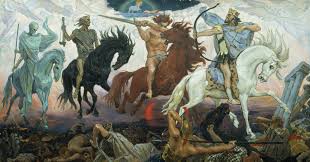
The Wrath of Con!

Ask the average Christian in America about the end-times ‘Great Tribulation’, and, if anything, they’ll probably tell you it’s “seven years of horrible stuff from the Antichrist and God after Christians have been raptured!”

But study what the prophets, the apostles, and our Christ said about this ‘time like never seen before or will ever be seen again’ (e.g., Joel 2:2; Matthew 24:21), and you’ll find a more accurate and much more sobering version of this terrible time to come. Here are some critical facts about the coming Great Tribulation:

  • It will be no longer than 3.5 years and occur during the last half of a seven-year agreement between Israel and the Antichrist (e.g., Daniel 9:27). We know nothing about the first half of that period other than it will begin with an agreement. Whether we’ll know when it happens remains to be seen.
  • The period will be the time of the Antichrist’s wrath against God’s people—Israel and those who hold to the testimony of our Christ (Daniel 7:19-25; Matthew 24:15-21; Revelation 12:13-17). If possible, the Antichrist and his cohort will con God’s people through lies and deceit (e.g., Matthew 24:24; Revelation 13:12-14). How will this happen? Because of shallow or non-existent faith made possible through intentional ignorance (e.g., a lack of Bible study, discipleship, and spiritual formation necessary for building faith).
  • The time of the Antichrist’s con and wrath will be cut short by Christ’s appearance. His presence will earmark two important events identified as ‘harvests’ in the Bible: the gathering of Jesus’ followers (e.g., Matthew 24:29-31 and Revelation 14:12-16) and the beginning of God’s wrath against what and who remain on the earth afterward (e.g., Revelation 6:12-17 and 14:17-20).

So, the wrath of the one who will con will come in the form of the Great Tribulation. After nearly 3.5 years, the faithful will find relief (e.g., Matthew 24:22 and 29-31; Revelation 19:6-10). God’s great wrath against the earth and her inhabitants will end the Antichrist’s wrath and great con.

Would you be able to resist being conned by those who say you don’t have to worry about any of this or by the Antichrist and his cohort in the last days? If not, waste no time learning the truth that leads to salvation (life with God and rescue from His coming wrath)! For a very comprehensive and detailed study of this crucial topic, feel free to read my 2011 book Finding the End of the World, available at Amazon and Barnes & Noble. You’ll find roughly 500 pages of building blocks to help you do your own complete and unbiased study based on the Bible and history!

Next week, we’ll continue our end-times journey by exposing the truth about the ‘mark of the beast.’

Blessings and peace,

Dr. Ron Braley

Yes, Judge—but who??

The idea of judging trips people up. We know our faults or sins and feel we have no right to judge others as a result. Conversely, some people behave as though they must inform everyone around them of every sinful act. The truth regarding judging others resides somewhere in the middle.

Who should judge whom? According to Jesus, God will judge the world – those people who aren’t His. Christ-followers will be evaluated for their works done out of faith and rewarded accordingly at the end of this age. Meanwhile, we must hold one another accountable for spiritual growth and moral positioning. For instance, the apostle Paul called out sexually immoral behavior in the Corinthian church and told them this:

… Do you not know that a little leaven leavens the whole lump of dough? Clean out the old leaven so that you may be a new lump, just as you are in fact unleavened. . . . Do you not judge those who are within the church? But those who are outside, God judges. REMOVE THE WICKED MAN FROM AMONG YOURSELVES. —1Corinthians 5:6-13.

So, how are we to judge other followers of Jesus? We must be careful and gentle according to Christ’s commandments, not by what we feel. The goal must always be to help followers who are ‘sinning’ turn back to the truth and be reconciled to God (e.g., James 15:19-20). Jesus also reminds us not to tolerate the practice of sinful behavior inside the community of Christians.

“If your brother sins, go and show him his fault in private; if he listens to you, you have won your brother. But if he does not listen to you, take one or two more with you, so that BY THE MOUTH OF TWO OR THREE WITNESSES EVERY FACT MAY BE CONFIRMED. If he refuses to listen to them, tell it to the church; and if he refuses to listen even to the church, let him be to you as a Gentile and a tax collector.” —Matthew 18:15-17.

Now, I realize that some people will counter by quoting Luke 6:37, “Do not judge and you will not be judged . . .” But it and verses 38-42 deal with justice and mercy. And verses 41-42 remind us to become righteous before holding others accountable by God’s standard.

If you want to love your fellow Christians with the love of Christ, judge them according to His commandments with a sense of urgency before it’s too late for anyone practicing sinful behavior and earning a one-way ticket to God’s judgment! And let’s demonstrate God’s standard by not doing or condoning anything He opposes (such as sexual immoralities). Otherwise, we could be single-handedly responsible for leading the lost to their destruction.

Next week, we’ll look at healthy and unhealthy Christian relationships.

Blessings and peace,

Ron Braley

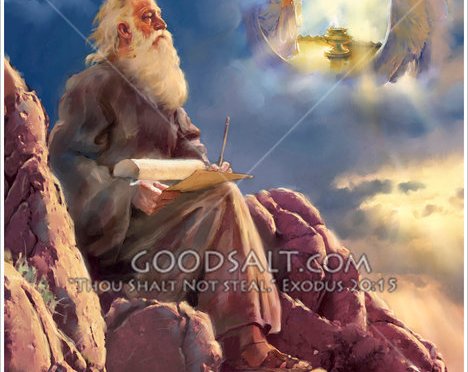
John the Revelator – a Timeline

John, the son of Zebedee, was a disciple who humbly proclaimed Jesus’ love for him (John 13:23; 19:26; 20:2; 21:7 & 20). He was an obedient apostle and a caring surrogate son to Mary, Jesus’ mother. He penned his own gospel account, several letters to the early Church, and unveiled things to come. But when and where did he do all this??

First, John lived during Jesus’ time. Biblical scholars agree that Jesus was born in approximately 4 BCE. So, it stands to reason that John would’ve been born near this time, although we don’t know precisely when. Second, Jesus was 29 years old (about 30 (Luke 3:23)) when He called John to discipleship. John partnered with Jesus during his one-year ministry from just before Passover until the following Passover (see my article “Why so Long??” from August 12, 2020).

He then became an apostle when Jesus sent him and the other disciples to make more disciples (Matthew 28:18-20). Let’s assume this was about 26-27 AD. It would also be the year when Jesus charged John with caring for Mary (John 19:26-27), was crucified, and then raised by the Father.

Apostle John then went beyond Jerusalem to spread the good news of God’s Kingdom. He started the church in Ephesus (in modern-day Western Turkey) and likely started, or was instrumental in creating, others he would later oversee: Smyrna, Pergamum, Thyatira, Sardis, Philadelphia, and Laodicea. John and Mary settled in Ephesus until he was exiled to the Island of Patmos, where he continued to oversee the other churches and received his revelation from Jesus.

Emperor Domitian, who hated Christianity, exiled John to Patmos (a prison colony) in 94 AD, where he stayed for two years until freed by Emperor Nerva in 96 AD. Early Church Father Eusebius, who defers to Irenaeus, confirms this. John then returned to Ephesus, where he continued to care for Mary until her passing. John lived to be just over 100 years old. We know much about his life because of Prochorus, one of the 70 disciples Jesus sent out who later became John’s scribe.

So, what about his gospel account and three letters to the early Church? He wrote the gospel between 90 – 100 AD in Ephesus before being exiled to Patmos or immediately afterward. The same holds for his three epistles, although he most likely wrote them after returning from exile. What follows is an abbreviated and approximate timeline:

  • 4 BC: John’s birth
  • 26 AD: Called to discipleship
  • 27 AD: Charged with caring for Mary; becomes an apostle
  • 94 AD: Exiled to Patmos
  • 94-96 AD: Receives Jesus’ revelation
  • 96 AD: Freed; Returns to Ephesus
  • 90 – 100 AD: Writes, from Ephesus, his gospel and three letters to the Church

What about next week? I’ll tell you the woeful tale of “the Ghost Pepper that wasn’t!”

Blessings and peace,

Ron Braley

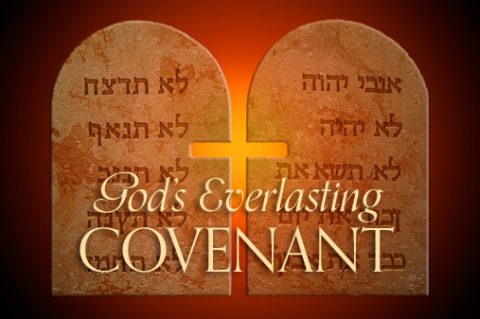
The Covenant with God: Part I

Last week, I presented an exciting riddle about 3,000 souls lost, gained, and then lost again (on American soil). I also mentioned the related relational framework (covenant) that may dictate the presence or absence of God’s provision and protection. We’ll unpack it further in this and next week’s articles.

God has sought partnership with His creation from the beginning of human time when He charged the first man, Adam, with caring for what He had made. Adam cultivated the garden and named the animals (Genesis 1:26-30 and 2:15-20). From then, a relational God who endowed humans with the ability to choose Him has regularly sought “I will if you will” engagements.

Probably the earliest example of a covenantal relationship (two-way partnership with terms and conditions) with God was what He shared with Abraham. In Genesis 15:1-21 and 17:1-14, God engaged him to fulfill a promise to provide a way back and redeem creation after Adam and Eve’s rebellion.  The relationship was based on an ancient Hittite suzerain-vassal framework that outlined the arrangement between the lord of the land and its occupants. The lord demanded complete devotion and allegiance and a tithe (10%) of what the land produced. His subjects received, in return, protection and provision. It was the standard arrangement in place at Abraham’s time, and it had a preamble that listed affected parties and a historical prologue providing the “basis of obligation.” 

Furthermore, the covenantal agreement listed stipulations (terms and conditions), blessings for obedience, and curses for disobedience.  Regular readings of the treaty to keep it first and foremost in the participants’ minds was necessary.  That God used it should come as no surprise considering that Father and Son have always employed human language, practices, idioms, etc., in communicating with people.  The lord-servant arrangement was what Abraham knew. It would have made sense to him. God continued what He had started by reaffirming the agreement through Moses 500 years later.

God remembered His covenant with Israel when the people were captives in Egypt (Exodus 2:24). Upon their rescue via Moses, God confirmed the treaty using the same suzerain/vassal framework:

1.         Preamble/Title: “I am Yahweh your God . . .”          

2.         Prologue: “. . . who brought you up out of the land” (provides obligations and motive).

3.         Stipulations/Obligations: “You shall have no other gods before me. . . .”

4.         Periodic reading of the treaty.

5.         Witnesses.

6.         Curses and blessings.

Additional covenantal artifacts exist in scriptures such as Deuteronomy 4:32-40, 6:4-25, and chapter eight.

In summary, a God who exercises choice created humans in His image, and He sought reciprocal relationships with willing participants in the Old Covenant (Old Testament). Next week, we’ll see that this is still the case in the New Covenant (New Testament).

Come Back!!

The Creator Called: He wants His stuff back! Return. Partner. Live!

For God has not destined us for wrath, but for obtaining salvation through our Lord Jesus Christ —1Thessalonians 5:9.

And having been made perfect, He became to all those who obey Him the source of eternal salvation —Hebrews 5:9.

The world is passing away, and also its lusts; but the one who does the will of God lives forever. —1John 2:17.

New Beginnings

We think about a New Year in human terms and for new human beginnings. But, there is an ultimate and true start that brings new beginnings for Jesus’ followers – and will bring an end to all else (Revelation 22:11-13).

Let the one who does wrong, still do wrong; and the one who is filthy, still be filthy; and let the one who is righteous, still practice righteousness; and the one who is holy, still keep himself holy. Behold, I am coming quickly, and My reward is with Me, to render to every man according to what he has done. I am the Alpha and the Omega, the first and the last, the beginning and the end. —Revelation 22:11-13.
Examples of human New Year celebrations:
• American/European: January 1st
• Chinese (Also known as the Spring Festival): 23rd day of the 12th lunar month of the Chinese calendar
• Jewish: Religious – Pesach (Passover): The 1st Jewish month; Agricultural – Rosh Hashanah: 7th month on the Jewish calendar

Human New Year resolutions: We usually make them to bring hope of a new human beginning (perhaps that the next year will be better than the last). We also make them as ‘do overs’ – we want to change what we don’t like.

But, let’s look at a new human and spiritual beginning in Jesus. Why would we care? To move toward God and life, and away from judgment and spiritual wrath. Here’s how:
• Believe and Repent (our focus) (Mark 1:15)
• Be baptized as an outward, physical manifestation of new faith (Mark 16:16)
• Grow in faith, live right, and tell others the good news (i.e. Matthew 19-20)

Interestingly, both human and spiritual new beginnings require repentance.
• Defined: A change in heart that results in a change in behavior
• Enables forgiveness, and salvation (Luke 24:47 and Acts 11:15-18)
• It’s what God desires of everyone (2Peter 3:9-10) and often disciplines us for (Revelation 3:19)
• A beginning that leads to good habits and better health (relationship, emotional, physical, and spiritual)
• We don’t practice sin once we repent (Galatians 5:20-23, John 8:3-12, and 1John 3:2-10
• Not repenting will lead to judgment and wrath (Romans 2:5-10)

Repent, experience a new beginning, and don’t look back! The results will be spiritually, physically, emotionally, and mentally rewarding.

Keep an eye out for “Finding Answers to Stuff Churches Don’t Discuss!” scheduled for a mid-2015 publication. There, you’ll find roughly 60 topics related to daily life (such as sex, religion, finances, tattooing, and everything in between!) along with practical application of God’s guidance for navigating those difficult waters!

And, for a very comprehensive and detailed study of the very important topic of God’s judgment to come and being rescued from it, feel free to read my 2011 guide titled, “Finding the End of the World” available at Amazon, Barnes and Noble, and from http://www.ronbraley.com in paper and e-book formats. In the guide, you’ll find roughly 500 pages of building blocks to help you do your own complete and unbiased study based on Scripture and history!

God – the Nature of the Creator

In our emotion-based Christian culture, we often picture our God as a kindly old man who emotionally loves us no matter who we are and what we’ve done. We’re told to imagine ourselves crawling into His lap and cuddling as we talk to Him. This is a dangerous and misleading picture!

Our God wants to be reconciled with the mankind He created and who walked away from Him 6,000 years ago. But make no mistake: we are to fear our God as we answer the call to a two-way relationship born of obedience out of faith, “I will be yours if you will be mine!

Let’s look at that ‘fear’ after glancing at some of the characteristics or nature of your God who is a jealous, just, merciful provider and protector of those who are His.

God is jealous: He wants to be our only God

A jealous and avenging God is the LORD; The LORD is avenging and wrathful. The LORD takes vengeance on His adversaries, And He reserves wrath for His enemies. The LORD is slow to anger and great in power, And the LORD will by no means leave the guilty unpunished. In whirlwind and storm is His way, And clouds are the dust beneath His feet.—Nahum 1:2-3.


God is just: He will keep His promises despite any ‘feelings

The Rock! His work is perfect, For all His ways are just; A God of faithfulness and without injustice, Righteous and upright is He. —Deuteronomy 32:4.


God is merciful: The promises He keeps as a just God bring life

Be merciful, just as your Father is merciful. —Luke 6:36.

The LORD is gracious and merciful; Slow to anger and great in lovingkindness. —Psalm 145:8.

God is protector and provider and forgiver of the righteous

“But this is what I commanded them, saying, ‘Obey My voice, and I will be your God, and you will be My people; and you will walk in all the way which I command you, that it may be well with you.’” —Jeremiah 7:23.

If we confess our sins, He is faithful and righteous to forgive us our sins and to cleanse us from all unrighteousness. —1John 1:9.

God is judge of all

Being then the children of God, we ought not to think that the Divine Nature is like gold or silver or stone, an image formed by the art and thought of man. Therefore having overlooked the times of ignorance, God is now declaring to men that all people everywhere should repent, because He has fixed a day in which He will judge the world in righteousness through a Man whom He has appointed, having furnished proof to all men by raising Him from the dead. —Acts 17:29-31.

Another destructive misconception in today’s Christian culture is that God is ‘not of fear’. However, that claim comes from a lack of understanding and by taking a biblical text out of context. It’s true that we have no need to fear a man when we have the Spirit; however, we are to fear God and with good reason.

  • Fear of God and Christ (i.e. Luke 7:16, Acts 13:16, Romans 13:7, 2Corinthians 7:1, Ephesians 5:21, Philippians 2:12, 1Peter 1:17). This healthy fear is represented by the Greek word phobos (Strong’s G5401); it indicates alarm, fright, or terror.

Therefore, having these promises, beloved, let us cleanse ourselves from all defilement of flesh and spirit, perfecting holiness in the fear of God. —2Corinthians 7:1.

So then, my beloved, just as you have always obeyed, not as in my presence only, but now much more in my absence, work out your salvation with fear and trembling —Philippians 2:12.

If you address as Father the One who impartially judges according to each one’s work, conduct yourselves in fear during the time of your stay on earth —1Peter 1:17.

  • This next ‘fear’, phobeō (Strong’s G5399), comes from the one we just covered, and it basically means to ‘be in awe of’ or revere. Examples of its use can be found in Luke 12:4-5, Romans 11:20-21, Acts 5:10-11, and 1Peter 2:17.

“I say to you, My friends, do not be afraid of those who kill the body and after that have no more that they can do. But I will warn you whom to fear: fear the One who, after He has killed, has authority to cast into hell; yes, I tell you, fear Him!—Luke 12:4-5.

Honor all people, love the brotherhood, fear God, honor the king. —1Peter 2:17.

Your just God is willing to protect, provide, and forgive when we respond to His call through faith and action. Believe. Repent. Love through charity and obedience. Fear in a healthy fear the nature of your God Jehovah and live!


Keep an eye out for “Finding Answers to Stuff Churches Don’t Discuss!” scheduled for a mid-2016 publication. There, you’ll find roughly 60 topics related to daily life (such as sex, religion, finances, tattooing, and everything in between!) along with practical application of God’s guidance for navigating those difficult waters!

And, for a very comprehensive and detailed study of the very important topic of God’s judgment to come and being rescued from it, feel free to read my 2011 guide titled, “Finding the End of the World” available at Amazon, Barnes and Noble, and from www.ronbraley.com in paper and e-book formats. In the guide, you’ll find roughly 500 pages of building blocks to help you do your own complete and unbiased study based on Scripture and history!

God – the Christ

No one’s perfect and everyone will sin – miss the ‘mark’. Because of this and God’s desire to dwell with us, Jesus became the ultimate sacrifice for the forgiveness of sin. All we have to do is believe that, act appropriately out of our faith, and repent of sinful behavior for God to save you from His future wrath.

You’ll find several references in the Bible to Jesus: Messiah, the Christ, His Christ, our Christ, and Jesus. Why so many names and titles? It’s important first to understand that His name isn’t Jesus Christ.  It isn’t as though someone named Jesus was born to Mr. and Mrs. Christ.

The name of Jesus is just a loose translation of the Greek word Iēsous for Jehoshua, Jesus’ proper Hebrew name. The word Christ is a title, not a proper name, which comes from the Greek word Christos – anointed one, or Messiah.  So, Jesus Christ is a loose translation of Yehoshua the Messiah. Interestingly, the Bible also refers to Jesus as God’s Christ (His Christ):

And the people stood by, looking on. And even the rulers were sneering at Him, saying, “He saved others; let Him save Himself if this is the Christ of God, His Chosen One.” —Luke 23:35.

I think the reference to Jehoshua as God’s Christ is appropriately used to label the Son of God sent as the Christos – Messiah – to save mankind through His sacrifice and resurrection. God asked Him to do this; Jesus was obedient to live and die among men so God could raise Him on the third day to fulfill a promise and serve as a sign for all who would believe and follow.

So also Christ did not glorify Himself so as to become a high priest, but He who said to Him, “YOU ARE MY SON, TODAY I HAVE BEGOTTEN YOU”; just as He says also in another passage, “YOU ARE A PRIEST FOREVER ACCORDING TO THE ORDER OF MELCHIZEDEK.” In the days of His flesh, He offered up both prayers and supplications with loud crying and tears to the One able to save Him from death, and He was heard because of His piety. Although He was a Son, He learned obedience from the things which He suffered. And having been made perfect, He became to all those who obey Him the source of eternal salvation —Hebrews 5:5-9.

Yehoshua’s reward for His obedience? A seat at the right hand of God the Father of Spirits, a right earned by redeeming and reconciling mankind to the one true God, which is certainly His one overarching will.

The God of our fathers raised up Jesus, whom you had put to death by hanging Him on a cross. He is the one whom God exalted to His right hand as a Prince and a Savior, to grant repentance to Israel, and forgiveness of sins. —Acts 5:30-31.

Son of God. Redeemer. Savior. These are all good ways to refer to the one who has offered everlasting life. Believe and follow!

Keep an eye out for “Finding Answers to Stuff Churches Don’t Discuss!” scheduled for a mid-2015 publication. There, you’ll find roughly 60 topics related to daily life (such as sex, religion, finances, tattooing, and everything in between!) along with practical application of God’s guidance for navigating those difficult waters!

And, for a very comprehensive and detailed study of the very important topic of God’s judgment to come and rescue from it, feel free to read my 2011 guide titled, “Finding the End of the World” available at Amazon, Barnes and Noble, and from www.ronbraley.com in paper and e-book formats. In the guide, you’ll find roughly 500 pages of building blocks to help you do your own complete and unbiased study based on Scripture and history!

God – the Heavenly Hierarchy

The word ‘God’ is used in two basic ways in the Bible.

On one hand, it’s the corporate name given to the Father, Son, and Spirit who have worked together in the creation, care, and judgment of mankind. This is Hebrew el-o-heem – our God in plurality from the beginning (i.e. Genesis 1:1-2 & John 1:1-14).

Different beings labeled as ‘God’:
Father: the father of spirits (Hebrews 12:9), the father who gives us the Spirit (Luke 11:13), and the father who forgives (Matthew 6:14-15). The name of our Heavenly Father of Spirits: Jehovah. We, beginning with the Jews, are instructed to call Him by this name.

Son: came to earth and took human form (spirit in body like us) to become the sacrifice for all. He has earned the right to rescue us from judgment. He sits in the kingdom of heaven at the right side of God the father (Ephesians 1:19-20).

Spirit: described as the ‘breath of god’, He is currently on earth to guide and instruct those who follow the Christ (John 16:13).

But, they’re corporately the same just like company employees or a husband and wife may be of one mind. Jesus pointed this out when claiming that He and His father were one and the same (John 14:11).

On the other hand, God has been used as a title for our heavenly father, who is also labeled as the father of spirits. This makes sense considering His creation of the spirit in mankind.

Unfortunately, manmade doctrine has distorted our understanding of God – His character and name, and hierarchy alike. Jehovah, our creator, will one day judge all spirits for how they used the body while on earth whether for evil or good works. We’d better figure out who He is and what He wants . . . and in a hurry!

Keep an eye out for “Finding Answers to Stuff Churches Don’t Discuss!” scheduled for a mid-2015 publication. There, you’ll find roughly 60 topics related to daily life (such as sex, religion, finances, tattooing, and everything in between!) along with practical application of God’s guidance for navigating those difficult waters!

And, for a very comprehensive and detailed study of the very important topic of God’s judgment to come and being rescued from it, feel free to read my 2011 guide titled, “Finding the End of the World” available at Amazon, Barnes and Noble, and from http://www.ronbraley.com in paper and e-book formats. In the guide, you’ll find roughly 500 pages of building blocks to help you do your own complete and unbiased study based on Scripture and history!

Evangelism: When enough is enough . . .

I’ve often witnessed someone focusing on trying to maintain what ends up being a tumultuous and unhealthy relationship because they believe they’ll eventually ‘lead the other person to Christ’. In business, this could be considered a bad ROI – Return on Investment – of the resources spent trying to ‘save’ someone.
We’re not responsible for saving people, only for passing on the good news of salvation from God’s wrath to come. The receiver must choose what to do with the information and any prompting by the Spirit of God. Granted, evangelizing that good news will benefit from relationships; however, you may reach a point when ‘enough is enough’ – especially if the relationship is emotionally or spiritually harmful to you. And, your time may be better spent in moving forward in telling others the good news and discipling those who become willing participants in a covenant with God through the Christ.

Then He said to His disciples, “The harvest is plentiful, but the workers are few. Therefore beseech the Lord of the harvest to send out workers into His harvest.” —Matthew 9:37-38.

“Whoever does not receive you, nor heed your words, as you go out of that house or that city, shake the dust off your feet.” —Matthew 10:14.

“Do not give what is holy to dogs, and do not throw your pearls before swine, or they will trample them under their feet, and turn and tear you to pieces.” —Matthew 7:6.

Keep an eye out for “Finding Answers to Stuff Churches Don’t Discuss!” scheduled for a mid-2015 publication. There, you’ll find roughly 60 topics related to daily life (such as sex, religion, finances, tattooing, and everything in between!) along with practical application of God’s guidance for navigating those difficult waters!
And, for a very comprehensive and detailed study of the very important topic of God’s judgment to come and being rescued from it, feel free to read my 2011 guide titled, “Finding the End of the World” available at Amazon, Barnes and Noble, and from http://www.ronbraley.com in paper and e-book formats. In the guide, you’ll find roughly 500 pages of building blocks to help you do your own complete and unbiased study based on Scripture and history!