Tag Archives: Bible

An Attitude of Gratitude for Latitude

The Bible reflects a grateful attitude for what God and others have done in many places! Here are a few examples:

Enter His gates with thanksgiving And His courts with praise. Give thanks to Him, bless His name. (Psalm 100:4)

Let them give thanks to the LORD for His lovingkindness, And for His wonders to the sons of men! Let them also offer sacrifices of thanksgiving, And tell of His works with joyful singing. (Psalm 107:21-22)

We also find a grateful apostle Paul:

First, I thank my God through Jesus Christ for you all, because your faith is being proclaimed throughout the whole world. (Romans 1:8).

And he reminds us always to be thankful to God as we continue to ask Him to meet our needs:

Be anxious for nothing, but in everything by prayer and supplication with thanksgiving let your requests be made known to God. And the peace of God, which surpasses all comprehension, will guard your hearts and your minds in Christ Jesus. (Philippians 4:6-7)

If you think about it, we can (and should!) be grateful for so many things, including family, friends, jobs, and God’s creation itself. So, expressing gratitude—especially toward God—seems to be important! Why? Giving thanks for what we receive or experience is an appropriate response that completes a transaction: you have received something, so you give something in return. And having a grateful attitude can also be physically and emotionally beneficial.

 Practicing gratitude “reinforces generous behavior, squeezes our negative feelings, and can help with depression” (https://www.heysigmund.com/the-science-of-gratitude/). Also, “research has found that we tend to feel more grateful for experiences than for things we have.” Being grateful causes us to change our focus from our issues and troubles and makes us feel better as if we’ve received an emotional ‘shot in the arm.’ I want to share one of my experiences.

In 1994, I opened an electronics repair and computer business. Naively, I wasn’t financially prepared, and my family was without money for food by early 1995. My church didn’t help. They were friendly, but not ‘kind.’ However, one of my customers, a kind Catholic woman who heard of our situation, rallied her congregation to buy groceries before, during, and after Thanksgiving and Christmas gifts for our four children. Her selfless acts were purely sacrificial and loving. Our gratitude for what she and the others in her church did gave us relief from our struggles and empowered us also be kind to others over the years.

In closing, I’ll tell you that I’m thankful for every one of you who reads and ponders my articles. They are my gift to you, and I’m grateful for your readership. What’s next? Well, let’s continue our journey of self-improvement in Turning Bad Into Good.

Blessings and peace,

Dr. Ron Braley

Fig Trees & The End of the World

“Ron, what do fig trees have to do with the end of the world and God’s judgment?” Lots! In the Bible’s New Testament, we find multiple end-of-the-world and fig events.

First, in Peter’s account that bears the name of his scribe, Mark, we find an interesting parable about Jesus cursing a fig tree on the Mount of Olives (Mark 11:12-14). Jesus picks out one tree of probably thousands to make a point about the nation of Israel. Although the figs weren’t ready to be picked (verse 13), there should’ve been fruit because there were leaves. The tree was like the Pharisees who gave an outward impression of [spiritual] fruit where none existed. Jesus, in an active parable, cursed the tree to demonstrate judgment that would come soon through Rome and at the end of this world. Think of this as a near-far prophecy revealed by Jesus with the fruitless fig tree. Are there other instances? Yep!

Second, Jesus explained days later to His disciples that any unproductive—unfruitful—person, including self-proclaimed Christians, would be destroyed in the last-days judgment:

If anyone does not abide in Me, he is thrown away as a branch and dries up; and they gather them, and cast them into the fire and they are burned (John 15:6). Also, read Matthew 25:31-46.

Or … If you keep My commandments, you will abide in My love; just as I have kept My Father’s commandments and abide in His love (John 15:10).

So, the one who bears spiritual fruit by obeying God’s commandments will not suffer the same fate (destruction) as the cursed fig tree. Alright—one more end-of-the-world figgie thingie!

Finally, Jesus used the blossoming of the fig tree at springtime in a when you see this, you will see that comparison to explain that the generation of people to see the signs He had just prophesied in verses 14-27 will also see His return:

Now learn the parable from the fig tree: when its branch has already become tender and puts forth its leaves, you know that summer is near. Even so, you too, when you see these things happening, recognize that He is near, right at the door. Truly I say to you, this generation will not pass away until all these things take place. (Mark 13:28-30).

I understand that some Christians believe that “this generation” in verse 30 refers to the disciples’ generation. However, “this generation” will be the one to see the end-of-the-world signs, which haven’t occurred. By the way: this fig tree instance is a Jewish idiom (figure of speech) just like Matthew 24:28 (dead bodies and vultures).

In summary, we who desire to abide with God must bear fruit or suffer destruction by our own choice. What’s next? Let’s have some fun with being thankful in all circumstances in A Gratitude Attitude for Latitude!

Blessings and peace,

Dr. Ron Braley

Cheap Grace

Now, I’m a Protestant Christian by default, but we live in a Protestant ‘get saved quick’ culture whereby someone may be told to say a silent and unbiblical ‘sinner’s prayer’ to avoid hell and go to heaven. There’s often an invitation to invite Jesus ‘in’ instead of an outward devotion of all we are and have to the King (e.g., Matthew 22:37; Romans 10:9-10). Few understand the cost of a relationship with God, so that’s where things usually stall. For about 85% of people who ‘get saved,’ there’s no discipleship, disciple-making, or charitable activity. This grace is one-sided and cheap, and it devalues our ransom paid by Christ. The Bible tells of costly grace, though—something about which Dietrich Bonhoeffer addressed in his book, The Cost of Discipleship:

Cheap grace is the grace we bestow on ourselves. Cheap grace is the preaching of forgiveness without requiring repentance, baptism without church discipline, Communion without confession, absolution without personal confession. Cheap grace is grace without discipleship, grace without the cross, grace without Jesus Christ, living and incarnate. Costly grace is the treasure hidden in the field; for the sake of it a man will gladly go and sell all that he has. . . . Costly grace is the gospel which must be sought again and again, the gift which must be asked for, the door at which a man must knock. Such grace is costly because it calls us to follow, and it is grace because it calls us to follow Jesus Christ.

What about the ‘get saved’ history? It was never a thing until after the formal Protestant Reformation. From the beginning of Christian history until then, converts were either part of the universal Church or not. They responded appropriately to God’s call through Christ and lived transformed lives within their communities until they died, or they didn’t. The idea of an instant and permanent one-sided passive salvation wasn’t, and still isn’t, a thing in many Christian circles, including Roman Catholic and Eastern Orthodox faiths. “So, Ron—then how do I become part of Christ’s universal Church?” Good question!

There’s nothing ‘quick’ about entering God’s rest now and rescuing from His wrath at the end of this world. The lifelong process appears to be: (1) become equipped for decision-making through things such as Scriptures and evangelism (e.g., John 20:30-31), (2) decide to respond to God’s call through devotion, love, and discipleship (Matthew 22:34-40; Romans 10:9-10), and (3) remain in the relationship (John chapter 15). In other words, understand well, choose well, and then stay and grow spiritually, no matter the cost.

What’s next? Well, I’m an end-of-the-world guy (Finding the End of the World, 2011) and recently ate some fig bars on a mini vacation. So, I’m motivated to write about Fig Trees & The End of The World. See you next week!

Blessings and peace,

Dr. Ron Braley

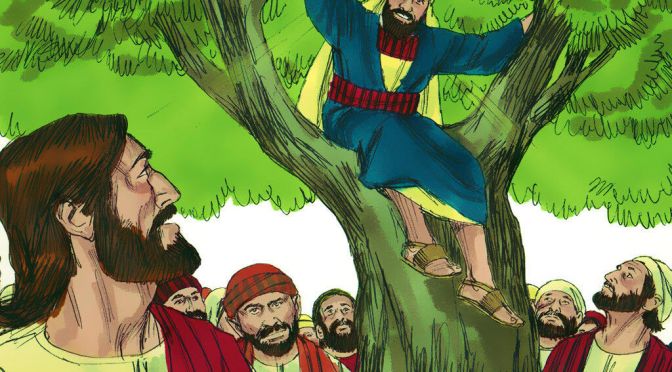
Wacky Zaccy!

Nearly 2,000 years ago, a short guy got up into a tree to see and hear Jesus teach and then did something remarkable after being called out. Here’s what Luke reports about that guy and time (Luke 19:1-8):

He [Jesus] entered Jericho and was passing through. And there was a man called by the name of Zaccheus; he was a chief tax collector and he was rich. Zaccheus was trying to see who Jesus was, and was unable because of the crowd, for he was small in stature. So he ran on ahead and climbed up into a sycamore tree in order to see Him, for He was about to pass through that way. When Jesus came to the place, He looked up and said to him, “Zaccheus, hurry and come down, for today I must stay at your house.” And he hurried and came down and received Him gladly. When they saw it, they all began to grumble, saying, “He has gone to be the guest of a man who is a sinner.” Zaccheus stopped and said to the Lord, “Behold, Lord, half of my possessions I will give to the poor, and if I have defrauded anyone of anything, I will give back four times as much.”

Luke tells us that Zacchaeus was a Chief Tax Collector. Is that important to the story? Yep! He was a Jewish man who collected taxes from his people for the Roman government. Think of it as the ancient IRS! So, you can imagine that Zacchaeus wasn’t very popular with the townspeople! Strike one! Here’s the rub: tax collectors could collect as much as they wanted as long as the Romans received a certain amount. Collectors were to keep a small portion for their trouble. Anyway, the problem was that many kept more than was reasonable. Strike two!

Why did Zaccy’s homies think he was a sinner? It’s because he likely stole from them by keeping more than he should’ve. He all but admits to the defrauding in the final verse above. But what appears to be a story about a short guy and a tree is a beautiful lesson in true repentance—a change of behavior that came about because of a new heart. Zacchaeus could’ve, like many of us, just said something like, “Well, I’m sorry!” But he didn’t stop there, volunteering to give back more than he stole.

As a result, Zaccy is likely someone who stands tall in God’s Kingdom. How can we do the same? To start, we must turn “I’m sorry” into something useful by changing our behavior and making things right, as Zacchaeus did. Then, we learn about God’s ways and do them consistently! What about next week? Well, I think we’ll test our priorities in What’s in Your Wallet?

God’s blessings and peace to you,

Dr. Ron Braley

Playing With Fire!

God has always demanded allegiance and obedience. There’s no middle ground, no room for ‘fudging’ things, and no gray area. He commanded Adam and Eve not to eat the fruit of a particular tree. They disobeyed, and we lost our access to the Tree of Life (but only until God returns creation to the perfection it once enjoyed!). Lot’s wife played with fire and lost her life for taking one last peek at her old lifestyle (Genesis 19). There are many other examples in the Bible of people who ‘pushed the envelope,’ testing God’s commandments. We do the same today.

God tells us to stay away from interaction with the spirits of the dead, but we engage mediums and psychics (Deuteronomy 18:10-13). We indulge in astrology, relying on created things to determine our fate instead of trusting the Creator. And testing God’s commands where sexuality is concerned is a vast area where many Christians play with fire (literally and figuratively)!

God is clear about the destination of those who practice sexual rebellion, such as adultery and homosexuality (1Corinthians 6:9-10). We are also warned to carefully choose what we listen to and observe (Matthew 6:22-23; Job 31:1; Philippians 4:8). Here’s an interesting fact: people wanting to become Christians in the first couple of centuries couldn’t if they, at the same time, participated in the theater because of the sensuality and immoralities it often portrayed (just like today!). Why must we take care of what we watch? Because the input helps map the pathways in our brain and can cause us to ‘boil the frog’ as we slowly allow or condone or ignore—become desensitized to—the things God hates. This is where watching pornography comes in.

Pornography (Greek porneia and graphe) is a compound ‘catch-all’ word representing all kinds of sexual immoralities. Indulging in anything sexually immoral, even just visually, tests God’s commands and His desires for our conduct; it won’t end well. Here’s a shortlist of other ways Christians play with fire where God is concerned:

  • We must tell the truth—especially where the welfare of others is concerned (Exodus 20:16). But lying has become pervasive.
  • We must not idolize (covet) things, but we do it all the time (stuff, sports, people, multimedia—anything but God’s ways) (Exodus 20:17; 1 John 2:15-17).
  • We are commanded to rest one day each week (for many reasons, including physical, spiritual, and mental health) (Exodus 20:10; Mark 2:27-28); however, few do this religiously.

Just because the proverbial lightning hasn’t struck us down as we rebel against God doesn’t mean that our playing with fire won’t result in judgment and destruction. So, if you’re playing with fire by doing anything God is against, please stop and change direction—fast! Next week, we’ll continue to consider God’s desires as I outline the requirements for Citizenship in the Kingdom of Heaven.

Blessings and peace,

Dr. Ron Braley
Corroborating Apocalypses

What do you think of when you hear or read the word apocalypse? Nuclear war? Missiles, tanks, death, and other violent stuff? The basic form of the ancient word means “to reveal.” In the Revelation given by God to Jesus to give to John to pass on to the churches in Asia Minor (phew!) in about 90CE, Jesus revealed events to come later. That’s why Revelation is apocalyptic. But do you know that Jesus had already told much of the Revelation events or characteristics when He was on earth about 60 years earlier? It’s true!

During the week of His crucifixion, Jesus and perhaps several of His closest disciples walked from the Temple complex to the Mount of Olives. He had said that the Temple would eventually be destroyed and not one of its stones left in place (Matthew 24:1-2). On the Mount of Olives, His disciples asked several related questions: 1. When would this happen, 2. What will signal Jesus’ return to earth, and 3. When will be the end of the age (Matthew 24:3)?

Jesus answers their questions in Matthew chapters 24 and 25, which inform of the beginning of hard times (‘birth pains,’ according to Jesus (Matthew 24:5-8)) to the judgment at the end of this age (Matthew 25:31-46). He gave much more detail about the same timeframe in visions to John about 60 years later. Here’s a brief comparison of what Jesus revealed on earth to what He revealed to John in about 90CE:

  • False saviors (Christs):                                                                 Matthew 24:5 & Revelation 6:2
  • War/violence:                                                                                    Matthew 24:6-7a & Revelation 6:3-4
  • Famine/pestilence:                                                                         Matthew 24:7b & Revelation 6:5-6
  • Terrible time of trouble and persecution (Great Tribulation) by the Antichrist:   Matthew 24:10-13 & Revelation 6:7-12; 7:9-17; 12:17                                
  • Christ’s second coming (ending the Great Tribulation):                                Matthew 24:29-31 & Revelation 6:12-17
  • The Great Judgment:                                                                  Matthew 25:31-46 & Revelation 20:11-15

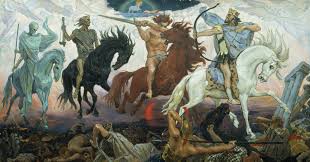
A final note about the False Christs of Matthew 24:5 and Revelation 6:2, which can seem confusing: The horse in Revelation is white and the rider wears a crown, which signifies righteousness and authority; however, his weapon is a bow, not a sword, which is the weapon of Christ (Matthew 10:34; Revelation 19:15 & 21).

In summary, Jesus, who came to earth to satisfy our debt to God, is the same Jesus who revealed end-times things again to John 60 years later. So, it makes sense that the information is related. It seems important! Shouldn’t we study the Bible and pray for illumination by God’s Spirit so that we can find out what God wants and do that before it’s too late??

Next week, we’ll leave the end-times and explore a dangerous practice by many Christians in Playing with Fire.

Blessings and peace,

Dr. Ron Braley

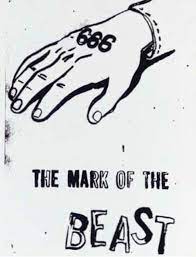
The Mark of the Beast: Part II (What it means)

What exactly will the mark of the beast be? No one knows for sure, but there are a couple of things to consider:

1.                It will be a way of identifying someone who has intentionally aligned with the Antichrist or the authority (Revelation 13:18).

2.                It may be something physical on the right hand or forehead. Or it may instead indicate something you know (forehead analogy) and do in response (symbolized by the hand) (cf. Exodus 13:9 & 16, and Deuteronomy 6:8 & 11:18).

When trying to understand anything biblical, we must consider and compare all related Scriptures. The mark is no exception. God used the hand and forehead analogy when He gave the Israelites specific commandments after the exodus from Egypt (cf. Exodus 13:9 & 16 and Deuteronomy 6:8 & 11:18). For instance:

And it shall serve as a sign to you on your hand, and as a reminder on your forehead, that the law of the LORD may be in your mouth; for with a powerful hand the LORD brought you out of Egypt. Therefore, you shall keep this ordinance at its appointed time from year to year. —Exodus 13:9-10.

He told them to remember how He’d saved the nation and to remember His commandments forever. God used the tangible and familiar “forehead” to represent the receiving and committing His commandments to memory. Likewise, He used the “hand” as an identifier for acting upon that knowledge. The learning, retaining, and acting upon God’s commandments would prove allegiance to Him. So, the significance of forehead and hand may be a pledge of allegiance through the learning, agreeing, and acting upon a particular set of commandments initiated by the Antichrist’s authority.  So, what about the number—666?

The number is that of a human, and this one will be one part of an unholy trinity: Satan, Antichrist, and False Prophet (see Revelation chapter 13). The number 6 historically represented a human, whereas the number 7 represents God, indicating perfection. Because of this and the unholy trinity mentioned above, I suggest the number 666 represents some identification or sign of allegiance that will come from the Antichrist (empowered by Satan) through the False Prophet.

An alliance with the unholy trinity may enable buying and selling during the time of the Great Tribulation, but it will bring personal destruction by God. Therefore, we must increase our faith by learning of God’s ways to avoid end-times deception and should, therefore, watch out for anything that may require ungodly allegiance.

Next week, we’ll continue our end-times journey by comparing what Jesus told His disciples on the Mount of Olives to what He revealed to John about 60 years later.

Blessings and peace,

Dr. Ron Braley
Dealing with Temptation

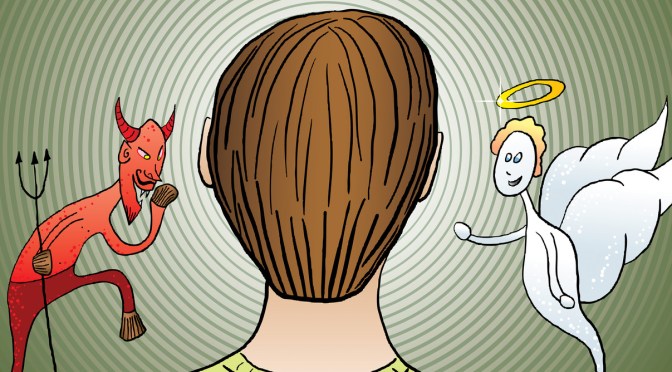
We’re often tempted to do or say unhealthy things. The temptation alone isn’t an issue. However, losing the battle in our mind by sinning or at least intending to sin (rebel against God’s ways) IS! Here’s what Jesus’ half-brother James had to say about this:

But each one is tempted when he is carried away and enticed by his own lust. Then when lust has conceived, it gives birth to sin; and when sin is accomplished, it brings forth death. —James 1:14-15.

So, we must learn to squash temptations before they become intentions and sinful actions. But, what is temptation? It’s a strong desire, but still in the mind. So, it isn’t a problem as long as it stays there. By the way: temptation is common.

No temptation has overtaken you but such as is common to man; and God is faithful, who will not allow you to be tempted beyond what you are able, but with the temptation will provide the way of escape also, so that you will be able to endure it. —1Corinthians 10:13.

We have the freedom to do what we ought—choose the right path and not let temptation lead to sin. We who have the Spirit of God can walk by that Spirit to ensure we don’t sin.

But I say, walk by the Spirit, and you will not carry out the desire of the flesh. For the flesh sets its desire against the Spirit, and the Spirit against the flesh; for these are in opposition to one another, so that you may not do the things that you please. —Galatians 5:16-17.

Reading the Bible daily and praying and meditating all the while can help us imitate Christ as we walk in His ways and away from temptations to do bad things.

Let us behave properly as in the day, not in carousing and drunkenness, not in sexual promiscuity and sensuality, not in strife and jealousy. But put on the Lord Jesus Christ, and make no provision for the flesh in regard to its lusts. —Romans 13:13-14.

And, we should avoid temptations we can’t control. For instance, anyone with a weakness to gamble should stay away from places that host gaming. Have a weakness for alcohol? Stay away from friends who drink and places that sell or serve alcohol. Tempted by sexual misconduct? Stay away from media that show nudity and sex.

Finally, pray, pray, pray!

Keep watching and praying that you may not enter into temptation; the spirit is willing, but the flesh is weak. —Matthew 26:41.

Next week, we’ll look at the concept of judgment by Christians.

Blessings and peace,

Ron Braley

Love Yourself, Part I: What??

Early in His ministry, Jesus said something interesting to the religious Jews interrogating Him:

And He said to him, “’YOU SHALL LOVE THE LORD YOUR GOD WITH ALL YOUR HEART, AND WITH ALL YOUR SOUL, AND WITH ALL YOUR MIND.’ This is the great and foremost commandment. The second is like it, ‘YOU SHALL LOVE YOUR NEIGHBOR AS YOURSELF.’ On these two commandments depend the whole Law and the Prophets.” (Matthew 22:37-40).

What?!? Love your neighbor as yourself?? Just what does that mean, and why should I do it?

First, we must understand that this love of self and others is NOT an emotion that comes and goes with the wind. It’s the kind of unconditional love that is actionable and not negotiable or optional. It’s doing the right thing for the right reason, no matter how we feel.

Second, doing the right things for yourself sets you up for doing the right things for others, to love them with the love of Christ. If you’ve flown on a commercial aircraft, you’ve probably heard something like, “If you have small children, please put on your mask first and then assist your child.” Why? Because you’d be of no use to your child if you’re passed out or dead. Loving yourself is sort of like that—you can be of little or no benefit to others if you’re emotionally, relationally, spiritually, financially, or mentally unhealthy.

So, we love ourselves in that agape action-type love by tending to our relationships, body, mind, spirit, and finances as God has taught through His prophets, our Christ, the apostles, and others in the Bible. And we learn to like ourselves through healthy living and walking by the Holy Spirit, who reminds us of who we are in God and Christ. We can also observe godly examples which, in loving themselves, can now love others properly.

In summary, Jesus has commanded that we love ourselves and, in self-love (care and feeding of our body, mind, and spirit), love others appropriately. Next week, we’ll dig deeper into how we can make this happen.

Blessings and peace,

Ron Braley

How to Read the Bible Part V: Change!

So far, we’ve learned that regular Bible study is critical to understanding God’s nature and His desires, spiritual growth, and salvation – rescue from judgment at Christ’s future appearing. We’ve also learned techniques and tools to help us. This week, I’ll share a few approaches to reading and applying what we read to become like Christ as God intends.

First, approaches to Bible reading. Here are three ways to read or study the Bible. All three can be done at the same time.

  1. By Genre. Stuff in the Bible usually falls into one of several categories: history (e.g., the Chronicles or Kings); wisdom and poetry (e.g., Job or the Proverbs or Ecclesiastes); prophetic (e.g., Isaiah); apocalyptic (e.g., Revelation); epistles (e.g., Paul’s letters to specific churches); gospel accounts (e.g., the book of Mark, the first gospel written).
  • By Topic. We’re real people with real issues. Jesus knew this, so He addressed what his hearers needed and referred to specific scriptures (what we call the Old Testament) to accomplish His purposes. Apostles James, John, Peter, and Paul did the same. If you look for scriptures that address a specific topic or need, just make sure that you keep the original meaning using what we’ve learned (i.e., context, concordances, and commentaries).
  • By Book. Studying a single book, like the gospel according to John, can be rewarding! Again, use your tools to stay focused on the writer’s intended meanings.
  • Sequentially. Starting at Genesis and reading the entire Bible (even if it takes a year or more) can be rewarding. Begin reading sequentially and never stop! Do you know that the Israelites were required to experience the Law of God repeatedly? Why? Because we tend to forget stuff, and what’s important to us changes over time.

Second, Making it Stick! Reading for pleasure and head knowledge is one thing; living it is another! Knowledge that doesn’t move us to action is worthless to God and our fellow humans (cf., James 1:22-27; 2:14-26)! To truly be transformed as Christ-followers, we can use this process when we read or study the Bible:

  1. Read the text, perhaps a few related verses at a time.
  2. Consider what it means in its context (not what it means to us!).
  3. Assimilate the text by thinking about it (meditate) while pausing to pray for guidance in applying what you learn.

In summary, start reading and studying the Bible and don’t stop! Use your tools and don’t be afraid to seek guidance about specific life needs. To make it stick, Read, Consider, and Assimilate! Next week, we’ll begin exploring faith, hope, and love and their relationship to each other and our relationship with people and God in a new three-part series.

Blessings and peace,

Ron Braley