Tag Archives: god

The Supernatural God: An Introduction

Look around. What you see exists within a single dimension. But what about what you can’t see? Are there other dimensions where beings create, advise, and influence people in this dimension? Yep!

Although humans reduce the supernatural God of creation to words and religion, there’s much more! Of course, written biblical texts inform our Christian walk. And religion helps us frame and practice our worship. But the texts and religion result from the speech and actions of a multi-dimensional supernatural God. His words were written down for people who could respond, in turn, with religious activities and right living. His actions, also documented, help us understand His nature. Regardless, the supernatural has driven what we read and do in the Christian faith. So, we’ll plumb the depths of God corporately as a heavenly council (Elohim) and individually as the Creator (YHVH).

This week, I’ll equip you to later explore Elohim, a biblical label for spiritual beings. We’ll then learn about the supernatural forces controlling earthly nations and rulers (except Israel) and how they received that authority. Finally, we’ll uncover the end-times supernatural players and events that will realign everything according to the Creator’s desire. But first, let’s look at two extremes that keep us from meeting or understanding our supernatural God: words alone and emotion mistaken for the Spirit. Words first.

A real risk of “worshipping the book” and missing God entirely exists when we dismiss the supernatural, earliest Christian traditions, faith experienced, and reason. I’ve witnessed extremes where the supernatural Spirit has no place in today’s Christianity. The supernaturally influenced Bible itself is elevated above practicing the precepts contained within, such as justice, love, and mercy. And countless rules, regulations, and bad theology abuse people and keep others from God’s Kingdom. On the other hand, ignoring the words in favor of pursuing perceived supernatural stuff alone is just as bad.

Without the Bible to frame and direct our faith, anything goes. I’ve witnessed severe abuses where people have barked, laughed hysterically, claimed to see gold dust, smelled stuff, fallen over, babbled unproductively, and much more. Add to the list fraudsters and adulterers because congregants were too Scripturally ignorant to recognize evil. However, there’s a better position where the supernatural God driving the creation of the words continues to interact spiritually with people who strive to understand and apply them correctly. In other words, balance is critical to rightly perceiving our supernatural God and imitating Him.

In summary, what we see in this dimension is a fraction of what exists here and in others—much of which drove what we read in the Bible and still influences people. In the following article, we’ll look closer at Elohim, that single-minded, one-mission group of supernaturals led by YHVH (Jehovah), God the Creator. We’ll also dig deeper into the gods that must take a backseat to Him.

Blessings and peace,

Dr. Ron Braley, MDiv, DMin.

Building Faith the Wesley Way!

Devote, grow, abide, and go are essential elements in our relationship with God through Jesus. But how can we devote ourselves to a God we don’t understand or grow when we’re unsure of how? Abide in what and how if all we have are words thousands of years old without context, sound guidance, or meaningful application? And go where and why?

The truth is that faith, devotion, and staying power are built by hearing, seeing, experiencing, and supernatural guidance. John Wesley understood this and developed a four-pronged approach to understanding the things of God and, I would argue, enjoying spiritual growth. The four parts we call the ‘Wesleyan Quadrilateral’ are Scripture, tradition, experience, and reason. I’ll add one more: the supernatural. Let’s unpack each.

Scripture. The Bible is central to our faith. Authoritative information in it should frame our thoughts and actions. Of course, this can only happen when we correctly read it, understand what we’ve read, and apply what we’ve learned. This is where tradition, experience, and reason—all formed by correctly interpreted and applied Scripture—come in.

Tradition. We’re 2,000 years removed from the New Testament authors. Most of us aren’t Jewish, know nothing about the TaNaKh (the writings, the Law, and the prophets Jesus referenced), or read biblical Greek or Hebrew. And most people understand nothing of the original poetry or figures of speech that made the Scriptures so rich and applicable. Our ignorance has often resulted in destructive doctrines and unholy practices. Wesley believed that doctrine must align with orthodox Christian traditions, probably to reduce that risk. In other words, we must consider how the earliest Church understood and experienced biblical texts or concepts.

Experience. Belief about God and Christ without action is useless, fruitless, and fuel for destruction. Faith must be experienced in several ways, including love, justice, mercy, and introducing God’s Kingdom to others. It then becomes an experience for the giver and receiver, the teacher and the learner. One more thing: everything in the Scriptures was born out of experiences. God created and spoke through prophets; someone wrote it down. History and genealogy happened; someone wrote it down. A vision was received or a prayer happened; someone wrote it down. You get the point.

Reason. God gave us a brain to help us make sense of things and rationally defend what we believe. For instance, “Come now, and let us reason together,” Says the LORD (Isaiah 1:18). Also, check out 1 Peter 3:15. Don’t divorce logic from faith!

The supernatural. God’s Spirit, given freely to Jesus’ followers, provides wisdom and helps clarify otherwise difficult things.

In summary, the Bible, illuminated by the Holy Spirit, should frame our traditions, experiences, and theological reasoning. These things working together help us understand God’s nature and what He desires and apply what we learn meaningfully. Next, I’ll take you on an exciting journey about our Supernatural God.

Blessings and peace,

Dr. Ron Braley, MDiv, DMin.

Spiritual Donuts

Muscle cars, parking lots, and hot chicks! Yep. You’ve gotta love the seventies and eighties (or not)! Reminiscing, I thought: “Ron! Remember punching the accelerator on your car in a parking lot to hear all the ‘squeaking’ and smell burnt rubber? Remember how you thought the girls would be impressed?” My response to myself: “Well, of course!” And my answer to my reply? “Ron! You were an idiot! You wasted gas, used up perfectly good clutches and tires, and ended up dateless anyway!” Sigh . . . It’s true. But the situation made me think: “Do we do something similar in our Christianity: spin around in circles, pointlessly wasting resources?” The simple answer is YES!

First, let’s look at the God-given resources we often waste or keep to ourselves. These are meant to empower us to be effective partners in introducing people to His Kingdom, and they include spiritual skills, superpowers, and assignments:

Skills. In Ephesians 4:11-16, Paul explains that the Spirit enables people to become Christian apostles, prophets, evangelists, pastors, and teachers. You can also add helpers and administrators to the list (1 Corinthians 12:28). For what purpose? To equip others in the Body of Christ to be faithful, helpful, and complete.

Superpowers. Furthermore, the Spirit occasionally empowers us to do really cool stuff at a particular time and for a specific reason according to God’s desires. These ‘superpowers’ include wisdom, knowledge, faith, healing, miracles, prophecy, spiritual discernment, and human and heavenly languages (1 Corinthians 12:4-11 & 28).

Assignments. We were made, and are equipped, for doing good works (Ephesians 2:10). We must honor God with all we are and have and be charitable (Matthew 22:34-40). And we must make the most of every moment by being righteous as He desires (Ephesians 5:13-21).

Second, spiritually doing donuts by not using our God-given resources and wasting what’s good and meant for others is genuinely robbing God! Sharing what He has given to build up His people is impossible, though, if we don’t hang out with them: “and let us consider how to stimulate one another to love and good deeds, not forsaking our own assembling together . . ..” (Hebrews 10:24-25)

Stealing from God, forsaking others, and wasting God-given gifts and skills by ‘spinning spiritual wheels’ will have consequences! For instance, in the parable of the talents: “. . . . Throw out the worthless slave into the outer darkness; in that place there will be weeping and gnashing of teeth.” (Matthew 25:14-30) And Jesus repeats this fate in Matthew 25:31-46.

In summary, God wishes to equip you for partnership in this age and the next. Don’t be wasteful or stingy! What’s next? Soon, I’ll take you on an exciting journey about our Supernatural God and a Return to Eden. But first, I’ll teach you what John Wesley understood about well-rounded faith-building that goes way beyond written words.

Blessings and peace,

Dr. Ron Braley, MDiv, DMin.

Diamonds in the Rough

Diamonds are precious. They begin insignificant but become prized after enduring extreme pressure and heat. The stuff? Simple carbon. Ordinarily, pressure and heat come from the earth over time. Diamonds can be created artificially much faster, but the process remains the same: apply pressure and heat to the right stuff. Christian growth works similarly: the right stuff enduring life’s stresses and purification’s heat. Are you a godly diamond in the making?

You may be a God-desired diamond if . . . you know God and respond accordingly. Knowing God and His nature is easy: it’s all over the Bible (just study it and hang out with more-mature Christians)! You’ll find He’s kind and just (fair but firm). His Spirit will be happy to help you understand Him fully (Luke 10:21 and John 14:26). Our response? Purity (1 Corinthians 6:20). Devotion and charity (Matthew 22:30-35). Justice and mercy (Micah 6:8). Discipleship (e.g., Matthew 28:18-20). Obedience: “By this we know that we have come to know Him, if we keep His commandments.” (1 John 2:3). Follow (John 10:27). But you can’t keep or follow what you don’t know or ignore! Stay the course, and God will know you too.

You may be a God-desired diamond if . . . God knows you because you know Him and respond as He desires. “But now that you have come to know God, or rather to be known by God . . .” (Galatians 4:9) and “But if anyone loves God, he is known by God.” (1 Corinthians 8:3). Hint: You can’t love what you don’t know!

You may be a God-desired diamond if . . . you and God know each other, and the relationship empowers you to endure life’s pressures. God didn’t say we’ll never suffer in this world (to the contrary!). Still, He promised to walk with us (e.g., Matthew 5:4). Know that pressure is necessary for growth and hope: “And not only this, but we also exult in our tribulations, knowing that tribulation brings about perseverance; and perseverance, proven character; and proven character, hope” (Romans 5:3-4 (see also James 1:2-4)).

You ARE a God-desired diamond if you know God, God knows you, and you remain His despite incredible pressure. For instance, Jesus said that if we love Him, we’ll remain (stay steadfast in our relationship) and that He and the Father will do the same with us in return (John 14:23 and 15:4-10).

In summary, know God and relate so He’ll know you too. Then, endure and stay and model that to others. The results? “Those who have insight will shine brightly like the brightness of the expanse of heaven, and those who lead the many to righteousness, like the stars forever and ever.” (Daniel 12:3). Shine on you godly diamonds! What’s next? Ever feel like you’re spinning your spiritual wheels? Me too! Let’s look at doing donuts in a spiritual parking lot.

Blessings and peace,

Dr. Ron Braley, MDiv, DMin.

There’s Nothing Original About Sin: The Cure

In my last article, I taught that sin is rebellion against God—initially by a spirit and then by humans. We continue to sin against God and people through enlightenment and choice. Before we delve into a sin cure, I need to stress that we’re talking about two categories of sin: the first that separated us from God and created a debt we couldn’t satisfy, and ongoing sins that threaten to keep us from God. Both are settled differently.

The initial human sin. Our Creator promised that One would eventually make things right and offer a way back. We call Him Jesus, and He willingly sacrificed Himself for ALL people (John 3:16 and 12:32; Acts 17:30-31; 1 Timothy 2:3-11 and 4:10; Hebrews 2:9; 2 Peter 3:9; 1 John 2:2-6). This was God’s call and love for us. He then raised Jesus from the dead to give hope to all who would become His. How? By responding in complete devotion (e.g., 1 Peter 1:3-5). The resulting ‘cleansing’ is the ‘bathing’ in Jesus and Peter’s upper room discussion (Greek ‘louo’ in John 13:10—see my article “Been Cleaned, Being Cleaned!”(March 2022)). This and the ongoing category of sin have one thing in common: a relationship with God through devotion and perseverance. Curing persistent sin can be difficult, though, because it requires permanent change.

Ongoing sin. God gives His Spirit to those who are His for guidance and change—transformation (Romans 12:1-2). In our journey forward, we must learn what God desires and do that, what He hates, and DON’T do that! Enlightenment and growth help us to deal with temptations so they don’t turn into sin in the first place.

But when we sin (and we will!), we must repent—change our behavior to enable forgiveness. This is the ‘washing’ in John 13:5-10 (Greek nipto), and it’s necessary to ensure we don’t practice sin! Regardless of the offense, practicing it will earn a spiritual death sentence (e.g., Galatians 5:16-17 and 1 Corinthians 6:9-10). Besides enlightenment by the Spirit, avoiding sin, and repentance, there’s another aid in sin cure: other people.

Christians are to assess other Christians’ behavior and help them remain in a relationship with God (1 Corinthians 5:6-13; James 5:19-20; Matthew 18:15-17). Unfortunately, we usually misinterpret Jesus’ “Do not judge” and “first take the log out of your own eye” of Matthew 7:1-5 and, therefore, don’t change our behavior or help others avoid or resolve sin. Yet, we are first to resolve our sinful behavior so that we can help others resolve theirs.

In summary, the debt incurred by the first human rebellion against God was covered by Jesus. He has called, so respond well! Ongoing rebellion (sin) is satisfied through repentance: a change in behavior from a new heart. What’s next? Let’s lighten things up a bit and encourage you diamonds in the making!

Blessings and peace,

Dr. Ron Braley, MDiv, DMin.

There’s Nothing Original About Sin: The Ailment

Few Christian things are more misunderstood or weaponized than the idea of sin. What is simple rebellion against God out of awareness of good and bad possibilities became polluted and misapplied by the fourth century CE. And many people or institutions today will gladly determine which behaviors are sinful. But what is sin? Was there an ‘original sin?’ How did religion distort a simple understanding of it and its cure? We’ll explore the answers in this first of two articles.

What is sin? Simply put, based on the original language and biblical contexts, it’s rebellion—intentionally missing a mark. What mark? God’s righteousness (His standard). Miss it but correct course, and [spiritually] live. Miss it repeatedly, and self-imposed permanent separation from God awaits (e.g., Galatians 5:19-21).

Was there an ‘original’ sin? Yes, but perhaps not like you’ve learned. Augustine was responsible for our Western understanding of ‘original sin.’ For him, the first sin was Adam’s rebellion in the garden, and its perpetual curse must be transmitted through sexual intercourse. His theory involved mistranslating and, therefore, misinterpreting the biblical Greek of Romans 5:12. The problem? Instead of consequences occurring BECAUSE of Adam’s rebellion, the misinterpretation prompted Augustine to teach that a perpetual sex-reproduced sin curse started THROUGH Adam. The truth about sin and its origin is simpler, however.

The original sin wasn’t human but spiritual. Lucifer (aka Satan) rebelled (sinned) against God and lost his heavenly position. He tempted Eve to sin; she tempted Adam. They rebelled against God’s instructions by eating from the ‘tree of all knowledge’ (Genesis 3:1-7). As a result, humans lost access to the Tree of Life and, therefore, suffer physical death (Genesis 3:22-24). Because we no longer live and walk with God as the first humans did before their rebellion, we also suffer spiritual separation from Him that requires resolution. The enlightenment gleaned by Adam and Eve remains available to be abused by choice.

How has religion distorted sin and its cure? The only remedy for Augustine’s original sin was, and is, baptism—even for infants. For many, the unbaptized are hell-bound, even from birth. For others, sin isn’t a manifestation of a heart or mind issue but actions themselves, regardless of intention: “Don’t drink; don’t smoke; don’t dance; don’t play cards . . .” Some religious leaders will tell you that sin and hell are nonexistent. And others will insist that you’ll go to hell if you don’t say or do something after each ‘sin.’ All these ‘miss the mark.’

In summary, sin is rebellion against God. The first was by a spiritual being, and sin by humans followed. We continue to rebel against God because of enlightenment and choice. In the following article, we’ll conclude by exploring the cure for the initial human rebellion that separated us from God and the ongoing sins that ail us.  

Blessings and peace,

Dr. Ron Braley, MDiv, DMin.

To Be or Not to Be!

“To be or not to be—that is the question!” This quote from Shakespeare’s Hamlet meant to ponder whether to live or die. This week’s article is similar, and it addresses ‘being’ in God’s Kingdom: Be and live . . . or don’t be and [spiritually] die. But be what? And what matters more: words or actions; speech or Christianity in motion?

The answer should be obvious, but let’s have fun getting there. Words can be cheap or useless—especially if there’s no accompanying action. It’s more about what we do, not what we say. And if our words don’t match our actions or are venomous, we may keep people from God’s Kingdom by making it unattractive or out of reach!

Don’t say you love—be loving. Don’t say ‘Jesus is Lord’—make Him Lord by devoting all you have and are to Him (this complete devotion is what we confess in Romans 10:9). Don’t throw out a bunch of Christianese people don’t understand and call it evangelism! SHOW them God’s Kingdom through charity, justice, and mercy, using words when it makes sense—and only meaningful terms and relative examples! If you feel adventurous, Google the Letter to Diognetus.

In it, an early first-century Church father (most likely Clement) tells Emperor Marcus Aurelius’ tutor about the behavior of persecuted Christians who lived according to Jesus’ teachings and God’s ways within their communities. The focus was on the behavior of Christians who didn’t isolate themselves but brought God’s Kingdom near to the people in their cultures by ‘being.’ No bullying. No programs. No Chick Tracts. Now, THAT’S an attractional Church!

We, too, can ‘be’ in what I call ‘be-attitudes’ (yes, I meant the pun!).

  • Be truthful. “Do not lie to one another, since you laid aside the old self with its evil practices . . .” (Colossians 3:9)
  • Be charitable.  “A new commandment I give to you, that you love one another, even as I have loved you, that you also love one another. By this all men will know that you are My disciples, if you have love for one another.” (John 13:34-35 – see also James 2:14-26 and Ephesians 2:10)
  • Be just and merciful. “. . . And what does the LORD require of you But to do justice, to love kindness, And to walk humbly with your God?” (Micah 6:8)
  • Be sexually pure and active in response to God’s gift of life. “. . . For you have been bought with a price: therefore glorify God in your body.” (1 Corinthians 6:19-20)

In summary, ‘be’ according to God’s desires and live. Be what? Truthful, charitable, merciful, pure, and wholly devoted to God. Now that we know ‘being’ is way better than ‘not being,’ let’s check out what we’re NOT to be as we define and dig into the origin of sin in a multi-part “There’s nothing original about sin!”

Blessings and peace,

Dr. Ron Braley, MDiv, DMin.
Fixed by the Broken

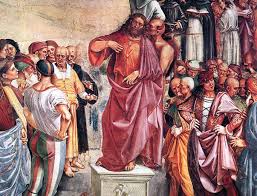
We’re broken. But the Cure for what ails us spiritually has in His roots others who were broken but redeemed, including Gentiles and prostitutes who began looking for love in all the right places. Bad became good. I’ll explain after first correcting a biblical misinterpretation about Jesus’ lineage.

Matthew 1:16 incorrectly identifies Joseph as the husband of Mary in Jesus’ lineage. This Joseph was her father, not her husband. In the original language, he could’ve been her father or husband. But Scripture insists it’s the former. Consider this:

  • The rhythm of Matthew 1:1-17 is “ . . . the father of . . .” So, ending with “. . . the husband of . . .” doesn’t work.
  • Mary’s husband, Joseph, didn’t contribute to Jesus’ bloodline.
  • According to Matthew 1:17, there were 14 generations from Abraham to David (1:2-6, check!), 14 from David to the Babylonian deportation (1:6-11, Jeconiah – check!), and 14 from Jeconiah to Jesus (1:11-16). If Joseph in verse 16 is Mary’s husband, as incorrectly interpreted, then you end up with only 13 generations, and the text is wrong. But, with Joseph as her father in the lineage, the rhythm is consistent, and you get 14 generations.

Now that I’ve gotten that out of the way, I’d like to focus on the seemingly broken out of which so much good came. One thing I’d like you to get out of this is that we’re never too bad, too broken, to be redeemed by God and used for His good while there’s breath within us. And status and education don’t determine our usefulness in God’s Kingdom!

Prostitutes and Gentiles. Tamar (Matthew 1:3) tricked King Judah into having sex with her by pretending to be a prostitute. Ruth (1:5) was a non-Jew (Gentile) who contributed to Jesus’ bloodline. The Gentile prostitute Rahab from Jericho gave birth to Boaz, the great-grandfather of David (1:6), who committed adultery and murder. But these broken people didn’t stay that way and became mighty in God’s Kingdom. It shouldn’t be any different for us!

The disciples. The earliest disciple-makers and Christian influencers included ruffians, zealots, a tax collector, a cheat, and people with attitude. For instance, Simon rebelled against Roman occupiers, Matthew collected taxes from a disgruntled Jewish population, and Judas Iscariot embezzled money from the disciples’ coffers. And we know about Peter’s temper! Yet, all played a vital role in God’s mission through Jesus.

In summary, God uses the uneducated and simple and turns seemingly bad into good to accomplish His mission to reconcile creation to Himself. What’s next? Well, words without corresponding actions are generally useless. What actions over speech does God desire? Find out in my next blog!

Blessings and peace,

Dr. Ron Braley, MDiv, DMin.
Why Did Jesus Die Anyway?

If I had a dollar for every time I’d heard, “Jesus died to forgive my sins!” I’d be rich! But that isn’t directly why He came; it shouldn’t be our focus! He died to bring us back to His Father, the Creator, not specifically to forgive personal sins: “For Christ also died for sins once for all, the just for the unjust, so that He might bring us to God . . .” (1 Peter 3:18).

Our heavenly Father has worked to reconcile with us since the rebellion in Eden. Forgiveness of sin has been just one step in the process. It was, and is, an ongoing benefit of Jesus’ work at the cross done solely for making a way back to God, but it wasn’t the prime directive.

Why die? According to the Lord-servant covenant that God struck with Abram, death was the consequence of breaking it. We owed God, but Jesus paid our debt that began way back in Eden (“Don’t eat or else!”). Why is it important to understand that personal sin forgiveness wasn’t the priority? If we believe Jesus died explicitly to forgive individual sins instead of humanity’s rebellion, then we may feel, as we tend to in the West, that there’s nothing left to do; we owe God nothing.

On the other hand, if we understand that Jesus died to bring us back to the Father, even though the benefits can include personal forgiveness and transformation now, and salvation from His wrath to come, the focus is redirected to Him, not us. It becomes easier to understand that we must discover what He desires in return and then do that! But what do we who belong to God get in return besides forgiveness, transformation, and salvation? The gifts of His righteousness (standard), the Holy Spirit, and life in the coming age. (Acts 2:38; Romans 5:17; John 3:15-16)

Anyway, here’s a brief history of our reconciliation and Jesus’ mission from beginning to end:

  • Our rebellion.
  • Our sacrifices for sporadic forgiveness.
  • Jesus’ permanent satisfaction of our debt through the cross for ALL! (John 1:29; 1 John 2:2).
  • Our hope through His resurrection.
  • Our choosing God through Jesus (making Him ‘Lord’) brings righteousness and the Spirit.
  • Our ongoing repentance brings ongoing forgiveness.
  • Our renewed mind and the Spirit bring transformation and obedience for salvation.
  • Our outcome (if God knows us) will be a resurrection and eternal existence with Father and Son.

In summary, Jesus died to bring us back to God, and all that entails. Death paid off our debt, and resurrection gives us hope. Father raised the Son; He’ll raise the rest of us who are His! In the meantime, righteousness, the Spirit, and ongoing sin forgiveness are rewards for devotion. Personal sin forgiveness wasn’t the objective; transformation is. Since we’re on the topic of Jesus, let’s explore His genealogy and legacy in the next article.

Blessings and peace,

Dr. Ron Braley, MDiv, DMin.

Be Careful Little Eye What You See, Ear What You Hear!

As a little boy, I (and probably many of you!) learned a song that began: “Oh, be careful little eyes what you see . . . Oh, be careful little ears what you hear . . .”

I’ve learned the value of guarding what I see and hear. Take in good things, and good things will likely come out. The opposite is akin to the programming concept of “garbage in, garbage out.” Regardless, the more we take the same things in, the more we become them. Why? Neuroplasticity. The brain remaps itself based on practices and preferences. Feed it garbage, and you’ll likely become garbage in thought and deed. This is likely the case here:

“For they exchanged the truth of God for a lie . . . God gave them over to degrading passions; for their women exchanged the natural function for that which is unnatural . . . men abandoned the natural function of the woman and burned in their desire toward one another . . . God gave them over to a depraved mind . . .” (Romans 1:25-28).

 The ears? We listen to what sounds (or feels) good and were warned that people will chase whatever sounds good in the last days (2 Timothy 4:3).

The eyes? Jesus explained in Matthew 6:22-23 that what we watch reflects our inner being: “The eye is the lamp of the body; so then if your eye is clear, your whole body will be full of light. But if your eye is bad, your whole body will be full of darkness. . . .” Pornography and its sexual immoralities. Violence. Gossip. Conspiracies. You get the idea. The eyes and ears can cause spiritual death if we’re not careful.

But there’s a way out. We don’t have to habitually take in what will kill us spiritually. Jesus teaches that we are to remove stumbling blocks—those practices that will keep us from God’s Kingdom: “If your eye causes you to stumble, pluck it out and throw it from you. It is better for you to enter life with one eye, than to have two eyes and be cast into the fiery hell.” (Matthew 18:9; 5:29)

How? We can, like Job, make a righteous deal with our eyes and ears (Job 31:1 NIV) to not “look at anything vile and vulgar.” (Psalm 101:3) Here’s Paul’s advice: “This I say then, Walk in the Spirit, and you shall not fulfill the lust of the flesh.” (Galatian 5:17). Discipline yourself to see, hear, and practice good things and live, or choose depravity and die. Let me know if I can help you decide!

In summary, be careful little eye what you see, ear what you hear, to enter the coming age! In the following article, we’ll uncover that Jesus died to make that possible for you.

Blessings and peace,

Dr. Ron Braley, MDiv, DMin.