Tag Archives: Holy Spirit

The Master’s Voice

A disciple seeks to be like the master, whom they imitate and then become something worthy of imitation. The process requires studying what is said and shown. My dog Aragon does this. When I leave the room, he waits and watches in earnest for my return. He stares intently when I’m with him, waiting for the next praise or instruction. So, he was easy to train. Listen. Watch and wait. Imitate. We should be like Aragon in our relationship with God. How? Always listen and watch, waiting on the movement of the Holy Spirit, biblical instructions, or admonishments from other Christ followers. Let’s examine the “listen, wait, imitate” rhythm from a biblical perspective.

The master’s voice. Read 1 Kings 19:4-18, and you’ll find a depressed Elijah on the run from Ahab. In verses 10 and 14, he cried to the Lord, “Am I the only one?” He didn’t respond through a great wind and earthquake. He didn’t answer through a fire. Instead, He replied gently, softly. In a small, still voice, the Lord God almighty whispered: “No! Seven thousand others are like you!” (1 Kings 19:11-18).

Aragon knows me. He knows my voice and responds accordingly. I speak, he listens. I go, he goes. He follows because he knows and trusts me. Similarly, Jesus knows those who belong to Him: “My sheep hear My voice, and I know them, and they follow Me; and I give eternal life to them . . .” (John 10:27-28). Besides listening, the obedient to God sometimes must wait patiently for a deed, a word.

Just wait! Aragon will wait patiently for hours for me. When he sees me, he’ll leap into action. The wait is worth it! The same holds for God’s children. The Psalmist wrote this: “I wait for the Lord, my soul waits, and in his word I hope” (Psalm 130:5, ESV). We often wait for a word of instruction, admonishment, or comfort from the Lord through His Spirit, scriptures, or other followers of Jesus.

Imitate and replicate! Training Aragon was easy. He listened, watched, and repeated what he saw. He even tries to make the sounds I make when we play. As imagers of God, we, too, are meant to imitate what we see and hear related to Him and repeat the words and behavior. The apostle Paul confirms it: “Be imitators of me, just as I also am of Christ. Now I praise you because you remember me in everything and hold firmly to the traditions, just as I delivered them to you.” (1Corinthians 11:1-2).

Listen for the Master’s voice even if you must wait. Then, just like Aragon with me, imitate what you learn and become something worthy of imitation by others. What’s next?  Let’s reverse today’s upside-down church model with a church of house churches. While waiting, remember that God wants your loyalty, not your religion.

Blessings and peace,

Dr. Ron Braley, MDiv, DMin.

Lent, Orthodox Style Part III – Pascha

Here, I was going to introduce you to my dog, Aragon. Instead, I’ll turn the Lent Orthodox duo into a trilogy and give you a bonus Part III! You’ll meet Aragon next time. In Parts I and II of Lent, Orthodox Style, I introduced you to Eastern/Greek Orthodoxy and its Lent practices meant to aid Christian formation. The idea is to develop a rhythm of praying, giving, studying, and fasting because these practices are of Christian importance. Lent also prepares the practitioner for Pascha (a celebration of Jesus’ resurrection), today’s subject.

Pascha significance. Christ died to bring us back to God (1 Peter 3:18), satisfying a debt incurred by humanity’s original rebellion: “Therefore, just as through one man sin entered into the world, and death through sin, and so death spread to all men because all sinned” (Romans 5:12) and “But God demonstrates His own love toward us, in that while we were yet sinners, Christ died for us.” (Romans 5:8)

In return, our Heavenly Father raised Him from the dead, paving the way for so many others to be resurrected at the end of this world: “But now Christ has been raised from the dead, the first fruits of those who are asleep. For since by a man came death, by a man also came the resurrection of the dead. For as in Adam all die, so also in Christ all will be made alive. But each in his own order: Christ the first fruits, after that those who are Christ’s at His coming” (1 Corinthians 15:20-23).

So, the Pascha celebration commemorates what Christ did for us and His resurrection, which gives us hope. From dark to light, fasting to feasting, the Pascha celebration brings joy that hints at what God’s children will experience in the coming resurrection after much suffering. How does the celebration unfold? Let’s see!

Pascha celebration. In the previous two articles, we learned about the 40 days of Lent before Pascha. The final week, called “Holy Week,” includes recounting the Gospel story on Thursday and the Lamentation of Christ’s death and burial on Friday and Saturday. It concludes on Sunday with a procession celebrating Christ’s resurrection, after which red eggs symbolizing renewed life through Christ’s blood are handed out, and then a feast. The feast ends the 40-day fast and invites participants to enjoy the foods they sacrificed during that time. After all, “there can be no feasting without fasting!”

In summary, Orthodox Lent aids Christian formation and paves the way to celebrate Pascha, Christ’s resurrection. Visit https://orthodoxwiki.org/Pascha to learn more. What’s next? I’ll finally introduce you to my dog, Aragon, and tell you why we should be more like him, listening for the Master’s voice. Until then, remember that Christ died to satisfy your debt to the creator and rose from the dead to give you hope. Act like it!

Blessings and peace,

Dr. Ron Braley, MDiv, DMin.

When Two Kingdoms Collide

Initially, God’s world and ours intersected and cohabitated. This was Eden until humankind rebelled and broke its relationship with the Creator. Now, the two separate realms (kingdoms) have two kings: God and Satan. Because we’re made of mammal fleshiness and God-made spirit, we feel the draw of this appealing-to-the-flesh earth ruled by Satan and heaven ruled by God. We can’t serve two masters and must choose one. And not choosing God’s Kingdom will put you in the other by default. Let’s learn more about each to help you choose well. By the way, I published “The Supernatural God: Rebellion & Disinheritance!” in May 2023. You might want to revisit it for more background.

Satan’s Kingdom. After the dispersion at Babel, God disinherited most of the earth and its people (except for Israel), giving them to others in His council (Deuteronomy 32:7-12; Psalm 82). Those other spiritual beings have managed most of humanity ever since. Satan is their ruler; he has authority over the earth and anyone who isn’t God’s. He couldn’t have offered Jesus his earthly kingdom in Matthew 4:8-10 otherwise! Other biblical examples of Satan’s rulership: “Satan, the ruler of this world . . .” (John 12:31) and “Jesus said, ‘The ruler of this world approaches . . .’” (John 14:30). Jesus also confirms “My kingdom is not of this realm” in John 18:36 and “the whole world lies in the power of the evil one.” (1 John 5:19) But, this won’t always be the case!

God’s (YHVH’s) Kingdom. Despite Satan’s temporary rulership of this earth, God’s Kingdom has been attainable since Jesus gave His life to satisfy our debt to the Creator. Why did He do that? To return us to our Maker (1 Peter 3:18). For now, His Kingdom is ‘already, but not yet’ because it is available through Jesus but isn’t physically among us. One day, the two kingdoms will engage in a final conflict, and the ruler of this world will be ousted and destroyed. God’s realm and ours will intersect again as they did in Eden. When? We don’t know for sure, but here are reminders of the certainty:

  • “Then the seventh angel sounded; and there were loud voices in heaven, saying, ‘The kingdom of the world has become the kingdom of our Lord and of His Christ; and He will reign forever and ever.’” (Revelation 11:15)
  • “Now the salvation, and the power, and the kingdom of our God and the authority of His Christ have come . . .” (Revelation 12:10)

To summarize, the Devil runs things on earth for now, establishing lots of wickedness inside and outside the churches. However, God will one day reclaim what’s His and recombine His realm and ours in a new world. Where should we go next? Let me share my Orthodox Lent journey with you in an enlightening multi-parter. Meanwhile, choose your king and kingdom wisely and stay!

Blessings and peace,

Dr. Ron Braley, MDiv, DMin.
God Versus Evil: Part One

Just as the word ‘God’ can conjure different ideas from a benevolent cosmic dude to a celestial judge, ‘evil’ may mean various things—usually because of different cultures and worldviews. The truth is that ‘evil’ probably doesn’t mean what you think, and its use By YHVH (God) has produced good. Let’s dig in by defining it first.

Evil defined. The word usually evokes responses like ‘scary’ or ‘spooky’ and images of fiery demons or people with spinning heads. However, these aren’t biblical representations of evil but imaginations working overtime. The truth is worse because evil is more subtle and can sneak up on you! Original biblical language and contexts suggest that it more or less represents something bad, adversarial, distressful, or disagreeable. Not spooky or frightening, but trouble often clothed in beauty that can be disguised as good despite the distress it brings.

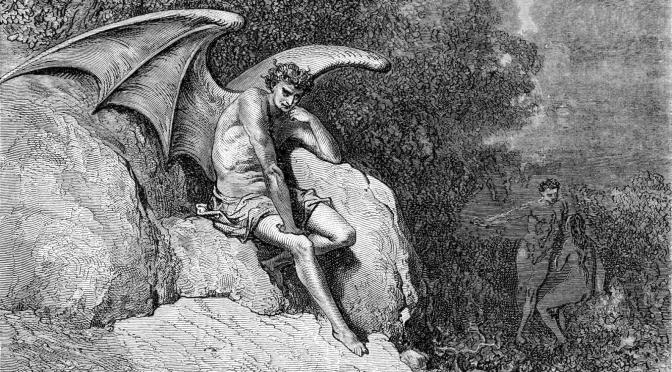
Who’s evil, anyway? The disobedient Elohim (spiritual beings from God’s Divine Counsel) were evil. The devil we call Satan is evil. So were the ancients who opposed God’s instructions. And so is anyone behaving in wicked ways that oppose God whether they call their actions ‘good.’ Church leaders and teachers allowing distressful, adversarial, and disagreeable-to-God doctrine and people into the assembly of believers are evil. The apostle Paul called them out 2,000 years ago while also reminding Christ-followers that evil and its deceit can be beautiful: “For such men are false apostles, deceitful workers, disguising themselves as apostles of Christ. No wonder, for even Satan disguises himself as an angel of light. Therefore, it is not surprising if his servants also disguise themselves as servants of righteousness, whose end will be according to their deeds.” (2 Corinthians 11:13-15)

Guarding against evil. It’s easy to be deceived by evil or call bad good if you don’t know what good looks like! This is why a solid Christian foundation is critical to discerning good from bad and righteousness from evil. Learn well and surround yourself with godly people, practicing what you see and hear. Deal with temptation in the mind before thoughts produce bad speech or behavior. Don’t give the adversary—the ‘evil one’ of Matthew 6:13 —a foothold! And always determine how your thinking or actions will affect your relationships with God or people.

Can evil be used for good? God doesn’t test or tempt people, trip them up, or do evil to them. However, He has used distress or adversity (often termed ‘evil’) and evil people to accomplish His plans. From Joseph’s brothers and Abimelech and Saul to the prophets of King Ahab, God has turned evil into good. I’ll explain more about this in Part Two.

In summary, evil can be anything opposed to good (e.g., God’s instructions). Next time, we’ll examine how God has used evil (adversarial things) for good in Part Two.  Meanwhile, behave, be kind, and beware of evil—inside the church and out!

Blessings and peace,

Dr. Ron Braley, MDiv, DMin.

The Kingdom and Culture: Part Two

In Part One of “The Kingdom and Culture,” I explained that much of the Bible describes thoughts, feelings, events, and problem-solution situations besides providing historical information. We can use much of what we read to understand YHVH (God) and Christ better and sometimes assist our Christian walk. On the other hand, the Bible prescribes instructions that apply to all people and are non-negotiable. They include the Ten Commandments and further moral instructions. Unfortunately, we tend to make the descriptive, prescriptive—force behavior not meant for everyone in all situations. Let’s dig deeper into my previous three examples of hair, women’s leadership, and Eldership.

Long hair for heaven? Some claim that Paul commanded all women to have long hair (and men short). The misinterpretation has resulted in many foreign church leaders believing their female congregants will go to hell because of cultural baldness or short hair. Understand that 1 Corinthian 11 describes Paul admonishing Greek Christian women to honor their culture, which believed long female hair and short male hair were essential to fertility. Why admonish them? To reduce the risk of creating barriers to God’s Kingdom through unnecessary contention between the culture and the Christian community. The requirement is certainly not going to pertain to all women everywhere!

No women leaders or preachers? Many Christians teach this by misapplying Paul’s localized instructions. For instance, in 1 Corinthians 14 and 1 Timothy 2, Paul addresses unruly women who were falsely teaching and bucking the Greko-Roman-Jewish cultures through newfound Christian freedom (causing scandal). He didn’t prohibit women Church leaders and teachers in general! Anyone claiming women can’t lead or ‘preach’ should remember there was an ancient Jewish judge over women and men (Deborah), and female leaders and teachers were instrumental in establishing the early churches. Who? Mary Magdalene, Philip’s daughters, Priscilla, Deaconness Phoebe (Romans 16:1–2) …

No polygamous Elders? Paul established moral guidelines for being a deacon or elder (e.g., 1 Timothy 3:2-5). Included is marital fidelity (being a ‘one-woman man’). Unfortunately, some claim that no elder anywhere can have multiple wives (or have been divorced). Recently, a Ugandan Christian with two wives asked about leading in his church, part of a polygamous community. Someone demanded that he honor the [English] ‘letter of the law’ and not allow anyone with multiple wives to become an elder. What was his suggestion instead? Pray that God would kill one of the wives so that he will have only one and be able to be an Elder! Sigh … Christ’s Law of Love and the need to effectively manage the church in a unique culture certainly trump Pharisaical-like law-mongering and biblical misinterpretations!

In summary, keep the descriptions and applications of Biblical texts in their contexts unless they prescribe behavior for all people all the time! Next, let’s understand evil better in “God Versus Evil.”  In the meantime, honor God and care for people.

Blessings and peace,

Dr. Ron Braley, MDiv, DMin.

New & Renewed Beginnings

Recently, I reposted an ‘untold’ Christmas story—a behind-the-scenes look at God’s peace and redemption Jesus set into motion with His arrival on earth. Because the new year begins a week after Christmas, I thought we should revisit new and renewed beginnings. Here are a few examples of New Year celebrations and why we use them to make resolutions.

American/European: January 1st. We often gather the evening before and bring in the new year with shouts, parties, countdowns, and resolutions. And some of those parties bring regrets and spawn resolutions of their own.

Chinese (Also known as the Spring Festival): The 23rd day of the 12th lunar month of the Chinese calendar. The idea is like that of the American and European New Year celebrations.

Jewish, Religious – Pesach (Passover): The 1st Jewish month, when the time of the covenant between God and His ‘bride’ Israel began. It was a new beginning for her.

Jewish, Agricultural – Rosh Hashanah: The 7th month of the Jewish calendar. Interestingly, this is the official State New Year, but it also closely relates to God’s covenant. This New Year begins with the Feast of Trumpets and introduces a time of repentance, forgiveness, and rest.

Because we know of the good and bad things we’ve done or that the current year has brought, the thought of a ‘better’ new year can bring anticipation of good things to come! We want to change what we don’t like; this is where ‘repentance’ (even for the non-religious) comes into play. We’re sorry for the behaviors we don’t like and, therefore, vow to change. It’s more complicated than it seems! Here are three guidelines for helping you achieve your dreams and goals.

First, you must set goals for yourself. Follow the SMART principle:

Specific. Be clear about what you would like to accomplish!

Measurable. How will you know whether you’re succeeding?

Attainable. You probably won’t be a millionaire by the age of 50 – especially if you’re, well, 60.

Relevant. Why try to be a better poker player if your goal is to overcome gambling addiction?

Timely. When should you achieve your goals?

Second, if you intend to have a new beginning in Christ or embrace a lifestyle change, you must PLAN to achieve your goals! To quote some silly movie line: “Those who fail to plan, plan to fail!”

Third, we can rarely accomplish large tasks independently, especially when dealing with weaknesses or temptations. God’s Spirit can provide strength and guidance, and accountability partners give us direction, wisdom, strength, and discipline to be successful.

In summary, it’s never too late to begin again if our heart still beats! Make goals and be accountable for success. Next, let’s find out what King Solomon says matters most at the end of the day.  In the meantime, keep your ‘love, honor, and cherish’ vows to God.

Blessings and peace,

Dr. Ron Braley, MDiv, DMin.
Christmas, the Retold Story!

Published initially in December, 2021

Christmas is full of traditions, including the story depicting Jesus’ birth. Some renderings sport sheep, camels, and donkeys with costume-clad humans for effect. The event makes us feel good and can be a great time of fun and family. But is there more to the story—perhaps stuff behind the scenes that would make it more meaningful if known? Let’s see.

First, the Son of God, born a son of man, has been around since the creation of our universe (John 1:1-4).

Second, this Son of God had to live and die as a human for a reason: to restore the relationship between Creator and creation by paying the penalty for the first humans’ rebellion and crushing evil (e.g., Genesis 3:15). Why? Paying the price could only be done by someone who had never rebelled against God. He began sending clues about this coming perfect Savior through various prophets like Isaiah: “Therefore the Lord Himself will give you a sign: Behold, a virgin will be with child and bear a son, and she will call His name Immanuel.” (Isaiah 7:14)

This Prince would be born in about 4 BC and eventually crucified, as shown to the prophet Daniel 500 years before Jesus came to earth (Daniel 9:25-26). His birth brings God’s peace to the people with whom He is pleased (Luke 2:14), but it prompted the wrath of a man, Herod (Matthew 2:1-12). For Jesus’ safety, an angel told Joseph and Mary to escape to Egypt until Herod’s death (Matthew 2:13-15). How would the journey be possible? After all, travel and daily life were costly, just as they are now. Allow me to introduce the wise men.

To fully appreciate their contribution, we must return to Persia 500 years earlier when Daniel earned great respect and treasure. He was also well-trained in Babylonian arts, including astronomy. He knew when Jesus would be born and would’ve been familiar with Micah’s prophecy about Jesus’ birth in Bethlehem (Micah 5:2). 

So, Daniel, the Jew who spent his life in Persia, had treasure, knew how to chart star movements, and knew where Jesus would be born and the timeframe. Therefore, we shouldn’t be surprised that Persian magi (wise men) knew that Jesus fulfilled prophecies, and the alignment of the stars at the time and place of His birth. Daniel’s great wealth was likely the resource that funded Jesus’ trip to Egypt until Herod’s death. Our God is the master orchestrator who crafts everything according to His pleasure! “And we know that God causes all things to work together for good to those who love God, to those who are called according to His purpose.” (Romans 8:28)

God and our Christian traditions can bring great blessings, peace, and joy! Next, let’s revisit my New Year 2022 article on new and renewed beginnings.  Meanwhile, give what God desires: charity justice, mercy, and pure heart.

Blessings and peace,

Dr. Ron Braley, MDiv, DMin.

Puttin’ the ‘Be’ Back Into Be-Attitudes!

Most of us have heard of the ‘Beatitudes’ (Matthew 5: 3-11 or Luke 6:20-23). You may have even heard them read recently in liturgies. But hearing them reminded me that we may not fully understand them or the action-and-reward implications. And what is ‘Blessed?’ Who are the ‘poor in spirit?’ We’ll unpack those things as we explore each Beatitude, which I call “Be-Attitudes!”

Some religious teachers say the blessed in the Beatitudes are ‘happy people.’ In other words, ‘blessed’ means happy. For instance, that would mean that the ‘blessed who mourn’ in Matthew 5:4 are happy in their mourning. This isn’t necessarily true. Happy depends on happenstance—external influences. The mourner could be joyful, which comes from inside by the Holy Spirit, despite sorrow or tribulation. However, in the case of the Beatitudes, the blessed receive a reward for their ‘being.’

According to the original language and context, a blessing is something received. So the blessed have received something. For instance, in the beatitudes, the blessed are recipients of God’s good favor in various forms like His Kingdom, rule over the earth, satisfaction, mercy, and the right to be His child. Let’s look at each Beatitude in more detail, and you’ll see what I mean.

  • “Blessed are the poor in spirit, for theirs is the kingdom of heaven.” People more interested in the things of the spirit than earthly riches will receive something beyond wealth: God’s Kingdom.
  • “Blessed are those who mourn, for they shall be comforted.” God’s favor in comfort received (see also 2 Corinthians 1:3-4).
  • “Blessed are the gentle, for they shall inherit the earth” God’s favor in power and authority received.
  • “Blessed are those who hunger and thirst for righteousness, for they shall be satisfied.” God’s favor in righteousness received.
  • “Blessed are the merciful, for they shall receive mercy.” God’s favor in mercy received.
  • “Blessed are the pure in heart, for they shall see God.” God’s favor in His presence for purity—removing all that hinders His Spirit.
  • Blessed are the peacemakers, for they shall be called sons of God.” God’s favor in receiving adoption into His family for those who seek peace, not violence (including in religion!).
  • “Blessed are those who have been persecuted for the sake of righteousness, for theirs is the kingdom of heaven. Blessed are you when people insult you and persecute you, and falsely say all kinds of evil against you because of Me.” Like verse 3, these persevering folks will receive the Kingdom.

Summary: The blessed aren’t always happy but receive something more valuable than emotion. In the Beatitudes, they receive from God because they persevere and bless others according to His desires for peace, purity, and perfection. Next, we’ll prepare for Christmas by revisiting my December 2021 ‘Christmas, the Retold Story.’ Listen and do more and speak less in the meantime.

Blessings and peace,

Dr. Ron Braley, MDiv, DMin.

Experiencing Thanksgiving

Family. Turkey. Stuffing. Gravy. Pies. Tums! There are so many things to be thankful for, and the Thanksgiving holiday is here! Expressing thanksgiving is good for our relationships and mental health. And it’s what God desires: “… in everything give thanks; for this is God’s will for you in Christ Jesus.” (1 Thessalonians 5:18). Although people have always been thankful, the formal holiday stems from the gratitude early Spanish and European settlers showed to the indigenous American Indians for feeding them and acclimating them to a new land and new ways.

It’s hard to say precisely when the first Thanksgiving occurred. One account pinpoints the autumn of 1621 when “at least 90 Wampanoag joined 52 English people at what is now Plymouth, Massachusetts, to mark a successful harvest.” Another group in Berkeley Hundred (now Virginia) celebrated their arrival to the new world as early as 1619. Supposedly, the meal consisted of scant oysters and ham. But they were thankful even without abundant turkey, ham, pie, cranberry sauce, etc. We find another, even earlier, Thanksgiving celebration in 1565 with the Spanish settlers and the Seloy tribe. But who established the official Thanksgiving holiday, and when?

The first Federal Congress passed a Thanksgiving Holiday resolution on September 28, 1789. Consequently, President George Washington proclaimed Thursday, November 26, 1789, a day for public thanksgiving. But President Abraham Lincoln made the holiday a regular, recurring event (the last Thursday in November) in 1863. Of course, commerce prevailed, and President Franklin D. Roosevelt moved Thanksgiving to the second-to-last Thursday of November in 1939 to lengthen the Christmas shopping season.

Regardless, we must always give thanks for everything that is benevolent and brings innocent joy, including each other, God’s provision and mercy, our jobs, and every breath we take. As a community, we must express thanksgiving for those who protect us. Decision-makers who govern deserve our thanks, too. And in our gratitude, we must show love and be thankful when we receive it. This is worship, and it brings healing and expresses our love for God while healing our relationship with Him.

Worship comprises ‘worth’ and ‘ship.’ It means to give worth to what we value. We express worthiness to God by acknowledging His protection, provision, salvation, comfort, grace, and mercy. How should we do this? By showing (not just telling!) gratitude. In other words, ‘being’ thankful through our actions. Purity. Prayer. Loving others as God loves. Sacrifice. Note how worship is full of action, not words or music.

Summary: Have a blessed Thanksgiving Holiday! Be thankful and enjoy the festivities. But don’t stop there: be grateful every day through your actions. In your gratitude for what you have received from God, give the same to others. Next, let’s put the ‘Be’ back into ‘Be-Attitudes’ as we learn about righteous character and the benefits received through God’s favor. Until then, give more than you receive.

Blessings and peace,

Dr. Ron Braley, MDiv, DMin.

The Ultimate Sacrifice

Veterans Day is upon us (November 11)! Initially set apart to honor WWI veterans, ‘Armistice Day’ became dedicated to world peace and all war veterans. Jesus taught there’s no greater love than sacrificing life for others’ sake (John 15:13). Honoring those who’ve given their lives defending others makes sense. So, please do this on the 11th! Here, I’d like to introduce folks from the Christian community who’ve sacrificed life, limb, time, treasure, and talents to serve others and present God’s Kingdom to the unchurched: martyrs, missionaries, evangelists/apostles, and helpers. Martyrs first.

Martyrs. A martyr is someone killed for their beliefs (e.g., religious). Notable Christian martyrs include Stephen, stoned to death in about 30 AD, and eleven of the twelve original apostles killed for their faith. Later, faithful Lawrence was grilled to death in 258 AD. Perpetua was a 22-year-old nursing mother killed by a wild beast in the coliseum for her unshakable faith in the third century AD. Another example is Margaret Clitherow, pressed to death in 1586 for ‘illegally’ harboring priests in her home. Others suffer hardship, even if they don’t always die for their faith.

Missionaries. Jesus said, “GO and make disciples!” (e.g., Matthew 28:18-20). Some people do this close to home. Others travel to foreign lands or new communities. We call the latter missionaries, and they often sacrifice life, limb, and significant comfort and resources to serve God. Examples include 18th-century William Carey, known as the “Father of Modern Missions.” He was the first missionary to India and translated the Bible into Bengali. And there was David Livingstone—a 19th-century Scottish physician who evangelized Africa. Speaking of Africa, Joanne and I just returned from a two-week mission to Kenya and Uganda, Africa, training about 400 church leaders in Christian Leadership and Discipleship principles.

Evangelists and Apostles. These preachers of God’s Kingdom to the yet-to-be-churched are another sacrificial group (where they preach determines whether they’re an evangelist or apostle). An apostle is sent into new communities to start new churches; evangelists usually preach closer to home. These obedient folks often undergo hardships and sacrifice comfort and familiarity to introduce God’s Kingdom to the spiritually needy here and abroad.

Humble Helpers. We also must recognize the folks who work humbly, obediently, and quietly behind the scenes to support and promote God’s Kingdom. They don’t seek recognition but deserve it because they sacrifice time, treasures, and talents! These folks are rare, accounting for less than 20% of a typical congregation! You’ll find them teaching, cooking, cleaning, greeting, fixing, mowing—serving selflessly in these and many more ways!

Summary: On November 11, remember those who’ve died for others. We should also honor the people who willingly sacrifice everything to introduce God’s Kingdom to the lost. Next, in anticipation of the Thanksgiving holiday, I’ll write about being thankful. Meanwhile, remember that God expects you to BE the Church, not DO church.

Blessings and peace,

Dr. Ron Braley, MDiv, DMin.