Tag Archives: Jesus

The Kingdom of God

“Ron – what is God’s Kingdom?” The easy answer is: “Where God rules!” Fair enough, but you might want to know where that is and more about the Kingdom itself. Let’s start with a bit of information about what is the Kingdom of God.

Indeed, the Kingdom of God is where God the Father rules. His Kingdom is where the Bible calls the 3rd heaven.

I know a man in Christ who fourteen years ago–whether in the body I do not know, or out of the body I do not know, God knows–such a man was caught up to the third heaven. … was caught up into Paradise … —2 Corinthians 12:2-4.

The first heaven is the space above where birds fly; the second is the cosmos where the constellations hang.

… both humans and beasts, creeping thing and birds of heaven (Genesis 6:7, ESV).

And take heed, lest you lift up your eyes to heaven, and when you see the sun, the moon, and the stars, all the host of heaven … (Deuteronomy 4:19, NASB).

The Father rules the third heavenly domain with the Son – the one we English-speaking folks call Jesus, the Christ.

When Christ had offered for all time a single sacrifice for sins, he sat down at the right hand of God —Hebrews 10:12.

 You might ask, “Doesn’t Jesus reign here on earth – in our hearts?”

Sort of … First, Jesus made clear that He and the Father are ‘preparing a place’ for the faithful. When ready, He will gather them. So, the Kingdom of Heaven isn’t physically here. But, you could say that the Kingdom of Heaven is ‘already within reach although it’s not here yet.’

Second, the Spirit of God given by the Father connects the faithful to His Kingdom and helps them persevere while they wait for Father and Son’s physical reign.

Third, heaven and earth will become one (in a sense) when evil, the world, and death are destroyed, and God makes all things new, returning creation to the perfection it enjoyed at the very beginning of human time. When that happens, the Kingdom of Heaven will be on the new earth and Father and Son will reign and dwell among creation.

To tie everything together, the Kingdom of God (the Kingdom of Heaven) is physically in the ‘third heaven’ but will be on the new earth in the coming age when the Father makes all things new and dwells with His creation. That Kingdom is now within reach for those who acknowledge Him as the King of their lives, entirely devoting all they are and have to Him (see Matthew 22:37). The Spirit He gives in return becomes the connection to the Kingdom until the new age comes.

Blessings and peace, Ron Braley

How Many Years??

In early August, I responded to this question in an article I wrote for the Taylor Press:

“Hey, Ron – was Jesus’ ministry really three-and-a-half years long? If not, why are we told that?”

Jesus’ ministry began when He was almost (about) 30 years old – so, 29, and lasted for just over a year. He was crucified at the age of 30, which may also account for the number (30) of silver pieces Judas received for betraying Him (taxes or fees paid sometimes were based on an individual’s age). The gospels agree very well on the flow of the ministry, and John’s account is the easiest to follow.

Why do we believe, incorrectly, that Jesus ministered for 3.5 years? John 6:4, which throws in a bogus Passover, wasn’t in the earliest manuscripts but added by the third century. Then, fourth-century Eusebius, wanting to crack the code of the ‘week of years’ before the end of the world, used the bad information and rounded up, perpetuating the false belief that Jesus’ ministry was three-and-a-half years long. If you leave out chapter six, verse four (as you should!), the flow of Jesus’ one-year ministry goes like this according to the Gospel by John:

  • John’s introduction, the start of Jesus’ ministry, and gathering disciples: 1
  • Jesus performs His first miracle; the ministry begins just before Passover at age 29: 2
  • Jesus’ first Passover; religious contention begins (March/April): 2-3
  • Jesus goes back to his home in the north, stopping in Samaria along the way: 4
  • Jesus visits Jerusalem for Pentecost (May/June): 5
  • Jesus heads back to the north for the summer; feeding 5,000: 6-7
  • Jesus goes back to Jerusalem for the Feast of Booths in the fall (October-ish): 7
  • Jesus stays in Jerusalem until winter and the Feast of Dedication (Hanukkah in December): 7-10
  • Jesus leaves Jerusalem for the rest of the winter: 10-11
  • Jesus enters Jerusalem for the second and last Passover in His ministry; He’s crucified and then resurrected (March/April): 12-20
  • Jesus appears to various disciples and ascends to Heaven: 20-21

So, what did we learn? First, Jesus’ earthly ministry lasted just over a year from the age of 29-30. Second, the Christian tradition of a 3.5-year ministry was started by Eusebius when trying to rationalize his belief about end-of-the-world timing.

Blessings and peace,

Ron Braley
Western Christianity Versus the Borg

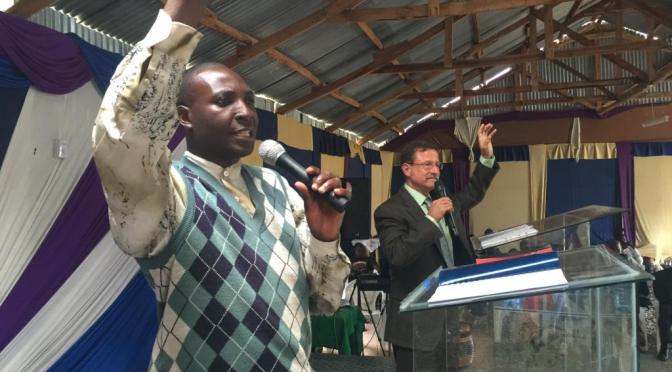
Jesus encouraged us to unshoulder our burdens and share them with Him (cf. Matthew 11:28); the Apostle Paul tells us to share our burdens with each other (cf. Galatians 6:2). Moreover, we are to use our resources to care for our Christian brothers and sisters. Still, we maintain a ‘great divide’ between laity and clergy and each other relationally – indeed a gap too wide to facilitate the transfer of our burdens to others or Christ. So they collect and weigh us down until we become the picture of spiritual unhealthiness and a questionable witness. Meanwhile, individualism prohibits deep interpersonal relationships necessary for accountability or the discovery of needs. How do we narrow the gap and once again participate instead of dictating or isolating? Through real community, not as a collective of individuals.

Our current one-to-many church model whereby a minister talks to a congregation and then sends them away has created a division between clergy and laity and defies the biblical structure meant for the assembly of Christ followers. There, everyone is equal, and they operate in parallel to use resources and spiritual gifts to equip the Saints for God’s ministry of reconciliation. Our contemporary Christianity, however, saddles clergy as paid religious professionals with laity responsibility for spiritual development and business tasks. As a result, growth is stunted, spiritual lethargy abounds, and opportunities for sharing God-given gifts and talents are nearly non-existent. Moreover, the congregation itself exists not as one body but a collection of individuals sharing the inbound religious experience.

Scott Boren, the author of The Relational Way, points out that the United States has been dubbed by many sociologists as the most individualized society in human history (12). Because our churches comprise complex, diverse humanity that doesn’t, for the most part, become transformed into the likeness of Christ, we too model individualism. We share little including struggles and needs or the Gospel for that matter. Why? Individualism and relationalism are antithetical; the former (us) creates a firewall that restricts relationships and, therefore, the trust necessary for sharing. Let’s have a bit of fun and look at something that looks more like we should: The Borg.

If you are a long-time Star Trek fan, you will likely know of the Borg – that single entity comprising many individuals functioning as that single consciousness; they exist to participate relationally for the betterment of the ‘one.’ Here are some helpful snippets from the Star Trek database (http://www.startrek.com/database_article/borg):

The Borg have a singular goal … This collective consciousness is experienced by the Borg as “thousands” of voices — they are collectively aware, but not aware of themselves as separate individuals. … Among the many advantages their collective consciousness affords them, the Borg hive-mind allows for instantaneous adaptations … with the power of their collective thoughts alone. … The hive-mind drones do not register as individual life-signs when scanned, only as a mass reading …

OK, so the Borg is fictional, and the Church is not. However, we could learn a serious lesson from the Borg concept: Participate to serve, not experience; Grow to help, not for self-gain.

In summary, God has equipped each of us to partner with others in His ministry of Reconciliation. Rather than congregate as self-centered individuals with a common desire to experience religion, let’s become more relational to build trust to enable training and service. Then, we can truly resemble the Borg … well, without all the tubes and stuff!

Blessings,

rb

Soul Food, Anyone?

An ounce of prevention is worth a pound of cure!” resonates with those of us who understand the value of caring for what we value from home and car maintenance to finances. Care of the ‘soul’ should get no less attention and upkeep; spiritual formation points us in the right direction and can help us remain healthy in body, soul, and mind.

Because I understand the soul represents what the spirit doesn’t (e.g. body, mind, intent, etc.,) spiritual formation (soul-care) makes perfect sense to me as the ounce of prevention needed to be faithful, obedient, and healthy. The lack of attention to relative formation elements introduces the risk of stress, anxiety, poor physical and mental/emotional health, and limited or non-existent faith – all of which can become roadblocks to spiritual effectiveness!

Here are a few standard disciplines related to spiritual formation and the reduction of the risks I just mentioned:

  • Bible Study & Prayer. The Bible makes clear that our faith (belief/confidence) is formed largely through exposure to the Scriptures (e.g. Romans 10:17; 2Timothy 3:16-17). The learning provides boundaries and guidance, builds our ability to follow, and reduces the chances of deception (cf. Colossians 2:7-8). Most Christians (more than 98%, statistically) don’t read the Bible regularly. And, although prayer is our communication with God through the Spirit, we don’t do that regularly or effectively either. Setting aside at least one period each day (ideally at the same time) for prayer and Bible study will allow us to ‘renew our minds’, avoid deceptions (g., equip to train others, and petition or thank our God.
  • Physical Exercise. Physical exercise reduces stress and illness. And, the better we feel, the more efficient we’ll likely be in our walk as Jesus’ followers. A regiment of at least 30 minutes or so several times a week in some cardio and physical exercise would be an excellent start.
  • Mental Exercise. The brain needs stimulus too. Engaging in educational pursuits, intelligent conversations or debates, reading, etc. will help keep you mentally healthy and productive in your work, play, and witness.
  • Financial Stewardship. Financial problems provide much stress and distraction from important and healthy pursuits. Stress over financial trouble strains relationships and physical health alike. God calls us to be good financial stewards as shown by the Bible throughout the Old and New Testaments (e.g. Psalms 37:21; Proverbs 22:7 & 26; Matthew 25:27; Luke 20:20-25; Romans 13:8). Following biblical advice will aid greatly in keeping us healthy and financially stable.
  • Relationship Maintenance. Finally, we’re social creatures and must maintain our relationships to reduce stress and loneliness. Relationships are also critical to our ability to evangelize and disciple others. Therefore, we should make time to maintain our connections to family and friends.

In conclusion, my challenge to all followers of our Christ is that we continually engage in spiritual formation – ‘soul care’ – to ensure we’re active participants in our covenant with God.

Blessings,

rb

Come Back!!

The Creator Called: He wants His stuff back! Return. Partner. Live!

For God has not destined us for wrath, but for obtaining salvation through our Lord Jesus Christ —1Thessalonians 5:9.

And having been made perfect, He became to all those who obey Him the source of eternal salvation —Hebrews 5:9.

The world is passing away, and also its lusts; but the one who does the will of God lives forever. —1John 2:17.

Communion – Food for Thought

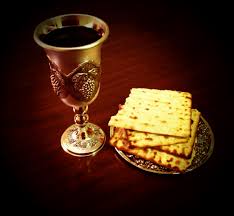
The sacrament/ordinance of Communion invites different thoughts and even an air of mystery depending on your religious background. Regardless, we typically understand it to be either a Spirit-enabled grace or remembrance related to Jesus’ sacrifice; whether grace or memory will, again, depend on religious affiliation. However, the sacrifice is but one of two major points of consideration. Remembering only the sacrifice, we seemingly gloss over the other – the covenant Jesus’ sacrifice enabled. That marriage-like covenant will be the focus of my blog.

God and our Christ have always communicated with us in terms and contexts humans understand and to which we can relate. For instance, Jesus used fishing terminology when teaching fishermen and farming concepts when instructing farmers. Likewise, God used or established human practices to guide performance and dress rehearsals for things to hope for in the future.

An excellent example of God’s use of an existing practice to guide contemporary behavior was the covenant He formed with Abraham with its cutting, shedding of blood, and the promise of servitude. It constituted the basis for the renewed covenant through Moses and the dress rehearsals of the Passover feast (e.g. 1Corinthians 5:7) and a marriage-like relationship with Israel. Both rehearsals would eventually be fulfilled by Jesus’ sacrifice and resulting marriage-like covenant. But what do covenant, sacrifice, and marriage have to do with Communion?

Jesus and Paul made clear that the Church is the Bride of Christ (see the fulfillment steps below) just as Israel was the Bride of God (e.g. Exodus 19:5-6; Isaiah 54:5-8). And why not? Marriage is a covenant, and there’s no other human relationship meant to be as close. Therefore, the Jewish marriage served as a good ‘dress rehearsal’ for the relationship of God with the world through the Christ.

Understanding the process Jesus and His disciples were familiar with will help in the interpretation of Jesus, Paul, and John’s comments related to the bride, a cup of the covenant, separation and preparation of a home, the return of Christ, and the wedding supper. Here are major steps of the Jewish betrothal/marriage process we fulfill with Jesus until His return:

Ancient Jewish Betrothal & Our Fulfillment

  1. Father of the groom selects a potential bride: 2Corinthians 11:2
  2. Covenant sealed by bride and groom drinking from the cup of covenant: Matthew 26:27-29
  3. Separation (John Chapter 14; Matthew 9:14-15) & building of a home: John 14:2-3
  4. Father determined the day/hour of the marriage gathering: Mark 13:26-32

Ancient Jewish Wedding & Our Fulfillment

  1. Wedding announcement by shouts and trumpet: Matthew 24:30-31; 1Thessalonians 4:16-17
  2. Wedding feast and the drinking of the last cup: Matthew 26:29; Revelation 19:7-9
  3. The wife goes to her new home: Revelation 21:1-2 & 9-10


In closing, my challenge is that we as His Bride not only remember Jesus’ sacrifice during the sharing of wine and bread but also the marriage-like covenant His shed blood and broken body made possible.


Blessings,

Rb


Keep an eye out for “Finding Answers to Stuff Churches Don’t Discuss!” scheduled for a mid-20167 publication. There, you’ll find roughly 60 topics related to daily life (such as sex, religion, finances, tattooing, and everything in between!) along with practical application of God’s guidance for navigating those difficult waters!

And, for a very comprehensive and detailed study of the very important topic of God’s judgment to come and being rescued from it, feel free to read my 2011 guide titled, “Finding the End of the World” available at Amazon, Barnes and Noble, and from www.ronbraley.com in paper and e-book formats. In the guide, you’ll find roughly 500 pages of building blocks to help you do your own complete and unbiased study based on Scripture and history!

Dunkin’ Do-Nots

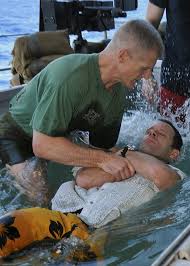
I found the Sacrament (or Ordinance) of Baptism fascinating, and it reminds me of so many questions and internal friction spawned by this simple and yet critical Christian function! Dip or dunk? Necessary for salvation? Public or private? Prescriptive or Descriptive?

Baptism was prescribed from the beginning and had a presence in ancient Israel and pagan rituals, but what purpose does it serve for contemporary Christianity? Humanmade doctrine varies, and you’ll find it an act that imparts grace on the newly-born and old alike for the sacramental-minded. And there, a sprinkle is likely to be just as effective as a complete dunking as long as an individual ordained in the particular sect or denomination performs the rite. On the other hand, you’d be more likely to find baptism an ordinance of immersion and more of a symbolic act of burial and resurrection than an impartation of Godly grace if you’re of a Protestant persuasion. Which is correct, and does the function impact the salvation of those being doused or dunked?

What the Bible makes clear: Baptism in our New Testament context is meant to represent the forgiveness of sin and symbolize rebirth in Christ. It provided accountability, at least in the beginning, through the public profession of faith – often in the face of possible martyrdom. But that the ritual is necessary for salvation is unlikely; that idea may be part of a misunderstanding of salvation and a focus on praxis as opposed to the heart.

First of all, and contrary to our contemporary desire, the Bible teaches us that salvation – a rescuing by definition – will be a stay from God’s future wrath (e.g. 1Peter 1:3-5). Second, Jesus had a lot to say about our heart (intent) and the idea of choosing and following. And, Paul seems to corroborate the concept of persevering in our covenant with God. Finally, the Bible and this week’s lectures confirm that our confession of choice is synonymous with a ‘dying to self,’ and dying is indeed necessary before burial and resurrection baptism symbolizes. So, while it may not be directly related to salvation itself, baptism is meant to be a visible sign (not unlike circumcision in God’s covenant with Israel) that someone has ‘counted the cost’ and chosen to covenant with God. In other words, the ‘washing’ implies an educated commitment.

A common practice in the early church (still done in some Christian circles today) was to spend perhaps many months training a new ‘believer’ before baptism to ensure they understood what they were about to do. Contrast the practice with our Western tendency to get someone to say a ‘sinner’s prayer’ and seek baptism with little or no knowledge of the God with whom they’re supposed to covenant!

So, dunk, dip, or sprinkle as long as the recipient ends up as more than just wet!

Blessings,

Rb

Keep an eye out for “Finding Answers to Stuff Churches Don’t Discuss!” scheduled for a mid-20167publication. There, you’ll find roughly 60 topics related to daily life (such as sex, religion, finances, tattooing, and everything in between!) along with practical application of God’s guidance for navigating those difficult waters!

And, for a very comprehensive and detailed study of the very important topic of God’s judgment to come and being rescued from it, feel free to read my 2011 guide titled, “Finding the End of the World” available at Amazon, Barnes and Noble, and from www.ronbraley.com in paper and e-book formats. In the guide, you’ll find roughly 500 pages of building blocks to help you do your own complete and unbiased study based on Scripture and history!

Adopt a Bible!

Disappointingly, our plea for Bibles for Africa recently yielded no results despite the knowledge that most Africans have no Bible (including most Christian teachers and leaders!).

How can the people learn about God or become disciples effectively with no guide?

How can we who are wealthy by comparison and have an abundance of Bibles and Christian literature be obedient to Jesus’ commandment to ‘tell’ and ‘make disciples’ without doing our part to rectify this incredible disparity?

So, I thought I’d take a different approach by asking everyone to ‘adopt a Bible’. A donation of only $10 will buy one Swahili Bible. Obviously, Africa needs more than one Bible but if everyone buys at least one, we win in our obedience and Africa wins by being able to learn and teach their Faith.

Will you adopt a Bible for Africa by donating here? http://findingrevelation.com/FindingDiscipleship/Africa%20Bibles.htm

Blessings!

Ron Braley, findingdiscipleship.org & ronbraley.com


New Beginnings

We think about a New Year in human terms and for new human beginnings. But, there is an ultimate and true start that brings new beginnings for Jesus’ followers – and will bring an end to all else (Revelation 22:11-13).

Let the one who does wrong, still do wrong; and the one who is filthy, still be filthy; and let the one who is righteous, still practice righteousness; and the one who is holy, still keep himself holy. Behold, I am coming quickly, and My reward is with Me, to render to every man according to what he has done. I am the Alpha and the Omega, the first and the last, the beginning and the end. —Revelation 22:11-13.
Examples of human New Year celebrations:
• American/European: January 1st
• Chinese (Also known as the Spring Festival): 23rd day of the 12th lunar month of the Chinese calendar
• Jewish: Religious – Pesach (Passover): The 1st Jewish month; Agricultural – Rosh Hashanah: 7th month on the Jewish calendar

Human New Year resolutions: We usually make them to bring hope of a new human beginning (perhaps that the next year will be better than the last). We also make them as ‘do overs’ – we want to change what we don’t like.

But, let’s look at a new human and spiritual beginning in Jesus. Why would we care? To move toward God and life, and away from judgment and spiritual wrath. Here’s how:
• Believe and Repent (our focus) (Mark 1:15)
• Be baptized as an outward, physical manifestation of new faith (Mark 16:16)
• Grow in faith, live right, and tell others the good news (i.e. Matthew 19-20)

Interestingly, both human and spiritual new beginnings require repentance.
• Defined: A change in heart that results in a change in behavior
• Enables forgiveness, and salvation (Luke 24:47 and Acts 11:15-18)
• It’s what God desires of everyone (2Peter 3:9-10) and often disciplines us for (Revelation 3:19)
• A beginning that leads to good habits and better health (relationship, emotional, physical, and spiritual)
• We don’t practice sin once we repent (Galatians 5:20-23, John 8:3-12, and 1John 3:2-10
• Not repenting will lead to judgment and wrath (Romans 2:5-10)

Repent, experience a new beginning, and don’t look back! The results will be spiritually, physically, emotionally, and mentally rewarding.

Keep an eye out for “Finding Answers to Stuff Churches Don’t Discuss!” scheduled for a mid-2015 publication. There, you’ll find roughly 60 topics related to daily life (such as sex, religion, finances, tattooing, and everything in between!) along with practical application of God’s guidance for navigating those difficult waters!

And, for a very comprehensive and detailed study of the very important topic of God’s judgment to come and being rescued from it, feel free to read my 2011 guide titled, “Finding the End of the World” available at Amazon, Barnes and Noble, and from http://www.ronbraley.com in paper and e-book formats. In the guide, you’ll find roughly 500 pages of building blocks to help you do your own complete and unbiased study based on Scripture and history!