Tag Archives: Jesus

Demons with Job Titles & the ‘Spirit’ of Biblical Abuse . . .

Sometimes, unwilling to accept that we may be the cause of sickness or feelings such as anger, depression, or sadness, we seek to blame other people or specific demons with job titles. This is unfortunate because it makes possible the shirking of personal ownership and repentance as well as the growth of grace in us as we deal with difficult people and difficult circumstances.

The idea of naming spirits in an effort to place blame for our bad circumstances comes from a few Scriptural references that, in context, only refer to a state of mind or personal attitude.

For instance: Numbers 5:14 refers to a spirit of jealousy; Deuteronomy 34:9 introduces a spirit of wisdom; Isaiah 19:14 introduces a spirit of distortion; Isaiah 61:3 mentions a spirit of fainting; Romans 8:15 warns of a spirit of slavery; 1Corinthians 4:21 describes a possible spirit of gentleness; Ephesians 1:17 reveals a spirit of wisdom; 2Timothy 1:7 includes a spirit of timidity.

Some people name other spirits such as ‘heaviness’ or ‘depression’ or ‘jezebel’ to make sense of how they feel or others behave. Remember that all spiritual beings are creations regardless of whether they’re demons or the spirit within us, and all have a leader – either God or Satan. So, what about Satan? Perhaps another time . . .

For anyone who believes they’re being hounded, possessed, influenced, or hindered by a demonic spirit of ‘this or that’: Just remember that those of us who truly have given ourselves to God through faith and obedience have nothing to worry about – we’ll remain beyond reach of any temptation or oppression demonic spirits can initiate. In addition to God’s protection, we also have wisdom and guidance through His Spirit.

Keep an eye out for “Finding Answers to Stuff Churches Don’t Discuss!” scheduled for a mid-2015 publication. There, you’ll find roughly 60 topics related to daily life (such as sex, religion, finances, tattooing, and everything in between!) along with practical application of God’s guidance for navigating those difficult waters!

And, for a very comprehensive and detailed study of the very important topic of God’s judgment to come and being rescued from it, feel free to read my 2011 guide titled, “Finding the End of the World” available at Amazon, Barnes and Noble, and from www.ronbraley.com in paper and e-book formats. In the guide, you’ll find roughly 500 pages of building blocks to help you do your own complete and unbiased study based on Scripture and history!

Ghouls, Spirituality, and Jesus . . . Compatible?

Christians are often conflicted over whether to celebrate Halloween.

For some, Halloween is a harmless time of fun when everyone can dress up and party. Their children love this time of year because of the costumes and quest for candy.

On the other hand, a growing number of Jesus’ followers are uncomfortable with the festival. They choose not to participate in it to avoid the appearance of a double standard once they learn of its origin. So, where did this contentious holiday come from?

Halloween is an ancient festival born of paganism and Christianity (Samhain for the pagans and Hallowmas for the Catholic Church – both 3 days long beginning on October 31st). The holiday was brought to the United States by European immigrants in the 19th century.

What does this have to do with God and our Christ? Embracing or condoning any kind of spiritualism, witchcraft, divination, or communication with the dead will bring certain judgment from God at the last days and open the door to demonic oppression or possession in the meantime. This could include the religious practice of praying to or for the dead, séances, or the pursuit of magical or astrological arts (i.e. consulting mediums, use of tarot cards, reliance upon horoscopes, etc.).

Should a follower of the Christ, celebrate the holiday? This is a personal decision that should be made carefully after consideration of its origin, current practices, and damage to a potential witness for Jesus.


Keep an eye out for “Finding Answers to Stuff Churches Don’t Discuss!” scheduled for a mid-2015 publication. There, you’ll find roughly 60 topics related to daily life (such as sex, religion, finances, tattooing, and everything in between!) along with practical application of God’s guidance for navigating those difficult waters!

And, for a very comprehensive and detailed study of the very important topic of God’s judgment to come and being rescued from it, feel free to read my 2011 guide titled, “Finding the End of the World” available at Amazon, Barnes and Noble, and from www.ronbraley.com in paper and e-book formats. In the guide, you’ll find roughly 500 pages of building blocks to help you do your own complete and unbiased study based on Scripture and history!

Suicide . . .

Is suicide a sin? Will those who commit suicide go to hell? There’s little in Scripture related to the taking of one’s own life. Nothing condones it, but neither is there anything that prohibits the act. What we’ll most likely discover is that, as with nearly everything else we do, intent is important to determining the eternal fate of someone who has committed suicide.

What does the Bible say about suicide? Very little, actually. What little information there is can be found in one of two categories: verses that tell us of a few individuals who killed themselves and others that may reflect an unfulfilled desire of some to end their lives.

Acts of actual suicide in Bible and history:

  • Samson. After being captured and blinded, he took advantage of an opportunity to kill not only himself but 3,000 Philistines by ‘bringing down the house’ (cf. Judges 16:25-31). It’s possible that Samson martyred himself as opposed to committing suicide. Only he and God know of his intent at the time of this final act.
  • King Saul. Seriously wounded, he asked his armor bearer to kill him. When the assistant refused, the king killed himself (according to at least one account). The armor bearer then committed suicide as well (cf. 1Samuel 31:1-6; 1Chronicles 10:2-6; 2Samuel chapter 1). In context, Saul sought death to avoid abuse by his enemies.
  • King Abimelech. A woman mortally wounded him by dropping a millstone on his head. Knowing he was about to die, the king had his armor bearer finish the job because he didn’t want it said that a woman had killed him (cf. Judges 9:50-54).
  • King Zimri. This king reigned only 7 days before committing suicide. King Omri of Israel besieged Zimri’s city of Tirzah and, probably out of fear, Zimri killed himself by burning the house down around him (cf. 1 Kings 16:15-20).
  • Ahithophel. King David’s counselor turned on the king in support of his son and enemy, Absalom. When his advice against the king wasn’t followed, he returned home and killed himself (cf. 2Samuel 17:23).
  • Judas Iscariot. This disciple of Jesus killed himself out of guilt for betraying the Christ (cf. Matthew 27:3-5).
  • Hundreds of Jews at Masada. Roman soldiers breached the walls of this hilltop fortress in 73 CE, compelling nearly 1,000 Jews to commit suicide. Husbands killed wives and children out of fear they’d be sexually abused and turned into slaves. The males then drew lots to determine which ones would kill the others.[i]


Possible unfulfilled desires to commit suicide:

  • Moses. In despair over the burden of caring for the Israelites, he asked God to kill him (cf. Numbers 11:12-15).
  • Elijah. . . . and he requested for himself that he might die, and said, “It is enough; now, O LORD, take my life, for I am not better than my fathers.” —1Kings 18 and 19:4. Interestingly, this request came just after God had enabled a great victory over the prophets of Baal. Now that Jezebel was seeking his life, Elijah despaired and went from what was probably an extreme high to quite a low. This is common even with today’s followers of Jesus.
  • Jonah. This prophet was angry enough at God’s mercy with the Assyrians and discouraged at the lack of protection from intense heat that he asked God to take his life (cf. Jonah 4).
  • Those about to suffer during God’s end-times wrath.  At the darkening of the sun, moon, and stars of the sixth seal of the Revelation in the last days, Jesus’ followers will be gathered and the remainder of humanity will prepare for God’s impending wrath (cf. Matthew 24:29-31; Revelation 6:12-17). Those left behind will cry out for the rocks to fall upon them because of the realization that God’s wrath is upon them (Revelation 6:16-17).
  • Those who’ll suffer during God’s end-times wrath. The fifth angel of God’s last-days wrath will cause the release of locust-like creatures from the abyss. They’ll torment men for 5 months (cf. Revelation 9:1-10). The pain will be so severe that the victims will wish for death, but it will elude them (Revelation 9:6).


While there’s nothing that directly condones or prohibits suicide, some insist you’ll find proof that suicide is wrong in the commandment that prohibits murder and in 1Corinthians 6:19-20 and 3:17:

You shall not murder. —Exodus 20:13.

Or do you not know that your body is a temple of the Holy Spirit who is in you, whom you have from God, and that you are not your own? For you have been bought with a price: therefore glorify God in your body. —1Corinthians 6:19-20.

Do you not know that you are a temple of God and that the Spirit of God dwells in you? If any man destroys the temple of God, God will destroy him, for the temple of God is holy, and that is what you are. —1Corinthians 3:16-17.

In the case of the commandment to not murder, remember that it’s one of 5 that tell us how to treat our fellow man. Regarding Paul’s admonishment to glorify God in our body in 1Corinthians 6:19-20, as with many of his words to a sin-riddled church, the message exhorts the followers in Corinth to rule the flesh with the spirit and honor God through purity and not the other way around. It’s not specifically addressing suicide.

What we’ve learned so far is that many people in Scripture and history have committed suicide for what they believed to be good reasons: to avoid worse fates or get relief from excruciating pain and certain death by more unpleasant means. We see this kind of activity today for similar reasons. Is it wrong? Will the act result in a sentence of hell? The answer may depend on the state of mind and therefore the intent of anyone who has committed suicide. Internal chemical/emotional and external factors can overwhelm an individual and temporarily cloud their judgment.

Most people understand the potential lack of accountability that can stem from blocked rational thought and an inability to use sound judgment. We often talk about something termed the ‘age of accountability’ whereby we believe God will accept and save from judgment the spirit of a child until it’s old enough to fully understand the need for God’s salvation through Jesus. The youngster would need to decide from that point onward whether to follow the Christ.

The lack of emotional and mental maturity keeps one from being able to make this choice regardless of whether it’s due to age, disease, or intense physical or emotional pain. Only God knows the heart of someone who has committed suicide and whether they were able to make right choices. And, since He’s a good and righteous judge, we can trust that God will judge each person according to their heart’s condition.

Two extremely unfortunate side-effects of suicide are grief and finality. In some cases, family members understand that death provided relief for the deceased. But in most cases, the grief produced by the loss of a loved one is overwhelming. And death is certainly final. If God’s plan had included a part for the deceased, then the chance to fulfill that role has been forever removed. Therefore, suicide is also a serious matter with possible heavy and lasting consequences.

Summary: The Bible says little on the subject of suicide. What it does report is strictly historical in nature. As a result, we’re left only with opinions on the subject and personal desires. Mine is that the act itself won’t condemn a person to hell – that condemnation depends alone on the individual’s heart including the presence (or absence) of faith and resulting obedience up to the time of death. My prayer and belief is that God does indeed consider the heart condition when determining the fate of someone who has committed suicide.

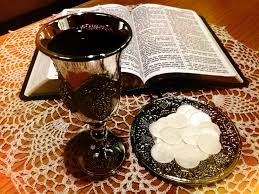
“Taking the Mystery out of Communion”

Communion is defined as sharing; intimate fellowship or rapport (Merriam-Webster).

What do Christians so intimately share and why? What you’ll discover is that our communion ritual has its beginnings in God’s covenant with Israel and the Passover celebration – something we’re certainly encouraged to participate in.

In fact, Jesus was celebrating the Passover Seder when He announced that His body would be broken and His blood shed for a new covenant with God. Jesus then encouraged His disciples to remember His coming sacrifice whenever they partook of the Passover elements – probably because of their fulfillment with His coming, death, resurrection, and salvation.

The Passover flat bread and lamb’s blood had significance then . . . and now. Let’s take a quick look at the communion components before discussing how they’ve been used to represent God’s actions and fulfillment of fulfillment of His words through the prophets:

  • The bread: from the Passover, and as our ‘bread of life’ – Jesus.
  • The wine: blood the Passover Lamb and Jesus shed for salvation.

Old Covenant/Passover fulfillment:

  • The bread – matzo – had no yeast and represented the urgent departure of the Israelites from Egypt. Its holes and stripes represent OT prophecies about the piercing and beatings our Christ would endure (Isaiah 53:3-5).
  • The wine represented the blood of the old covenant between God and Israel. Today, Jews celebrate the Passover with a Seder meal that includes matzo and four cups of wine: Sanctification, Deliverance, Redemption/Blessing (1Corinthians 10:16-17), and Hope – usually associated with the return of Elijah.

New Covenant fulfillment:

  • The bread represents the ‘bread of life’ (Jesus) broken for us to offer salvation from God’s judgment to the world (John 6:35-58). The matzo bread was broken and hidden in a specific manner during the Passover celebration. Jesus did this and made His comments about being broken for the forgiveness of sins while conducting the Seder. God asked Him to do this and He accepted the assignment: inhabit a human form, live a perfect life as a blemish-free sacrificial lamb, and then be sacrificed at the exact time the Passover lambs were to be sacrificed.
  • The wine represents the blood Jesus shed for salvation as our ‘Passover Lamb’ (Matthew 26:27-28; 1 Corinthians 5:7). It is the Seder Cup of Blessing and the covenant cup (like in a traditional Jewish wedding). One of the many prophecies and ‘dress rehearsals’ Jesus fulfilled (and is still fulfilling) was that of a traditional Jewish bridegroom. Let’s look at these things in greater detail.

Wedding – Covenant – fulfillment:

God called Israel His ‘bride’. We are called the ‘Bride of Christ’ because He and we have been fulfilling the marriage covenant since Jesus’ time on earth. No other relationship between humans should be as close as that of a husband and wife, so the comparison makes sense. Here are but a few steps that have, and will be, completed:

  • Choosing of a bride: The father of a potential groom would search for a wife for his son. We have been selected as a pure bride for our Christ (2Corinthians 11:2).
  • Contract (covenant) – first cup of wine (Matthew 26:27-28). When a suitable bride had been found, the two families would meet to discuss the potential union. If the young man and woman agreed, they would essentially say, “I will be yours if you will be mine!” This is akin to what God said to His bride, Israel. To cement the deal, the couple would drink from a cup of wine called the “cup of covenant”.
  • Separation and the building of a home (John 14:2-3). After vows, the giving of gifts, and ceremonial bathing (like the baptism we experience), the couple would separate for a short time. The boy and his father would prepare a home for the couple. This betrothal separation would normally last a year in a traditional Jewish wedding process; however, we continue to wait. Why? Because God’s timing is His timing, and He’ll wait until the number of those who’ll accept His mercy has been met.
  • Marriage and second cup timed by the groom’s father. This is also the final Seder cup and the second covenant cup in heaven: Matthew 26:28-29; the gathering for the marriage: Matthew 24:21-36; the marriage: Revelation 19:5-9). The father of the groom, at a time known only to him, would summon the groomsmen to announce that it was time for the marriage ceremony, which consisted of a supper and second cup of wine. The groomsmen made their announcement with shouts and trumpet calls.

We now understand that communion is a way of remembering the sacrifice Jesus made on our behalf and reiterating our vow in the new covenant with God through Jesus. Should everyone take communion? No!

First, only those who have promised their lives to God and our Christ should consider engaging in the ritual.

Second, there are unsuitable ways to take communion (remember that drinking the cup of covenant serves as a reiteration of our vow to ‘be a faithful bride’ until our groom returns).

  1. With an impure heart (1Corinthians 11:23-28). Taking the cup during communion while practicing sinful behavior (akin to being an unfaithful bride) is a contradiction and a lie. This is why we must be careful!
  2. For the wrong reasons (1Corinthians 11:20-22). In this case, some of the people in Corinth were using the communion table for eating and drinking – even getting drunk! This was a total abuse of the ritual, which is meant to remember Jesus’ sacrifice and our covenant. It also reeked of gluttony . . .

In summary, Jesus’ sacrifice of flesh and blood mirrored the Passover Lamb of the old covenant with God and paved the way for the salvation of all mankind in a new one. Followers of the Christ remember His sacrifice and the new covenant (synonymous with a human marriage relationship) by taking symbolic bread and wine together.

Keep an eye out for “Finding Answers to Stuff Churches Don’t Discuss!” scheduled for a mid-2015 publication. There, you’ll find roughly 60 topics related to daily life (such as sex, religion, finances, tattooing, and everything in between!) along with practical application of God’s guidance for navigating those difficult waters!

And, for a very comprehensive and detailed study of the very important topic of God’s judgment to come and being rescued from it, feel free to read my 2011 guide titled, “Finding the End of the World” available at Amazon, Barnes and Noble, and from www.ronbraley.com in paper and e-book formats. In the guide, you’ll find roughly 500 pages of building blocks to help you do your own complete and unbiased study based on Scripture and history!

Tattoos & Piercings: “Holy Inking, Batman!”

Question: “Is it a sin to get tattoos or body piercings?”

Is this more of a cultural than sin-related question? What drives an individual to ink or pierce their bodies? Could the intent (motive) itself be sinful? What does the Bible have to say about tattooing or piercing?

There’s been an incredible explosion in the number of people getting tattoos and multiple piercings these days. So, I’m not surprised at having been asked whether either is sinful. Anyone looking for a definitive sin line in the sand won’t find it here, as intent and culture make it impossible to draw one. This doesn’t mean that getting tattoos or receiving piercings isn’t related to sin, but the actions would most likely be manifestations of underlying sinful behavior such as pride, arrogance, or rebellion.

I mentioned that intent comes into play here (as it does just about anywhere!). Why an action is done is important to understanding whether it’s sinful. For instance, someone may get a tattoo to commemorate the life or death of a loved one. Someone else may have meaningful Scripture tattooed on their body for remembrance or some kind of witness. Is this sinful?

On the other hand, a minor may illegally and immorally receive tattoos or piercings out of rebellion against their parents or because of vanity.  Or, someone may get piercings in particular places for the purpose of enhancing sexual experiences or satisfying a narcissistic, prideful desire to stand out through the use of tattoos or piercings. Of course, these are but a few examples of what may be innocent intent on one hand and sinful desire on the other.  So, what does the Bible say about these activities? How could someone contemplating a tattoo or piercing determine whether they should follow through with the act? Let’s examine them one at a time.

Piercing. The only direct biblical reference to piercing is that of the Old Testament piercing of a slave’s ear by their master (cf. Exodus 21:6 and Deuteronomy 15:17). The Old Testament mentions earrings, but these may have been slipped on and not necessarily inserted through holes in the ears. Because there’s no way to tell for sure, references (e.g. Exodus 35:22) shouldn’t be used in support for or against ear piercings.

Tattoos. This one’s a bit trickier, as God specifically forbade the Israelites from gashing or marking their bodies.  I’ve heard it said that God was just talking about doing this in commemoration of the dead; however, look at the text and you’ll see that the tattoo warning comes after the mention of the “the dead”.

You shall not make any cuts in your body for the dead nor make any tattoo marks on yourselves . . .

Besides the biblical warning against tattooing, there are no benefits to the act. You’ll also find definite disadvantages and risks:

  • Permanence. Tattoos are relatively permanent, although today’s technologies may help in removing most evidence of inking.
  • Negative perceptions. These could come from potential friends, spouses, or employers. Why risk not getting an ideal job or missing out on close relationships for the sake of making a statement? You’ll likely find, though, that this isn’t quite the risk it once was; perceptions have changed somewhat as tattoos become more popular.
  • Roadblock to an effective witness. Presenting yourself as an inked Christian could have a detrimental effect on spreading the Gospel or invoking confidence in others. But, as with the ‘negative perceptions’ bullet above, the risk of a roadblock, while valid, may not be as viable as in the past.
  • Risk of infection. This does happen as a result of unsanitary conditions and equipment.

Summary: Unlike piercings, which seem to have no prohibition or permanent effects, tattooing carries a biblical warning and risks while sporting no apparent benefit. Also, the motive behind inking or piercings can be sinful – especially if born of sin such as pride or rebellion. Sinful motives (no matter what the action) should be repented of.

For a very comprehensive and detailed study of the very important topic of God’s judgment to come, feel free to read my 2011 guide titled, “Finding the End of the World” available at Amazon, Barnes and Noble, and from www.ronbraley.com in paper and e-book formats. In the guide, you’ll find roughly 500 pages of building blocks to help you do your own complete and unbiased study based on Scripture and history!

Apocalyptic Misquotes . . . Part XIII “Fear is not of God!”

Misquote: “Fear doesn’t come from God” Well, actually, it does. Our emotion of fear, healthy respect, or awe isn’t some demon with a job title of “the Spirit of Fear”. Instead, it’s an important part of our makeup that aids in our protection by warning of possible or impending danger. Read the entire Bible, keeping references to ‘fear’ in context, and you’ll learn that we’re taught to fear – God, for instance, because of His incredible power and just nature.  You’ll also find that the ‘fear’ we often take out of context actually refers to cowardice in proclaiming the gospel of salvation through Jesus!

This misunderstanding hinges on taking 2Timothy 1:7-8 out of context. Here’s the abused reference:

For God has not given us a spirit of timidity, but of power and love and discipline. Therefore do not be ashamed of the testimony of our Lord or of me His prisoner, but join with me in suffering for the gospel according to the power of God —2Timothy 1:7-8.

The Greek word used here for ‘timidity’ (also translated as ‘fear’ in some versions) is deilia (Strong’s G1167). Incidentally, this is the only place this word is used! It comes from the Greek word deilos (Strong’s G1169), which is used in only three places and represents the fear of men – cowardice (Matthew 8:26, Mark 4:40, and Revelation 21:8).

Indeed, cowardice isn’t of God. In fact, He gives His Spirit to those who follow, and that Spirit brings boldness and the wisdom necessary to tell others about the gospel that leads to life (i.e. Mark 13:11). So, who are the cowardly? Those without the Spirit who are headed to God’s judgment and wrath. Let’s take a brief look at the other types of fear that can be very good for us who do have the Spirit.

  • Fear of God and Christ (i.e. Luke 7:16, Acts 13:16, Romans 13:7, 2Corinthians 7:1, Ephesians 5:21, Philippians 2:12, 1Peter 1:17). This healthy fear is represented by the Greek word phobos (Strong’s G5401); it indicates alarm, fright, or terror.

Therefore, having these promises, beloved, let us cleanse ourselves from all defilement of flesh and spirit, perfecting holiness in the fear of God. —2Corinthians 7:1.

So then, my beloved, just as you have always obeyed, not as in my presence only, but now much more in my absence, work out your salvation with fear and trembling —Philippians 2:12.

If you address as Father the One who impartially judges according to each one’s work, conduct yourselves in fear during the time of your stay on earth —1Peter 1:17.

  • This next ‘fear’, phobeō (Strong’s G5399), comes from the one we just covered, and it basically means to ‘be in awe of’ or revere. Examples of its use can be found in Luke 12:4-5, Romans 11:20-21, Acts 5:10-11, and 1Peter 2:17.

“I say to you, My friends, do not be afraid of those who kill the body and after that have no more that they can do. But I will warn you whom to fear: fear the One who, after He has killed, has authority to cast into hell; yes, I tell you, fear Him!—Luke 12:4-5.

Honor all people, love the brotherhood, fear God, honor the king. —1Peter 2:17.

So, what’s the takeaway here? Don’t be a coward. God has offered you a way out of His judgment and wrath through our Christ’s sacrifice. If you’ve taken that path, then you know the gospel that brings life and have a testimony of some kind. Share it with others by the wisdom and boldness of the Spirit. And, have a healthy respect for the power, authority, impartiality, and just nature of our God and Christ!

With this, we’ll end our current series of Apocalyptic Misquotes.  Never fear, though – we’ll continue to train in righteousness through weekly blogs as we equip believers to become followers.

Ron Braley

www.ronbraley.com

www.findingdiscipleship.org

Apocalyptic Misquotes . . . Part XI: “Jesus can’t come back until we evangelize the world!”

Misquote: Jesus can’t come back until we evangelize the world!” This is based on taking Matthew 24:14 out of context and without consideration of its collaborating text in the Revelation given by the very Jesus that spoke of this topic to His disciples while He was on earth.

I’m intrigued that churches propagating this false doctrine will also tout a contradicting ‘imminent return’ doctrine that claims Jesus can come back at any moment . . . (please see my earlier blog titled, “Jesus can come back at any moment!” for more information). Claiming that Jesus must rely on mankind for the timing of His return (which is actually determined by God the Father!) is certainly contradictory to an ‘imminent return’ position!

Additionally, evangelizing every human on planet earth from the time of Jesus until the end would be quite impossible. I’ve heard many interesting theories about how we can do this today with the Internet or radio as some people try to rationalize a position where we dictate the timing of Jesus’ return to earth; however, our present day is just a bump in the long road from Jesus’ time until the very end. The fact remains that there’s no way every man, woman, and child from Jesus’ time until the end of all time could’ve been, or can be, evangelized.

Whether it could happen is irrelevant anyway. Consider the verse in its context and what you’ll learn is that the preaching of the Gospel to the entire world will be one step in an end-times sequence just before, and leading up to, Jesus’ return and our gathering.

Here’s the abused verse and its context of Matthew 24:3-31 (similar to Mark 13:4-27 and Luke 21:7-28).

Verse 3-8 (from Jesus’ time until just before the end): As He was sitting on the Mount of Olives, the disciples came to Him privately, saying, “Tell us, when will these things happen, and what will be the sign of Your coming, and of the end of the age?” And Jesus answered and said to them, “See to it that no one misleads you. For many will come in My name, saying, ‘I am the Christ,’ and will mislead many. You will be hearing of wars and rumors of wars. See that you are not frightened, for those things must take place, but that is not yet the end. For nation will rise against nation, and kingdom against kingdom, and in various places there will be famines and earthquakes. But all these things are merely the beginning of birth pangs. [compare to the events revealed by the breaking of seals 1-3 in Revelation Chapter 6]

Verses 9-13 (introduction to the Great Tribulation that will come at the end): “Then they will deliver you to tribulation, and will kill you, and you will be hated by all nations because of My name. At that time many will fall away and will betray one another and hate one another. Many false prophets will arise and will mislead many. Because lawlessness is increased, most people’s love will grow cold. But the one who endures to the end, he will be saved.

Verse 14 (this is the verse taken out of its context): “This gospel of the kingdom shall be preached in the whole world as a testimony to all the nations, and then the end will come.” [see Revelation 14:6 for a reiteration of this ‘preaching of the Gospel’ that will happen just before the gathering of Jesus’ followers and the wrath of God on all who are left on earth]

Verses 15-26 (more about the Great Tribulation that will occur just before Jesus returns to gather His own for the marriage supper in heaven):Therefore when you see the ABOMINATION OF DESOLATION which was spoken of through Daniel the prophet, standing in the holy place . . .  For then there will be a great tribulation, such as has not occurred since the beginning of the world until now, nor ever will. Unless those days had been cut short, no life would have been saved; but for the sake of the elect those days will be cut short. . . . [the persecution and death here are reiterated by Jesus in the events of the 4th and 5th seals of Revelation Chapter 6]

Verses 27-31 (the ending of the Great Tribulation with a complete darkening and the gathering of Jesus’ own): “For just as the lightning comes from the east and flashes even to the west, so will the coming of the Son of Man be. But immediately after the tribulation of those days THE SUN WILL BE DARKENED, AND THE MOON WILL NOT GIVE ITS LIGHT, AND THE STARS WILL FALL from the sky, and the powers of the heavens will be shaken. And then the sign of the Son of Man will appear in the sky, and then all the tribes of the earth will mourn, and they will see the SON OF MAN COMING ON THE CLOUDS OF THE SKY with power and great glory. And He will send forth His angels with A GREAT TRUMPET and THEY WILL GATHER TOGETHER His elect from the four winds, from one end of the sky to the other. [this darkening at the end of the Great Tribulation and at the time of our gathering is reiterated by Jesus in the event of the breaking of the 6th seal of Revelation Chapter 6]

In summary, the preaching of the Gospel Jesus refers to will be done by heavenly messengers at a very specific point in the last days as the Great Tribulation of the Antichrist is brought to a close and the wrath of God is about to begin. It will be a last chance for repentance.

But . . . remember that Jesus commanded us to tell others about the good news of salvation – God’s grace that offers us a way out of the judgment to come. After all: How will they hear if we don’t tell them?

For a very comprehensive and detailed study of this very important topic, feel free to read my 2011 guide titled, “Finding the End of the World” available at Amazon, Barnes and Noble, and from www.ronbraley.com in paper and e-book formats. In the guide, you’ll find roughly 500 pages of building blocks to help you do your own complete and unbiased study based on Scripture and history!

An Ounce of ‘cheek-turning’ Prevention is Worth a Pound of Relationship Cure!

We understand the value of repenting and asking for forgiveness, often demanding it of someone who has offended us – sometimes retaliating by severing otherwise good or productive relationships if we don’t get the apology or response we think we deserve.

I experienced this recently when someone terminated our friendship and discipleship relationship because of a perceived wrongdoing. Such destruction over perceptions! I’m sad that my friend was hurt. And, I’m grieved by the loss of the relationship.

What can be done in cases like this once the damage has been done (besides asking for forgiveness as necessary)? Giving forgiveness (even privately) and moving forward despite any negative emotions.

Jesus taught us that we should ‘turn the other cheek‘. This goes along with biblical instruction to be ‘slow to anger‘ and is the one thing we can do to give reconciliation with other humans a chance.

“Whoever hits you on the cheek, offer him the other also . . .” (Luke 6:29)

He who is slow to anger has great understanding, But he who is quick-tempered exalts folly. (Proverbs 14:29)

This you know, my beloved brethren. But everyone must be quick to hear, slow to speak and slow to anger (James 1:19)

BE ANGRY, AND yet DO NOT SIN; do not let the sun go down on your anger (Ephesians 4:26)

For anyone who feels they’ve been wronged and the situation is unresolved: please consider turning the other cheek to give reconciliation with friends, family, coworkers, and others a chance.

Blessings.  Ron

Apocalyptic Misquotes . . . Part IV

“No Weapon Formed Against me will Prosper” & “I can do all things Through Christ”

Let’s continue our Apocalyptic Misquotes with a look at more abuses that support a false and dangerous spiritual rock star mentality.

Misquote #1: “No weapon formed Against me will prosper” I’m continually amazed that we’ll justify our lack of biblical study in part by claiming that the Old Testament doesn’t apply to us. And, yet, we’ll pluck Scripture out of its context to support bad doctrine. Here’s the abused reference for this week’s misquote #1:

 “No weapon that is formed against you will prosper; And every tongue that accuses you in judgment you will condemn. This is the heritage of the servants of the LORD, And their vindication is from Me,” declares the LORD.—Isaiah 54:17.

In this example (in its entire context), God is issuing a warning and promise through Isaiah about Israel’s current disobedience and loss of protection, and last-days reconciliation with Him. This is part of a near-far prophecy where God is basically saying to Israel, “You’re going to get a smack-down because of your unfaithfulness, but I’ll bring you back to me in the end and no one will harm you because of My protection.

Unfortunately, out-of-context abuse of this reference bolsters today’s Christian spiritual rock star doctrine that God will give us anything we want and nothing bad will happen to us. So, when someone’s prayer isn’t answered the way they believe it should have been and when bad things do happen, common responses from within or by others include, “The devil must be after me!” or “There must be something wrong with your spiritual walk!”.

Neither is necessarily true. First, Satan has no authority or influence on true followers of our Christ. Second, neither God nor our Christ ever promised earthly prosperity or escape from sickness or danger. We’ll talk more about ‘why bad things happen’ in a future blog; however, Jesus’ true followers can expect tribulation now and in the last days (e.g. Matthew 24:9 & 21; John 16:33; Romans 5:3 and 12:12; 1Thessalonians 1:6; Revelation 7:14, 13:10, and 14:12). We’re told to ‘count the cost’ (Luke 14:27-33). And, try telling the apostle Paul that there must’ve been something wrong with his spirit life because of all the trials he had to endure . . . (check out 2Corinthians 11:23-27).

Misquote #2: “I can do all things Through Christ” Here’s yet another verse that, when taken out of context, lends itself to spiritual rock star and superhuman ways of thinking.

I can do all things through Him who strengthens me. —Philippians 4:13.

This verse is abused because it, like the others we’ve studied recently, has been taken out of its context. Read the entire chapter to determine the intent of the writer, and you’ll find that Paul is saying he has learned to be content in any situation.

Remember 2Corinthians 11:23-27 from Misquote #1? Good. Then you should understand that Paul had persevered through many trials experienced while doing Jesus’ will: preaching the good news of salvation from God’s coming judgment to the lost – all in support of the Father’s overarching will, which is to reconcile mankind to Him.

Christ’s strengthening and resulting perseverance were possible because Paul was doing the will of our Christ and God as he sought the ‘kingdom of heaven’ (cf. Matthew 6:33).

So, if you want the Spirit of God to strengthen you in your activities, aiding in perseverance, then make sure that whatever you’re doing is in pursuit of the will of God as you seek His kingdom before all else.

For more information regarding the return of our Christ and our ‘marriage’ to Him, and of the end of our world as we know it, please consider studying my very comprehensive guide “Finding the End of the World”. You’ll easily find it in paper and electronic format at Amazon, Barnes & Noble, and www.ronbraley.com.

Next week, we’ll look at another great example of personal interpretation and bad hermeneutics as we continue to explore common misquotes and abuses of Scripture. The next topic: “God needs an audience to show up – where two or more are gathered . . .”.

Apocalyptic Misquotes . . . Part III

“Jesus Can Come Back at Any Moment”

Let’s continue our Apocalyptic Misquotes with a look at an abuse that gives birth to an erroneous end-of-the-world timing and reflects poor hermeneutics.

Misquote/False Statement: “Jesus can come back at any moment!” This is perpetuated to support faulty end-times imminent return and pre-tribulation rapture doctrines. It’s made possible by taking texts like Matthew 24:36 and 1Thessalonians 5:2 and out of context and misquoting them at the same time (the Day of the Lord refers to the judgment of God to come in every case, which will come as a surprise to the wicked, – not to the gathering of the Saints).

so, you too, when you see all these things, recognize that He is near, right at the door. . . . But of that day and hour no one knows, not even the angels of heaven, nor the Son, but the Father alone. . . . Therefore be on the alert, for you do not know which day your Lord is coming. . . . But be sure of this, that if the head of the house had known at what time of the night the thief was coming, he would have been on the alert and would not have allowed his house to be broken into. For this reason you also must be ready; for the Son of Man is coming at an hour when you do not think He will.” — Matthew 24:33-44.

For you yourselves know full well that the day of the Lord [referred to many times in the Old Testament end-times prophecies] will come just like a thief in the night. —1Thessalonians 5:2.

You may be tempted at a glance to think that the return of our Christ will indeed be a surprise and could happen at any moment.  However, look at the verses leading up to and including Matthew 24:33 and you’ll find that Jesus gave signs to watch for.

What you’ll also learn through study of Scripture is that the return of our bridegroom at a ‘day and hour known by the Father alone’ reflects His fulfillment of the traditional betrothal and marriage processes whereby the Father determines when it’s time for the marriage supper to take place. He alone, after all preparations have been made including the building of the house for the new couple (remember, this is just one of several things Jesus referred to in mirroring the betrothal and marriage processes!), will send the groomsmen into the streets with shouts and trumpet blasts to announce that the time for the marriage supper had come. Related marriage fulfillment references to check out:

  • Betrothal – The Father has chosen us as a ‘bride’ for His son: Ephesians 1:3-5 and 2Corinthians 11:2
  • Betrothal – The cup of contract/covenant (cup of Ketubah): Matthew 26:28
  • Betrothal – The Father and Son preparing a place for us: John 14:2-3
  • Marriage – The gathering at the trumpets/shouts of the groomsmen once preparation have been made: Matthew 24:31 and 1Thessalonians 4:16
  • Marriage – The marriage supper/second cup of the covenant – ‘cup of blessings’:  Matthew 26:28-29 and Revelation 19:6-9

And, regarding abuse of 1Thessalonians 5:2: Paul is reminding Christ’s followers that the judgment and destruction of the wicked will be a surprise to them but that we, as followers, should NOT be surprised . . .

For more information regarding the return of our Christ and our ‘marriage’ to Him, and of the end of our world as we know it, please consider studying my very comprehensive guide “Finding the End of the World”. You’ll easily find it in paper and electronic format at Amazon, Barnes & Noble, and www.ronbraley.com.

Please join me next week when we’ll continue teaching about (and hopefully correcting) bad doctrine and misquotes with these common abuses: “No Weapon Formed Against me will Prosper” and “I can do all things Through Christ“.