
Category Archives: Finding Answers to Stuff Churches Don’t Discuss

Blogging about real-life stuff where we apply God’s guidance

Freedom Fighters

We celebrated this Independence Day by rejoicing in our freedom and remembering the sacrifice of so many! As Jesus said, there’s no greater love than giving our lives if necessary for one another (John 15:12-13). This is exactly what Jesus did to free us from the bonds of sin – rebellion against God and the resulting judgment – through choice (Romans 5:6-9).

What does freedom mean in the context of our Christ and His death for us? The Hebrew text (Isaiah 61:1) quoted by Jesus (Luke 16:4-21) gives a glimpse: “To proclaim liberty to captives and freedom to prisoners . . .”

The Hebrew word for freedom in this case means ‘opening’ and ‘jail delivery’ (figuratively salvation from sin according to Strong’s Concordance). We are set free from slavery (Galatians 5:1) to sin (John 8:32-36 and 1Peter 2:16).

You’ll encounter the word ‘law’ in related study. What law . . . or laws? Here are at the two you’ll be faced with:

  1. The ‘Law of Moses’ necessary to teach the people of Israel how to honor God and treat their fellow man. We learn that one of two of Jesus’ commandments sums up this ‘law’: Galatians 5:13-14. That ‘law’ also served to show that it’s impossible to meet every single piece and work your way into salvation (Romans 3:19-25 and 5:19-21). This idea of the Law and its conviction of sin and inability to save from God’s wrath are confirmed by Paul (Romans 8:1-4).
  1. So, if the Law of Moses can’t set us free by obedience to it, what will? Obedience to the perfect law written on our hearts by the Spirit of God, given to all who believe and follow Jesus. (James 1:21-25).

True freedom summed up: it’s the freedom to choose the alternative to sin and its death sentence. That alternative is eternal life and righteousness that comes from doing what we ought, not what we want, through guidance of the Spirit. It’s this freedom that enables us to deal effectively with temptation as a result.

Remember those who gave their lives for your freedom: your fellow human and your Christ. Honor; believe; follow.

Keep an eye out for “Finding Answers to Stuff Churches Don’t Discuss!” scheduled for a mid-2015 publication. There, you’ll find roughly 60 topics related to daily life (such as sex, religion, finances, tattooing, and everything in between!) along with practical application of God’s guidance for navigating those difficult waters!

And, for a very comprehensive and detailed study of the very important topic of God’s judgment to come and being rescued from it, feel free to read my 2011 guide titled, “Finding the End of the World” available at Amazon, Barnes and Noble, and from www.ronbraley.com in paper and e-book formats. In the guide, you’ll find roughly 500 pages of building blocks to help you do your own complete and unbiased study based on Scripture and history!

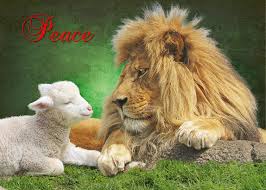
The Lamb & the Lion

Our Jesus – the Christ – is certainly the lamb of God’ that takes away the sin of the world (John 1:29). Unfortunately, we often miss the real point in our experiential Christian culture, feeling good while we imagine our Jesus as a cute and cuddly lamb . . . I think you’ll find that a better visual would be that of a ‘mamma bear’ who is kind, just, and protective with her own but ruthless against opposition.

The truth is that the dress rehearsal of Passover and its sacrificial lamb, and prophetic utterance by the likes of Isaiah, were fulfilled by our Christ’s obedience to God to become the once-for-all sacrifice for sin. Jesus ‘bought’ us with His sacrifice; we must now choose whether to believe and obey – follow – or to ignore this new covenant with God through the Christ.

He was oppressed and He was afflicted, Yet He did not open His mouth; Like a lamb that is led to slaughter, And like a sheep that is silent before its shearers, So He did not open His mouth. —Isaiah 53:7 & Acts 8:32.

Clean out the old leaven so that you may be a new lump, just as you are in fact unleavened. For Christ our Passover also has been sacrificed. Therefore let us celebrate the feast, not with old leaven, nor with the leaven of malice and wickedness, but with the unleavened bread of sincerity and truth. —1Corinthians 5:7-8.

When He had taken the book, the four living creatures and the twenty-four elders fell down before the Lamb . . . “Worthy are You to take the book and to break its seals; for You were slain, and purchased for God with Your blood men from every tribe and tongue and people and nation. You have made them to be a kingdom and priests to our God; and they will reign upon the earth.” —Revelation 5:8-9.

Also true is that those who wish to follow the lamb must consider the cost as Jesus said, for they may very well go to their own destruction or be afflicted in their bodies (just look at all the apostles, except John, who were martyred for their faith!).

And they overcame him because of the blood of the Lamb and because of the word of their testimony, and they did not love their life even when faced with death. —Revelation 12:11.

What about the ‘Lion’? Well, Jesus our redeemer is also referred to as the ‘Lion from the tribe of Judah’ in God’s revelation given to John by Jesus.

Then I began to weep greatly because no one was found worthy to open the book or to look into it; and one of the elders said to me, “Stop weeping; behold, the Lion that is from the tribe of Judah, the Root of David, has overcome so as to open the book and its seven seals.” —Revelation 5:4-5.

So far, we understand that the picturesquely mild and meek ‘lamb’ is that way in symbol only. The example was used to show how Jesus was voluntarily slaughtered as a lamb to assist God the Father in the accomplishment of His desire to reconcile with His creation.

Our creator is a just God who will keep His promise to reward the faithful and destroy the wicked. Jesus, because of His obedience, earned the right to save and judge as a faithful arm of God’s wrath.

and they said to the mountains and to the rocks, “Fall on us and hide us from the presence of Him who sits on the throne, and from the wrath of the Lamb —Revelation 6:16.

And I saw heaven opened, and behold, a white horse, and He who sat on it is called Faithful and True, and in righteousness He judges and wages war. . . .  From His mouth comes a sharp sword, so that with it He may strike down the nations, and He will rule them with a rod of iron; and He treads the wine press of the fierce wrath of God, the Almighty. And on His robe and on His thigh He has a name written, “KING OF KINGS, AND LORD OF LORDS.” —Revelation 19:11-16.

So, the lamb and the lion are one and the same: savior and judge. Rescuer and executioner. Which will you experience?

Keep an eye out for “Finding Answers to Stuff Churches Don’t Discuss!” scheduled for a mid-2016 publication. There, you’ll find roughly 60 topics related to daily life (such as sex, religion, finances, tattooing, and everything in between!) along with practical application of God’s guidance for navigating those difficult waters!

And, for a very comprehensive and detailed study of the very important topic of God’s judgment to come and being rescued from it, feel free to read my 2011 guide titled, “Finding the End of the World” available at Amazon, Barnes and Noble, and from www.ronbraley.com in paper and e-book formats. In the guide, you’ll find roughly 500 pages of building blocks to help you do your own complete and unbiased study based on Scripture and history!

The “A-B-C’s” of the End of the World (Originally “It’s the Final Countdown”

According to Jesus, the “end of the age” will be the conclusion of this current age – era or world – with the Great Judgment and the creation of a new heaven and earth. According to the apostle Paul, we’re already in the “last days” leading up to the end.

The final countdown to the grand finale of our world as we know it has begun and the clock’s ticking is getting louder as we see signs of the times and anticipate the conclusion of God’s creation in its current form. A glimpse of what’s to come:

  • Increase in the frequency and intensity of false saviors, wars, and earthquakes & famine/financial disaster.
  • An evil authority we call the Antichrist and an agreement with Israel, kicking off a final seven-year epoch.
  • Breaking the agreement in the middle followed by a three-and-a-half-year reign of terror like never seen before or again.
  • Jesus’ highly-anticipated appearing and the gathering of the spirits of those who are His, and the wrath of God against the rest of the world.
  • The 1,000-year reign of Jesus following God’s incredible wrath.
  • Destruction of Satan and final judgment.
  • God’s new and never-ending heaven and earth.

Looking for guidance? Many man-made theories propped up by a few, specific Biblical verses (usually taken out of context) abound.  So, find out for yourself!  Here’s how to begin:

  1. Read Matthew chapters 24 and 25 together.
  2. Read Revelation chapter 6. There, you’ll see that the signs revealed by Jesus to John in about 90 AD in a vision match what He told His disciples on the Mt. of Olives decades earlier as recorded in Matthew 24 up to the appearing of our Lord at the future, complete darkening of the sun, moon, and stars.
  3. Compare what you read in Matthew 24 and 25  to the entire book of Revelation. You’ll find corroboration between the two and a sequence resembling that given here.
  4. Look for unbiased and complete studies such as my “Finding the End of the World” (available on Amazon.com, Barnes and Noble, and ronbraley.com) to broaden your knowledge and faith.

Remember: a countdown is no good if you don’t know when it began or what time it is!

Keep an eye out for “Finding Answers to Stuff Churches Don’t Discuss!” scheduled for a mid-2015 publication. There, you’ll find roughly 60 topics related to daily life (such as sex, religion, finances, tattooing, and everything in between!) along with practical application of God’s guidance for navigating those difficult waters!

And, for a very comprehensive and detailed study of the very important topic of God’s judgment to come and being rescued from it, feel free to read my 2011 guide titled, “Finding the End of the World” available at Amazon, Barnes and Noble, and from www.ronbraley.com in paper and e-book formats. In the guide, you’ll find roughly 500 pages of building blocks to help you do your own complete and unbiased study based on Scripture and history!

The “A-B-C’s” of Judging Others and Discipleship (Originally “Judge Dread”)

The idea of judging really trips people up. Many know their own faults or past sins and feel they have no right to judge others about anything as a result. On the other hand, some people behave as though it’s their duty to inform everyone around them of every act they feel is contrary to God’s ways. The truth regarding judging others resides somewhere in the middle.

Are we to judge at all? Definitely! How else will we disciple others or ‘sharpen’ (which is more of a complete reshaping, by the way!). But, let’s take a look at what the word judge means before we go any further.

It comes from the Greek word kree’-no, which means to ‘call into question’. Of course, we can’t call anything into question if we don’t know what should be questionable or why. Who should judge whom? According to Jesus, God will judge the world – those who aren’t Jesus’ followers – and Jesus will judge followers at His return and the end of this current age. Meanwhile, we’re to hold one another accountable for growth and moral positioning.

It is actually reported that there is immorality among you, and immorality of such a kind as does not exist even among the Gentiles, that someone has his father’s wife. You have become arrogant and have not mourned instead, so that the one who had done this deed would be removed from your midst . . . Your boasting is not good. Do you not know that a little leaven leavens the whole lump of dough? Clean out the old leaven so that you may be a new lump, just as you are in fact unleavened. . . . Do you not judge those who are within the church? But those who are outside, God judges. REMOVE THE WICKED MAN FROM AMONG YOURSELVES. 1Corinthians 5:1-13.

So, how are we to judge other followers of Jesus? We are to be careful and gentle, basing the ‘questioning’ on adherence to the Christ’s commandments and not on emotion. The goal must always be to help those followers who are ‘sinning’ to turn back to the truth and be reconciled with the church (e.g. James 15:19-20).  The text below not only confirms that but also reminds us that we’re not to tolerate the unrepentant practice of sinful behavior within the Church.

“If your brother sins, go and show him his fault in private; if he listens to you, you have won your brother. But if he does not listen to you, take one or two more with you, so that BY THE MOUTH OF TWO OR THREE WITNESSES EVERY FACT MAY BE CONFIRMED. If he refuses to listen to them, tell it to the church; and if he refuses to listen even to the church, let him be to you as a Gentile and a tax collector.” —Matthew 18:15-17.

Want to ‘love’ your brother or sister in the Christ? Then judge them according to God and our Christ’s commandments with a sense of urgency before it’s too late for those who are practicing sinful behavior that will earn them a one-way ticket to God’s judgment!

Keep an eye out for “Finding Answers to Stuff Churches Don’t Discuss!” scheduled for a mid-2015 publication. There, you’ll find roughly 60 topics related to daily life (such as sex, religion, finances, tattooing, and everything in between!) along with practical application of God’s guidance for navigating those difficult waters!

And, for a very comprehensive and detailed study of the very important topic of God’s judgment to come and being rescued from it, feel free to read my 2011 guide titled, “Finding the End of the World” available at Amazon, Barnes and Noble, and from www.ronbraley.com in paper and e-book formats. In the guide, you’ll find roughly 500 pages of building blocks to help you do your own complete and unbiased study based on Scripture and history!
The “A-B-C’s” of Prayer

Payer is definitely one of the most powerful, but misused, tools in a Christian’s arsenal. For most, it’s a one-way request for stuff or a spontaneous cry for help. We like talking to God when we want something. We like thinking that God is just hanging out waiting for our requests despite the condition of our heart, practice of sin, or lack of faithfulness in the covenant we are supposed to be in with Him through the Christ.

What is prayer . . . really? How should it be used? It’s necessary for us to communicate our thanks, desires, needs, and requests on others’ behalf to our Father of Spirits (God the Father). We do this by the Holy Spirit and through our Christ who intercedes with God on our behalf.

Toward that end, we’re taught how to pray by Jesus who gave a model – a template – for prayer (what we call the Lord’s Prayer) (Matthew 6:9-13).

That model teaches us what to pray (ACTS): Adoration, Confession, Thanksgiving, and Supplication. It also shows us how to pray.

  • Trust and don’t be anxious (Ephesians 3:20; Philippians 4:6).
  • Ask with the right motives (i.e. to fulfill God’s desires and plans) and keep asking (1John 5:14; Luke 18:1-7).
  • Be specific! The effort shows intent and helps to see God at work.
  • No rote, repetitive prayers; pray in private (to ensure it’s from the heart and without pride) (Matthew 6:5-8).

So, what is the role of the Spirit and our Christ in this prayer/connection? Communicator, helper, and intercessor (Romans 8:26-27).

Let’s look at a few things that will enable our prayers as we exercise faith and obedience:

  • Ask with the right motives.
  • Keep asking and don’t lose heart.
  • Living right and be obedient (1John 3:21-22; John 15:7).
  • Walking by the Spirit.

Contrary to unbiblical thinking and teaching that proposes God is waiting with bated breath to hear and answer every prayer despite our lack of participation in covenant, there are certainly things that can keep our prayers from being ‘heard’ or answered. The following list can basically be summed up under a heading of, “The lack of a right heart/intent”:

  • Impure motives (James 4:3).
  • Bad relationships (1Peter 3:7).
  • Lack of repentance and reconciliation (Psalms 66:18; Matthew 5:23-24).
  • Disobedience (lack of the obedience shown in scriptures above).

Summary: Jesus gave us a template to pray by in our Adoration of God, Confession of anything we do in opposition to His ways, in Thanksgiving for His mercies, and in Supplication. Ask with the right motives and keep asking. Wait. Trust. Be righteous and holy to enable, and not inhibit, prayer. And, always remember that we should want what God wants; it has always been, and always will be, about Him!

Keep an eye out for “Finding Answers to Stuff Churches Don’t Discuss!” scheduled for a mid-2015 publication. There, you’ll find roughly 60 topics related to daily life (such as sex, religion, finances, tattooing, and everything in between!) along with practical application of God’s guidance for navigating those difficult waters!

And, for a very comprehensive and detailed study of the very important topic of God’s judgment to come and being rescued from it, feel free to read my 2011 guide titled, “Finding the End of the World” available at Amazon, Barnes and Noble, and from www.ronbraley.com in paper and e-book formats. In the guide, you’ll find roughly 500 pages of building blocks to help you do your own complete and unbiased study based on Scripture and history!

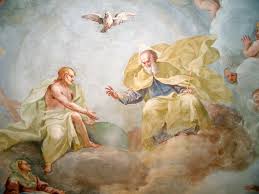
The “A-B-C’s” of the Trinity

God . . . Three in one? One in three? Slivers of the same? Or three distinct beings?

Despite man’s centuries-old trinity debate, the Bible refers to God in two ways: Corporately at the beginning of creation – Hebrew el-o-heem (Genesis 1:1-2 & John 1:1-14) and as God the Father. Different heavenly beings under corporate God (el-o-heem) are as follows.

  • Father: The father of spirits (Hebrews 12:9), the father who gives us the Spirit (Luke 11:13), and the father who forgives (Matthew 6:14-15).
  • Son: Took human form to live and die as a man in order to give humankind the choice of life through covenant with Him.
  • Spirit: Described as the ‘breath of God’, He is currently on earth to guide and instruct those who follow the Christ (John 16:13).

They’re corporately the same just like company employees or a husband and wife may be of one mind. Jesus pointed this out when claiming that He and His father were one and the same (John 14:11).  However, each is a distinct entity with beautiful attributes.

Different titles for God the Father based on His character and actions:

  • His true name, Jehovah/Yahweh – “I am that I am” – “I exist” (Genesis 2:4)
  • Creator and Father of spirits (Genesis 6:7, Ecclesiastes 12:5-7 & Hebrews 12:9)
  • Healer, Jehovah-Rapha (Exodus 15:26)
  • Provider, Jehovah-Jireh (Genesis 22:14)
  • Judge of the world through Jesus the Christ (Acts 17:30-31)

Regarding the Son of God: He came to earth and took human form (spirit in body like us) to become the final sacrifice for sin. He has earned the right to rescue us from judgment (Revelation 5) and sits in the kingdom of heaven at the right side of God the father (Ephesians 1:19-20).

What about the Spirit of corporate God? The Spirit is given by God the Father at the moment of true belief (Luke 11:13) and Acts 19:2). He is also a teacher & helper to Jesus’ Followers (John 14:26 and 16:13, and 2Peter 1:21). Finally, the Holy Spirit also gives gifts to the Followers of Jesus to strengthen them. These include the tongues of men and angels along with interpretations, wisdom, knowledge, faith, healing, miracles, prophecy, and discerning of spirits (Acts 2:4 & 13, and 1Corinthians 12:7-10).

El-o-heem God corporately describes creator, savior, and helper – three distinct individuals working together to reconcile God the Father of Spirits with His creation. Who – or what – is your god?

Keep an eye out for “Finding Answers to Stuff Churches Don’t Discuss!” scheduled for a mid-2015 publication. There, you’ll find roughly 60 topics related to daily life (such as sex, religion, finances, tattooing, and everything in between!) along with practical application of God’s guidance for navigating those difficult waters!

And, for a very comprehensive and detailed study of the very important topic of God’s judgment to come and being rescued from it, feel free to read my 2011 guide titled, “Finding the End of the World” available at Amazon, Barnes and Noble, and from www.ronbraley.com in paper and e-book formats. In the guide, you’ll find roughly 500 pages of building blocks to help you do your own complete and unbiased study based on Scripture and history!

The “A-B-C’s” of God’s Law and Covenant

What is the Old Testament ‘Law’ (note the capital L) and what does it have to do with today’s New Testament Christian? To answer these questions, we must first understand where the Law came from.

Long ago, God formed a covenant with mankind through the nation of Israel with Abraham, reaffirmed through Moses. There was no formal Law before God revealed it to Moses in about 1445 BCE. The covenant God formed with Israel was to be as close and as binding as a marriage contract and the resulting relationship. This is why He called Israel His ‘wife’ and the Church is called the ‘bride of Christ’. The Law given to God’s bride through Moses and the prophets would serve to guide her in this relationship with God. It would also become an unachievable standard by which we realize our sinful and imperfect nature (i.e. Romans 5:20 and 7:7; Galatians 3:24).

Today, no one can truly be called ‘Christian’ unless they’ve entered into a similar covenant with God through our Christ. That marriage-like agreement and its “I’ll be yours if you’ll be mine” promise begins with a change of heart and corresponding behavior that moves our direction and actions toward God and His ways (repentance). We give ourselves to God and then reaffirm our commitment to Him and our Christ – the Savior of mankind as foretold by God through the prophets – whenever we drink from the Communion cup.

But . . . salvation from God’s wrath to come and eternal life with Him through a following of our Christ doesn’t nullify the Law as some suggest (see Paul’s response in Romans 3:31). Jesus fulfilled the Law by His coming, death, resurrection (i.e. Matthew 5:17-18), but it still serves a purpose and the words contained within it and the Torah (Old Testament) that houses it are very valid, even today. We may no longer be under the religious requirements of the Law (i.e. any of hundreds of rules from tithing to sacrifices), but that ancient guide can tell us a lot about how we’re to walk with God and treat our fellow man.

Want to know the mind of God – what He likes and what He hates? Interested in knowing where you came from, spiritually-speaking? Then study the Old Testament and the Law – the Scriptures referenced by the Apostle Paul (2Timothy 3:14-17)!

The old covenant between God and His bride, Israel, brought us the Law. God’s new covenant with the world through our Christ fulfilled the ancient Law and provides the Spirit to all who truly believe and follow. The perfect law is now written on the hearts/minds of followers through the Spirit (i.e. Romans 2:13-15; prophecy of Jeremiah in Chapter 31, etc.). And, we still have the ancient Law as it existed to instruct, guide, and provide a sanity check in our daily activities (i.e. Matthew 7:12; Romans 13:8).

Keep an eye out for “Finding Answers to Stuff Churches Don’t Discuss!” scheduled for a mid-2015 publication. There, you’ll find roughly 60 topics related to daily life (such as sex, religion, finances, tattooing, and everything in between!) along with practical application of God’s guidance for navigating those difficult waters!

And, for a very comprehensive and detailed study of the very important topic of God’s judgment to come and being rescued from it, feel free to read my 2011 guide titled, “Finding the End of the World” available at Amazon, Barnes and Noble, and from www.ronbraley.com in paper and e-book formats. In the guide, you’ll find roughly 500 pages of building blocks to help you do your own complete and unbiased study based on Scripture and history!
The “A-B-C’s” of God’s Judgment

God will judge everyone in the last days for reward or punishment. We, as followers of Jesus, are to judge the behavior of the Church – police ourselves, if you will (more on that in a future blog).

All will be judged by God at the end of our current age – even Jesus’ followers (see Romans 14:10-12 and 2Corinthians 5:10). The names of the obedient and faithful throughout time will be found in the Book of Life. For them, eternal life and unimaginable reward await. The rest (those whose names won’t appear in that Book) will be thrown into hell – the lake of fire punishment created for Satan and his fallen angels.

He who believes in Him is not judged; he who does not believe has been judged already, because he has not believed in the name of the only begotten Son of God. —John 3:18.

Therefore having overlooked the times of ignorance, God is now declaring to men that all people everywhere should repent, because He has fixed a day in which He will judge the world in righteousness through a Man whom He has appointed, having furnished proof to all men by raising Him from the dead. —Acts 17:30-31.

For we must all appear before the judgment seat of Christ, so that each one may be recompensed for his deeds in the body, according to what he has done, whether good or bad. —2Corinthians 5:10.

And I saw the dead, the great and the small, standing before the throne, and books were opened; and another book was opened, which is the book of life; and the dead were judged from the things which were written in the books, according to their deeds. And the sea gave up the dead which were in it, and death and Hades gave up the dead which were in them; and they were judged, every one of them according to their deeds. Then death and Hades were thrown into the lake of fire. This is the second death, the lake of fire. And if anyone’s name was not found written in the book of life, he was thrown into the lake of fire. —Revelation 20:12-15.

Eternal life and reward await those who choose reconciliation with God through the Christ. All others will be judged and dealt with accordingly regardless of whether they’ve chosen to reject God or just not bothered to choose.

Life or death. Which is your choice?


Keep an eye out for “Finding Answers to Stuff Churches Don’t Discuss!” scheduled for a mid-2015 publication. There, you’ll find roughly 60 topics related to daily life (such as sex, religion, finances, tattooing, and everything in between!) along with practical application of God’s guidance for navigating those difficult waters!

And, for a very comprehensive and detailed study of the very important topic of God’s judgment to come and being rescued from it, feel free to read my 2011 guide titled, “Finding the End of the World” available at Amazon, Barnes and Noble, and from www.ronbraley.com in paper and e-book formats. In the guide, you’ll find roughly 500 pages of building blocks to help you do your own complete and unbiased study based on Scripture and history!

The “A-B-C’s” of Repentance and Forgiveness

True repentance, which is a ‘change in behavior brought about by a change of heart’, is absolutely necessary for forgiveness. And, forgiveness is indeed necessary for salvation from God’s judgment to come. Therefore, as the Bible points out so well, repentance is necessary for salvation.

Is repentance a saying, “I’m sorry”? No (see 2Corinthians 7:9-10)! This is why we tend to repeat sinful behavior. Yes, we must be sorrowful as a natural component of the ‘change of heart’ necessary for repentance. But, we don’t truly repent unless we’ve taken action to remove whatever is causing us to stumble (Jesus discussed this in Matthew 5:29-30).

To reiterate, doing something that’s sinful can be remediated (and forgiven) through repentance – acknowledging that what we’ve done (or intend to do) is opposite of God’s ways and then taking action to ensure the act (or intended act) won’t be repeated. Do this and God will be more than willing to forgive the offense or intention to commit it.

“Cast away from you all your transgressions which you have committed and make yourselves a new heart and a new spirit! For why will you die, O house of Israel? For I have no pleasure in the death of anyone who dies,” declares the Lord GOD. “Therefore, repent and live.” —Ezekiel 18:31-32.

“and He said to them, “Thus it is written, that the Christ would suffer and rise again from the dead the third day, and that repentance for forgiveness of sins would be proclaimed in His name to all the nations, beginning from Jerusalem.” —Luke 24:46-47.

 “And now, brethren, I know that you acted in ignorance, just as your rulers did also. But the things which God announced beforehand by the mouth of all the prophets, that His Christ would suffer, He has thus fulfilled. Therefore repent and return, so that your sins may be wiped away, in order that times of refreshing may come from the presence of the Lord;” —Acts 3:17-19.

“You have no part or portion in this matter, for your heart is not right before God. Therefore repent of this wickedness of yours, and pray the Lord that, if possible, the intention of your heart may be forgiven you.” —Acts 8:21-22.

If we confess our sins, He is faithful and righteous to forgive us our sins and to cleanse us from all unrighteousness. —1John 1:9.

On a related note, repeating sinful actions constitutes sinful behavior – something God has no tolerance for. In fact, we’re taught that He will leave us to our own rebellious behavior and execute wrath at His judgment if we continue to practice sin.

Therefore having overlooked the times of ignorance, God is now declaring to men that all people everywhere should repent, because He has fixed a day in which He will judge the world in righteousness through a Man whom He has appointed, having furnished proof to all men by raising Him from the dead.” —Acts 17:30-31.

But because of your stubbornness and unrepentant heart you are storing up wrath for yourself in the day of wrath and revelation of the righteous judgment of God, who WILL RENDER TO EACH PERSON ACCORDING TO HIS DEEDS —Romans 2:5-6.

Now the deeds of the flesh are evident, which are: immorality, impurity, sensuality, idolatry, sorcery, enmities, strife, jealousy, outbursts of anger, disputes, dissensions, factions, envying, drunkenness, carousing, and things like these, of which I forewarn you, just as I have forewarned you, that those who practice such things will not inherit the kingdom of God. —Galatians 5:19-21. (See also Ephesians 5:5-6)

So, ‘feel’ sorry, but turn that sorrow into action in the same way that ‘belief’ must result in action – obedience – to our God and Christ. Repent, obey, and live!

Keep an eye out for “Finding Answers to Stuff Churches Don’t Discuss!” scheduled for a mid-2015 publication. There, you’ll find roughly 60 topics related to daily life (such as sex, religion, finances, tattooing, and everything in between!) along with practical application of God’s guidance for navigating those difficult waters!

And, for a very comprehensive and detailed study of the very important topic of God’s judgment to come and being rescued from it, feel free to read my 2011 guide titled, “Finding the End of the World” available at Amazon, Barnes and Noble, and from www.ronbraley.com in paper and e-book formats. In the guide, you’ll find roughly 500 pages of building blocks to help you do your own complete and unbiased study based on Scripture and history!

The “A-B-C’s” of Sin and Righteousness

What is righteousness? What is sin? What do the two have to do with each other?

~ Sin Defined ~

Make no mistake – there’ll be a reckoning at the end of this current age, or era. (Please refer to my book Finding the End of the World for details regarding the end of our world as we know it!) It’ll come as judgment and consequence both to those who were and are obedient to God’s instructions and those who’ve been disobedient. This disobedience, rebellion, or sin must be dealt with one way or another – either through a true change of heart that leads to a change of behavior (repentance) and resulting forgiveness, or by judgment and sentencing.

Many things are often loosely defined as sin because they contradict manmade doctrine even if there’s no apparent rebellion against God’s ways. Some core behaviors should be called sin but aren’t. Understanding what sin really is and how it often manifests itself will be crucial to avoiding it and keeping our eyes on the prize of eternal life with God and His Christ. Here are the primary forms of sin as identified by the Strong’s Concordance for the Old and New Testaments (‘H’ = Hebrew Old Testament; ‘G’ = Greek New Testament):

Hebrew or Greek Word for Sin Primary Meaning Strong’s #
khat-aw-aw’ offense Η2401
khaw-taw’ to miss Η2398
hamartia offense G266
hamartanō missing the mark G264

For the most part, sin is defined as an offense or ‘missing the mark’. But missing what mark? Offending whom? In this author’s opinion, sin is missing the standard (mark) set by God and is therefore offensive to Him. Wherever there’s sinful behavior, there’ll be something contrary to God’s ways or commandments. Let’s look at these standards and commandments in more detail in order to gain a better understanding of what we’re to strive for.

Jesus said, “If you love me, you’ll obey my commandments.” (cf. John 14:15 & 23). This implies that not keeping His commandments will reflect a lack of love, or rebellious behavior – sin. What were these commandments? That we love God appropriately and man charitably (cf. Matthew 22:35-40). He tells us that the Law [of Moses] and teachings of the prophets are summed up in those two statements. This makes sense since nearly everything we can think of to do is related to our treatment of God and man. Here’s an interesting and related tidbit: the first five of the Ten Commandments relate to our treatment of, and obedience to, God; the last five dictate some basic guidelines for how we should treat our fellow man. Everything we do – or want to do – should be measured against those two categories. Want to know whether a particular action (whether intended or carried out) is a sin? Just consider how it will affect God or fellow human beings. Is it really that cut and dry?

Scripture clearly teaches that there’s a distinction between an isolated rebellion against God (sinful action that we need to repent of and be forgiven for) and practicing sinful behavior. While the former can be resolved along the journey toward righteousness, the latter will bring clear separation from God and invoke judgment! Practicing sinful behavior, which certainly implies a lack of repentance, will, as I’ve said several times, result in God’s wrath at the end-of-the-age judgment to come (see 1Corininthians 6:9-10 and Galatians 5:19-21, for instance).

We know that sin is rebellion against God and His ways. Sin without repentance and the practice of sin will lead to separation from God and ultimate judgment. But how do we gain an understanding of God’s ways – the standards by which we should compare all we think and do? We can only come to know the mind of God and His instructions through two ways: (1) Communication with Him through the Spirit that resides in us once we’ve truly believed in the Christ and His incredible gift of salvation; (2) knowledge of God’s instructions and ways through exposure to the messages and testimonies found in the Bible.

 “But the Helper, the Holy Spirit, whom the Father will send in My name, He will teach you all things, and bring to your remembrance all that I said to you.” —John 14:26.

So faith comes from hearing, and hearing by the word of Christ. —Romans 10:17.

You, however, continue in the things you have learned and become convinced of, knowing from whom you have learned them, and that from childhood you have known the sacred writings which are able to give you the wisdom that leads to salvation through faith which is in Christ Jesus. All Scripture is inspired by God and profitable for teaching, for reproof, for correction, for training in righteousness; so that the man of God may be adequate, equipped for every good work. —2 Timothy 3:14-17.

~ Righteousness Defined ~

“ . . . for correction, for training in righteousness; so that the man of God may be adequate, equipped for every good work. —2 Timothy 3:14-17.

By Strong’s definition, righteousness is ‘equity of character or action; by implication innocent and holy – just and right; right – justice and its execution’ (see the Strong’s definitions and related verses below).

Essentially, we’re righteous if we’re living right and are just in our actions. This is the opposite of sinful behavior. Sin and righteousness are incompatible – we can’t be both at the same time!

Want to be righteous? Learn God’s ways (again, see 2Timothy 3:14-17 and others that tell us to immerse ourselves in the Scriptures of the Torah – Old Testament – and letters and Gospel accounts of the New Testament to accomplish this).

The righteous will be rewarded; the sinful will be punished. Sheep or goat – which will you be in the last days?

Keep an eye out for “Finding Answers to Stuff Churches Don’t Discuss!” scheduled for a mid-2015 publication. There, you’ll find roughly 60 topics related to daily life (such as sex, religion, finances, tattooing, and everything in between!) along with practical application of God’s guidance for navigating those difficult waters!

And, for a very comprehensive and detailed study of the very important topic of God’s judgment to come and being rescued from it, feel free to read my 2011 guide titled, “Finding the End of the World” available at Amazon, Barnes and Noble, and from www.ronbraley.com in paper and e-book formats. In the guide, you’ll find roughly 500 pages of building blocks to help you do your own complete and unbiased study based on Scripture and history!