Category Archives: Finding Answers to Stuff Churches Don’t Discuss

Blogging about real-life stuff where we apply God’s guidance

It’s all About God, the Father of Spirits!

It’s easy in our ‘Jesus culture’ of roughly the last 100 years or so to get lost in emotion and lose sight of “Why?

The will – desire, by definition – of our God the “father of spirits” has been to reconcile with His creation from the time mankind walked away from Him in the Garden of Eden1. Covenant after covenant have been witness to this extraordinary effort by our God: first through Noah, then through Abraham and Moses, and finally through Jesus’, the promised savior.

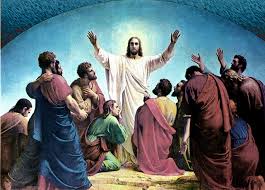
Jesus voluntarily became our ‘one sacrifice for all’ at the request of God the Father as a way of accomplishing His desire to reconcile2. But, the ‘new covenant’3 made possible by our Jesus is still a covenant with our heavenly father.

We are to strive to be perfect like our God the Father is perfect4 as we await a heaven-bound gathering to be with Him. Our prayers are to Him, although Jesus intercedes for us. Those who enter into this final covenant do so by being obedient out of faith to God’s commandments. And we are brothers with Jesus in the sense that we will inherit the kingdom of God the Father5.

Believe in Jesus’ fulfillment of God’s promised covenant with mankind (the “Why?”) and then obey because you believe. There, you’ll find righteousness and the way to God the Father through our Messiah.


Scripture references:

  1. Romans 5:10-11, etc.
  2. i.e. John 6:38-40
  3. Luke 22:20; Romans 11:26-27; 2Corinthians 3:6; Hebrews 13:20 -21; many others
  4. Matthew 5:48
  5. i.e. Matthew 25:34 and Revelation 21:7

Christian Nation? Really??

Amazingly, I still hear people refer to our country as a “Christian nation”.

To be known as a “Christian nation”, most of our citizens must be followers of Jesus. Note my use of the word follower. This implies action from faith, not just belief itself. Those who only believe join the ranks of the demons God created hell for (James 2:19 and Matthew 25:41).

So, are we a nation of followers of Jesus? No! Statistics show the majority of people in America believe in some higher power or a God. That makes us a nation of believers . . . in something. But, are we followers?

Jesus said that if we love Him, we’ll obey His commands to treat our heavenly father appropriately and fellow man charitably, and tell others of the good news of Salvation and disciple them (Matthew 22:36-40, 25:31-46, and 28:19-20). This is action out of faith and outward-bound as opposed to the trend of inward-bound prosperity gospels, blessings for hire, emotion mistaken for the Spirit, and entertainment mistaken for worship prevalent in our western Christian culture. Following implies we look away from ourselves and act as God would act, condone what He condones, and hate what He hates. Is this the case in America?

Our nation promotes abortion, homosexuality, and excessive entitlements – all of which contradict God’s ways.  Leadership reflects the morality of those that those who elected them. So, let’s consider what they condone. Exit polls taken after the 2012 election (http://www.cnn.com/election/2012/results/race/president) showed this of voters supporting the winning party:

–          They are 62% of those who never attend religious services.

–          They are 67% of those who support legal abortion. There should be no doubt as to how God feels about murder – especially when don out of convenience.

–          They are 73% of those who support legalizing same-sex marriage, and 76% of that group admit to being homosexual. This behavior is in direct opposition to God’s intent and one of the specific behaviors He actually says He ‘hates’ through the use of the word abomination (Leviticus 18:22). It’s also one practice that will earn a one-way ticket to God’s judgment and hell (1Corinthians 6:9-10 and Revelation 21:8). Please note that there are other behaviors we can practice (i.e. murder, theft, other sexual immoralities, etc.) that will also earn God’s wrath.

We’re also painfully aware of the increase in taxes and national debt to support an alarming amount of entitlements. Although we could also discuss the moral and legal aspects of taking money from some people to hand to others, Scripture tells us that those who can but choose to not work shouldn’t eat (2Thessalonians 3:10).

So, because I doubt a nation could be identified by its minority, it’s safe to say we’re absolutely NOT a Christian nation. For the moral minority that actually follows our Christ: your rest is coming – persevere! Peace and blessings to you!  rb

Actions Speak Louder Than Words!

I’ve often heard said, “Words are cheap!”  Well, I’d go one step farther and say that words are absolutely worthless unless supported by actions related to those words.  Don’t believe me? Check what the apostle James had to say about this:

What use is it, my brethren, if someone says he has faith but he has no works? Can that faith save him? If a brother or sister is without clothing and in need of daily food, and one of you says to them, “Go in peace, be warmed and be filled,” and yet you do not give them what is necessary for their body, what use is that? Even so faith, if it has no works, is dead, being by itself. But someone may well say, “You have faith and I have works; show me your faith without the works, and I will show you my faith by my works.” You believe that God is one. You do well; the demons also believe, and shudder. But are you willing to recognize, you foolish fellow, that faith without works is useless? —James 2:14-20.

Jesus taught us that true love is actionable – agape love. This is how we prove our ‘love’ for our Christ and it’s how God loves us:

If you love Me, you will keep My commandments.” . . . Jesus answered and said to him, “If anyone loves Me, he will keep My word; and My Father will love him, and We will come to him and make Our abode with him.” — John 14:15 & 23.

This is also how we’re supposed to care for and treat others of our faith despite how we feel (e.g. Matthew 22:35-40). In fact, we’ll be judged by our obedience:

  • The obedient: “Then the King will say to those on His right, ‘Come, you who are blessed of My Father, inherit the kingdom prepared for you from the foundation of the world. For I was hungry, and you gave Me something to eat; I was thirsty, and you gave Me something to drink; I was a stranger, and you invited Me in; naked, and you clothed Me; I was sick, and you visited Me; I was in prison, and you came to Me.’ —Matthew 25:34-36.
  • The disobedient: “Then He will also say to those on His left, ‘Depart from Me, accursed ones, into the eternal fire which has been prepared for the devil and his angels; for I was hungry, and you gave Me nothing to eat; I was thirsty, and you gave Me nothing to drink; I was a stranger, and you did not invite Me in; naked, and you did not clothe Me; sick, and in prison, and you did not visit Me.’ —Matthew 25:34-36.

Are you a believer or a follower? Destined for hell or heaven? Glutton or servant? Leave the ranks of believers, which include demons according to Scripture, and become a follower and live!

How to Study the Bible . . . or NOT!

True faith – confidence – is based on our exposure to, and understanding of, God’s words and testimonies contained in the Bible. How we interpret it is vital to ensuring we “get it right.” Getting it wrong could have devastating consequences. Those who mislead others will be judged accordingly. Ignorance could lead to experiencing God’s wrath, disappointment, deception, a falling away from the Christian faith, etc.

Rule number one of Bible interpretation: do everything possible to determine the writer’s original intent. Rule number two of Bible interpretation: see rule number one. Figuring out what the text writer meant to say to the intended audience should be your primary focus.

The next goal of Scripture interpretation should be to find out how the message applies today (there’s only one meaning of the text, but possibly multiple applications). A good understanding of grammatical principles and attention to format and message context will help ensure your success.

Here are some tips for effective biblical study:

  • Be prepared to study through guidance by God’s Spirit (having a teachable spirit and a good attitude, etc.)
  • Take Scripture literally whenever possible and look for the simplest meaning first
  • Consider the author and audience
  • Consider historical/cultural background first
  • Compare translations for consensus
  • Consider apocalyptic symbols and look for explanation in Scripture (nearly all are explained somewhere in the Bible!)
  • Use study tools (like e-Sword) and aids whenever possible (i.e. concordance or dictionaries)

Work to understand what God, His son, the prophets, or the apostles intended to say to their audience – not what you’d like their words to mean to you. Remember: only one meaning, many potential applications.

God gets the Final Word!

We hear the phrase, “the Word of God!” quite often. And, we quote Paul who told Timothy that, “All Scripture is inspired by God . . .” But, what is that Word of God or Scripture? The fourth-century Vulgate? The 1560 Geneva Bible? The 1611 King James Bible? ‘Our Daily Bread’ devotional? None of them, actually.

The Scripture Paul referred to is the Torah, or Old Testament, available in Hebrew and in Greek in the first century. It was what the Bereans used to hold Paul accountable for his teachings of the prophetic fulfillment of the coming Christ by Jesus.

The word (lower-case ‘w’) represents the words spoken by God as when He spoke the world into existence or when He spoke of the coming Christ and our reconciliation with God through Him. In fact, the Word (upper-case ‘W’) is the manifestation of the reconciliation word(s) of God (i.e. Revelation 19:13).

So, what is the Bible and where does it come into play if not necessarily the Word of God? It’s a collection of ancient texts consolidated by groups of men after much arguing and debate; it contains the Torah and many first and second-century documents.

The Old Testament Torah is a collection of oral traditions, historical documentation, personal reflections of wisdom and love and lamentations, and prophecies – both current to the times and futuristic in nature. These were inspired by God and written by men.

The New Testament is a similar collection of historical and eyewitness accounts, letters full of wisdom from apostles, and prophetic and apocalyptic literature. The Gospel accounts of Jesus’ life, death, resurrection, and ascension were reiterations of what was spoken of or influenced by Jesus as was the Revelation given to John later. This collection was also recorded by men.

We’re creatures of free will and of differing intelligence levels and backgrounds. So, it’s truly amazing that God entrusted us to record anything related to Him or our Christ. But, despite that and the transliterations, translations, and interpretations that have introduced minor discrepancies in today’s Bible, the core words of God that promise hope of the future through the Word – our Christ – stands untarnished and remains intact.

What Word do you subscribe to?

Who Needs the Church?

There’s the Church, which is the entire assembly of Jesus’ followers, and there are churches (lower case), which can represent local collections of Christian believers or followers (there is a difference!).

The Church as a whole is responsible for being obedient to our covenant with the Christ. We are to do these things in particular:

  • Evangelize: How will people hear the good news of salvation if we don’t tell them?? (Matthew 28:19-20; Romans 1:16 and 10:14-15; 2Corinthians 5:18-20)
  • Be Charitable: The collecting of funds and other resources in the first-century Church was for the care of others including those who traveled to spread the Gospel message.
    • Care for brothers & sisters in Christ (Matthew 25:41-43; James 2:13-17; Acts 4:32-35; Acts 6:1-5)
    • Care for traveling evangelists (3John 1:7-8; Philippians 4:14-19)
    • Worship: Although we worship God and our Christ through our speech and actions, we can also do this in song and dance. (Ephesians 5:19; Colossians 3:16)
    • Governance: No one should be more important than another or ‘lord it over’ others, but fill roles as the Holy Spirit enables them.
      • Elders – overseers within the churches (Acts 14:23; 1Timothy 5:17)
      • Deacons – servants in the churches (1Timothy 3:8-13)
      • Bishops – overseers among the churches (1Timothy 3:1-7)
      • Discipleship: This is a very necessary step after evangelizing the Gospel message! We must share spiritual gifts, teach, mentor, and disciple to help others increase in their faith and stand firm against all kinds of wickedness and false teaching (Matthew 28:19-20; Romans 6:17 and 10:17; Colossians 1:28 and 3:16; 2Timothy 3:16; Titus 1:9 and 2:3; Hebrews 5:12-14)

In summary, the Church at large is composed of true followers of Jesus who are obedient out of their faith by honoring God and treating their fellow humankind appropriately. This includes caring for them.  Additionally, Jesus commanded us to spread the good news of salvation and make disciples. Everything we do as the corporate Church should work together for these purposes.

So . . . do you belong to the Church, a church, or both?

Let the Feasting Begin!

In His covenant with His bride, Israel, God ordained 7 feasts and festivals: 4 in the spring, and 3 in the fall.  While followers of Jesus aren’t forced to observe them, knowing of the events and their past, present, and future significance will help understand where we’ve come from and God’s covenant with Israel and our Christ’s covenant with the world are related.

~ Spring Feasts of the Lord (fulfilled by Jesus’ first coming) ~

Feasts of Passover and Unleavened Bread: These first two spring feasts commemorate the salvation of the Hebrews from God’s judgment against Pharaoh and their exodus from Egypt in about 1445 BC. Passover commences on the 14th day of the first month at twilight. The Feast of Unleavened Bread lasts for 7 days beginning on the day after Passover. Jesus fulfilled the role of Passover lamb sacrificed for the choice of salvation (just as with the Hebrews in Egypt), and He represented the removal of leaven (yeast) – sin, as we see in 1Corinthians 5:6-8.

Feast of First fruits: This marks the beginning of the harvest period and gives Israel an opportunity to present the first fruits of that harvest to God in thanksgiving. It occurs 50 days prior to the Feast of Weeks. Jesus fulfilled this event as the first fruits of the resurrected dead presented to the Father (1Corinthians 15:20 & 35-48).

The Feast of Weeks (Pentecost): This particular feast occurs 7 weeks and a day (50 days total) after the feast of First Fruits. The purpose is to signal the end of the grain harvest and give thanks to God for His provision. It’s also marked the fulfillment of Jesus’ promise to send the Spirit of God to empower His followers for ministry (John 14:16).

~ Fall Feasts of the Lord (will be fulfilled by Jesus’ return to earth) ~

The Feast of Trumpets: This ‘memorial of blowing of trumpets’ is to happen on the first day of the 7th month (usually September) and will most likely signal our Christ’s return to earth and the gathering of His bride at the ‘last trumpet’ (cf. Matthew 24:30-31 and 1Thessalonians 4:16-17).

The Day of Atonement: The event is meant to be a time of atonement for the Jews and will most likely mark the manifestation of salvation and reconciliation between God and Israel at the end of the ‘time of the gentiles’ (cf. Luke 21:24 and Romans 11:25-27).

The Feast of Tabernacles: Finally, this feast commemorates the Israelites’ time in the desert just before entering the land of Canaan. During the festival, which lasts 7 days, Jews are compelled to live in structures – booths – made of branches, twigs, and leaves. This practice most likely also represents the time of Jesus’ kingdom where He will dwell with man and once again be the protector and provider for Israel.

Which will it be for you – feast or famine (spiritually-speaking)?

Foods_(cropped)

Trinity . . . Exactly WHO or WHAT is our God??

God . . . Three in one? One in three? Slivers of the same? Or three distinct beings?

Despite the fact that religious leaders have gotten their underwear in a bunch over the trinity debate for centuries, Biblical texts refer to God in two ways: Corporately at the beginning of creation – Hebrew el-o-heem (Genesis 1:1-2 & John 1:1-14) and as God the Father. Different heavenly beings under corporate God are as follows.

  • Father: The father of spirits (Hebrews 12:9), the father who gives us the Spirit (Luke 11:13), and the father who forgives (Matthew 6:14-15).
  • Son: Took human form to live and die as a man in order to give humankind the choice of life through covenant with Him.
  • Spirit: Described as the ‘breath of god’, He is currently on earth to guide and instruct those who follow the Christ (John 16:13).

They’re corporately the same just like company employees or a husband and wife may be of one mind. Jesus pointed this out when claiming that He and His father were one and the same (John 14:11).  However, each is a distinct entity with beautiful attributes.

Different titles for God the Father based on His character and actions:

  • His true name, Jehovah/Yahweh – “I am that I am” – “I exist” (Genesis 2:4)
  • Creator and Father of spirits (Genesis 6:7, Ecclesiastes 12:5-7 & Hebrews 12:9)
  • Healer, Jehovah-Rapha  (Exodus 15:26)
  • Provider, Jehovah-Jireh  (Genesis 22:14)
  • Judge of the world through Jesus the Christ (Acts 17:30-31)

Regarding the Son of God: He came to earth and took human form (spirit in body like us) to become the final sacrifice for sin. He has earned the right to rescue us from judgment (Revelation 5) and sits in the kingdom of heaven at the right side of God the father (Ephesians 1:19-20).

What about the Spirit of corporate God? The Spirit is given by God the Father at the moment of true belief (Luke 11:13) and Acts 19:2).  He is also a teacher & helper to Jesus’ Followers (John 14:26 and 16:13, and 2Peter 1:21). Finally, the Holy Spirit also gives gifts to the Followers of Jesus to strengthen them. These include the tongues of men and angels along with interpretations, wisdom, knowledge, faith, healing, miracles, prophecy, and discerning of spirits (Acts 2:4 & 13, and 1Corinthians 12:7-10).

El-o-heem God corporately describes creator, savior, and helper – three distinct individuals working together to reconcile with mankind.  Who’s your god?

True Love . . .

True love is an actionable one not based on emotion. We usually associate a mushy, warm, down-in-our-gut emotion with love and often mistake that lustful desire or fondness for true love. These feelings are necessary in many human relationships or situations; however, the foundational love we’re to exhibit is related to action. Let’s take a further look at these variations of emotion and actions often called love.

The Bible refers to love in three primary ways: (1) lust or desire; (2) fondness for a person or thing; (3) love not based on emotion but unconditional charitable action that comes from moral compelling. The two types of love based on emotional feeling are lust (or desire) and fondness. Lust is more short-lived than fondness, but both can fade as our feelings change. The latter type of love isn’t based on emotion and is purer and longer-lasting than the first emotion-based loves.

The Holy Scriptures reflect the following three major variations of love in these Greek root words:

  • Epithumeo or epithumia for lust (examples include Matthew 5:27-28; Ephesians 2:1-3)
  • Variations of phil (as in philanthropea or Philadelphia) for fondness (i.e. Mark 10:17-22, Titus 3:3-5, Hebrews 13:1, etc.)
  • Unconditional, non-emotional love – :Agapao (Strong’s Greek G25): a verb representing morally-compelled action we’re to take as in, “Beloved, let us love one another, for love is from God; and everyone who loves is born of God and knows God.” —1John 4:7. And Agape, a noun representing charitable manifestations that can occur because of compelling agapao love as in, “Beloved, let us love one another, for love is from God; and everyone who loves is born of God and knows God.” —1John 4:7.

So, being ‘nice’ isn’t what God desires – it is actionable love that honors Him and treats His creation appropriately despite how we feel.

‘Feel’ or ‘do’ – which identifies you?

What is Hell Like?

Personal opinions on the subject of hell range from a profession of its existence as the fire-and-brimstone punishment for the person with unrepentant sin to a belief that it’s a mythical place since, “A good god would never kill his people!” The truth is that God is a just god who offered us a choice: follow Him and His Christ and live or don’t and die (spiritually). He created a place within the earth to serve as a means of destruction – a consequence that awaits the spirits of those who didn’t choose life through faith and resulting obedience.

Originally created for eventual judgment of the fallen angels (including their leader, Lucifer) hell will also be the final destination for the spirits of unrighteous humans. As well, this is the holding place of those spirits of the unrighteous awaiting judgment. Scripture is pretty clear about this. We also find references to this holding place and the fiery judgment from others like Enoch, the grandson of Adam.

  • Hell – holding place Hades = Sheol: holding place of the spirits of those whose names aren’t recorded in heaven as they await judgment. This place will be unnecessary and eliminated when death is abolished at God’s great judgment (cf. Revelation 20:15).

References include: Matthew 11:23 and 16:18; Luke 10:15 and 16:22-23; Acts 2:27 & 31; 1Corinthians 15:55; 2Peter 2:4; Revelation 1:18, 6:8, and 20:13-14

  • Hell – fiery judgment Gehenna & Lake of Fire: last-days consequences for the wicked after judgment. Scripture and the Book of Enoch describe this as a place within the earth that produces incredible heat and flames. Read Luke 16:23-24 and you’ll see words and phrases like ‘hades’ and ‘torment’ and “I am in agony in this flame”. So, for those who believe hell is figurative or a parable – I’d reconsider.
  • Gehenna references include: Matthew 5:22-30, 10:28, 18:9 and 23:15 & 33; Mark 9:43, 45, & 47; Luke 12:5; James 3:6

Do not fear those who kill the body but are unable to kill the soul; but rather fear Him who is able to destroy both soul and body in hell. —Matthew 10:28.

  • Lake of fire references include: Revelation 19:20, 20:10 & 14-15, and 21:8

Then death and Hades were thrown into the lake of fire. This is the second death, the lake of fire. And if anyone’s name was not found written in the book of life, he was thrown into the lake of fire. —Revelation 20:14-15.

Now that we know what hell is, let’s address what it isn’t. Contrary to popular opinion, hell isn’t a multi-layered furnace where sinners are divided and placed based on the bad things they did on earth. This concept is fantasy based on “Dante’s Inferno” – the first part of a poem titled Divine Comedy. It’s not even loosely based on Scripture and shouldn’t be taken as such. Anyone whose name isn’t recorded in heaven among the righteous at their time of death will find their spirit waiting in holding-place hell until their final disposition: hell as a fiery judgment.

What’s your destination?