Tag Archives: discipleship

Covenantal Anesthesia

Today, we prevent unwanted pregnancies not by abstinence but contraception. No discipline; no problem. Do whatever feels good. Promises made in the dark remain unkept in an age where words and actions are disconnected and often in complete opposition.

Today, we avert the consequences of other ungodly acts such as homosexuality through medicine and contraceptive methods. Lying and litigation are acceptable means by which to achieve objectives. These aren’t God’s ways or representative of His love, which equates to justice and mercy. His speech results in action; He has always done what He says He will do. This was the posture of the early Church: speech-action that mirrored their faith and produced good works accordingly. Their speech and actions were indistinguishable.

Second-century Christian and Church leader Justin notes this of his contemporary Christians: “… community doesn’t consider people true Christians if they simply quote Christ’s teachings but don’t live them.” (Justin, 1 Apol. 16.8 by Alan Kreider, The Patient Ferment of the Early Church, 15). He also lists the saying of Jesus under four categories: sexual ethics, actionable/charitable love, patience, and truth-telling. (ibid.) Many early Church leaders reported that the Christians lived among the non-Christians in community eating, drinking, and working beside them. However, their charity, honesty, and purity as well as patience under trials and hardships set them apart and made an impact that attracted those around the Christians to desire to learn of God’s kingdom and join the faith. Not so today in a world of watered-down preaching full of funny stories and anecdotes framed by entertaining music, coffee, and donuts; no so in a world where churches become the most expensive light-killing lampshades on the planet by hiding and entertaining consumers.

Today, the Western Church looks mostly like the world: same behaviors and worldviews; similar lack of patience, unrepentance, unforgiveness, divorce statistics, selfish driving habits, litigation, financial irresponsibility, and so-on. Why? In my experience as a minister, researcher, and writer, a driving factor is the lack of choice where a covenant with God is concerned.

Removing the consequences of immorality, lying, etc. through contraception, litigation, and ungodly laws can lure us into believing that the lack of consequences imply acceptance. Similarly, and in my experience, Western Christians are lured into believing that God exists to serve them and that prosperity is the goal because covenant and consequences have often been removed in the Church. Churchgoers are anesthetized by receiving a half-baked gospel where, if anything, a silent and personal ‘sinner’s prayer can save them without reciprocation. They are told there’s nothing they have to do – Jesus did it all! No self-discipline, no charity, no sacrifice, no two-way marriage-like covenantal response. No consequence for the pleasure-seeking individual uninterested in communal care who practices behavior antithetical to God’s ways. No accountability. No ongoing spiritual formation or discipleship (Barna, The State of the Church, 2016, for instance: https://www.barna.com/research/state-church-2016/). What to do?

There can be a fix – a positive change that once again draws others to our faith. Turn off the anethsiea of a covenantless gospel; stop entertaining and teach. Hold Christians accountable for ungodly behavior and gently train through discipleship. Move out of the church buildings and live out faith among others in our communities whether at work, play, or dwelling so that they may see our good works, patience, and purity and wonder just as the ancients did.

Blessings,

rb

http://www.ronbraley.com

http://www.findingdiscipleship.org

Soul Food, Anyone?

“An ounce of prevention is worth a pound of cure!” resonates with those of us who understand the value of caring for what we value from home and car maintenance to finances. Care of the ‘soul’ should get no less attention and upkeep; spiritual formation points us in the right direction and can help us remain healthy in body, soul, and mind.

Because I understand the soul represents what the spirit doesn’t (e.g. body, mind, intent, etc.,) spiritual formation (soul-care) makes perfect sense to me as the ounce of prevention needed to be faithful, obedient, and healthy. The lack of attention to relative formation elements introduces the risk of stress, anxiety, poor physical and mental/emotional health, and limited or non-existent faith – all of which can become roadblocks to spiritual effectiveness!

Here are a few standard disciplines related to spiritual formation and the reduction of the risks I just mentioned:

  • Bible Study & Prayer. The Bible makes clear that our faith (belief/confidence) is formed largely through exposure to the Scriptures (e.g. Romans 10:17; 2Timothy 3:16-17). The learning provides boundaries and guidance, builds our ability to follow, and reduces the chances of deception (cf. Colossians 2:7-8). Most Christians (more than 98%, statistically) don’t read the Bible regularly. And, although prayer is our communication with God through the Spirit, we don’t do that regularly or effectively either. Setting aside at least one period each day (ideally at the same time) for prayer and Bible study will allow us to ‘renew our minds’, avoid deceptions (g., equip to train others, and petition or thank our God.
  • Physical Exercise. Physical exercise reduces stress and illness. And, the better we feel, the more efficient we’ll likely be in our walk as Jesus’ followers. A regiment of at least 30 minutes or so several times a week in some cardio and physical exercise would be an excellent start.
  • Mental Exercise. The brain needs stimulus too. Engaging in educational pursuits, intelligent conversations or debates, reading, etc. will help keep you mentally healthy and productive in your work, play, and witness.
  • Financial Stewardship. Financial problems provide much stress and distraction from important and healthy pursuits. Stress over financial trouble strains relationships and physical health alike. God calls us to be good financial stewards as shown by the Bible throughout the Old and New Testaments (e.g. Psalms 37:21; Proverbs 22:7 & 26; Matthew 25:27; Luke 20:20-25; Romans 13:8). Following biblical advice will aid greatly in keeping us healthy and financially stable.
  • Relationship Maintenance. Finally, we’re social creatures and must maintain our relationships to reduce stress and loneliness. Relationships are also critical to our ability to evangelize and disciple others. Therefore, we should make time to maintain our connections to family and friends.

In conclusion, my challenge to all followers of our Christ is that we continually engage in spiritual formation – ‘soul care’ – to ensure we’re active participants in our covenant with God.

Blessings,

rb

Adopt a Bible!

Disappointingly, our plea for Bibles for Africa recently yielded no results despite the knowledge that most Africans have no Bible (including most Christian teachers and leaders!).

How can the people learn about God or become disciples effectively with no guide?

How can we who are wealthy by comparison and have an abundance of Bibles and Christian literature be obedient to Jesus’ commandment to ‘tell’ and ‘make disciples’ without doing our part to rectify this incredible disparity?

So, I thought I’d take a different approach by asking everyone to ‘adopt a Bible’. A donation of only $10 will buy one Swahili Bible. Obviously, Africa needs more than one Bible but if everyone buys at least one, we win in our obedience and Africa wins by being able to learn and teach their Faith.

Will you adopt a Bible for Africa by donating here? http://findingrevelation.com/FindingDiscipleship/Africa%20Bibles.htm

Blessings!

Ron Braley, findingdiscipleship.org & ronbraley.com


Evangelism: Playing the Detective

As we’ve already learned, evangelism is absolutely critical to our salvation and that of others we witness to . . . or don’t.

“Therefore everyone who confesses Me before men, I will also confess him before My Father who is in heaven. But whoever denies Me before men, I will also deny him before My Father who is in heaven.” —Matthew 10:32-33.

“Go therefore and make disciples of all the nations, baptizing them in the name of the Father and the Son and the Holy Spirit, teaching them to observe all that I commanded you” —Matthew 28:19-20.

One great way (but not the only way!) to evangelize the Gospel message is to build a relationship between yourself and those you to whom you express the good news. This will build trust and present opportunities to share and teach. Building that trust and seeking those golden opportunities will require you to get to know the other person. What is their background? What are their fears – especially regarding God or Christianity? What are their perceptions around religion? What physical, financial, emotional, or spiritual needs do they have? ‘Playing the detective’ will help you learn the answers to these questions and more in your relationship-building exercise.
Playing the detective requires that you ask open-ended questions, listen carefully to the responses, and then respond with additional questions as you ‘build their story’ and then relate your experiences and the Gospel to it. For instance:
“What do you think about God?”
“I don’t know. I’ve heard a lot of stuff and think he’s probably some higher power somewhere.”
“I know what you mean. The concept of God can be confusing – especially when so many people seem to have personal opinions about Him or be involved in different manmade religions. Tell me more about what you’ve heard.”

Well, I think you get the idea . . . Additional help in playing the detective can be found this highly-effective habit expressed by Dr. Stephen Covey: “Seek first to understand, and then to be understood”.
The following biblical advice can also help you treat your fellow man appropriately as you build evangelistic relationships:

Do nothing from selfishness or empty conceit, but with humility of mind regard one another as more important than yourselves; do not merely look out for your own personal interests, but also for the interests of others. Have this attitude in yourselves which was also in Christ Jesus —Philippians 2:4-5.

Keep an eye out for “Finding Answers to Stuff Churches Don’t Discuss!” scheduled for a mid-2015 publication. There, you’ll find roughly 60 topics related to daily life (such as sex, religion, finances, tattooing, and everything in between!) along with practical application of God’s guidance for navigating those difficult waters!
And, for a very comprehensive and detailed study of the very important topic of God’s judgment to come and being rescued from it, feel free to read my 2011 guide titled, “Finding the End of the World” available at Amazon, Barnes and Noble, and from http://www.ronbraley.com in paper and e-book formats. In the guide, you’ll find roughly 500 pages of building blocks to help you do your own complete and unbiased study based on Scripture and history!

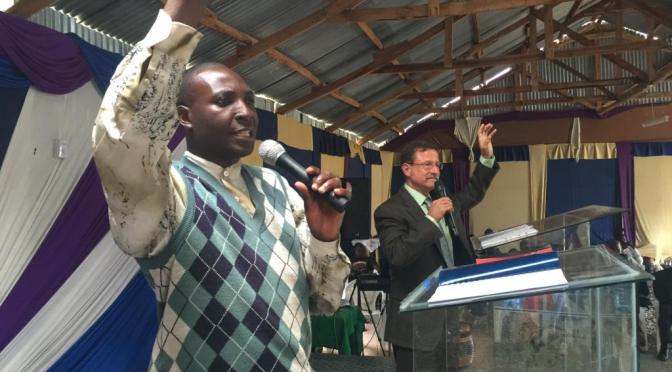
Back from mission ‘Disciple Africa’

Back from mission ‘Disciple Africa’ and, as Joanne says, “Our eyes have seen things our minds can’t comprehend“.

Please check out a summary of the trip and some photos at

http://findingrevelation.com/FindingDiscipleship/Africa%202015.htm

Remember: We’re ALL called to preach the good news of salvation, and some are called to teach. Those who don’t/can’t travel to evangelize or teach can still be obedient to the commandment for the Church to do so by funding those who can!  Will you consider partnering with us to return to Kenya and Uganda in 2016 to ‘train the trainer’ as we’ll teach nearly 300 pastors to train their villagers in discipleship and evangelism?

Blessings,

Ron Braley

The “A-B-C’s” of God’s Judgment

God will judge everyone in the last days for reward or punishment. We, as followers of Jesus, are to judge the behavior of the Church – police ourselves, if you will (more on that in a future blog).

All will be judged by God at the end of our current age – even Jesus’ followers (see Romans 14:10-12 and 2Corinthians 5:10). The names of the obedient and faithful throughout time will be found in the Book of Life. For them, eternal life and unimaginable reward await. The rest (those whose names won’t appear in that Book) will be thrown into hell – the lake of fire punishment created for Satan and his fallen angels.

He who believes in Him is not judged; he who does not believe has been judged already, because he has not believed in the name of the only begotten Son of God. —John 3:18.

Therefore having overlooked the times of ignorance, God is now declaring to men that all people everywhere should repent, because He has fixed a day in which He will judge the world in righteousness through a Man whom He has appointed, having furnished proof to all men by raising Him from the dead. —Acts 17:30-31.

For we must all appear before the judgment seat of Christ, so that each one may be recompensed for his deeds in the body, according to what he has done, whether good or bad. —2Corinthians 5:10.

And I saw the dead, the great and the small, standing before the throne, and books were opened; and another book was opened, which is the book of life; and the dead were judged from the things which were written in the books, according to their deeds. And the sea gave up the dead which were in it, and death and Hades gave up the dead which were in them; and they were judged, every one of them according to their deeds. Then death and Hades were thrown into the lake of fire. This is the second death, the lake of fire. And if anyone’s name was not found written in the book of life, he was thrown into the lake of fire. —Revelation 20:12-15.

Eternal life and reward await those who choose reconciliation with God through the Christ. All others will be judged and dealt with accordingly regardless of whether they’ve chosen to reject God or just not bothered to choose.

Life or death. Which is your choice?


Keep an eye out for “Finding Answers to Stuff Churches Don’t Discuss!” scheduled for a mid-2015 publication. There, you’ll find roughly 60 topics related to daily life (such as sex, religion, finances, tattooing, and everything in between!) along with practical application of God’s guidance for navigating those difficult waters!

And, for a very comprehensive and detailed study of the very important topic of God’s judgment to come and being rescued from it, feel free to read my 2011 guide titled, “Finding the End of the World” available at Amazon, Barnes and Noble, and from www.ronbraley.com in paper and e-book formats. In the guide, you’ll find roughly 500 pages of building blocks to help you do your own complete and unbiased study based on Scripture and history!

Apocalyptic Misquotes . . . Part IX

 “The Tribulation is Seven Years of Bad Luck – and we’ll be raptured before it Starts!”

Misquote: “We’ll escape the 7-year-long Tribulation!” There are two inherent problems with this statement.

1. The ‘great tribulation’ will last for no more than 3.5 years (the last half of a remaining 7-year period yet to be fulfilled). This great tribulation will be the wrath of the Antichrist.

2. True followers of our Christ will have to endure it until we’re ‘rescued’ and God’s wrath begins. What follows will guide you in a short study of this and is a reiteration of an earlier blog titled, “Wrath of Con”.

Ask the average Christian in America about the ‘Great Tribulation’ and, if anything, they’ll probably tell you it’s “seven years of really bad stuff from the Antichrist and God after Christians have been raptured!”

But, study what the prophets, the apostles, and our Christ said about this ‘time like never seen before or will ever be seen again’ (e.g. Joel 2:2, Matthew 24:21, etc.) and you’ll find a truer and much more sobering version of this terrible time to come. Here are some key facts about the coming Great Tribulation:

  • It will be no longer than 3.5 years and will occupy the last half of the last seven years of the overall timeframe Daniel spoke of for Israel to come to repentance and reconciliation with God (Daniel 9:24-27).
  • This will be the time of the Antichrist’s wrath against God’s people – Israel and those who hold to the testimony of our Christ (Daniel 7:19-25, Matthew 24:15-21, Revelation Chapters 11, 12:9-17, and 13, etc.). The Antichrist and his cohort will con God’s people if possible through lies and deceit (e.g. Revelation 13:12-14). How will this happen? Because of shallow or non-existent faith made possible through ignorance fueled by a lack of exposure to the Scripture, discipleship, etc. necessary for building faith.
  • The time of the Antichrist’s con and wrath will be cut short by the Christ’s appearing. His presence will earmark two important events identified as ‘harvests’ in Scripture: the gathering of Jesus’ followers (e.g. Matthew 24:29-31 and Revelation 14:12-16) and the beginning of God’s wrath against what and who remain on the earth afterward (e.g. Revelation 6:12-17 and 14:17-20).

So, the wrath of the one who will con will come in the form of the Great Tribulation. After nearly 3.5 years, the faithful will find relief as they’re taken to heaven for the ‘marriage supper’. God’s incredible wrath against the earth and her inhabitants will end the Antichrist’s wrath and great con.

Would you be able to resist being conned by those who say you don’t have to worry about any of this or by the Antichrist and his cohort in the last days? If not, waste no time in learning truth that leads to salvation!

For a very comprehensive and detailed study of this very important topic, feel free to read my 2011 guide titled, “Finding the End of the World” available at Amazon, Barnes and Noble, and from www.ronbraley.com in paper and e-book formats. In the guide, you’ll find roughly 500 pages of building blocks to help you do your own complete and unbiased study based on Scripture and history!

Next week, we’ll look at more great examples of personal interpretation and bad hermeneutics as we continue to explore common misquotes and abuses of Scripture. The next misquoted or misunderstood topic: “God is Love!”

An Ounce of ‘cheek-turning’ Prevention is Worth a Pound of Relationship Cure!

We understand the value of repenting and asking for forgiveness, often demanding it of someone who has offended us – sometimes retaliating by severing otherwise good or productive relationships if we don’t get the apology or response we think we deserve.

I experienced this recently when someone terminated our friendship and discipleship relationship because of a perceived wrongdoing. Such destruction over perceptions! I’m sad that my friend was hurt. And, I’m grieved by the loss of the relationship.

What can be done in cases like this once the damage has been done (besides asking for forgiveness as necessary)? Giving forgiveness (even privately) and moving forward despite any negative emotions.

Jesus taught us that we should ‘turn the other cheek‘. This goes along with biblical instruction to be ‘slow to anger‘ and is the one thing we can do to give reconciliation with other humans a chance.

“Whoever hits you on the cheek, offer him the other also . . .” (Luke 6:29)

He who is slow to anger has great understanding, But he who is quick-tempered exalts folly. (Proverbs 14:29)

This you know, my beloved brethren. But everyone must be quick to hear, slow to speak and slow to anger (James 1:19)

BE ANGRY, AND yet DO NOT SIN; do not let the sun go down on your anger (Ephesians 4:26)

For anyone who feels they’ve been wronged and the situation is unresolved: please consider turning the other cheek to give reconciliation with friends, family, coworkers, and others a chance.

Blessings.  Ron

Who Needs the Church?

There’s the Church, which is the entire assembly of Jesus’ followers, and there are churches (lower case), which can represent local collections of Christian believers or followers (there is a difference!).

The Church as a whole is responsible for being obedient to our covenant with the Christ. We are to do these things in particular:

  • Evangelize: How will people hear the good news of salvation if we don’t tell them?? (Matthew 28:19-20; Romans 1:16 and 10:14-15; 2Corinthians 5:18-20)
  • Be Charitable: The collecting of funds and other resources in the first-century Church was for the care of others including those who traveled to spread the Gospel message.
    • Care for brothers & sisters in Christ (Matthew 25:41-43; James 2:13-17; Acts 4:32-35; Acts 6:1-5)
    • Care for traveling evangelists (3John 1:7-8; Philippians 4:14-19)
    • Worship: Although we worship God and our Christ through our speech and actions, we can also do this in song and dance. (Ephesians 5:19; Colossians 3:16)
    • Governance: No one should be more important than another or ‘lord it over’ others, but fill roles as the Holy Spirit enables them.
      • Elders – overseers within the churches (Acts 14:23; 1Timothy 5:17)
      • Deacons – servants in the churches (1Timothy 3:8-13)
      • Bishops – overseers among the churches (1Timothy 3:1-7)
      • Discipleship: This is a very necessary step after evangelizing the Gospel message! We must share spiritual gifts, teach, mentor, and disciple to help others increase in their faith and stand firm against all kinds of wickedness and false teaching (Matthew 28:19-20; Romans 6:17 and 10:17; Colossians 1:28 and 3:16; 2Timothy 3:16; Titus 1:9 and 2:3; Hebrews 5:12-14)

In summary, the Church at large is composed of true followers of Jesus who are obedient out of their faith by honoring God and treating their fellow humankind appropriately. This includes caring for them.  Additionally, Jesus commanded us to spread the good news of salvation and make disciples. Everything we do as the corporate Church should work together for these purposes.

So . . . do you belong to the Church, a church, or both?