Category Archives: discipleship

The Wrath of Con!

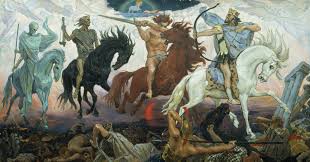
Ask the average Christian in America about the end-times ‘Great Tribulation’, and, if anything, they’ll probably tell you it’s “seven years of horrible stuff from the Antichrist and God after Christians have been raptured!”

But study what the prophets, the apostles, and our Christ said about this ‘time like never seen before or will ever be seen again’ (e.g., Joel 2:2; Matthew 24:21), and you’ll find a more accurate and much more sobering version of this terrible time to come. Here are some critical facts about the coming Great Tribulation:

  • It will be no longer than 3.5 years and occur during the last half of a seven-year agreement between Israel and the Antichrist (e.g., Daniel 9:27). We know nothing about the first half of that period other than it will begin with an agreement. Whether we’ll know when it happens remains to be seen.
  • The period will be the time of the Antichrist’s wrath against God’s people—Israel and those who hold to the testimony of our Christ (Daniel 7:19-25; Matthew 24:15-21; Revelation 12:13-17). If possible, the Antichrist and his cohort will con God’s people through lies and deceit (e.g., Matthew 24:24; Revelation 13:12-14). How will this happen? Because of shallow or non-existent faith made possible through intentional ignorance (e.g., a lack of Bible study, discipleship, and spiritual formation necessary for building faith).
  • The time of the Antichrist’s con and wrath will be cut short by Christ’s appearance. His presence will earmark two important events identified as ‘harvests’ in the Bible: the gathering of Jesus’ followers (e.g., Matthew 24:29-31 and Revelation 14:12-16) and the beginning of God’s wrath against what and who remain on the earth afterward (e.g., Revelation 6:12-17 and 14:17-20).

So, the wrath of the one who will con will come in the form of the Great Tribulation. After nearly 3.5 years, the faithful will find relief (e.g., Matthew 24:22 and 29-31; Revelation 19:6-10). God’s great wrath against the earth and her inhabitants will end the Antichrist’s wrath and great con.

Would you be able to resist being conned by those who say you don’t have to worry about any of this or by the Antichrist and his cohort in the last days? If not, waste no time learning the truth that leads to salvation (life with God and rescue from His coming wrath)! For a very comprehensive and detailed study of this crucial topic, feel free to read my 2011 book Finding the End of the World, available at Amazon and Barnes & Noble. You’ll find roughly 500 pages of building blocks to help you do your own complete and unbiased study based on the Bible and history!

Next week, we’ll continue our end-times journey by exposing the truth about the ‘mark of the beast.’

Blessings and peace,

Dr. Ron Braley

Would Someone Please Turn on the Lights??

What we think and believe matters greatly, generally driving what we do, which also matters for good or bad, better or worse. Ideally, we would have a standard to determine whether our intents or actions are, or will be, good and wholesome—right with God. Otherwise, we could justify thinking, believing, or doing anything that seems reasonable to us like we often do today. Well, that standard has existed for thousands of years, and it illuminates a good path and drags the bad out of the dark.

God established His Law thousands of years ago to guide the Israelites in their relationships with Him and each other. We know the basic form as the “10 Commandments:” Five pertain to our relationship with God (e.g., don’t abuse God’s name (authority or character)) and the other five to our inter-personal relationships (don’t steal, for instance). The commandments and the rest of God’s Law contained in Deuteronomy and Leviticus became a light turned on to illuminate God’s standard, His ways. Jesus’ first visit to earth did the same.

In Him was life, and the life was the Light of men. The Light shines in the darkness, and the darkness did not comprehend it. —John 1:4-5.

This is the judgment, that the Light has come into the world, and men loved the darkness rather than the Light, for their deeds were evil. For everyone who does evil hates the Light, and does not come to the Light for fear that his deeds will be exposed. But he who practices the truth comes to the Light, so that his deeds may be manifested as having been wrought in God. —John 3:19-21.

What deeds does the light of Christ reveal? Sexual immoralities and ungodly treatment of God and people (e.g., Leviticus 20:10-21; Romans 1.26-27; 1Corinthians 6:9-10 & 15-20; Galatians 5:19-21). Because Christians, by nature, move by God’s Spirit and carry His light, we must live by His standard and display His ways to others. This is how we evangelize the Kingdom of God, which has come to people who will devote fully to Him.

Then Jesus again spoke to them, saying, “I am the Light of the world; he who follows Me will not walk in the darkness, but will have the Light of life.” John 8:12.

You are the light of the world. A city set on a hill cannot be hidden; nor does anyone light a lamp and put it under a basket, but on the lampstand, and it gives light to all who are in the house. Let your light shine before men in such a way that they may see your good works, and glorify your Father who is in heaven. —Matthew 5:14-16.

Like studying end-times stuff? Well, next week, we’ll poke the bear a bit in my article The Wrath of Con!

Blessings and peace,

Dr. Ron Braley

Western Christianity Versus the Borg

Jesus encouraged us to unshoulder our burdens and share them with Him (cf. Matthew 11:28); the Apostle Paul tells us to share our burdens with each other (cf. Galatians 6:2). And we are to use our resources to care for our Christian brothers and sisters. Nevertheless, we maintain a ‘great divide’ between congregation and clergy and each other relationally—indeed, a gap too wide to facilitate the transfer of our burdens to others or Christ. So they collect and weigh us down until we become the picture of spiritual unhealthiness and a questionable witness.

Meanwhile, individualism prohibits deep interpersonal relationships necessary for discipleship, accountability, or the discovery of needs. How do we narrow the gap and once again participate instead of dictating or isolating—through true community, not as a collective of individuals.

Scott Boren, the author of The Relational Way, points out that many sociologists have dubbed the United States as the most individualized society in human history. And statistics and trends show that the church congregations resemble the world. Therefore, churches tend to be made up of individuals who just happen to congregate simultaneously for the same religious experiences. Let’s have a bit of fun and look at something that looks more like we should: The Borg.

If you’re a Star Trek fan, you’ll likely know of the Borg – that single entity comprising many individuals functioning as that single consciousness; they exist to participate relationally for the betterment of the ‘one.’ Here are some helpful snippets from the Star Trek database (http://www.startrek.com/database_article/borg):

The Borg have a singular goal … This collective consciousness is experienced by the Borg as “thousands” of voices — they are collectively aware, but not aware of themselves as separate individuals. … Among the many advantages their collective consciousness affords them, the Borg hive-mind allows for instantaneous adaptations … with the power of their collective thoughts alone. … The hive-mind drones do not register as individual life-signs when scanned, only as a mass reading …

OK, so the Borg is fictional, and the Church isn’t. However, we could learn a profound lesson from the Borg concept: Participate to serve, not just experience; Grow to help, not for self-gain. Commune, not isolate, for godly love and discipleship.

In summary, God has equipped each of us to partner with others in His ministry of reconciliation. Rather than assemble as self-centered individuals with a shared desire to experience religion, let’s become more relational and community-minded to build trust for service and discipleship. Then, we can genuinely resemble the Borg … well, without all the tubes and stuff!

Next week, we’ll explore sin and the light that brings it out of the dark in my article Would Someone Please Turn on the Lights??

Blessings and peace,

Dr. Ron Braley

Christianity Before the baggage

We’re creatures of habit and tradition and may believe that Christianity today in America is like the original Church started by Jesus and perpetuated by the apostles. Actually, our Christianity and the Church Jesus began are miles apart. The Church was, at first, one organization made up of different personalities, gifts, and talents. The diversity ensured spiritual growth and success in ministry. Today, there are thousands of Christian denominations, cults, organizations, and fractures, and each attracts people who think, believe, and act alike (for the most part). The single, diverse Church rich in shared spiritual gifts, skills, and talents is gone. There are other differences too.

In the first couple of centuries, Christianity was a costly religion (and, therefore, valuable to its members) because of persecution and difficulty in buying or selling in the marketplace. Every member of the community was required to contribute to its welfare and worship. Everyone sang and prayed aloud. Everyone was expected to put their spiritual gifts to work (e.g., teaching, preaching, overseeing . . .). Church discipline for spiritual growth (not punishment!) was necessary and expected.

Today? We live in a world of free or cheap grace without much discipleship or accountability (write to me via the editor if you’d like to see the statistics!). Few are required to participate, and, therefore, about 85% of Christians are freeloaders who don’t contribute or engage in spiritual formation or discipleship. Oh – and discipline within the Christian community? Forget about it! Anyone who doesn’t like the message or accountability can just go to another church down the road. What about things like baptism and Communion?

Initially, Communion (the Lord’s Supper) was a simple, intimate, worshipful dinner between believers. No pomp or circumstance. Today, it’s practiced in many ways, from a simple, quick ceremony as part of a Sunday service to a deeply mystical encounter. Baptism is another practice that differs significantly today from its early Christian counterpart.

For the first several generations from Jesus, baptism was a simple ceremony that confirmed the convert’s devotion to God and entry into the universal Church. Interestingly, according to early accounts, the water could be cold or warm, running or still, or even spit (as a last resort). The point wasn’t the water but devotion. After a few generations from Jesus, heresies and false teachings abounded, as did weak faith that people left under persecution. To ensure that converts truly understood the covenant they were about to enter, the Church began intense training and observation—sometimes for as much as three years—before baptism. That’s not the case today—baptism requires nothing more than a verbal affirmation of faith, no demonstration.

You may be wondering about one more big difference: giving. I’ll need to write a separate article for that one! What about next week? We’ll compare and contrast individualism in American churches to Star Trek’s Borg.

For the Love of Money

The Bible says plenty about money management: work hard, pay our bills, avoid debt if possible, not cosign for others, pay taxes, care for fellow Christians, and save for a rainy day. And, we must be content with what we have:

Make sure that your character is free from the love of money, being content with what you have; for He Himself has said, “I WILL NEVER DESERT YOU, NOR WILL I EVER FORSAKE YOU,”Hebrews 13:5.

Let’s explore each principle in more detail.

Work Hard. Those who can work but don’t shouldn’t eat! Remember the children’s story about the hard-working ant and the lazy grasshopper? It’s based on a biblical proverb (Proverbs 6:6-11 and 19:15).

Avoid Debt. Going into debt moves an individual from freedom into slavery (cf. Proverbs 22:7). Is debt contrary to God’s ways? Not necessarily, but there are risks and consequences. Here are a few tips to help reduce them:

  • Don’t borrow unless it’s necessary. Remember that borrowing turns us into a slave and any money we borrow will probably cost a lot more than imagined.
  • Put ‘skin in the game.’ Insert as much of your cash as possible to reduce the total amount of debt and the payment.

Never cosign!! First, the Bible tells us not to do this (Proverbs 22:26). Second, it’s risky. It’s as good as borrowing the money yourself since you’ll be responsible for repayment if the primary signer defaults. Another disadvantage cosigning may bring is that it can significantly stress or ruin close relationships.

Pay bills and taxes. God and His Christ have made it very clear that we’re to care for others and honor the authority of those placed over us. We do this in part by paying others what we owe and satisfying our tax requirements (cf. Luke 20:20-25). Paul tells us to pay our debts and therefore owe nothing (cf. Romans 13:8), and we learn in Psalms 37:21 that those who don’t pay their debts are wicked.

Be Charitable. Jesus gave us two commandments: serve God appropriately and treat man charitably (cf. Matthew 22:35-40). We’ll be judged by our obedience to those commands. (i.e., Matthew 25:31-46).

Save. I want to stress the importance of setting funds aside for a ‘rainy day.’ Many of us live paycheck to paycheck, praying that we don’t lose our job or suffer a catastrophic event. The lifestyle leads to stress and broken relationships—both of which can be mitigated by living within our means and regularly saving some of our resources.

What’s next? Have you ever wondered how the earliest Christians put Jesus’ example and God’s words to work in our New Covenant era? We’ll find out next week in my article Christianity Before the Baggage.

Blessings and peace,

Ron Braley

The Devil Made Me Do It!

Sometimes, unwilling to accept that we may cause our unhealthiness or unfortunate situations or feelings such as anger, depression, or sadness, we seek to blame someone else—even evil spirits or the devil. This is unfortunate because it allows us to ignore our responsibilities and repentance and growth as we deal with difficult people or circumstances.

The idea of blaming Satan is a weird one in my experiences. Here’s why:

  1. Christians who are in the middle of strife and the trials of life are often quick to say something like, “I must be doing something right because Satan’s after me!” Blaming Satan gives him way too much credit! Bad stuff happens all the time because we live in a broken, fallen world; we make bad choices; other people make bad choices; stuff just happens.

Another problem with blaming Satan for our misfortunes is that we’re essentially stating that God cannot protect us from him. He does look around for weak and unfaithful Christians to destroy them:

Be of sober spirit, be on the alert. Your adversary, the devil, prowls around like a roaring lion, seeking someone to devour. But resist him, firm in your faith, knowing that the same experiences of suffering are being accomplished by your brethren who are in the world.—1 Peter 5:8-9.

But God is more than capable and willing to aid those who resist the temptation to sin and Satan!

  • On the other hand, I’ve heard Christians say this to other Christians who are suffering: “You must not be living right, or these things wouldn’t happen to you!” Funny how things change when the table is turned! Essentially, the faulty thinking is that Christians will be well and prosperous if they’re faithful and that the supposed unfaithful Christians will have trouble. This bad theology could not be further from the truth!!

God never promised that we’d be wealthy or well. The sun shines on the righteous and the wicked; the wicked prosper; we left God’s provision and protection a long time ago in Eden. He will, however, help us persevere as we go through trials and keep our eye on Him.

. . . knowing that tribulation brings about perseverance; and perseverance, proven character; and proven character, hope; and hope does not disappoint, because the love of God has been poured out within our hearts through the Holy Spirit who was given to us.—Romans 5:3-5.

If you believe that you’re being troubled by a demonic spirit of ‘this or that’ or Satan, just remember that everyone who genuinely has given themselves to God through faith and obedience has nothing to worry about—we’ll remain beyond Satan’s reach. In addition to God’s protection, we also have wisdom and guidance through His Spirit.

Next week, we’ll take a look at healthy biblical finances in For the Love of Money.

Blessings and peace,

Ron Braley

Exploring God’s Will

We often want to know God’s will—especially for us. His will is what He wants to do, primarily to keep us from destruction through our transformation and eventual salvation from His wrath. It is His plan for humankind. In the process, He desires us to be obedient, rejoice, pray, and spread the good news to others. Although we tend to think God’s will is some glorious plan for our individual lives, we should instead focus on helping God see His plan for creation through to completion. That’s all well and good. But what exactly does ‘will’ mean?

The word in the ancient language implies choice, desire, pleasure, or an inclination. So, God’s will can be something He desires (as in Matthew 18:12-14) or His plan for humanity (i.e., Matthew 26:42 or John 6:37-40).

Here are some of God’s desires:

  • That all people are saved from His coming wrath (2Peter 3:9)
  • Obedience, not legalism (Matthew 9:13)
  • Our good works, done because of our faith (1Peter 2:13-16)
  • That we rejoice and pray continuously (1Thessalonians 5:16-19)
  • That we proclaim the good news of His Kingdom & make disciples (Matthew 28:19-20)

What are some benefits of partnering with God to accomplish His desires?

  • Redemption and forgiveness; the reward of everlasting life (John 6:40; Ephesians 1:5-13; Hebrews 10:35-36)
  • We get His Spirit and intercession on our behalf (Romans 8:26-28)

How do we participate in God’s plan and accomplish His desires? First, we must obey His commandments to honor the Father and Son and be charitable to people (1John 5:3; Matthew 22:36-40). We must also abstain from sexual immorality (1Thessalonians 4:2-4). We are to imitate God (Ephesians 5:1-20), allow the Holy Spirit to lead us (Romans 8:14, Galatians 5:25). Making God’s priorities our priorities (Matthew 6:33) is critical, and we must obey our civil leaders and submit to them (Hebrews 13:17).

Whew! That seems like a lot of stuff! But, we can learn what we’re to do in accomplishing God’s will or discovering the answers to our prayers by doing these things:

•           Study the Bible, which teaches principles that help in decision-making (2Timothy 3:16-17).

•           Ask for wisdom (James 1:5-6).

•           Seek wisdom (from family, friends, spiritually mature, etc.) (Proverbs 13:10).

•           Pray!!!

But, we can hinder the accomplishment of God’s will or desires – even for us – through:

•           Bad motives (James 4:3).

•           Bad relationships (1Peter 3:7).

•           Unrighteousness due to disobedience and the lack of the Spirit (John 9:31).

Summary: God has a plan for humanity: salvation through Christ. He also desires fellowship and obedience from us in a pursuit of holiness. We can join in and help accomplish God’s plans or desires, or we can rebel and keep Him from using us or even answering our requests. Of course, this rebellion will result in death. Next week, we’ll take a look at demons with job titles & the ‘spirit’ of biblical abuse.

Blessings and peace,

Ron Braley

In Loving Fairness!

In our feel-good Christian culture, I’ve often heard said, “God is Love!”

God IS love; however, this love is often misunderstood. And, the common misunderstanding of the love that God is and does lends itself to a dangerous and pervasive view that anyone in His excellent favor should never suffer and will have anything they want. The misunderstanding is based on 1John (1John 4:8 and 16 in particular). The first thing we must do is understand the context of John’s comments about God being love. The next thing we’ll do is explore the meaning of that ‘love,’ which we’ll find is consistent, appropriate action—not emotion.

The theme and context of 1John Chapter 4 are a fair and just God that will judge the world and save the righteous. This text serves as a reminder that our actionable love, which is obedience to Jesus’ commandments out of our faith, mirrors God’s just nature and is the basis for our coming salvation. Here’s a breakdown of the verses—you may want to read along.

Verses 1-6: Differentiating Christians from the world.

Verses 7-17: God is actionable love. He has promised a savior for humankind and kept His promise.  We should be like Him and love one another with action, not just emotion, because He has done the same for us first.

Verses 18-21: A sobering reminder that actionable love born of our faith is critical to salvationrescuing from God’s judgment to come. Being nice, feeling spiritual, believing alone, or having lots of knowledge about the Bible without action is useless to God, our Christ, and the Church.

I keep mentioning ‘actionable’ love. It’s the kind of love that equates to, “I’ll treat you right despite how I feel.” We’re to be fair, kind, patient, repentant, self-controlled, etc.  Hmmm . . . sounds a lot like the actions (fruits) shown by those who belong to God and, therefore, have the Spirit as they remain in a relationship with Him:

But the fruit of the Spirit is love, joy, peace, patience, kindness, goodness, faithfulness, gentleness, self-control; against such things there is no law. —Galatians 5:22-23.

So, God is love because He has treated us appropriately and kept His promise to send a savior despite the way He has ‘felt’ toward humankind at times throughout history. As so many New Testament letters show, He is just to save and forgive when we are in a relationship with Him. Act fairly, justly, kindly, and consistently as our God also has done for us . . . and live!

Next week, we’ll examine the will of God: what it is and how to discover it.

Blessings and peace,

Ron Braley

Hooking Up With Wickedness

We live in a world filled with people who are ignorant of God’s ways or the gift of salvation Jesus offers. Some know the truth but resist it. Without our influence through relationships, they’ll likely never know these truths. But we must not let influence work the other way around, allowing ourselves to be lured into sinful behavior.

First and foremost, we’re to spread the good news of God’s grace and mercy through Jesus to those around us by word and deed. As the apostle Paul pointed out, how will people learn of the Gospel—that great news of God’s Kingdom—if no one tells them? We’re all called to proclaim that good news through our speech and actions. How can we do this if we don’t interact with others who need to hear the message or see us model it (Romans 10:13-15)?

We’re also to be a shining example—a light to those around us. There’s no way to be that light without being visible to the world.

“You are the light of the world. A city set on a hill cannot be hidden; nor does anyone light a lamp and put it under a basket, but on the lampstand, and it gives light to all who are in the house. Let your light shine before men in such a way that they may see your good works, and glorify your Father who is in heaven.”Matthew 5:14-16.

We can’t isolate ourselves and, therefore, shield our light from the world. We must be in the world to provide an example, but not of the world (repeating any of its ungodly values and behaviors). The apostle Paul explained that although we need to be flexible and enter into relationships to be Jesus to a lost world, we must be careful not to practice sin found in the world and give up the gift of salvation (1Corinthians 9:19-27).

Paul tells the same church that they must not have close relationships with unbelievers in other warnings too. Associate, yes—be bound together, no. The original language implies unequal yoking, which is vital to understanding Paul’s intent. Yoking together dissimilar creatures would be counterproductive and, while the act may help the weakest of the pair, may bring down the stronger (or more righteous in this case).

Do not be bound together with unbelievers; for what partnership have righteousness and lawlessness, or what fellowship has light with darkness? Or what harmony has Christ with Belial, or what has a believer in common with an unbeliever? —2Corinthians 6:14-15.

Do not be deceived: “Bad company corrupts good morals. —1Corinthians 15:33.

Who are your friends and business partners? Remember to be a light to the world but take measures to avoid having your faith corrupted and, therefore, jeopardizing your rescuing from God’s wrath to come!

Next week: God is love. True, but how? Why?

Blessings and peace,

Ron Braley

Yes, Judge—but who??

The idea of judging trips people up. We know our faults or sins and feel we have no right to judge others as a result. Conversely, some people behave as though they must inform everyone around them of every sinful act. The truth regarding judging others resides somewhere in the middle.

Who should judge whom? According to Jesus, God will judge the world – those people who aren’t His. Christ-followers will be evaluated for their works done out of faith and rewarded accordingly at the end of this age. Meanwhile, we must hold one another accountable for spiritual growth and moral positioning. For instance, the apostle Paul called out sexually immoral behavior in the Corinthian church and told them this:

… Do you not know that a little leaven leavens the whole lump of dough? Clean out the old leaven so that you may be a new lump, just as you are in fact unleavened. . . . Do you not judge those who are within the church? But those who are outside, God judges. REMOVE THE WICKED MAN FROM AMONG YOURSELVES. —1Corinthians 5:6-13.

So, how are we to judge other followers of Jesus? We must be careful and gentle according to Christ’s commandments, not by what we feel. The goal must always be to help followers who are ‘sinning’ turn back to the truth and be reconciled to God (e.g., James 15:19-20). Jesus also reminds us not to tolerate the practice of sinful behavior inside the community of Christians.

“If your brother sins, go and show him his fault in private; if he listens to you, you have won your brother. But if he does not listen to you, take one or two more with you, so that BY THE MOUTH OF TWO OR THREE WITNESSES EVERY FACT MAY BE CONFIRMED. If he refuses to listen to them, tell it to the church; and if he refuses to listen even to the church, let him be to you as a Gentile and a tax collector.” —Matthew 18:15-17.

Now, I realize that some people will counter by quoting Luke 6:37, “Do not judge and you will not be judged . . .” But it and verses 38-42 deal with justice and mercy. And verses 41-42 remind us to become righteous before holding others accountable by God’s standard.

If you want to love your fellow Christians with the love of Christ, judge them according to His commandments with a sense of urgency before it’s too late for anyone practicing sinful behavior and earning a one-way ticket to God’s judgment! And let’s demonstrate God’s standard by not doing or condoning anything He opposes (such as sexual immoralities). Otherwise, we could be single-handedly responsible for leading the lost to their destruction.

Next week, we’ll look at healthy and unhealthy Christian relationships.

Blessings and peace,

Ron Braley