
Tag Archives: judgment

Vengeance is God’s Alone!

My cat is pretty funny … and vindictive! She insists on having the last ‘word.’ If she has just been scolded, she’ll likely hide behind a corner and lash out as the discipliner walks by. Or she may whelp a disapproving “meeooowwwuuuuuhhhh.” I’m not sure I want to know what she’s saying at that moment! Anyway, she reminds me that we’re often aggressive toward other people—even inside the church.

People who should know better gossip against others and retaliate in litigation (think about the Corinthians I wrote about last week!). They often throw hurtful speech or punches despite the order to be kind, patient, and loving. Vengeance flies even though we’re commanded to turn the other cheek to give reconciliation a chance and be quicker to listen than speak.

“This you know, my beloved brethren. But everyone must be quick to hear, slow to speak and slow to anger; for the anger of man does not achieve the righteousness of God.” (James 1:19-20)

“But the fruit of the Spirit is love, joy, peace, patience, kindness, goodness, faithfulness, gentleness, self-control; against such things there is no law.” (Galatians 5:22-23)

“But I say to you, do not resist an evil person; but whoever slaps you on your right cheek, turn the other to him also.” (Matthew 5:39)

These are some active ways we can be aggressive to God’s creation. There are others too.

My cat is aggressive in her retaliation. But sometimes, she’s passive in her attacks, withdrawing her affection or displaying ‘attitude’ in non-verbal or covert unkindness. We often do the same to each other. There’s the gossiper who will whisper unpleasantries or the ugly truth disguised in “Christian love.” I’ve heard these things spoken aloud in prayers to avoid the accusations of gossip. Some people, like my cat, will withhold their affections or stop helping in passive retaliation. And there’s the congregant who will selectively clap for one worship music artist while refraining when the person they dislike offers their gift. Aggressions like those I’ve mentioned are ungodly and hurtful, whether active or passive. So, who does have the right to be the aggressor?

Only God has the authority to issue vengeance, retribution, or judgment:

“For we know Him who said, ‘VENGEANCE IS MINE, I WILL REPAY.’ And again, ‘THE LORD WILL JUDGE HIS PEOPLE.’” (Hebrews 10:30)

“Therefore having overlooked the times of ignorance, God is now declaring to men that all people everywhere should repent, because He has fixed a day in which He will judge the world in righteousness through a Man whom He has appointed, having furnished proof to all men by raising Him from the dead.” (Acts 17:30-31)

Whether victim or aggressor, some of you may be frustrated at what I’ve written. So, join me next week to explore healthy conflict resolution and dealing with anger.

Blessings and peace,

Dr. Ron Braley

That’s Heavy, Man!

“Ron! Why do you write about such serious stuff? Just remind us that Jesus loves us no matter what and then tell a cute story or write something funny!” Indeed, my topics are often serious or deep. Why? I sometimes address a specific need or balance our lopsided Christianity that usually tells only half the story. Yes, Jesus loves us no matter what we’ve done or where we are. But we’re not meant to stay there! According to King Solomon, there’s nothing new under the sun. And the need to respond to current issues or provide guidance dates to the earliest days of the New Covenant.

New Testament (Covenant) letter writers usually addressed a particular audience to inform or solve a problem. They would often provide balance in a Christianity warped by heresies or immoralities of the day. Take Paul, for instance. He wrote to the Church in Rome to steer a predominantly Jewish congregation from focusing on religious format or works. Sure, God had predestined the nation of Israel to carry out His plan of salvation (Romans 8:18-30 – similarly, see Ephesians 1:4-6, 11). Its people—especially those who entered the Christian faith—probably felt special and believed that adherence to the Jewish religious Law was still necessary for the New Covenant. However, a focus on works negated the unmerited gift of life offered through Jesus.

The Corinthian Church was another recipient of Paul’s written guidance and correction. These believers, mostly Greek, often engaged in things like sexual immoralities (e.g., 1Corinthians 5:1-13 and 6:12-20). Many filed lawsuits against each other. Still, others practiced gluttony and self-centeredness and rebelled against customs like how women should respond in church or keep their hair. Why did he write against violating local traditions? Because the violations caused problems in the culture and could make God’s Kingdom unattractive to the locals. Paul’s letters addressed those issues (and more) to correct bad behavior and provide a clearer view of a righteous walk of faith. What about today?

We still misbehave toward one another, abuse our bodies, and neglect spiritual formation believing all the while, selfishly, that God has a unique plan for each of us and that He works all things for our personal good. The practices are unrighteous, and the beliefs are gross misunderstandings of Jeremiah 29:11 and Romans 8:28 taken out of context. Yes, God Has a plan and has invited us to join Him in it, but it’s His plan for all, not personal spiritual elevation.

So, I write to you to offer balance and guidance and partner with you to practice your faith according to God’s good pleasure. I promise to lighten it up where I can! What’s next? Let’s learn how not to be aggressive—even passively aggressive—in “Vengeance is God’s, not ours—even in church!”

Blessings and peace,

Dr. Ron Braley
Ask Away!

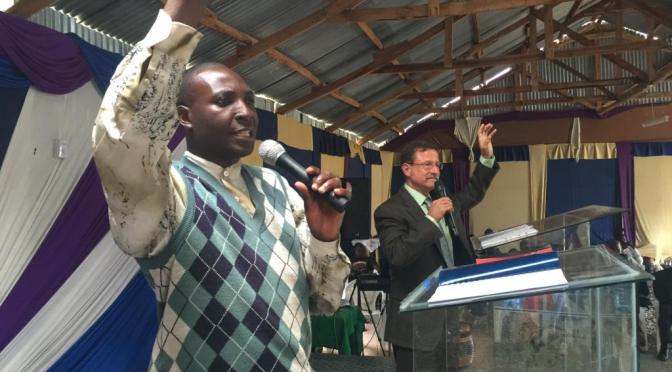
Once upon a time, I didn’t study (or regularly read!) my Bible. I didn’t ask questions. Maybe it was because I didn’t know what to ask or why. I believed that I just needed to believe in Jesus with no other relational or growth requirements. And no one challenged my resulting lack of faith, which, as it turns out, must be based on wisdom about God. So, my faith was blind and shallow. Then, the dam broke one day, and the floodwaters of grief, joy, and passion rushed in. “What happened?” you ask. Good question! Let your inquiry be the first of many to come.

Decades ago, a friend challenged my faith by bringing to light my lack of understanding about the end of the world and Jesus’ return … or anything else biblical, for that matter. He was right. But I decided to become ‘found’ by devoting myself and all I am to God and vowing to learn about His ways and teach others what I discovered. I learned during the process that we must challenge what we’re taught in church—especially where good biblical knowledge is lacking, or wrong, or things just don’t make sense. I suggest that discovering the source of church traditions is a great way to start. There are many excellent reasons to question these things.

First, blind faith can lead to spiritual death. On the other hand, asking questions can make us wiser and aid our discipleship. And a healthy fear of God is the beginning of wisdom. Why else would we go through the effort??

“Give instruction to a wise man and he will be still wiser, teach a righteous man and he will increase his learning. The fear of the LORD is the beginning of wisdom, And the knowledge of the Holy One is understanding.” (Proverbs 9:9-10)

Second, our inquiries can hold Christian preachers and teachers, who God holds to a higher standard (e.g., James 3:1), accountable. Your questioning can help them focus. We learn of one group, applauded for doing this:

“The brethren immediately sent Paul and Silas away by night to Berea, and when they arrived, they went into the synagogue of the Jews. Now these were more noble-minded than those in Thessalonica, for they received the word with great eagerness, examining the Scriptures daily to see whether these things were so. Therefore many of them believed, along with a number of prominent Greek women and men.” (Acts 17:10-12)

Finally, others are probably wondering the same things you are. Your questions and correct answers can benefit many others too. In summary, wisdom about God and spiritual transformation is a matter of life and death. Questioning what you hear and asking new questions can aid wisdom, provide accountability, and benefit others. What’s next? I’ll explain why so many of my topics seem serious or hard-hitting in “That’s Heavy, Man!”

Blessings and peace,

Dr. Ron Braley
Jesus Said What??

We love to read or hear that Jesus loves us. We love to read or hear that Jesus forgives us. Forgiveness by others, including God, can be music to our soul. But Jesus and others like Peter, James, and Paul also told us stuff we may not be so eager to receive. However, heeding them is a matter of life and death. Here are but a few of the lifesaving tips:

  • Honor God and be charitable to others (Matthew 22:36-40). We are to honor God with our bodies and by good works born of faith (Matthew 5:16; Ephesians 2:10; 1Timothy 6:18) … period.
  • Introduce God’s Kingdom everywhere by word and deed (Matthew 5:13-16). If the Spirit of God is within us, we will have no choice but behave that way (produce fruit). Godly behavior presents God’s Kingdom to people; arrogant, ungodly, self-centered, or self-righteous behavior makes the Kingdom unattractive and often unattainable.
  • Be and make disciples (Matthew 28:16-20; Ephesians 4:11-16; Hebrews 5:11-14; 2Timothy 3:14-17). As with honoring God and loving people, this is non-negotiable!
  • Count the cost of being a disciple, which anticipates appropriate responses to God and provides consequences, both good and bad, like any other relationship (Luke 14:25-33).
  • Forgive to be forgiven (Matthew 6:12-15; Colossians 3:12-13). We must give back what we’ve been freely given.
  • There will be trouble in life (John 16:33; 1Peter 4:12-19; Psalm 34:19; James 1:2-4 & 12; Romans 5:3-5 and 12:9-21).
  • But stand firm through that trouble to grow stronger and wiser and be saved from coming judgment (Matthew 10:22 and 24:13; Romans 5:3-4; Hebrews 3:14; 2Timothy 2:12).
  • Be productive in the Kingdom of God . . . or else. (Matthew 25:41-46; John 15:1-8).
  • Choose to stay (abide) in the relationship with God (John chapter 15). He seeks active, fruitful partners in a reciprocal relationship. Persevere and live!

So, according to Jesus and others, we’re to enter a relationship with God through Jesus and stay. And as we remain, we are disciples who make them as well. Finally, we must be productive by honoring God with all we have and are and love other people. Otherwise, we’re of no use to God. The good news is that He gives His Spirit to help us do all the things I just mentioned and be successful in our spiritual growth and obedience. What do we have to look forward to if we remain in a fruitful relationship with God? His peace and rest now, and rescue from judgment at the end of this world.

What’s next? Let’s understand better why we’re to challenge what we see or hear—especially where God is concerned—in next week’s article, “Ask Away!!”

Blessings and peace,

Dr. Ron Braley

“I Am” or “I Will Be”??

You may have heard God referred to as “The Great I AM.” In fact, Exodus 3:14 states that God is “I AM WHO I AM” in most if not all Bibles. But did God really call Himself the “I AM” in the original language as if He needed to prove His existence? Or did the Hebrew phrase mean something else? Let’s see.

About 500 years after God formed a covenant with Abram, Moses encountered God. He asked about His name in Exodus 3:13-14: “Then Moses said to God, “Behold, I am going to the sons of Israel, and I will say to them, ‘The God of your fathers has sent me to you.’ Now they may say to me, ‘What is His name?’ What shall I say to them?” God said to Moses, “I AM WHO I AM;” and He said, “Thus you shall say to the sons of Israel, ‘I AM has sent me to you.’”

The ancient Hebrew language in Exodus 3:13-14 refers to God as Ehyeh:  “And God said to Moses, ‘Ehyeh-Asher-Ehyeh.’” He continued, “Thus shall you say to the Israelites, ‘Ehyeh sent me to you.’”

The Hebrew word Ehyeh was understood, and, I believe, is best translated as, “I WILL BE—not “I AM.” Ehyeh-Asher-Ehyeh should be understood as “I WILL BE WHAT I WILL BE.” There’s evidence showing that early Church Fathers wrote it this way. This rendering is also present in the first modern English translation of the Bible (Myles Coverdale, 1535).

Now, I realize we’re told that God is the ‘Great I Am.’ But this translation may not follow the intended meaning of the Hebrew text. And, it implies that God needs to convince people that He exists. The rendering of “I WILL BE” makes much more sense when we remember that God is a God of action, of kept promises. For instance, He will be a provider (Matthew 6:26), be a shepherd (Psalm 23), and be a healer (Exodus 15:26). Here are two other examples:

“And I will bring them back and they will live in the midst of Jerusalem; and they shall be My people, and I will be their God in truth and righteousness.” (Zechariah 8:8)

“FOR THIS IS THE COVENANT THAT I WILL MAKE WITH THE HOUSE OF ISRAEL AFTER THOSE DAYS, SAYS THE LORD: I WILL PUT MY LAWS INTO THEIR MINDS, AND I WILL WRITE THEM ON THEIR HEARTS. AND I WILL BE THEIR GOD, AND THEY SHALL BE MY PEOPLE.” (Hebrews 8:10)

God will indeed be yours if you will be His! Reach out to take the next step! So, what will we dive into next week? We’ll explore our deadly consumeristic “McDonalds” Christianity.

Blessings and peace,

Dr. Ron Braley

Renewed Beginnings

Last week, I retold an ‘untold’ Christmas story—kind of a behind-the-scenes look at God’s peace and redemption Jesus set into motion with His arrival on earth. Because the new year began a week after Christmas, I thought we should now look at new beginnings. Here are a few examples of New Year celebrations and why we use them to make resolutions.

American/European: January 1st. We tend to gather the evening before and bring in the new year with shouts, parties, countdowns, and resolutions. And some of those parties bring regrets and spawn resolutions of their own.

Chinese (Also known as the Spring Festival): 23rd day of the 12th lunar month of the Chinese calendar. The idea is like that of the American and European New Year celebrations.

Jewish, Religious – Pesach (Passover): The 1st Jewish month, when the time of the covenant between God and His ‘bride’ Israel began. It was a new beginning for her.

Jewish, Agricultural – Rosh Hashanah: The 7th month of the Jewish calendar. Interestingly, while this is the official State New Year, it also closely relates to God’s covenant. This New Year begins with the Feast of Trumpets and introduces a time of repentance, forgiveness, and rest.

Because we know of the good and bad things we’ve done or that the current year has brought, the thought of a ‘better’ new year can bring anticipation of good things to come! We want to change what we don’t like; this is where ‘repentance’ (even for the non-religious) comes into play. We’re sorry for the behaviors we don’t like and, therefore, vow to change. It’s harder than it seems! Here are three guidelines for helping you achieve your dreams and goals.

First, you must set goals for yourself. Follow the SMART principle:

Specific. Be clear about what you would like to accomplish!

Measurable. How will you know whether you’re succeeding?

Attainable. You probably won’t be a millionaire by the age of 50 – especially if you’re, well, 60.

Relevant. Why try to be a better poker player if your goal is to overcome gambling addiction?

Timely. When should you achieve your goals?

Second, if you intend to have a new beginning in Christ or embrace a lifestyle change, you must PLAN to achieve your goals! To quote some silly movie line: “Those who fail to plan, plan to fail!”

Third, we can rarely accomplish large tasks independently, especially when dealing with weaknesses or temptations. The Spirit of God can provide strength and guidance, and accountability partners give us direction, wisdom, strength, and discipline to be successful.

Join me next week to explore whether God should be known as the “I Am” or “I Will Be.”

Blessings and peace,

Dr. Ron Braley
Christmas, the Retold Story!

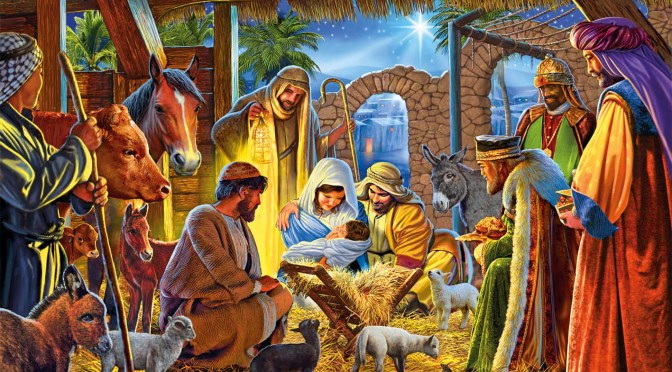
Christmas is full of traditions, including the story depicting Jesus’ birth. Some renderings sport sheep, camels, and donkeys with costume-clad humans for effect. The event makes us feel good, and it can be a great time of fun and family. But is there more to the story—perhaps stuff behind the scenes that would make it more meaningful if known? Let’s see.

First, the Son of God, born a son of man, has been around since our universe’s creation (John 1:1-4).

Second, this Son of God had to become human for a reason: to restore the relationship between Creator and creation by paying the penalty for the first humans’ rebellion, and crushing evil (e.g., Genesis 3:15).

But paying the price could only be done by someone who lived sin-free. God began to send clues about this coming perfect Savior through various prophets like Isaiah:

“Therefore the Lord Himself will give you a sign: Behold, a virgin will be with child and bear a son, and she will call His name Immanuel.” (Isaiah 7:14)

This Prince would be born in about 4 BC and eventually crucified, as shown to the prophet Daniel 500 years before Jesus came to earth (Daniel 9:25-26). His birth brings God’s peace to people with whom He is pleased (Luke 2:14), but it prompted the wrath of a man, Herod (Matthew 2:1-12). For Jesus’ safety, an angel told Joseph and Mary to escape to Egypt until Herod’s death (Matthew 2:13-15). How would the journey be possible? After all, travel and daily life required resources, then just as they do now. Allow me to introduce the wise men.

To fully appreciate their contribution, we must return to Persia 500 years earlier, when Daniel earned great respect and treasure. He was also well-trained in Babylonian arts, including astronomy. He knew when Jesus would be born and would’ve been familiar with Micah’s prophecy about Jesus’ birth in Bethlehem (Micah 5:2). 

So, Daniel, the Jew who spent his life in Persia, had treasure, knew how to chart star movements, and knew where Jesus would be born as well as the timeframe. Therefore, we should not be surprised that Persian magi (wise men) knew that Jesus would be the promised King and the alignment of the stars at the time and place of His birth. Daniel’s great wealth was likely the resource that funded Jesus’ trip to Egypt until Herod’s death. Our great God is indeed the master orchestrator who crafts all things according to His good pleasure!

“And we know that God causes all things to work together for good to those who love God, to those who are called according to His purpose.” (Romans 8:28)

Are you interested in making a fresh start physically, emotionally, or spiritually? Perhaps you’re interested in keeping personal goals. Join me next week when we’ll readdress fresh starts in Renewed Beginnings.

Blessings and peace,

Dr. Ron Braley

The Dangers of Being Ill-prepared

December seventh marks the 81st anniversary of the Japanese attack on Pearl Harbor, Oahu, Hawaii. Approximately 3,581 people were killed or wounded, 169 aircraft destroyed, and 19 ships destroyed or damaged (https://www.census.gov/history/pdf/pearl-harbor-fact-sheet-1.pdf). We must honor those who lost their lives defending our great nation! But as horrific and destructive as the attack was, the extent of the carnage was possible only because the island was unprepared for the enemy.

According to pearlharbor.org, the imminent attack appeared on newly installed radar equipment but was quickly dismissed as American aircraft (at the very least). The lack of training added to being unprepared for what was coming. Another challenge was the unpreparedness of aircraft, which were ill-parked, not fully fueled, and unarmed. As catastrophic as the December 7, 1941 events were, though, being unprepared for what will come at the end of this world will yield unimaginable physical and spiritual destruction!

In Matthew 25:1-13, Jesus used a parable to foretell how unprepared humanity will be at the end of this age before the great judgment (Matthew 25:31-46). In the parable, ten potential brides (humankind) anticipate the arrival of the bridegroom (Jesus). However, half are unprepared, missing their opportunity to attend the marriage ceremony (Revelation 19:6-10). Being prepared to make it through this life and enter the one to come requires complete devotion to God. We must stay that way, loving others and being transformed. If you’re unsure how to proceed, contact me through the Taylor Press editor or at Northview Christian Church (www.nvcc.church), and I’ll happily make time for you!

Anyway, those who belong to Christ (not just know of Him!) must also stay equipped to fend off spiritual attacks. According to the apostle Paul, we can do this by donning the complete protection God offers: His truth, righteousness (God’s standard), peace, faith, salvation, and teaching (Ephesians 6:10-18). We must pray regularly and often and be alert against subtle wickedness, such as the immoralities so prevalent today.

In summary, let’s decide to return to our God before it’s too late and then stand firm and prepared to resist what He hates. What’s next? Christmas is approaching, and some of us will celebrate the birth of One who suffered on our behalf. So, let’s consider that it is The Sufferer’s Holiday.

Blessings and peace,

Dr. Ron Braley,

ron@ronbraley.com  || ronbraley.blog

An Attitude of Gratitude for Latitude

The Bible reflects a grateful attitude for what God and others have done in many places! Here are a few examples:

Enter His gates with thanksgiving And His courts with praise. Give thanks to Him, bless His name. (Psalm 100:4)

Let them give thanks to the LORD for His lovingkindness, And for His wonders to the sons of men! Let them also offer sacrifices of thanksgiving, And tell of His works with joyful singing. (Psalm 107:21-22)

We also find a grateful apostle Paul:

First, I thank my God through Jesus Christ for you all, because your faith is being proclaimed throughout the whole world. (Romans 1:8).

And he reminds us always to be thankful to God as we continue to ask Him to meet our needs:

Be anxious for nothing, but in everything by prayer and supplication with thanksgiving let your requests be made known to God. And the peace of God, which surpasses all comprehension, will guard your hearts and your minds in Christ Jesus. (Philippians 4:6-7)

If you think about it, we can (and should!) be grateful for so many things, including family, friends, jobs, and God’s creation itself. So, expressing gratitude—especially toward God—seems to be important! Why? Giving thanks for what we receive or experience is an appropriate response that completes a transaction: you have received something, so you give something in return. And having a grateful attitude can also be physically and emotionally beneficial.

 Practicing gratitude “reinforces generous behavior, squeezes our negative feelings, and can help with depression” (https://www.heysigmund.com/the-science-of-gratitude/). Also, “research has found that we tend to feel more grateful for experiences than for things we have.” Being grateful causes us to change our focus from our issues and troubles and makes us feel better as if we’ve received an emotional ‘shot in the arm.’ I want to share one of my experiences.

In 1994, I opened an electronics repair and computer business. Naively, I wasn’t financially prepared, and my family was without money for food by early 1995. My church didn’t help. They were friendly, but not ‘kind.’ However, one of my customers, a kind Catholic woman who heard of our situation, rallied her congregation to buy groceries before, during, and after Thanksgiving and Christmas gifts for our four children. Her selfless acts were purely sacrificial and loving. Our gratitude for what she and the others in her church did gave us relief from our struggles and empowered us also be kind to others over the years.

In closing, I’ll tell you that I’m thankful for every one of you who reads and ponders my articles. They are my gift to you, and I’m grateful for your readership. What’s next? Well, let’s continue our journey of self-improvement in Turning Bad Into Good.

Blessings and peace,

Dr. Ron Braley

Fig Trees & The End of the World

“Ron, what do fig trees have to do with the end of the world and God’s judgment?” Lots! In the Bible’s New Testament, we find multiple end-of-the-world and fig events.

First, in Peter’s account that bears the name of his scribe, Mark, we find an interesting parable about Jesus cursing a fig tree on the Mount of Olives (Mark 11:12-14). Jesus picks out one tree of probably thousands to make a point about the nation of Israel. Although the figs weren’t ready to be picked (verse 13), there should’ve been fruit because there were leaves. The tree was like the Pharisees who gave an outward impression of [spiritual] fruit where none existed. Jesus, in an active parable, cursed the tree to demonstrate judgment that would come soon through Rome and at the end of this world. Think of this as a near-far prophecy revealed by Jesus with the fruitless fig tree. Are there other instances? Yep!

Second, Jesus explained days later to His disciples that any unproductive—unfruitful—person, including self-proclaimed Christians, would be destroyed in the last-days judgment:

If anyone does not abide in Me, he is thrown away as a branch and dries up; and they gather them, and cast them into the fire and they are burned (John 15:6). Also, read Matthew 25:31-46.

Or … If you keep My commandments, you will abide in My love; just as I have kept My Father’s commandments and abide in His love (John 15:10).

So, the one who bears spiritual fruit by obeying God’s commandments will not suffer the same fate (destruction) as the cursed fig tree. Alright—one more end-of-the-world figgie thingie!

Finally, Jesus used the blossoming of the fig tree at springtime in a when you see this, you will see that comparison to explain that the generation of people to see the signs He had just prophesied in verses 14-27 will also see His return:

Now learn the parable from the fig tree: when its branch has already become tender and puts forth its leaves, you know that summer is near. Even so, you too, when you see these things happening, recognize that He is near, right at the door. Truly I say to you, this generation will not pass away until all these things take place. (Mark 13:28-30).

I understand that some Christians believe that “this generation” in verse 30 refers to the disciples’ generation. However, “this generation” will be the one to see the end-of-the-world signs, which haven’t occurred. By the way: this fig tree instance is a Jewish idiom (figure of speech) just like Matthew 24:28 (dead bodies and vultures).

In summary, we who desire to abide with God must bear fruit or suffer destruction by our own choice. What’s next? Let’s have some fun with being thankful in all circumstances in A Gratitude Attitude for Latitude!

Blessings and peace,

Dr. Ron Braley