Tag Archives: judgment

Cheap Grace

Now, I’m a Protestant Christian by default, but we live in a Protestant ‘get saved quick’ culture whereby someone may be told to say a silent and unbiblical ‘sinner’s prayer’ to avoid hell and go to heaven. There’s often an invitation to invite Jesus ‘in’ instead of an outward devotion of all we are and have to the King (e.g., Matthew 22:37; Romans 10:9-10). Few understand the cost of a relationship with God, so that’s where things usually stall. For about 85% of people who ‘get saved,’ there’s no discipleship, disciple-making, or charitable activity. This grace is one-sided and cheap, and it devalues our ransom paid by Christ. The Bible tells of costly grace, though—something about which Dietrich Bonhoeffer addressed in his book, The Cost of Discipleship:

Cheap grace is the grace we bestow on ourselves. Cheap grace is the preaching of forgiveness without requiring repentance, baptism without church discipline, Communion without confession, absolution without personal confession. Cheap grace is grace without discipleship, grace without the cross, grace without Jesus Christ, living and incarnate. Costly grace is the treasure hidden in the field; for the sake of it a man will gladly go and sell all that he has. . . . Costly grace is the gospel which must be sought again and again, the gift which must be asked for, the door at which a man must knock. Such grace is costly because it calls us to follow, and it is grace because it calls us to follow Jesus Christ.

What about the ‘get saved’ history? It was never a thing until after the formal Protestant Reformation. From the beginning of Christian history until then, converts were either part of the universal Church or not. They responded appropriately to God’s call through Christ and lived transformed lives within their communities until they died, or they didn’t. The idea of an instant and permanent one-sided passive salvation wasn’t, and still isn’t, a thing in many Christian circles, including Roman Catholic and Eastern Orthodox faiths. “So, Ron—then how do I become part of Christ’s universal Church?” Good question!

There’s nothing ‘quick’ about entering God’s rest now and rescuing from His wrath at the end of this world. The lifelong process appears to be: (1) become equipped for decision-making through things such as Scriptures and evangelism (e.g., John 20:30-31), (2) decide to respond to God’s call through devotion, love, and discipleship (Matthew 22:34-40; Romans 10:9-10), and (3) remain in the relationship (John chapter 15). In other words, understand well, choose well, and then stay and grow spiritually, no matter the cost.

What’s next? Well, I’m an end-of-the-world guy (Finding the End of the World, 2011) and recently ate some fig bars on a mini vacation. So, I’m motivated to write about Fig Trees & The End of The World. See you next week!

Blessings and peace,

Dr. Ron Braley

What’s in Your Wallet??

A wise man once prayed something like: “God – please provide enough for my family and me so that I’m not tempted to steal, and not so much that I forget what it’s like to be in need.” I like the prayer because it shuns gluttony but seeks ‘daily bread.’ It begs remembrance of the poor and hungry so that the one praying will then feed, house, and clothe the less fortunate, just as Jesus commanded.

The Son of God summarized the Old Covenant laws and prophecies with two statements from the ancient Jewish Torah: treat God appropriately and people charitably (Matthew 22:35-40). Do you know that we’ll be judged at the end of this age on whether we obeyed those commandments (Matthew 25:31-46)?

We often see two extremes when it comes to our treasures: those who give generously for their fellow humans and those who love wealth. In the first group, we find Jesus and other servants who have given their lives for people they often don’t know. They may have also given generously to help feed, clothe, or house others. These people reflect the face of our God who created the spirit within us; their focus isn’t on self and material things.

What about the other group? There, you’ll find people who horde resources despite the suffering around them. They love money and stuff and entertainment, and that’s their focus. Perhaps they’ll give a few dollars here and there for charity but then spend thousands on a new shiny bobble or the latest electronic thing. These people reflect not the face of our creator but passion and self-serving nature.

If we want to look more like the first group, we need to be content with what we have, avoiding the love of money, which is the “root of all sorts of evil” (1Timothy 6:6-11; Hebrews 13:5). If possible, stay out of debt to avoid becoming a slave (Proverbs 22:7) and don’t store up treasures on earth. Be charitable. In Matthew 6:19-21, Jesus also reminds us that “where our treasure is, there our heart will also be.” Where’s your heart? What’s in your wallet? Is it money earmarked to help the hungry or less fortunate? Or would we discover bountiful plastic or lots of cash destined for food, drink, entertainment, and the latest shiny thing?

What about next week? Let’s explore some of the challenges of our ‘get saved quick’ Protestant Christian culture in Cheap Grace.

Blessings and peace,

Dr. Ron Braley

Wacky Zaccy!

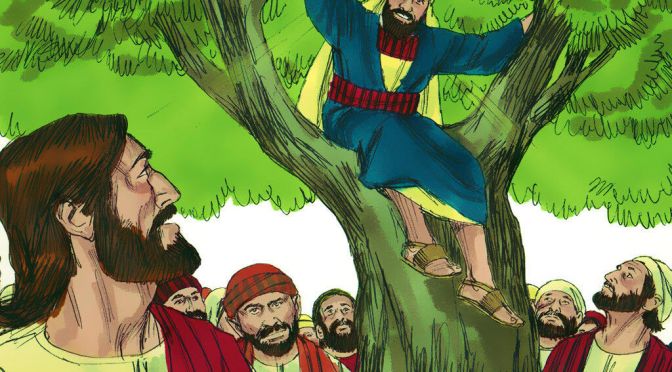
Nearly 2,000 years ago, a short guy got up into a tree to see and hear Jesus teach and then did something remarkable after being called out. Here’s what Luke reports about that guy and time (Luke 19:1-8):

He [Jesus] entered Jericho and was passing through. And there was a man called by the name of Zaccheus; he was a chief tax collector and he was rich. Zaccheus was trying to see who Jesus was, and was unable because of the crowd, for he was small in stature. So he ran on ahead and climbed up into a sycamore tree in order to see Him, for He was about to pass through that way. When Jesus came to the place, He looked up and said to him, “Zaccheus, hurry and come down, for today I must stay at your house.” And he hurried and came down and received Him gladly. When they saw it, they all began to grumble, saying, “He has gone to be the guest of a man who is a sinner.” Zaccheus stopped and said to the Lord, “Behold, Lord, half of my possessions I will give to the poor, and if I have defrauded anyone of anything, I will give back four times as much.”

Luke tells us that Zacchaeus was a Chief Tax Collector. Is that important to the story? Yep! He was a Jewish man who collected taxes from his people for the Roman government. Think of it as the ancient IRS! So, you can imagine that Zacchaeus wasn’t very popular with the townspeople! Strike one! Here’s the rub: tax collectors could collect as much as they wanted as long as the Romans received a certain amount. Collectors were to keep a small portion for their trouble. Anyway, the problem was that many kept more than was reasonable. Strike two!

Why did Zaccy’s homies think he was a sinner? It’s because he likely stole from them by keeping more than he should’ve. He all but admits to the defrauding in the final verse above. But what appears to be a story about a short guy and a tree is a beautiful lesson in true repentance—a change of behavior that came about because of a new heart. Zacchaeus could’ve, like many of us, just said something like, “Well, I’m sorry!” But he didn’t stop there, volunteering to give back more than he stole.

As a result, Zaccy is likely someone who stands tall in God’s Kingdom. How can we do the same? To start, we must turn “I’m sorry” into something useful by changing our behavior and making things right, as Zacchaeus did. Then, we learn about God’s ways and do them consistently! What about next week? Well, I think we’ll test our priorities in What’s in Your Wallet?

God’s blessings and peace to you,

Dr. Ron Braley

Godly Obedience

It’s July 8, 1741, in Enfield, Connecticut. Reformation preacher Jonathan Edwards turns the hearts of hundreds of listeners as he explains that their disobedience to God’s commandments [to honor Him and love people] has put them in a precarious position:

Your  Wickedness  makes  you  as  it  were  heavy  as  Lead, and to tend downwards with great Weight and Pressure towards Hell; and if God should let you go, you would immediately sink and swiftly descend & plunge into the bottomless Gulf, and your healthy Constitution, and your own Care and Prudence, and best Contrivance, and all your Righteousness, would have no more Influence to uphold you and keep you out of Hell, than a Spider’s Web would have to stop a falling Rock.

Don’t worry—this week’s article isn’t fire-and-brimstone teaching; however, there’s certainly great value in simple instruction about the consequences of obedience or disobedience to God’s commandments. But what are the commandments? Do we really need to do them?

Jesus reiterated two overarching commands from the Torah (the first few books of the Old Testament): Honor God with all we are and have, and love people (cf., Matthew 22:34-40). He stated that everything taught about God’s ways can be wrapped up in those two commands. He went on to say that:

If you love Me, you will keep My commandments. (John 14:15)

Jesus answered and said to him, “If anyone loves Me, he will keep My word; and My Father will love him, and We will come to him and make Our abode with him. He who does not love Me does not keep My words; and the word which you hear is not Mine, but the Father’s who sent Me.” (John 14:23-24)

Seems simple—right? Not really. If it were, we wouldn’t continually mess up, treat people horribly, and speed down that highway to hell so-to-speak. Here are a few abbreviated tips I pulled from the Bible that may help you obey, stay in the relationship with Father and Son, and inherit the Kingdom of God:

  • they love is pointless and deadly (James 2:14-26). So, help others; feed the hungry; be slow to speak and quick to listen; be slow to respond as you give reconciliation a chance (Matthew 5:39).

What about next week? Well, I think I’ll tell you about the short guy (not me!) who stands tall in the Kingdom of God: Wacky Zaccy!

Blessings and peace,

Dr. Ron Braley
Playing With Fire!

God has always demanded allegiance and obedience. There’s no middle ground, no room for ‘fudging’ things, and no gray area. He commanded Adam and Eve not to eat the fruit of a particular tree. They disobeyed, and we lost our access to the Tree of Life (but only until God returns creation to the perfection it once enjoyed!). Lot’s wife played with fire and lost her life for taking one last peek at her old lifestyle (Genesis 19). There are many other examples in the Bible of people who ‘pushed the envelope,’ testing God’s commandments. We do the same today.

God tells us to stay away from interaction with the spirits of the dead, but we engage mediums and psychics (Deuteronomy 18:10-13). We indulge in astrology, relying on created things to determine our fate instead of trusting the Creator. And testing God’s commands where sexuality is concerned is a vast area where many Christians play with fire (literally and figuratively)!

God is clear about the destination of those who practice sexual rebellion, such as adultery and homosexuality (1Corinthians 6:9-10). We are also warned to carefully choose what we listen to and observe (Matthew 6:22-23; Job 31:1; Philippians 4:8). Here’s an interesting fact: people wanting to become Christians in the first couple of centuries couldn’t if they, at the same time, participated in the theater because of the sensuality and immoralities it often portrayed (just like today!). Why must we take care of what we watch? Because the input helps map the pathways in our brain and can cause us to ‘boil the frog’ as we slowly allow or condone or ignore—become desensitized to—the things God hates. This is where watching pornography comes in.

Pornography (Greek porneia and graphe) is a compound ‘catch-all’ word representing all kinds of sexual immoralities. Indulging in anything sexually immoral, even just visually, tests God’s commands and His desires for our conduct; it won’t end well. Here’s a shortlist of other ways Christians play with fire where God is concerned:

  • We must tell the truth—especially where the welfare of others is concerned (Exodus 20:16). But lying has become pervasive.
  • We must not idolize (covet) things, but we do it all the time (stuff, sports, people, multimedia—anything but God’s ways) (Exodus 20:17; 1 John 2:15-17).
  • We are commanded to rest one day each week (for many reasons, including physical, spiritual, and mental health) (Exodus 20:10; Mark 2:27-28); however, few do this religiously.

Just because the proverbial lightning hasn’t struck us down as we rebel against God doesn’t mean that our playing with fire won’t result in judgment and destruction. So, if you’re playing with fire by doing anything God is against, please stop and change direction—fast! Next week, we’ll continue to consider God’s desires as I outline the requirements for Citizenship in the Kingdom of Heaven.

Blessings and peace,

Dr. Ron Braley

Corroborating Apocalypses

What do you think of when you hear or read the word apocalypse? Nuclear war? Missiles, tanks, death, and other violent stuff? The basic form of the ancient word means “to reveal.” In the Revelation given by God to Jesus to give to John to pass on to the churches in Asia Minor (phew!) in about 90CE, Jesus revealed events to come later. That’s why Revelation is apocalyptic. But do you know that Jesus had already told much of the Revelation events or characteristics when He was on earth about 60 years earlier? It’s true!

During the week of His crucifixion, Jesus and perhaps several of His closest disciples walked from the Temple complex to the Mount of Olives. He had said that the Temple would eventually be destroyed and not one of its stones left in place (Matthew 24:1-2). On the Mount of Olives, His disciples asked several related questions: 1. When would this happen, 2. What will signal Jesus’ return to earth, and 3. When will be the end of the age (Matthew 24:3)?

Jesus answers their questions in Matthew chapters 24 and 25, which inform of the beginning of hard times (‘birth pains,’ according to Jesus (Matthew 24:5-8)) to the judgment at the end of this age (Matthew 25:31-46). He gave much more detail about the same timeframe in visions to John about 60 years later. Here’s a brief comparison of what Jesus revealed on earth to what He revealed to John in about 90CE:

  • False saviors (Christs):                                                                 Matthew 24:5 & Revelation 6:2
  • War/violence:                                                                                    Matthew 24:6-7a & Revelation 6:3-4
  • Famine/pestilence:                                                                         Matthew 24:7b & Revelation 6:5-6
  • Terrible time of trouble and persecution (Great Tribulation) by the Antichrist:   Matthew 24:10-13 & Revelation 6:7-12; 7:9-17; 12:17                                
  • Christ’s second coming (ending the Great Tribulation):                                Matthew 24:29-31 & Revelation 6:12-17
  • The Great Judgment:                                                                  Matthew 25:31-46 & Revelation 20:11-15

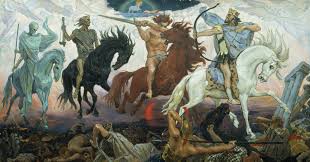
A final note about the False Christs of Matthew 24:5 and Revelation 6:2, which can seem confusing: The horse in Revelation is white and the rider wears a crown, which signifies righteousness and authority; however, his weapon is a bow, not a sword, which is the weapon of Christ (Matthew 10:34; Revelation 19:15 & 21).

In summary, Jesus, who came to earth to satisfy our debt to God, is the same Jesus who revealed end-times things again to John 60 years later. So, it makes sense that the information is related. It seems important! Shouldn’t we study the Bible and pray for illumination by God’s Spirit so that we can find out what God wants and do that before it’s too late??

Next week, we’ll leave the end-times and explore a dangerous practice by many Christians in Playing with Fire.

Blessings and peace,

Dr. Ron Braley

Why Bad Things Happen, Part II: Why??

Last week, we began examining “Why do bad things happen to me or any good person?” and learned that humanity separated from God, which introduced death and pain. We walked away from perfection and must deal with the consequences. This week, we’ll dig deeper into why bad things happen.

First, everyone is subject to fortune and misfortune, blessings, and catastrophe. Some wicked people will prosper – often because of deceit and injustice. Others will suffer from natural disasters or others’ bad choices despite their love for God and people.

Second, we experience the actions of others. Anyone can choose to harm us or who live carelessly.  But we know this – otherwise, there would be no need for end-of-the-world judgment and consequences. People will drive drunk and take lives. Some will steal and cause poverty and hunger. Others will, out of their anger or addictions, cause harm.

Third, we suffer from our actions at times (e.g., Matthew 26:52). Our lifestyles introduce risk. People who drive or ride in vehicles run the risk of being maimed or killed in accidents. Those who jump out of airplanes may die. Sportspeople may be killed or seriously injured, and so might those of us who participate in the national or local defense.

Also, our technology creates many risks! Cancer increases may be related to chemicals and carcinogens with which we pollute the air, water, and food. Genetic engineering may increase crop and livestock bounty but introduces the risk of human mutation and illnesses. God didn’t force us to employ electricity, vehicles, or chemical or genetic engineering, and yet we blame Him when we reap the consequences associated with our lifestyles and environments!

Finally, faithful followers of Jesus may suffer trouble out of faith (Luke 14:27-30):

Whoever does not carry his own cross and come after Me cannot be My disciple. For which one of you, when he wants to build a tower, does not first sit down and calculate the cost to see if he has enough to complete it? Otherwise, when he has laid a foundation and is not able to finish, all who observe it begin to ridicule him, saying, “This man began to build and was not able to finish.”

Next week, we’ll continue this train by considering how we can restrict, or enable, the presence of God in our lives. So, join me for Part III!

Blessings and peace,

Ron Braley

Liar, Liar, Pants on Fire!

People lie with incredible ease these days. Empty, unkept promises fill the air, and it’s common to speak what we believe people want to hear. Flattery brings a smile or manipulates but leaves the victim empty and the liar or flatterer headed for destruction. Let me give you a couple of personal examples.

Years ago, a pastor would say, “Ron, I love you!” during each visit. The words, empty as I soon discovered, made me feel good at first. However, he regularly didn’t honor his word in our relationship. Outright lying and not fulfilling promises had become his way. I recently had a negative experience with a local business and was promised a call by one manager who didn’t keep his word. A second manager also made empty, unmet promises. The situation was finally addressed, but distrust had set in. Perhaps many of you have had similar experiences of flattery, empty promises, lies, broken contracts, or deceit in relationships. Maybe it’s a phone call that never came or an email that never materialized. I’m sorry if so! It wasn’t always this prevalent and certainly isn’t what God intends!

“A man’s word is his bond” was a common phrase once upon a time. And a handshake was as good as a contract because people kept their word. The understanding was that if a person could not be trusted, they would be of little value as a community member. God-fearers and Christ-followers understood that God valued honesty and word-keeping and that anything else would bring deadly consequences.

Telling the truth has always been important to God. At the beginning of time, He spoke, and stuff happened. The heavens and earth appeared, as did all creatures on land and sea and in the air. God spoke through the prophets and what He said through them came true. God promised to provide a way back to Him. Once again, He kept His word. God is fair and just; He does what He says He will do. Honoring His promise to send a savior is one reason why God is love – the kind of love He desires from us (1John 4:17-21). He has no use for liars and deceivers in this world, His Kingdom, or the coming age:

He who overcomes will inherit these things, and I will be his God and he will be My son. But for the cowardly and unbelieving and abominable and murderers and immoral persons and sorcerers and idolaters and all liars, their part will be in the lake that burns with fire and brimstone, which is the second death. —Revelation 21:7-8.

So, keep your promises, do what you say you’ll do. Don’t lie or deceive others but be trustworthy as God is trustworthy. In that, we can love as God loves and join Him in this age and the next.

Questions or comments? Email publisher@taylorpress.net.

Blessings and peace,

Pastor Ron Braley, Northview Christian Church

Adopt a Bible!

Disappointingly, our plea for Bibles for Africa recently yielded no results despite the knowledge that most Africans have no Bible (including most Christian teachers and leaders!).

How can the people learn about God or become disciples effectively with no guide?

How can we who are wealthy by comparison and have an abundance of Bibles and Christian literature be obedient to Jesus’ commandment to ‘tell’ and ‘make disciples’ without doing our part to rectify this incredible disparity?

So, I thought I’d take a different approach by asking everyone to ‘adopt a Bible’. A donation of only $10 will buy one Swahili Bible. Obviously, Africa needs more than one Bible but if everyone buys at least one, we win in our obedience and Africa wins by being able to learn and teach their Faith.

Will you adopt a Bible for Africa by donating here? http://findingrevelation.com/FindingDiscipleship/Africa%20Bibles.htm

Blessings!

Ron Braley, findingdiscipleship.org & ronbraley.com


God – the Nature of the Creator

In our emotion-based Christian culture, we often picture our God as a kindly old man who emotionally loves us no matter who we are and what we’ve done. We’re told to imagine ourselves crawling into His lap and cuddling as we talk to Him. This is a dangerous and misleading picture!

Our God wants to be reconciled with the mankind He created and who walked away from Him 6,000 years ago. But make no mistake: we are to fear our God as we answer the call to a two-way relationship born of obedience out of faith, “I will be yours if you will be mine!

Let’s look at that ‘fear’ after glancing at some of the characteristics or nature of your God who is a jealous, just, merciful provider and protector of those who are His.

God is jealous: He wants to be our only God

A jealous and avenging God is the LORD; The LORD is avenging and wrathful. The LORD takes vengeance on His adversaries, And He reserves wrath for His enemies. The LORD is slow to anger and great in power, And the LORD will by no means leave the guilty unpunished. In whirlwind and storm is His way, And clouds are the dust beneath His feet.—Nahum 1:2-3.


God is just: He will keep His promises despite any ‘feelings

The Rock! His work is perfect, For all His ways are just; A God of faithfulness and without injustice, Righteous and upright is He. —Deuteronomy 32:4.


God is merciful: The promises He keeps as a just God bring life

Be merciful, just as your Father is merciful. —Luke 6:36.

The LORD is gracious and merciful; Slow to anger and great in lovingkindness. —Psalm 145:8.

God is protector and provider and forgiver of the righteous

“But this is what I commanded them, saying, ‘Obey My voice, and I will be your God, and you will be My people; and you will walk in all the way which I command you, that it may be well with you.’” —Jeremiah 7:23.

If we confess our sins, He is faithful and righteous to forgive us our sins and to cleanse us from all unrighteousness. —1John 1:9.

God is judge of all

Being then the children of God, we ought not to think that the Divine Nature is like gold or silver or stone, an image formed by the art and thought of man. Therefore having overlooked the times of ignorance, God is now declaring to men that all people everywhere should repent, because He has fixed a day in which He will judge the world in righteousness through a Man whom He has appointed, having furnished proof to all men by raising Him from the dead. —Acts 17:29-31.

Another destructive misconception in today’s Christian culture is that God is ‘not of fear’. However, that claim comes from a lack of understanding and by taking a biblical text out of context. It’s true that we have no need to fear a man when we have the Spirit; however, we are to fear God and with good reason.

  • Fear of God and Christ (i.e. Luke 7:16, Acts 13:16, Romans 13:7, 2Corinthians 7:1, Ephesians 5:21, Philippians 2:12, 1Peter 1:17). This healthy fear is represented by the Greek word phobos (Strong’s G5401); it indicates alarm, fright, or terror.

Therefore, having these promises, beloved, let us cleanse ourselves from all defilement of flesh and spirit, perfecting holiness in the fear of God. —2Corinthians 7:1.

So then, my beloved, just as you have always obeyed, not as in my presence only, but now much more in my absence, work out your salvation with fear and trembling —Philippians 2:12.

If you address as Father the One who impartially judges according to each one’s work, conduct yourselves in fear during the time of your stay on earth —1Peter 1:17.

  • This next ‘fear’, phobeō (Strong’s G5399), comes from the one we just covered, and it basically means to ‘be in awe of’ or revere. Examples of its use can be found in Luke 12:4-5, Romans 11:20-21, Acts 5:10-11, and 1Peter 2:17.

“I say to you, My friends, do not be afraid of those who kill the body and after that have no more that they can do. But I will warn you whom to fear: fear the One who, after He has killed, has authority to cast into hell; yes, I tell you, fear Him!—Luke 12:4-5.

Honor all people, love the brotherhood, fear God, honor the king. —1Peter 2:17.

Your just God is willing to protect, provide, and forgive when we respond to His call through faith and action. Believe. Repent. Love through charity and obedience. Fear in a healthy fear the nature of your God Jehovah and live!


Keep an eye out for “Finding Answers to Stuff Churches Don’t Discuss!” scheduled for a mid-2016 publication. There, you’ll find roughly 60 topics related to daily life (such as sex, religion, finances, tattooing, and everything in between!) along with practical application of God’s guidance for navigating those difficult waters!

And, for a very comprehensive and detailed study of the very important topic of God’s judgment to come and being rescued from it, feel free to read my 2011 guide titled, “Finding the End of the World” available at Amazon, Barnes and Noble, and from www.ronbraley.com in paper and e-book formats. In the guide, you’ll find roughly 500 pages of building blocks to help you do your own complete and unbiased study based on Scripture and history!