Category Archives: Finding Answers to Stuff Churches Don’t Discuss

Blogging about real-life stuff where we apply God’s guidance

Evangelism: Playing the Detective

As we’ve already learned, evangelism is absolutely critical to our salvation and that of others we witness to . . . or don’t.

“Therefore everyone who confesses Me before men, I will also confess him before My Father who is in heaven. But whoever denies Me before men, I will also deny him before My Father who is in heaven.” —Matthew 10:32-33.

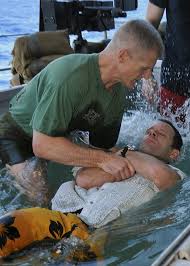
“Go therefore and make disciples of all the nations, baptizing them in the name of the Father and the Son and the Holy Spirit, teaching them to observe all that I commanded you” —Matthew 28:19-20.

One great way (but not the only way!) to evangelize the Gospel message is to build a relationship between yourself and those you to whom you express the good news. This will build trust and present opportunities to share and teach. Building that trust and seeking those golden opportunities will require you to get to know the other person. What is their background? What are their fears – especially regarding God or Christianity? What are their perceptions around religion? What physical, financial, emotional, or spiritual needs do they have? ‘Playing the detective’ will help you learn the answers to these questions and more in your relationship-building exercise.
Playing the detective requires that you ask open-ended questions, listen carefully to the responses, and then respond with additional questions as you ‘build their story’ and then relate your experiences and the Gospel to it. For instance:
“What do you think about God?”
“I don’t know. I’ve heard a lot of stuff and think he’s probably some higher power somewhere.”
“I know what you mean. The concept of God can be confusing – especially when so many people seem to have personal opinions about Him or be involved in different manmade religions. Tell me more about what you’ve heard.”

Well, I think you get the idea . . . Additional help in playing the detective can be found this highly-effective habit expressed by Dr. Stephen Covey: “Seek first to understand, and then to be understood”.
The following biblical advice can also help you treat your fellow man appropriately as you build evangelistic relationships:

Do nothing from selfishness or empty conceit, but with humility of mind regard one another as more important than yourselves; do not merely look out for your own personal interests, but also for the interests of others. Have this attitude in yourselves which was also in Christ Jesus —Philippians 2:4-5.

Keep an eye out for “Finding Answers to Stuff Churches Don’t Discuss!” scheduled for a mid-2015 publication. There, you’ll find roughly 60 topics related to daily life (such as sex, religion, finances, tattooing, and everything in between!) along with practical application of God’s guidance for navigating those difficult waters!
And, for a very comprehensive and detailed study of the very important topic of God’s judgment to come and being rescued from it, feel free to read my 2011 guide titled, “Finding the End of the World” available at Amazon, Barnes and Noble, and from http://www.ronbraley.com in paper and e-book formats. In the guide, you’ll find roughly 500 pages of building blocks to help you do your own complete and unbiased study based on Scripture and history!

Evangelism 101

What is evangelism? It’s proclaiming what we know about God and our Christ . . . out loud (i.e. Psalm 96 and 1John 1:1-5). Who has been called to evangelize? Everyone!

but sanctify Christ as Lord in your hearts, always being ready to make a defense to everyone who asks you to give an account for the hope that is in you, yet with gentleness and reverence — 1Peter 3:15.

Go therefore and make disciples of all the nations, baptizing them in the name of the Father and the Son and the Holy Spirit, teaching them to observe all that I commanded you —Matthew 28:19-20.

Why is evangelism necessary?
•To enable mankind to be reconciled to God (2Corinthians 5:18-20).
• No one will hear if no one tells . . . (Romans 10:12-15).
• To help build faith (Romans 10:17; 2 Timothy 3:14-17).
• For our relationship with God & Christ (i.e. Matthew 10:32).
• Jesus commanded it (Matthew 28:19-20)!

How do we evangelize?
• Prepare – be convinced (2 Timothy 3:14-17 and 1Peter 3:15-16). We can’t tell what we don’t know or believe. That ‘convincing’ is rooted in discipleship, mentoring, Bible study, fellowship, etc.
• Build relationships. Those you tell the Gospel message to must trust you. Remember, blind faith is useless. And, discipleship, which requires trust too, will only be possible through relationship.
• Live the life – walk the talk and be consistent! However, just being a ‘good person’ and hoping people will somehow know Jesus as a result doesn’t work. We MUST tell about the hope within us and the ‘why’ . . .
• Use what you know. Take advantage of your experiences. “Dude! I was a drunk and lost until I heard about our creator and how He wants us back even though we walked away from a relationship with Him thousands of years ago. I’ve given my life back to Him and have promised to walk in His ways. My life has changed as a result – I am definitely a new person with a renewed hope! Want to hear more?” Everyone has a story, and we can all give a basic salvation elevator pitch . . .
• Look for opportunities to share God’s message of salvation and hope.

Summary: We are all called to proclaim God’s glory and spread the news of eternal life through Jesus. So, we learn and tell others what we know. We can also support evangelists (3John 1:7-8; Philippians 4:14-19; 1Corinthians 9:1-14). Those who tell others about God’s just nature and salvation from His wrath will enjoy a relationship with Him and all it brings including the Spirit and salvation from that wrath.

Keep an eye out for “Finding Answers to Stuff Churches Don’t Discuss!” scheduled for a mid-2015 publication. There, you’ll find roughly 60 topics related to daily life (such as sex, religion, finances, tattooing, and everything in between!) along with practical application of God’s guidance for navigating those difficult waters!
And, for a very comprehensive and detailed study of the very important topic of God’s judgment to come and being rescued from it, feel free to read my 2011 guide titled, “Finding the End of the World” available at Amazon, Barnes and Noble, and from http://www.ronbraley.com in paper and e-book formats. In the guide, you’ll find roughly 500 pages of building blocks to help you do your own complete and unbiased study based on Scripture and history!

Hooking Up With Wickedness

We live in a world filled with people ignorant of God’s ways or the gift of salvation Jesus offers. Without our influence through relationship, they’ll likely never know these truths. But, we must not let influence work the other way around by allowing ourselves to be lured into sinful behavior.

First and foremost, we’re to spread the good news of God’s grace and mercy through the Christ to those around us. This wasn’t a nice suggestion – it was an order by Jesus (Matthew 28:19-20). And as Paul pointed out, how will people learn of the Gospel – that great news – if no one tells them? We’re all called to preach (proclaim and display) the Gospel. How can we do this if we don’t interact with others who need to hear the message (Romans 10:13-15)?

We’re also to be a shining example – a light to those around us. There’s no way to be that light without being visible to the world.

“You are the light of the world. A city set on a hill cannot be hidden; nor does anyone light a lamp and put it under a basket, but on the lampstand, and it gives light to all who are in the house. Let your light shine before men in such a way that they may see your good works, and glorify your Father who is in heaven.” —Matthew 5:14-16.

so that you will prove yourselves to be blameless and innocent, children of God above reproach in the midst of a crooked and perverse generation, among whom you appear as lights in the world —Philippians 2:15.

Keep your behavior excellent among the Gentiles, so that in the thing in which they slander you as evildoers, they may because of your good deeds, as they observe them, glorify God in the day of visitation. —1Peter 2:12.

Again, we can’t isolate ourselves and therefore shield our light from the world. We must be in the world to provide an example, but not of the world (duplicating any of its ungodly values and behaviors). In fact, Paul reminded the church in Corinth that they must exist in the world, but not to be of the world by tolerating sinful behavior from those who should know better.

I wrote you in my letter not to associate with immoral people; I did not at all mean with the immoral people of this world, or with the covetous and swindlers, or with idolaters, for then you would have to go out of the world. But actually, I wrote to you not to associate with any so-called brother if he is an immoral person, or covetous, or an idolater, or a reviler, or a drunkard, or a swindler–not even to eat with such a one. —1Corinthians 5:9-11.

Paul also explained that although we need to be flexible and enter into relationships to preach the Gospel, we must be careful not to practice sin found in the world and therefore give up the gift of salvation (1Corinthians 9:19-27).

In another related admonishment, Paul tells the same church that they must not enter into very close relationships with unbelievers. Associate, yes – be bound together, no. The Greek word for ‘bound’ below is heterozugeō, which implies unequal yoking. This is important to understanding Paul’s intent. Yoking together dissimilar creatures would be counterproductive and, while the act may help the weakest of the pair, may bring down the stronger (or more righteous in this case).

Do not be bound together with unbelievers; for what partnership have righteousness and lawlessness, or what fellowship has light with darkness? Or what harmony has Christ with Belial, or what has a believer in common with an unbeliever? —2Corinthians 6:14-15.

Do not be deceived: “Bad company corrupts good morals. —1Corinthians 15:33.

Who shouldn’t be bound together with unbelievers? Probably the best example is a follower of Jesus in marriage. This relationship will do nothing positive for the believer and may cause them to fall from their faith (although I’m sure there have been some exceptions).

Another sobering example that hits close to home for me is that of a relationship with atheists. These people are enemies of God and are not to be your associates! You won’t convert them. Their twisted agenda and abuse of God’s words trip up and confuse the faith of many. “Dude! You’ve gotta help me – my faith is shaken!” still rings in my ears . . .

Also included in unequal relationships that should be avoided between followers and unbelievers are business partnerships and those entering legal agreements. Why? A follower of the Christ operates under direction from the Holy Spirit and probably by a different set of moral guidelines than an unbeliever would follow. Their misaligned spiritual goals and different motivations could result in serious trouble in business, finances, friendships, or salvation.

Who are your friends and business partners? Remember to be a light to the world, but take measures to avoid having your faith corrupted and, therefore, jeopardizing your rescuing from God’s wrath to come!

Keep an eye out for “Finding Answers to Stuff Churches Don’t Discuss!” scheduled for a mid-2015 publication. There, you’ll find roughly 60 topics related to daily life (such as sex, religion, finances, tattooing, and everything in between!) along with practical application of God’s guidance for navigating those difficult waters!

And, for a very comprehensive and detailed study of the very important topic of God’s judgment to come and being rescued from it, feel free to read my 2011 guide titled, “Finding the End of the World” available at Amazon, Barnes and Noble, and from www.ronbraley.com in paper and e-book formats. In the guide, you’ll find roughly 500 pages of building blocks to help you do your own complete and unbiased study based on Scripture and history!

Purity & Holiness

God desires righteousness and blamelessness from us. Therefore, purity would describe the level of attainment of that state whatever the thing we want to be pure in. Think of it this way: in nature, something nearly pure (like fine gold or diamonds for instance) has little if anything else mixed with it. The purer, the more desirable the object is.

We, in covenant with our God through the Christ, must be set apart from worldly behavior (be holy, by definition). It’s not a mere suggestion, but a mandate. Those who practice immorality and sinful behavior will perish; the righteous who pursue purity and holiness through discipleship and application will live and enjoy their reward.

Be an example through purity, which may come at least in part through understanding of the Word of God.

Let no one look down on your youthfulness, but rather in speech, conduct, love, faith and purity, show yourself an example of those who believe. Until I come, give attention to the public reading of Scripture, to exhortation and teaching. —1Timothy 4:12-13.

As followers of Jesus, we should be ‘dead’ to immorality and impurity.

Therefore consider the members of your earthly body as dead to immorality, impurity, passion, evil desire, and greed, which amounts to idolatry. For it is because of these things that the wrath of God will come upon the sons of disobedience, and in them you also once walked, when you were living in them. But now you also, put them all aside: anger, wrath, malice, slander, and abusive speech from your mouth. —Colossians 5:3-8 (see also Ephesians 5:19-5).

Be pure, and therefore set apart from wicked behavior.

Therefore, having these promises, beloved, let us cleanse ourselves from all defilement of flesh and spirit, perfecting holiness in the fear of God. —2Corinthians 7:1.

So, just how do we learn and apply God’s ways in the pursuit of holiness?

Finally, brethren, whatever is true, whatever is honorable, whatever is right, whatever is pure, whatever is lovely, whatever is of good repute, if there is any excellence and if anything worthy of praise, dwell on these things. —Philippians 4:8.

Now for this very reason also, applying all diligence, in your faith supply moral excellence, and in your moral excellence, knowledge, and in your knowledge, self-control, and in your self-control, perseverance, and in your perseverance, godliness, and in your godliness, brotherly kindness, and in your brotherly kindness, love. —2Peter 1:5-7.

Speaking of self-control in application of what we learn: Just as our belief in Jesus must result in obedience to be effective, our desire for purity must be put into action through self-control of the body and its desires. When we didn’t know better, it was easy to become slaves to lusts of our body. Paul had a lot to say about this in Romans Chapter 6 (definitely worth a read!). Other excellent Scriptures that highlight the importance of self-control in the pursuit of holiness include the following.

  • Exercise self-control to avoid being disqualified from the race and prize Paul equates to righteousness and eternal life. 1Corinthians 9:25-27.
  • Self-control is one of the fruits of the Spirit of God (Galatians 5:22-23).
  • We should always ask whether what we’ll use our body for will be pleasing to God. 1Corinthians 6:18-20.
  • We must no longer be enslaved by our body and its lusts but the other way around. Romans 6:6 & 12-13.

Purity and holiness are possible when we learn God’s ways and apply them consistently. Like the body builder in pursuit of an exceptional physique, application can be difficult and painful at first; however, the rewards far outweigh the pain of achieving them.

What’s your pursuit?

Keep an eye out for “Finding Answers to Stuff Churches Don’t Discuss!” scheduled for a mid-2015 publication. There, you’ll find roughly 60 topics related to daily life (such as sex, religion, finances, tattooing, and everything in between!) along with practical application of God’s guidance for navigating those difficult waters!

And, for a very comprehensive and detailed study of the very important topic of God’s judgment to come and being rescued from it, feel free to read my 2011 guide titled, “Finding the End of the World” available at Amazon, Barnes and Noble, and from www.ronbraley.com in paper and e-book formats. In the guide, you’ll find roughly 500 pages of building blocks to help you do your own complete and unbiased study based on Scripture and history!

Who’s Your Life Coach?

Everyone (even the casual Christian) seems to be looking for the latest self-help book or some kind of life coach these days. A silver-bullet approach to fixing ourselves or quick, easy fix toward self-improvement are high on the list of priorities for many.

Seems like a good pursuit. Right? I guess that depends on why we think we need ‘fixing’ or the standard to which we’re comparing ourselves and repairing what we perceive as damaged. And it could be anything from physical improvement to emotional well-being . . .

Well, if this describes you and your direction, you’re in luck! Your creator – the Father of Spirits – has provided you with everything you need to know to redirect your steps toward righteousness, perfection, and the ultimate self-help path that will also keep you from His incredible judgment and destruction to come!

For instance, Jesus tells us that we’re to be obedient to His commandments if we want to live (John 14:21-24). And, He and the Apostle Paul warn us of the behaviors that will land us in hell (Matthew 25:31-46 and 1Corinthians 6:9-10). Going further back in time, we can even learn about behaviors that can aid in healthy living (e.g. the books of Leviticus and Deuteronomy).

Speaking of the Apostle Paul: We learn from him that immersing ourselves in the Scriptures (the Torah from which the Old Testament was formed) can keep us on the right track and help us discern right from wrong and truth from fable (2Timothy 3:16 and 1Timothy 4:6-7).

So, what do we do when we realize we’re heading down the wrong path? We repent – a change in behavior that comes from a change of heart (Acts 3:19 and 11:18; Romans 2:5).

The Spirit of God can also provide us with tools and gifts we can use to live well and for eternity (John 14:26 and 1Corinthians 12:7-11). In fact, those who believe in, and follow, our God, and, therefore, receive His Spirit, display characteristics such as peace, joy, and self-control (John 7:39; Acts 19:2; Galatians 5:22-23).

So, allow the words of God, and His Spirit, to be your life coaches. Learn. Commit. Grow. Improve. Live!

Keep an eye out for “Finding Answers to Stuff Churches Don’t Discuss!” scheduled for a mid-2015 publication. There, you’ll find roughly 60 topics related to daily life (such as sex, religion, finances, tattooing, and everything in between!) along with practical application of God’s guidance for navigating those difficult waters!

And, for a very comprehensive and detailed study of the very important topic of God’s judgment to come and being rescued from it, feel free to read my 2011 guide titled, “Finding the End of the World” available at Amazon, Barnes and Noble, and from www.ronbraley.com in paper and e-book formats. In the guide, you’ll find roughly 500 pages of building blocks to help you do your own complete and unbiased study based on Scripture and history!

In Loving Fairness (previously “Apocalyptic Misquote: God is Love”)

In our feel-good experiential Christian culture, I’ve often heard said, “God is Love!

Actually, God IS love; however, this ‘love’ is grossly misunderstood. And, the common misunderstanding of the love that God is and does lends itself to a dangerous and pervasive view that anyone in His good favor should never suffer and will have anything they want . . . Please see my earlier blogs titled “God has a plan for me!”, “I can do all things Through Christ”, “No Weapon Formed Against me will Prosper” and “In Jesus’ Name” in Apocalyptic Misquotes Parts I, IV, and VI for more information related to this prosperity Gospel and spiritual rock star mentality so prevalent in churches today.

This misunderstanding is based on 1John – 1John 4:8 and 16 in particular. The first thing we must do is understand the context of John’s comments about God being love. The next thing we’ll do is explore the meaning of that ‘love’, which you’ll learn is consistent, appropriate action – not emotion.

The theme and context of 1John Chapter 4 boils down to a fair and just God that will judge the world and save the righteous. This text serves as a reminder that our actionable love, which is obedience to Jesus’ commandments out of our faith, mirrors God’s just nature and is the basis for our coming salvation. Here’s a breakdown of the verses.

Verses 1-6: Differentiating ourselves from the world.

Verses 7-17: God is actionable love. He has promised a savior for mankind and kept His promise.  We should be like Him and actionably love one another because He has done the same for us as we abide in Him and He in us through the Spirit.

Verses 18-21: A sobering reminder that actionable love born of our faith is critical to salvationrescuing from God’s judgment to come. Being nice, feeling spiritual, belief alone, or having lots of knowledge about the Bible kept private are of no use to God, our Christ, or the Church.

I keep mentioning ‘actionable’ love, which is based on the Greek agape and agapao (is love and action born of love). Nowhere does Scripture or the New Testament Gospel or letters suggest God is ‘nice’ or that we should be that way. With the exception of a few uses of a Greek-based phil love (i.e. Philadelphia – brotherly love), the only ‘love’ you’ll see related to God and our Christ is actionable, non-emotion-based, agape/agapao love. This is one that equates to, “I’ll treat you appropriately despite how I feel.” Instead, we’re to be fair, kind, patient, repentant, self-controlled, etc.  Hmmm . . . sounds a lot like the actions (fruits) shown by those who belong to God and, therefore, have the Spirit as they abide in God and He in them . . .

So, God is love because He has treated us appropriately and kept His promise to send a savior despite the way He has ‘felt’ toward mankind at times throughout history. He is just to save and to forgive when we are in covenant with Him as so many of the New Testament letters show. Please see my earlier blog titled, “True Love” for more background on the kind  of love God had and has for us, and we should have for each other.

Act fairly, justly, kindly, and consistently as our God also has done for us . . . and live!

Keep an eye out for “Finding Answers to Stuff Churches Don’t Discuss!” scheduled for a mid-2015 publication. There, you’ll find roughly 60 topics related to daily life (such as sex, religion, finances, tattooing, and everything in between!) along with practical application of God’s guidance for navigating those difficult waters!

And, for a very comprehensive and detailed study of the very important topic of God’s judgment to come and being rescued from it, feel free to read my 2011 guide titled, “Finding the End of the World” available at Amazon, Barnes and Noble, and from www.ronbraley.com in paper and e-book formats. In the guide, you’ll find roughly 500 pages of building blocks to help you do your own complete and unbiased study based on Scripture and history!

Exploring God’s Will

God’s will is what He wants to do, which is primarily to keep us from destruction through salvation. This is His plan for mankind. In the process, He desires for us to be obedient, rejoice, pray, and spread the good news to others. Although we tend to think God’s will is actually some kind of grandiose plan for our lives, we should instead focus on helping God see His plan for mankind through to completion.

“Will” is defined in two ways in the Greek translated into the New Testament:

  • Strong’s G2307, thelēma, a determination; choice; inclination: – desire, pleasure, will. (John 6:40)
  • Strong’s G2309, thelō ethelō   to determine; choose or prefer; to wish, be inclined to; to delight in: – desire, intend, list, love, mean, please (Matthew 9:13 – desire;  Matthew 15:28 – wish; Matthew 26:39 – will; Mark 12:38 – like; Galatians 5:17 – please)

So, God’s will can be something He desires (as in Matthew 18: 12-14) or His plan for mankind (i.e. Matthew  26:42 or John 6:37-40).

Some of God’s desires:

  • That none are lost (Matthew 18: 12-14)
  • Obedience, not legalism (Matthew 9:13)
  • Our good deeds so we’ll silence the foolish (1Peter 2:13-16)
  • We rejoice and pray continuously (1Thessalonians 5:16-19)
  • We preach the Gospel/make disciples (Matthew 28:19-20)

About His plans:

  • They’re just that – HIS plans. Helping should be our focus.
  • Can be progressive – not always immediately accomplished!

Benefits of partnering with God to accomplish His plan:

  • Redemption and forgiveness; the reward of everlasting life (John 6:40) & (Ephesians 1: 5-13) & (Hebrews 10: 35-36)
  • God works for the good of those who love him; for it is God who is at work in you (Philippians 2:12-13)
  • The Spirit and His intercession (Romans 8:26-28)

How do we participate in His plan and accomplish His desires?

  • Be obedient
    • Do His commandments (1John 5:3 and Matthew 22:36-40).
    • Obedience is more important than works or sacrifice (Matthew 9:13).
    • Abstain from sexual immorality (1Thessalonians 4:2-4).
    • Be an ‘imitator of God’ (Ephesians 5:1-20).
  • Allow ourselves to be led by the Spirit (Romans 8:14).
  • Live by the Spirit (Galatians 5:25).
  • Seek His kingdom first; this requires submission (Matthew 6:33).
  • Obey our leaders and submit (Hebrews 13:17).

How can we learn of the things we’re to do in accomplishing His will or in learning of answers to our requests?

  • The Bible teaches principles that help in decision-making (2Timothy 3:16-17).
  • Ask for wisdom (James 1:5-6).
  • Seek wisdom (this can be from family, friends, spiritually-mature, etc.) (Proverbs 13:10).
  • Pray!!!
  • Use a ‘fleece’ as Gideon did (Judges 6:36-40).

We can hinder the accomplishment of God’s will or desires – even for us – through:

  • Bad motives (James 4:3).
  • Bad relationships (1Peter 3:7).
  • Unrighteousness due to disobedience and the lack of the Spirit (John 9:31).
  • Not allowing God’s timing (i.e. as Abraham did).

Summary: God has a plan for mankind: salvation through the Christ. He also desires fellowship and obedience from us in a pursuit of holiness. We can join in and help accomplish God’s plans or desires, or we can rebel and keep Him from using us or even answering our own requests. Of course, this rebellion will result in death.

Keep an eye out for “Finding Answers to Stuff Churches Don’t Discuss!” scheduled for a mid-2015 publication. There, you’ll find roughly 60 topics related to daily life (such as sex, religion, finances, tattooing, and everything in between!) along with practical application of God’s guidance for navigating those difficult waters!

And, for a very comprehensive and detailed study of the very important topic of God’s judgment to come and being rescued from it, feel free to read my 2011 guide titled, “Finding the End of the World” available at Amazon, Barnes and Noble, and from www.ronbraley.com in paper and e-book formats. In the guide, you’ll find roughly 500 pages of building blocks to help you do your own complete and unbiased study based on Scripture and history!

Freedom Fighters

We celebrated this Independence Day by rejoicing in our freedom and remembering the sacrifice of so many! As Jesus said, there’s no greater love than giving our lives if necessary for one another (John 15:12-13). This is exactly what Jesus did to free us from the bonds of sin – rebellion against God and the resulting judgment – through choice (Romans 5:6-9).

What does freedom mean in the context of our Christ and His death for us? The Hebrew text (Isaiah 61:1) quoted by Jesus (Luke 16:4-21) gives a glimpse: “To proclaim liberty to captives and freedom to prisoners . . .”

The Hebrew word for freedom in this case means ‘opening’ and ‘jail delivery’ (figuratively salvation from sin according to Strong’s Concordance). We are set free from slavery (Galatians 5:1) to sin (John 8:32-36 and 1Peter 2:16).

You’ll encounter the word ‘law’ in related study. What law . . . or laws? Here are at the two you’ll be faced with:

  1. The ‘Law of Moses’ necessary to teach the people of Israel how to honor God and treat their fellow man. We learn that one of two of Jesus’ commandments sums up this ‘law’: Galatians 5:13-14. That ‘law’ also served to show that it’s impossible to meet every single piece and work your way into salvation (Romans 3:19-25 and 5:19-21). This idea of the Law and its conviction of sin and inability to save from God’s wrath are confirmed by Paul (Romans 8:1-4).
  1. So, if the Law of Moses can’t set us free by obedience to it, what will? Obedience to the perfect law written on our hearts by the Spirit of God, given to all who believe and follow Jesus. (James 1:21-25).

True freedom summed up: it’s the freedom to choose the alternative to sin and its death sentence. That alternative is eternal life and righteousness that comes from doing what we ought, not what we want, through guidance of the Spirit. It’s this freedom that enables us to deal effectively with temptation as a result.

Remember those who gave their lives for your freedom: your fellow human and your Christ. Honor; believe; follow.

Keep an eye out for “Finding Answers to Stuff Churches Don’t Discuss!” scheduled for a mid-2015 publication. There, you’ll find roughly 60 topics related to daily life (such as sex, religion, finances, tattooing, and everything in between!) along with practical application of God’s guidance for navigating those difficult waters!

And, for a very comprehensive and detailed study of the very important topic of God’s judgment to come and being rescued from it, feel free to read my 2011 guide titled, “Finding the End of the World” available at Amazon, Barnes and Noble, and from www.ronbraley.com in paper and e-book formats. In the guide, you’ll find roughly 500 pages of building blocks to help you do your own complete and unbiased study based on Scripture and history!

The Lamb & the Lion

Our Jesus – the Christ – is certainly the lamb of God’ that takes away the sin of the world (John 1:29). Unfortunately, we often miss the real point in our experiential Christian culture, feeling good while we imagine our Jesus as a cute and cuddly lamb . . . I think you’ll find that a better visual would be that of a ‘mamma bear’ who is kind, just, and protective with her own but ruthless against opposition.

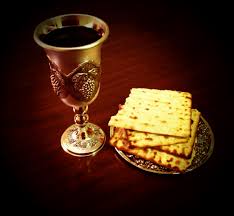
The truth is that the dress rehearsal of Passover and its sacrificial lamb, and prophetic utterance by the likes of Isaiah, were fulfilled by our Christ’s obedience to God to become the once-for-all sacrifice for sin. Jesus ‘bought’ us with His sacrifice; we must now choose whether to believe and obey – follow – or to ignore this new covenant with God through the Christ.

He was oppressed and He was afflicted, Yet He did not open His mouth; Like a lamb that is led to slaughter, And like a sheep that is silent before its shearers, So He did not open His mouth. —Isaiah 53:7 & Acts 8:32.

Clean out the old leaven so that you may be a new lump, just as you are in fact unleavened. For Christ our Passover also has been sacrificed. Therefore let us celebrate the feast, not with old leaven, nor with the leaven of malice and wickedness, but with the unleavened bread of sincerity and truth. —1Corinthians 5:7-8.

When He had taken the book, the four living creatures and the twenty-four elders fell down before the Lamb . . . “Worthy are You to take the book and to break its seals; for You were slain, and purchased for God with Your blood men from every tribe and tongue and people and nation. You have made them to be a kingdom and priests to our God; and they will reign upon the earth.” —Revelation 5:8-9.

Also true is that those who wish to follow the lamb must consider the cost as Jesus said, for they may very well go to their own destruction or be afflicted in their bodies (just look at all the apostles, except John, who were martyred for their faith!).

And they overcame him because of the blood of the Lamb and because of the word of their testimony, and they did not love their life even when faced with death. —Revelation 12:11.

What about the ‘Lion’? Well, Jesus our redeemer is also referred to as the ‘Lion from the tribe of Judah’ in God’s revelation given to John by Jesus.

Then I began to weep greatly because no one was found worthy to open the book or to look into it; and one of the elders said to me, “Stop weeping; behold, the Lion that is from the tribe of Judah, the Root of David, has overcome so as to open the book and its seven seals.” —Revelation 5:4-5.

So far, we understand that the picturesquely mild and meek ‘lamb’ is that way in symbol only. The example was used to show how Jesus was voluntarily slaughtered as a lamb to assist God the Father in the accomplishment of His desire to reconcile with His creation.

Our creator is a just God who will keep His promise to reward the faithful and destroy the wicked. Jesus, because of His obedience, earned the right to save and judge as a faithful arm of God’s wrath.

and they said to the mountains and to the rocks, “Fall on us and hide us from the presence of Him who sits on the throne, and from the wrath of the Lamb —Revelation 6:16.

And I saw heaven opened, and behold, a white horse, and He who sat on it is called Faithful and True, and in righteousness He judges and wages war. . . .  From His mouth comes a sharp sword, so that with it He may strike down the nations, and He will rule them with a rod of iron; and He treads the wine press of the fierce wrath of God, the Almighty. And on His robe and on His thigh He has a name written, “KING OF KINGS, AND LORD OF LORDS.” —Revelation 19:11-16.

So, the lamb and the lion are one and the same: savior and judge. Rescuer and executioner. Which will you experience?

Keep an eye out for “Finding Answers to Stuff Churches Don’t Discuss!” scheduled for a mid-2016 publication. There, you’ll find roughly 60 topics related to daily life (such as sex, religion, finances, tattooing, and everything in between!) along with practical application of God’s guidance for navigating those difficult waters!

And, for a very comprehensive and detailed study of the very important topic of God’s judgment to come and being rescued from it, feel free to read my 2011 guide titled, “Finding the End of the World” available at Amazon, Barnes and Noble, and from www.ronbraley.com in paper and e-book formats. In the guide, you’ll find roughly 500 pages of building blocks to help you do your own complete and unbiased study based on Scripture and history!

The “A-B-C’s” of the End of the World (Originally “It’s the Final Countdown”

According to Jesus, the “end of the age” will be the conclusion of this current age – era or world – with the Great Judgment and the creation of a new heaven and earth. According to the apostle Paul, we’re already in the “last days” leading up to the end.

The final countdown to the grand finale of our world as we know it has begun and the clock’s ticking is getting louder as we see signs of the times and anticipate the conclusion of God’s creation in its current form. A glimpse of what’s to come:

  • Increase in the frequency and intensity of false saviors, wars, and earthquakes & famine/financial disaster.
  • An evil authority we call the Antichrist and an agreement with Israel, kicking off a final seven-year epoch.
  • Breaking the agreement in the middle followed by a three-and-a-half-year reign of terror like never seen before or again.
  • Jesus’ highly-anticipated appearing and the gathering of the spirits of those who are His, and the wrath of God against the rest of the world.
  • The 1,000-year reign of Jesus following God’s incredible wrath.
  • Destruction of Satan and final judgment.
  • God’s new and never-ending heaven and earth.

Looking for guidance? Many man-made theories propped up by a few, specific Biblical verses (usually taken out of context) abound.  So, find out for yourself!  Here’s how to begin:

  1. Read Matthew chapters 24 and 25 together.
  2. Read Revelation chapter 6. There, you’ll see that the signs revealed by Jesus to John in about 90 AD in a vision match what He told His disciples on the Mt. of Olives decades earlier as recorded in Matthew 24 up to the appearing of our Lord at the future, complete darkening of the sun, moon, and stars.
  3. Compare what you read in Matthew 24 and 25  to the entire book of Revelation. You’ll find corroboration between the two and a sequence resembling that given here.
  4. Look for unbiased and complete studies such as my “Finding the End of the World” (available on Amazon.com, Barnes and Noble, and ronbraley.com) to broaden your knowledge and faith.

Remember: a countdown is no good if you don’t know when it began or what time it is!

Keep an eye out for “Finding Answers to Stuff Churches Don’t Discuss!” scheduled for a mid-2015 publication. There, you’ll find roughly 60 topics related to daily life (such as sex, religion, finances, tattooing, and everything in between!) along with practical application of God’s guidance for navigating those difficult waters!

And, for a very comprehensive and detailed study of the very important topic of God’s judgment to come and being rescued from it, feel free to read my 2011 guide titled, “Finding the End of the World” available at Amazon, Barnes and Noble, and from www.ronbraley.com in paper and e-book formats. In the guide, you’ll find roughly 500 pages of building blocks to help you do your own complete and unbiased study based on Scripture and history!